


Antique Upholstered Sofa Suite
An antique upholstered sofa suite brings together matching seating for a formal room, offering cohesive period craftsmanship and historic textiles.
Antique Upholstered Sofa Suite
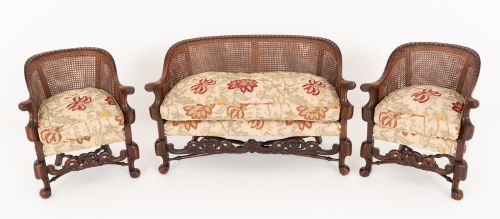
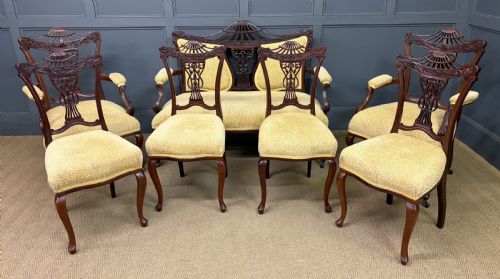
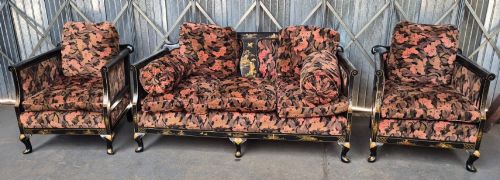
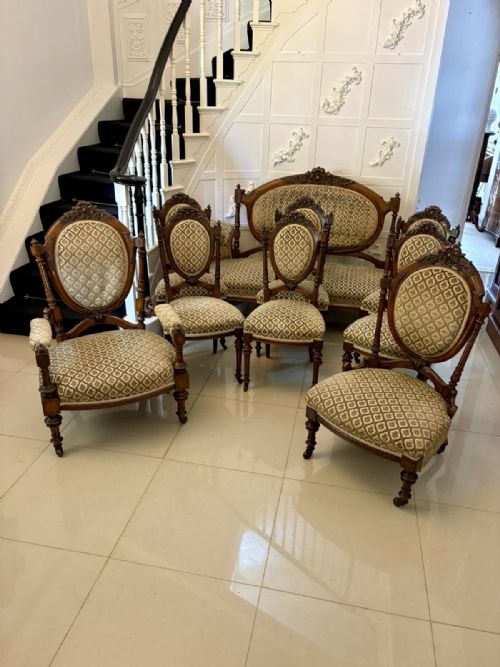
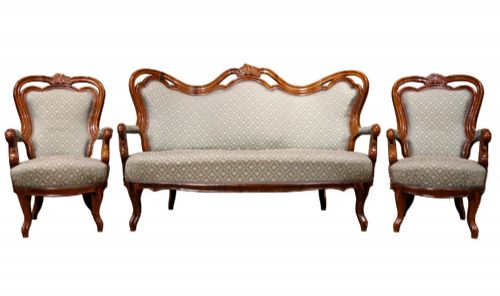
An antique upholstered sofa suite comprises coordinated seating pieces, typically including a settee paired with matching armchairs, designed for formal parlours and drawing rooms. When searching for an antique upholstered sofa suite, buyers most frequently encounter Victorian and Edwardian multi-piece sets constructed from walnut or mahogany.
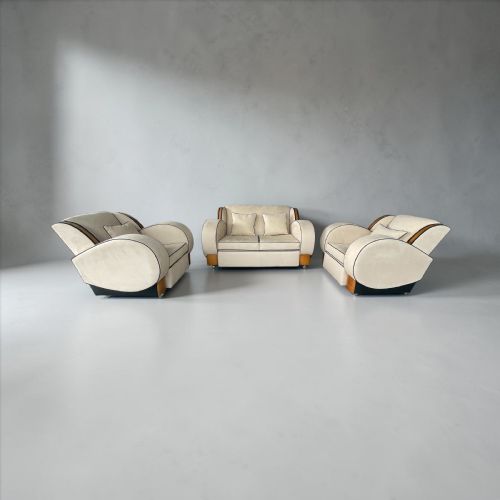
These groupings range from intimate three-piece settings to expansive nine-piece and eleven-piece salon arrangements featuring matching side chairs and footstools. The forms span various historical revivals, including Louis XVI, French Empire, and Carolean styles, alongside later Art Deco designs.
How they were made
Cabinetmakers built the structural frames using dense hardwoods such as walnut, mahogany, satinwood, and rosewood, frequently incorporating detailed hand-carving or delicate marquetry inlay. Frames occasionally feature gilt-wood finishes or brass hardware, grounding the seating on substantial supports like lion paw feet or ball and claw feet.
Traditional upholstery techniques secure the internal padding and springs to support heavy decorative outer textiles. These coverings rely on rich fabrics including velvet, damask, patterned upholstery fabric, and textured textile weaves.
The documented forms range from compact three-piece parlours to expansive eleven-piece drawing room sets complete with footstools.
What varies in quality
The distinction between standard and superior suites rests upon the crispness of the timber carving and the complexity of the wood selection, such as figured walnut or inlaid mahogany. Exhibition-quality pieces display superior joinery, harmonious proportions across every matching chair and settee, and intricate decorative motifs.
Quality also manifests in the ambition of the overall design, moving from straightforward Edwardian frames to elaborate French revival gilding and marquetry. Complete, uniform sets sharing matching original frames and cohesive textile upholstery command greater historical integrity than pieced-together groupings.
Howard and Sons·James Shoolbred
The Antique Upholstered Sofa Suite Glossary
- Settee
- A medium-length upholstered wooden seat designed for multiple people. It typically shares matching design details with companion armchairs in a suite.
- Bergere
- An enclosed upholstered armchair with wooden framing around the sides and back. These chairs often feature exposed carved woodwork.
- Marquetry
- The art of applying decorative veneer pieces to a wooden surface to create geometric or pictorial patterns. Cabinetmakers use this technique on Edwardian and 19th-century mahogany frames.
- Buttonback
- An upholstery style where depressions are formed in the padding by pulling buttons deep into the stuffing. This method secures the filling while creating a diamond-tufted pattern.
- Canape
- A French-style ornamental sofa featuring an exposed wooden frame and upholstered back and seat. These pieces frequently appear in Louis XVI and French Empire revival suites.
Antique Upholstered Sofa Suite: Frequently Asked Questions
How were these suites arranged originally?
In nineteenth and early twentieth-century homes, these suites anchored the main reception rooms, arranged to encourage conversation among guests. The larger settee sat against a primary wall while companion armchairs and side chairs were positioned around the perimeter or near a fireplace.
Larger configurations involving seven to eleven pieces allowed families to distribute matching seating across expansive drawing rooms. Footstools and tub chairs completed the coordinated arrangement for formal gatherings.
How do I distinguish Victorian from Edwardian suites?
Victorian suites generally feature heavier carved walnut or mahogany frames with deep buttonback upholstery, dark wood tones, and robust supports like lion paw feet. The overall aesthetic leans toward ornate historical revivals such as Rococo and French Empire.
Edwardian suites tend to exhibit lighter forms, often utilising inlaid mahogany, rosewood, or satinwood with refined marquetry details. The styling reflects a shift towards airier parlour arrangements, occasionally incorporating Chinoiserie motifs or tub-shaped seating.
How do I care for antique upholstery?
Caring for antique textiles requires protecting them from direct sunlight to prevent the fading of delicate velvets, damasks, and woven fabrics. Gentle vacuuming with a soft brush attachment helps remove surface dust without straining aged threads.
Maintaining stable indoor humidity levels prevents the hardwood frames from drying out or splitting. Professional textile conservationists should handle any deeper cleaning or reupholstery to preserve the historical integrity of the piece.