

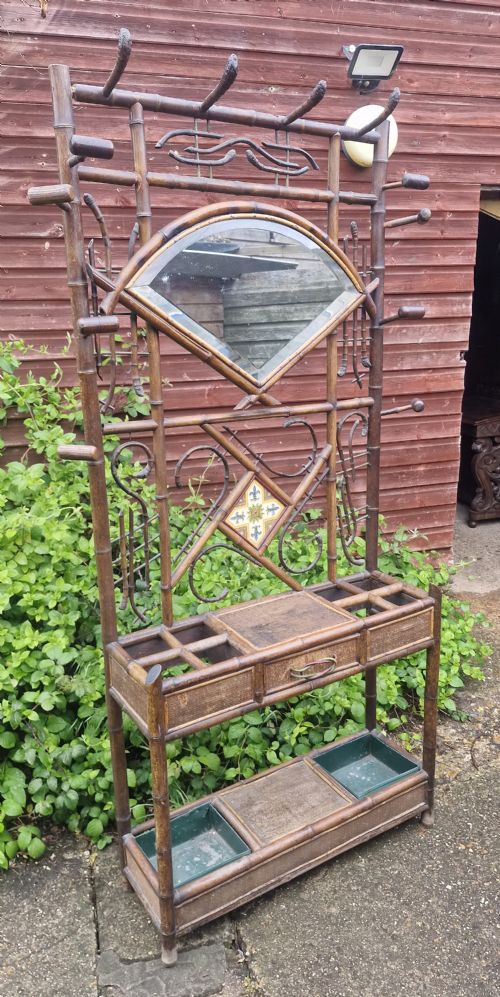


Antique Umbrella Hallstand
An antique umbrella hallstand brings order to an entranceway through a blend of hanging hooks, mirror plates, and dedicated umbrella wells.
Antique Umbrella Hallstand
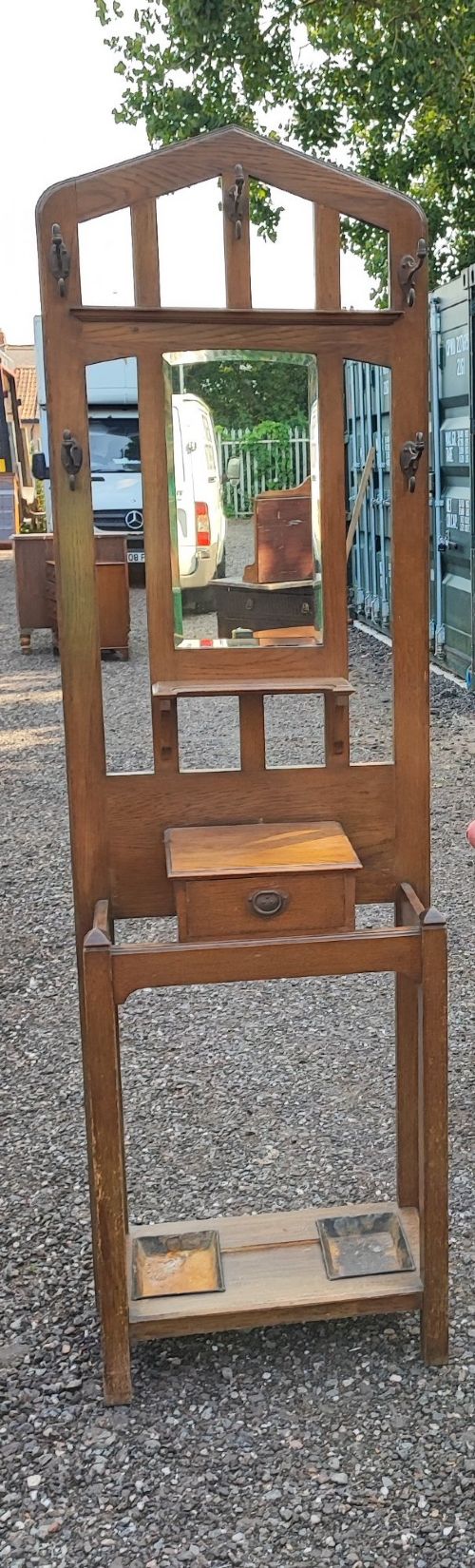
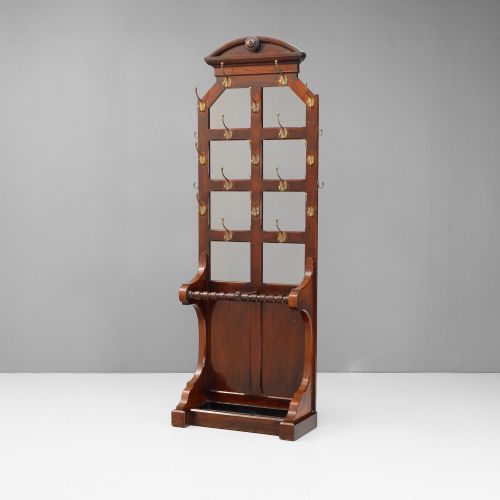
An antique umbrella hallstand serves as a dual-purpose entrance furnishing, combining coat hooks and hat storage with integrated umbrella and walking stick holders. Pieces span the Victorian, Edwardian, and Arts and Crafts periods, alongside the nineteenth century.
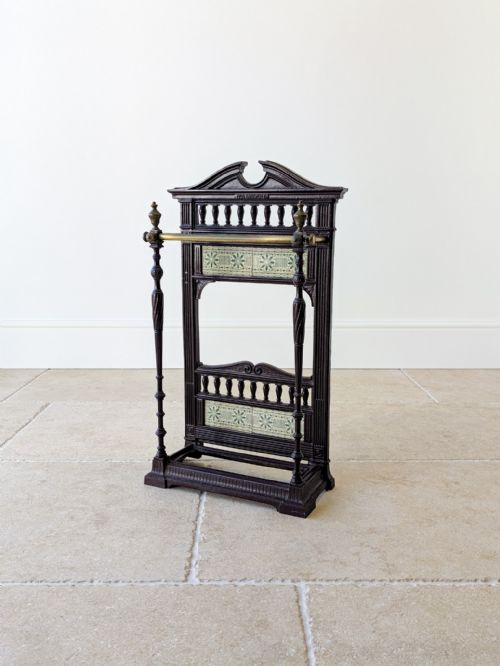
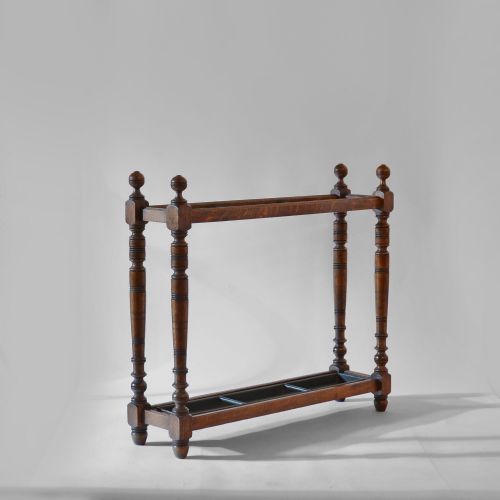
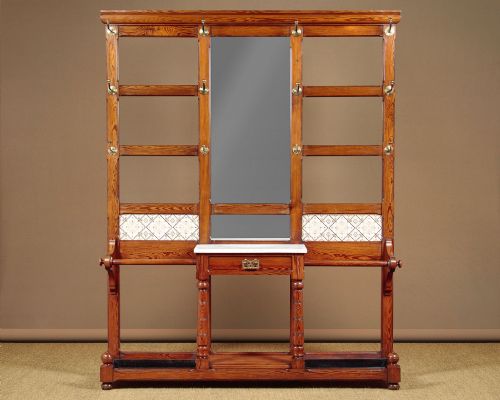
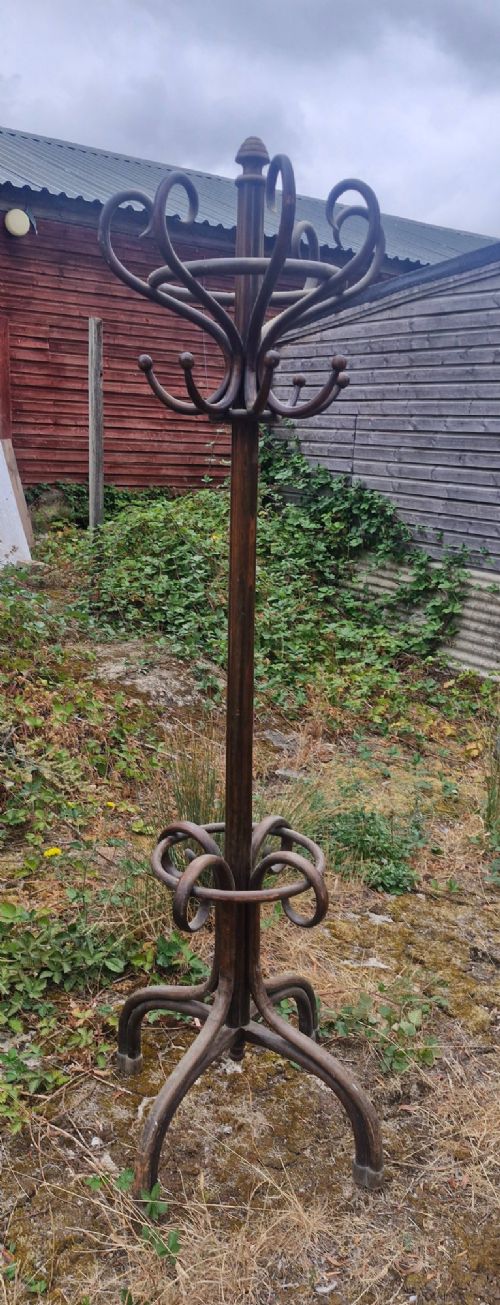
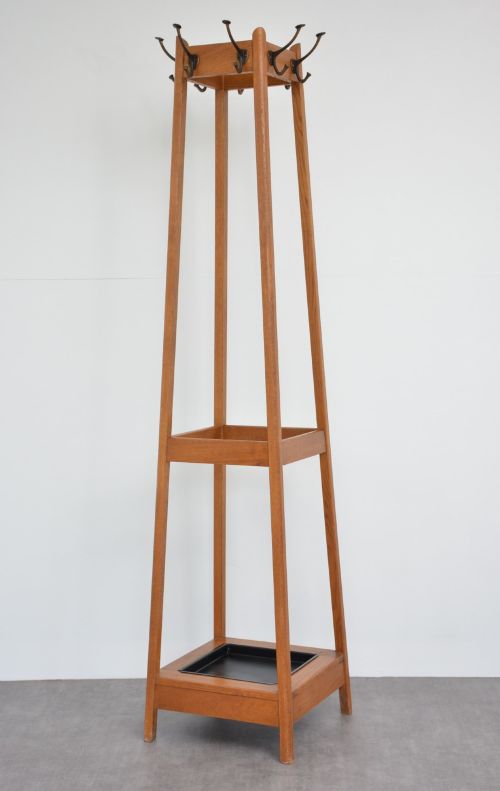
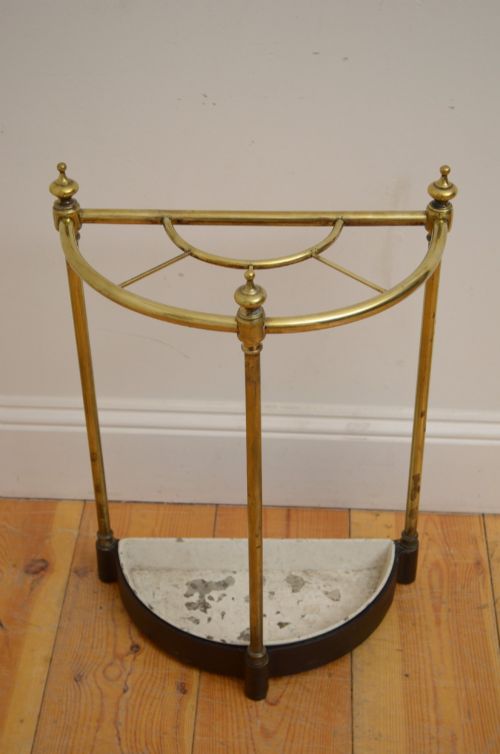
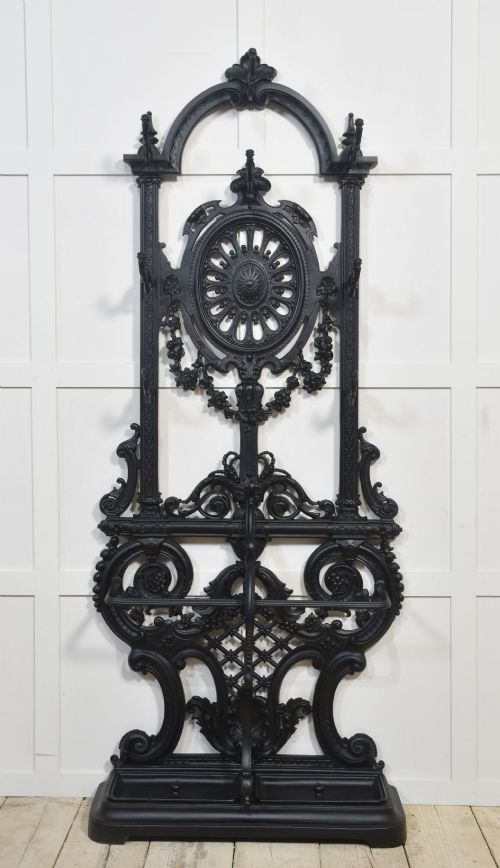
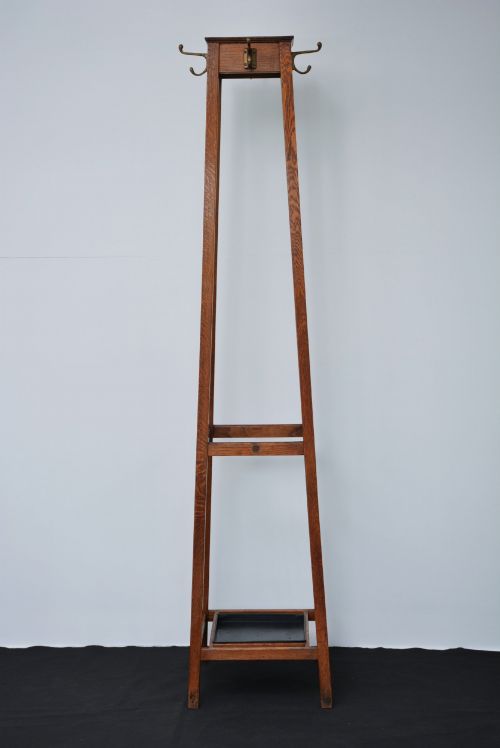
The most common formats met on this page include sturdy oak frameworks featuring central mirrors and marble inserts, alongside utilitarian cast iron stick stands and lightweight bentwood designs. They originate from British workshops as well as continental makers.
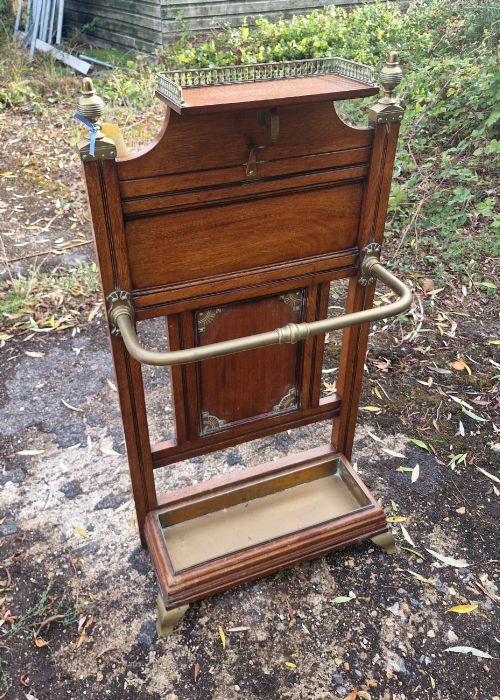
Tall timber variants often incorporate zinc or brass drip trays at the base to catch rainwater from wet sticks, while freestanding iron versions utilise open lattice frames to dry wet umbrellas quickly.
Materials and construction methods
Cabinetmakers utilised solid and veneered hardwoods such as oak, mahogany, beech, and pine, frequently shaping timber into curved components for bentwood models or carving intricate details for Gothic Revival and Black Forest examples.
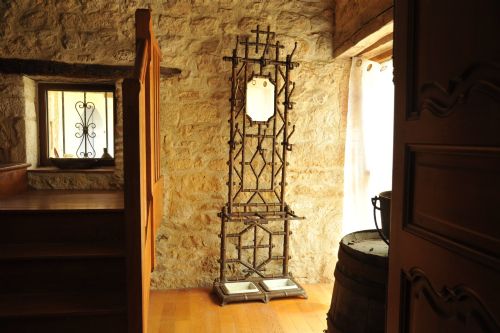
Foundries cast iron into complex patterns, including faux bamboo, half-moon shapes, and sculptural figures like bears, often pairing the metalwork with removable brass or glass trays.
Assembly relied on traditional joinery, sturdy metal brackets, and inset bevelled mirror glass secured with wooden beads.
Distinguishing quality factors
Quality rests upon the weight and integrity of the materials, from heavy, dense oak frames and substantial cast iron structures down to lighter beech bentwood. Finer examples feature crisply carved ornamentation, heavy cast brass fittings, and intact original drip trays rather than modern replacements.
The presence of maker attribution, such as work by Coalbrookdale, Falkirk Ironworks, James Shoolbred, or Fischel, elevates a piece through superior foundry work or refined cabinetmaking.
Structural stability in tall furniture remains vital, demonstrated by thick back panels, secure mirror mountings, and well-anchored coat hooks that withstand daily domestic use.
Coalbrookdale·Falkirk Ironworks·James Shoolbred·Fischel
The Antique Umbrella Hallstand Glossary
- Bentwood
- Wood steamed and bent into curved structural forms, commonly utilised in lightweight hall stands and coat racks.
- Drip tray
- A shallow metal, glass, or ceramic dish positioned at the base of a stick stand to catch moisture from wet umbrellas.
- Demilune
- A half-moon shape with a curved front and flat back, frequently seen in corner or wall-standing hall furniture.
- Faux bamboo
- Wood or cast iron carved, turned, or moulded to imitate the segmented stalks of natural bamboo.
- Hallstand
- A tall piece of entrance furniture combining clothes hooks, a mirror, and umbrella storage.
Antique Umbrella Hallstand: Frequently Asked Questions
How do I care for an antique oak hallstand?
Maintain the timber by applying a traditional beeswax polish periodically to nourish the dry wood and preserve the surface sheen. Avoid placing damp items directly onto unsealed surfaces where missing drip trays might allow moisture damage.
Keep the furniture away from direct heat sources and sudden temperature shifts to prevent the solid panels or veneers from splitting over time.
Were all hall stands fitted with mirrors?
Many tall timber hall stands incorporate a bevelled mirror plate into the central backboard to allow a final check before leaving the house. Smaller cast iron stick stands, bentwood designs, and open umbrella racks omit mirrors entirely in favour of minimalist framework.
Heavier Victorian and Edwardian hallstands rely on the mirror to visually lighten the substantial timber mass dominating the entrance space.
How do I distinguish cast iron from other metals?
Cast iron exhibits a heavy, dense weight with a textured surface finish resulting from the sand-casting process, often decorated with painted or blackened finishes. It lacks the golden or reddish gleam of brass and does not bend under pressure.
Magnet testing provides a reliable indicator, as iron strongly attracts magnets while brass remains non-magnetic.
Can these stands be placed directly on carpets?
Freestanding cast iron and heavy timber stands sit securely on most floor coverings due to their substantial weight. However, models lacking integrated drip trays may require protective mats underneath to shield carpets from residual moisture.
Wall-standing or tall bentwood versions occasionally benefit from discrete wall fixings to ensure absolute stability in busy hallways.