




Gothic Coat Rack
A gothic coat rack brings dramatic architectural presence to an entranceway, offering robust hanging space rooted in nineteenth-century design.
Gothic Coat Rack
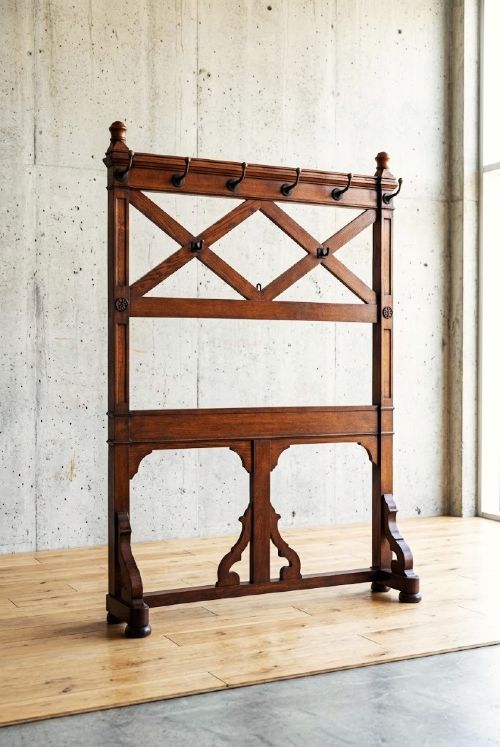
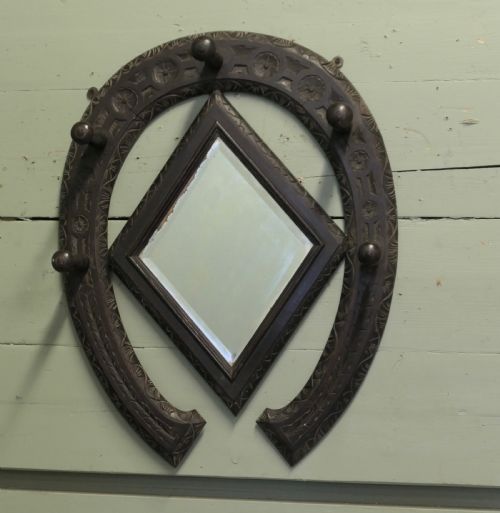
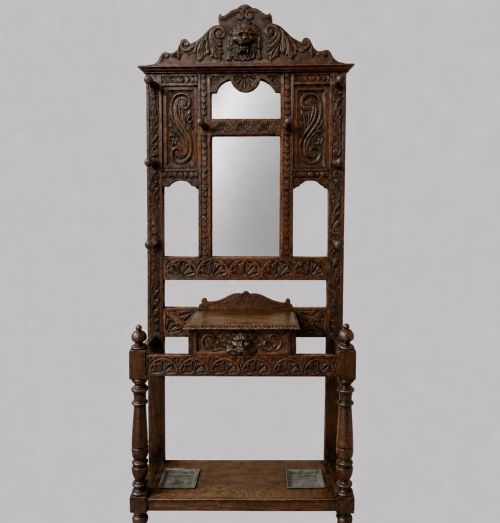
A gothic coat rack encompasses architectural hall stands, wall-mounted racks, and umbrella stands originating from the nineteenth century. These pieces typically display the revival styles of the Victorian era, drawing heavily on medieval motifs.
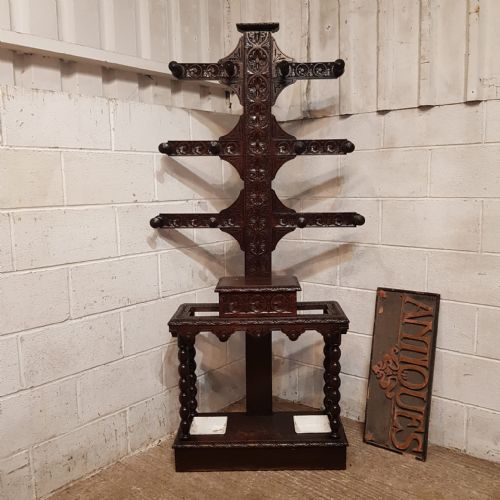
The heavier examples take the form of large hall stands fashioned from oak, frequently incorporating mirrors, marble inserts, and cast iron hooks. Wall-mounted racks provide a more compact option while retaining the distinctive pointed arches and carved details of the style.
Materials and Construction
Solid oak serves as the primary timber, shaped through deep hand-carving to produce intricate foliage, linenfold panels, and mythological figures such as the Green Man. Mahogany and ebonised woods also appear, providing darker, highly polished surfaces.
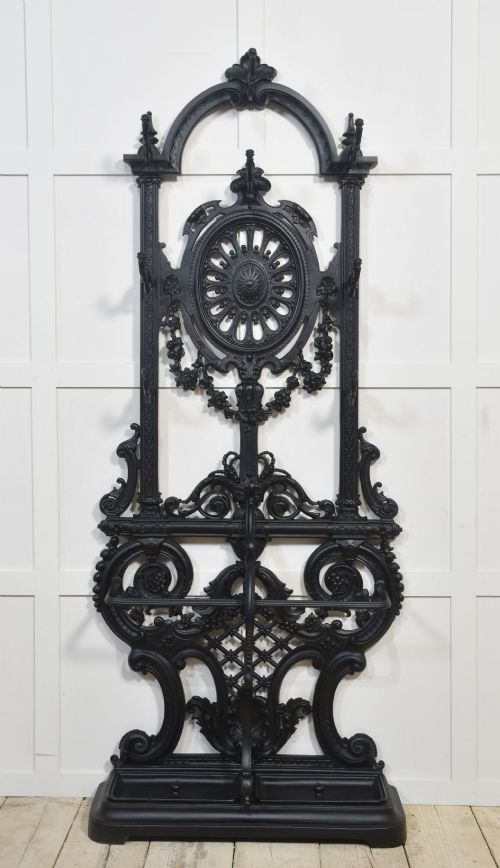
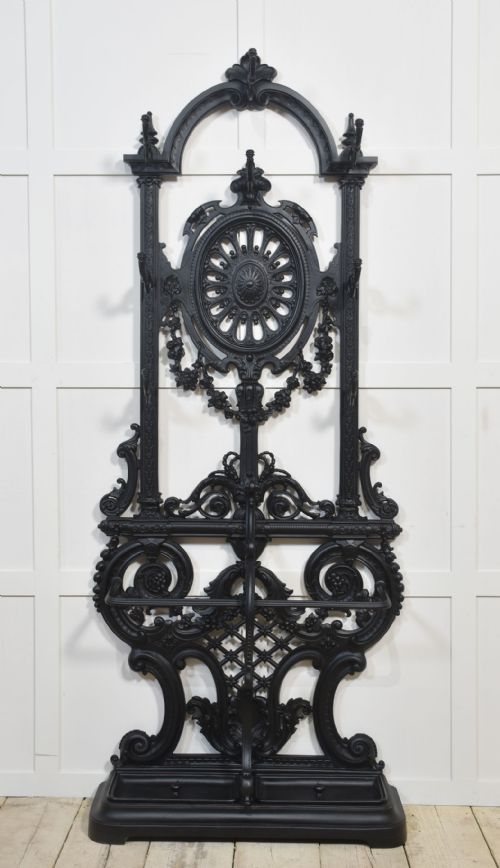
Metalwork forms an integral part of the construction, utilising cast iron, brass, and iron for structural hooks, drip trays, and backing frames. Foundries produced robust umbrella stands and hall stands utilising moulded iron, often paired with mirrored glass panels.
Assessing Quality
Quality rests in the crispness of the carving and the integrity of the timber framing. Superior examples feature deeply undercut foliage and expressive figural work rather than shallow mechanical stamping.
The integration of secondary materials such as carved marble, bevelled mirror glass, and heavy brass or cast iron hooks distinguishes finer architectural pieces from simpler utility items.
Falkirk Foundry·Coalbrookdale
The Gothic Coat Rack Glossary
- Gothic Revival
- An architectural and decorative style popular during the nineteenth century that revived medieval forms, pointed arches, and heavy ornamentation. It dominates the design vocabulary of these pieces.
- Green Man
- A sculptural motif depicting a human face disgorged from or entwined with foliage, frequently found carved into Victorian oak hall stands. This pagan symbol experienced a significant revival during the nineteenth century.
- Hall Stand
- A large freestanding piece of furniture designed for entranceways, combining coat hooks, a hat shelf, a mirror, and umbrella compartments. Many incorporate drip trays at the base to catch rainwater.
- Coalbrookdale
- A renowned nineteenth-century ironworks known for producing ornate cast iron furniture and architectural elements. Pieces attributed or styled to this foundry feature complex openwork casting.
Gothic Coat Rack: Frequently Asked Questions
What is a gothic coat rack?
A gothic coat rack is a nineteenth-century entranceway furnishing, taking the form of either a wall-mounted hanging rack or a substantial freestanding hall stand. They are characterised by medieval architectural motifs, pointed arches, and dark woods.
These pieces were built to serve busy Victorian hallways, providing designated places for hats, coats, and wet umbrellas while setting a dramatic tone upon entering a home.
How do I date a Victorian hall stand?
Dating relies upon examining the timber, the style of the hardware, and secondary elements like mirror bevelling or cast iron markings. Pieces span from approximately eighteen-sixty to nineteen-hundred, with earlier examples often showing strict Pugin-style Gothic Reform influences.
Later Victorian and turn-of-the-century pieces frequently embrace more elaborate carvings, such as Green Man masks, combined with mass-produced cast iron components from prominent foundries.
Where should I place a hall stand?
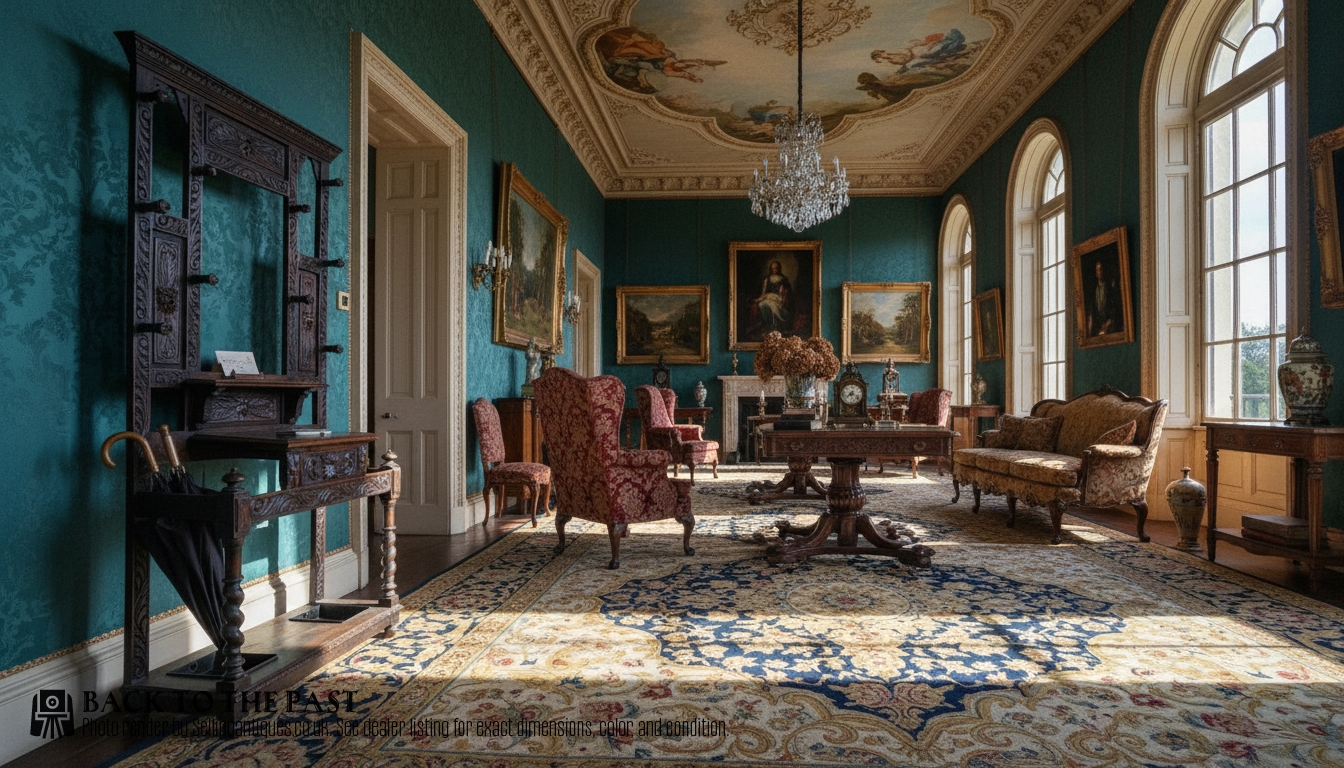
A freestanding hall stand requires a generous entrance hall or corridor with sufficient wall space and clearance to accommodate its architectural height and depth. Wall-mounted racks suit smaller hallways where floor space is limited.
Ensure the wall structure can support the weight of heavy oak and cast iron, and position the piece away from direct heat sources to protect the antique timber and glued joints.
Are these racks sturdy enough for daily use?
Nineteenth-century hall stands and coat racks were constructed from heavy solid oak and cast iron to withstand the weight of heavy winter garments. Their robust materials make them entirely practical for everyday use in a modern household.
Care should be taken to check that wall-mounted versions are properly anchored into masonry or studs, as the combination of dense timber and iron hooks creates considerable weight.