

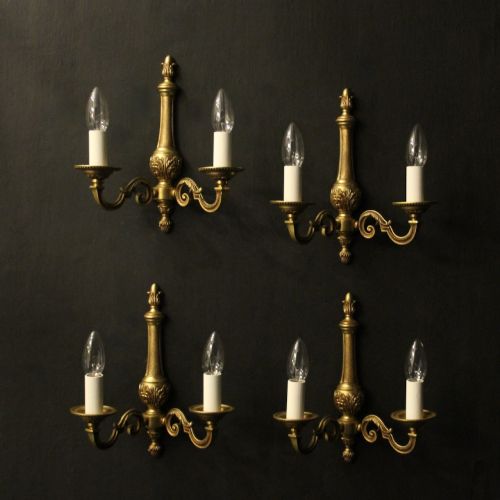
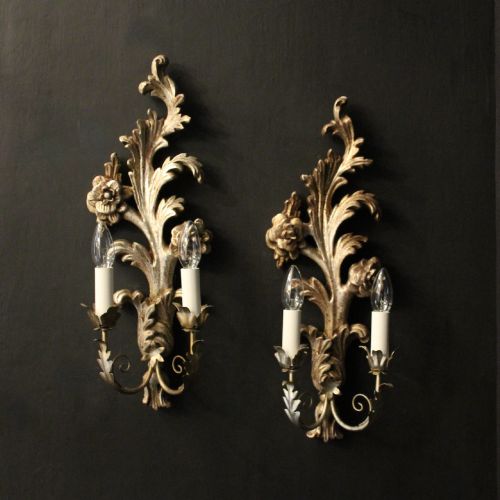
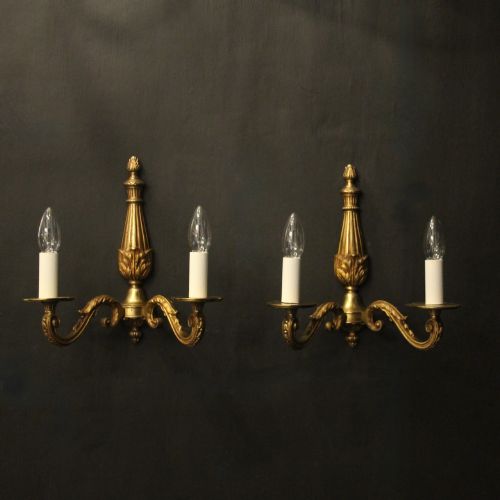
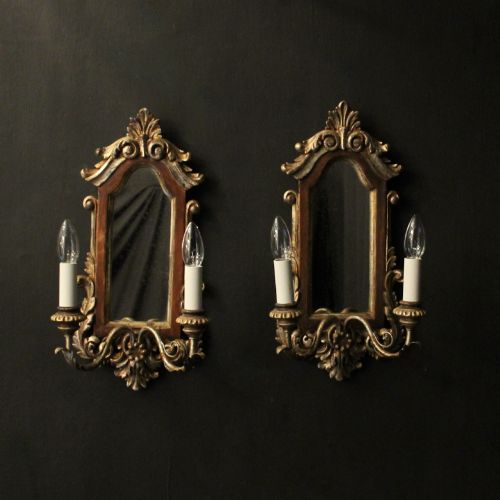
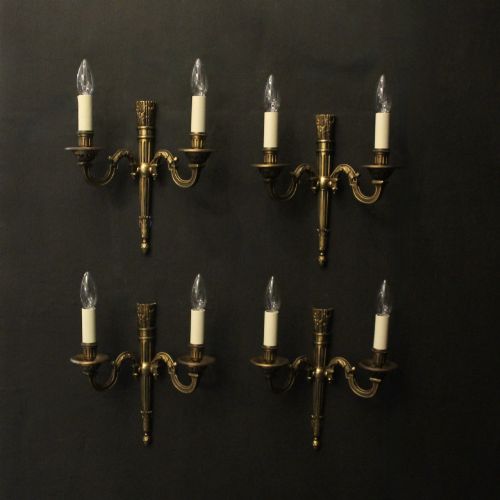
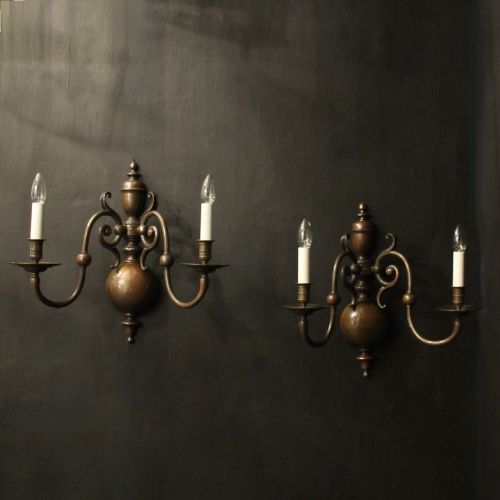
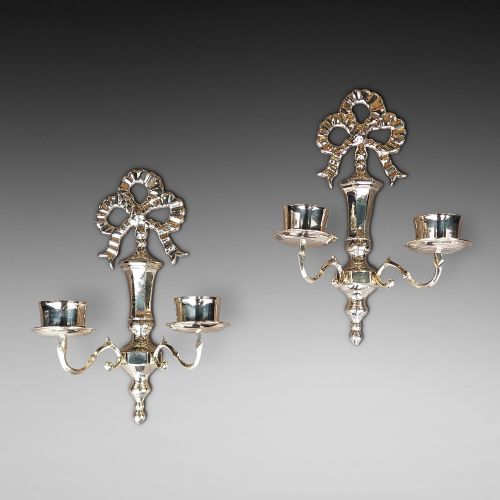
Antique Twin Wall Sconces
When choosing antique twin wall sconces, you select dependable illumination fixtures designed to flank mirrors or fireplaces with balanced twin branches.
Antique Twin Wall Sconces
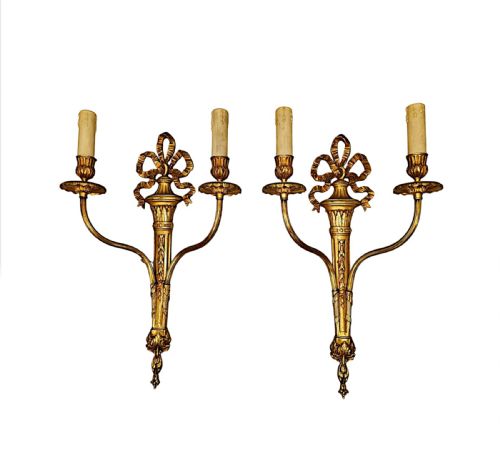
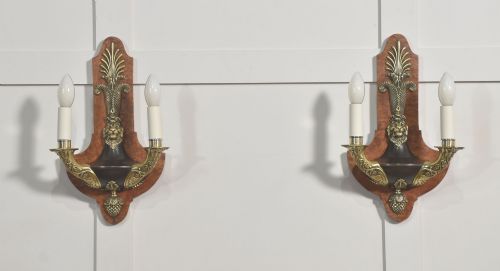
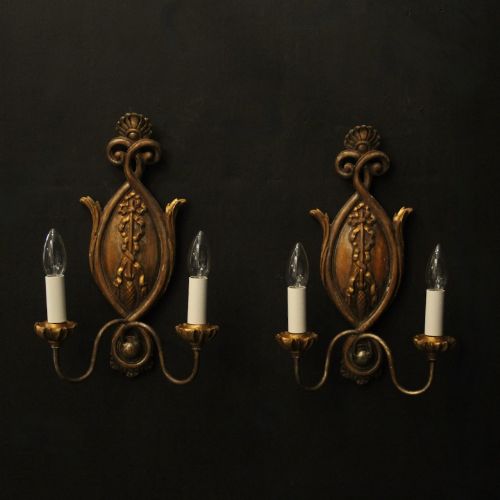
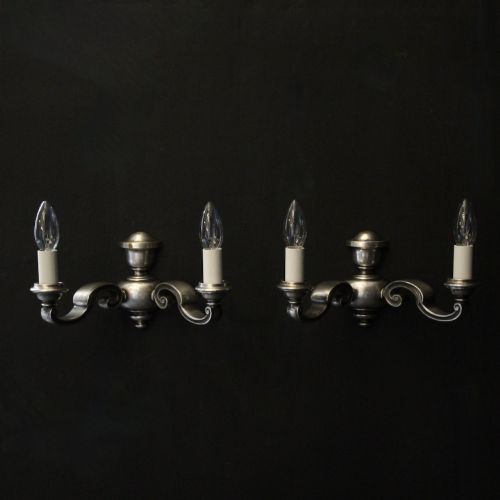
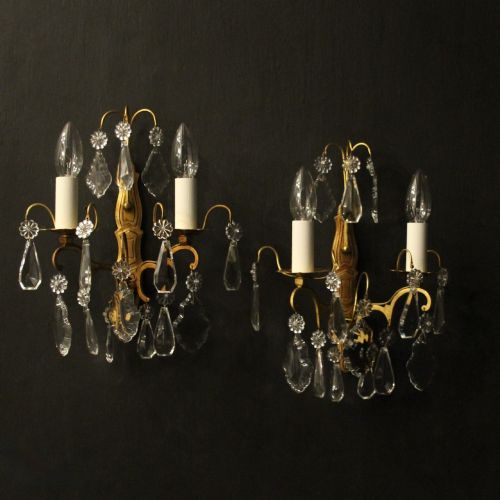
When searching for antique twin wall sconces, you encounter lighting fixtures featuring two branches designed to mount directly onto domestic walls. The pieces on this page span from the nineteenth century into the 1930s, incorporating styles such as French Rococo, Neoclassical, and Florentine design.
You meet a high proportion of French examples, often formed in gilded brass, bronze, or ormolu with twin arms. English and Italian variants also appear, alongside forms described as girandoles or half lanterns equipped for two lights.
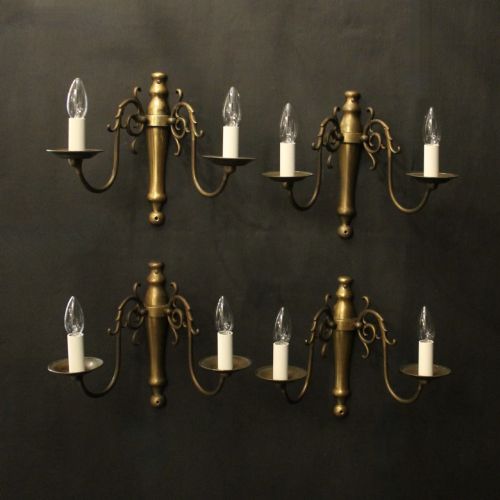
Pairs dominate the selection, though sets of three, four, or six pieces occur regularly across the listings. These fixtures function as architectural ornaments that project light across a room from symmetrical dual candleholders or electrified arms.
How They Were Made
Foundry workers shaped these metals through casting, producing robust frames in brass, bronze, and ormolu that took fine detailing. Artisans then applied layers of gilding or silver plating to the metallic surfaces to create reflective finishes.
Woodcarvers fashioned alternative structures from timber, producing giltwood frames often paired with carved floral motifs or gilded ribbons. Workshops also integrated materials such as crystal drops, ceramic plaques, and burr walnut into the metal and wooden armatures.
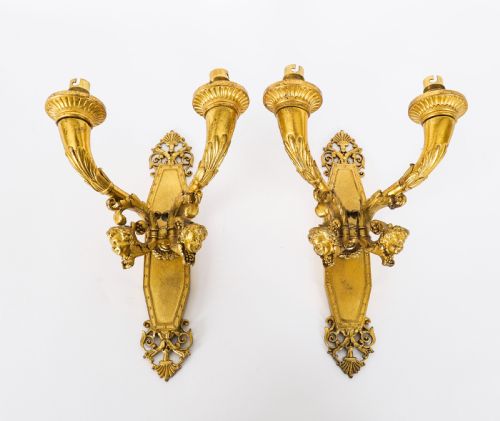
Several Florentine sconces smuggle tiny carved cherubs into the lighting arrangement, apparently holding up the candles.
What Varies in Quality
The quality of the surface finish dictates the visual impact of the fixture. Heavy fire-gilding or well-preserved gold leaf reflects ambient light differently than thin modern plating or worn lacquer.
Bruce Talbert·Casier
The Antique Twin Wall Sconces Glossary
- Ormolu
- A technique of applying finely ground high-carat gold to an amalgamated bronze object through heat. This process leaves a durable, rich metallic lustre characteristic of fine French decorative arts.
- Girandole
- An ornamental branched wall light or sconce that incorporates a mirror to reflect the illumination. The reflective backplate enhances the candle or electric light within the room.
- Giltwood
- Timber, typically lime or pine, that has been carved and coated with a thin layer of gold leaf. It provides a lightweight alternative to cast metal while retaining a brilliant appearance.
- Rococo
- An ornate artistic style characterised by asymmetrical scrollwork, C-scrolls, and naturalistic plant motifs. This aesthetic heavily influences many nineteenth and early twentieth-century lighting designs.
- Half Lantern
- A wall-mounted lighting fixture shaped like a vertical lantern cut in half against the mounting surface. These variants often house twin internal light sources behind glass panels.
Antique Twin Wall Sconces: Frequently Asked Questions
How were antique twin wall sconces originally lit?
Makers designed these fixtures to hold wax or tallow candles upon their twin drip pans and nozzles. Many surviving examples have since been safely rewired for electricity to suit modern domestic requirements.
Conversion methods vary, with some fittings preserving dummy candles that conceal modern lamp holders. Original wax drips and sconce pans occasionally remain visible beneath the electrical components.
Where should wall sconces be placed in a room?
These fixtures work best mounted at eye level on either side of a fireplace, architectural doorway, or large wall mirror. Positioning them in pairs ensures balanced illumination and symmetrical visual weight across the wall surface.
Consider the height of the ceiling and surrounding furniture when fixing the backplates in position. Dual arms project light outward, making them effective for flanking larger focal points in a drawing room or hallway.
How do I identify French Rococo revival sconces?
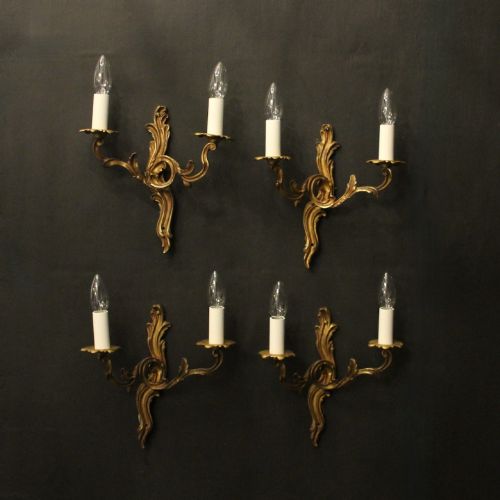
French Rococo revival pieces feature flowing, asymmetrical lines, shell motifs, and pronounced C-scrolls along the backplate and arms. The cast bronze or brass often displays organic leaf patterns that mimic natural growth.
These fixtures frequently date from the nineteenth century or the 1930s revival periods. Their heavy cast construction and ornate detailing distinguish them from simpler Neoclassical or Adam style designs.