

Antique Twin Lights
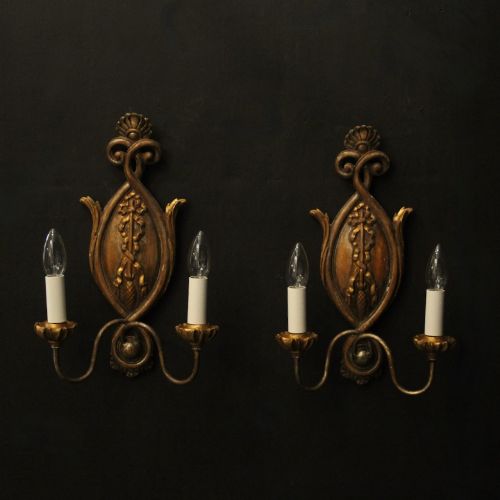
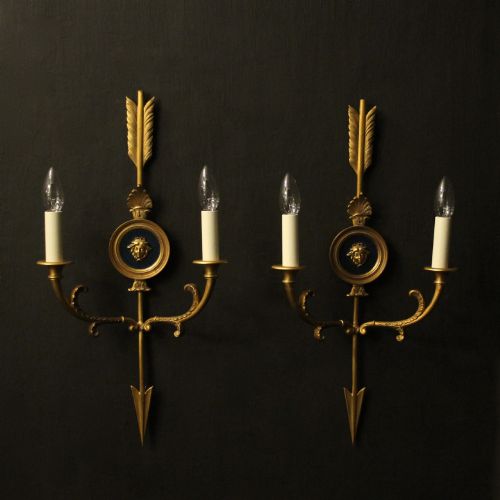
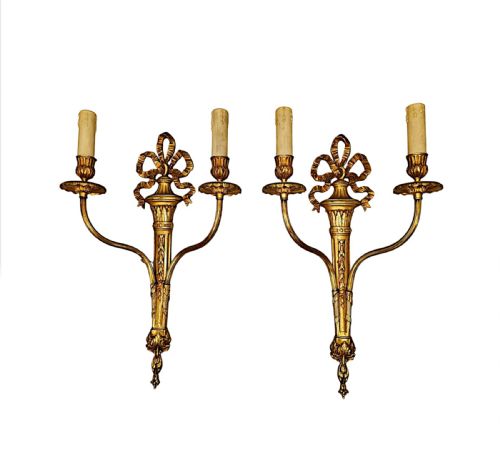
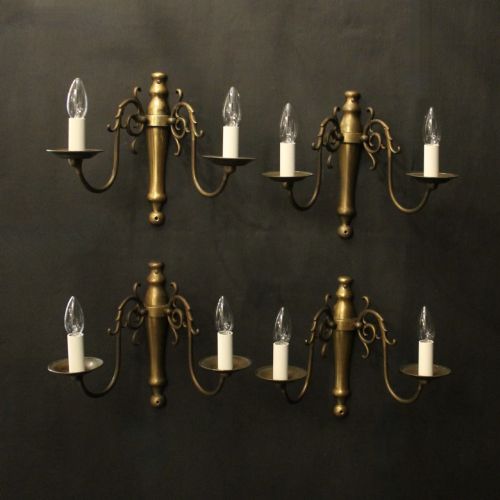
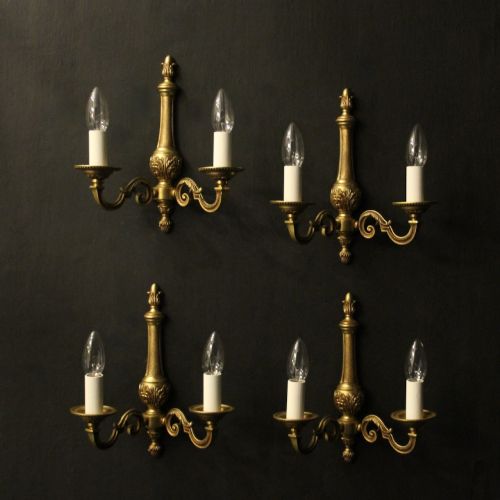
These antique twin lights are paired wall sconces and lamps designed to hold two bulbs or candles, bringing balanced illumination to a room.
Antique Twin Lights
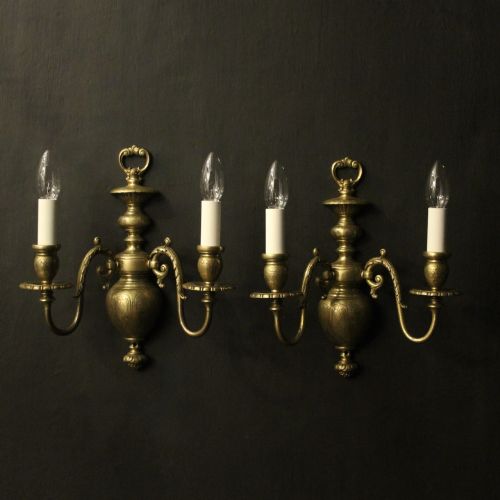
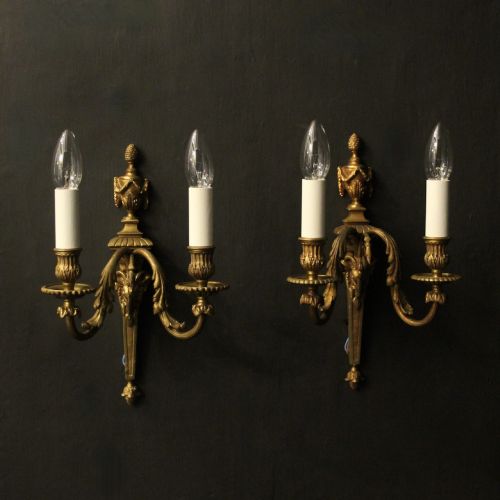
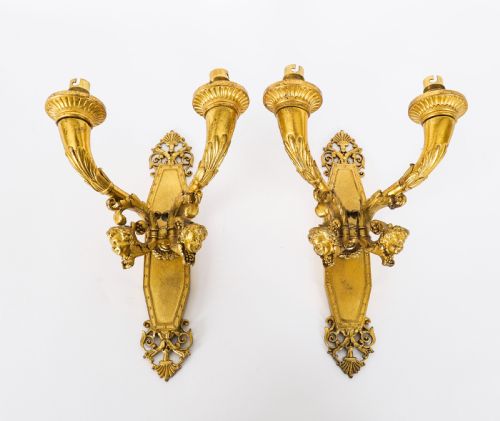
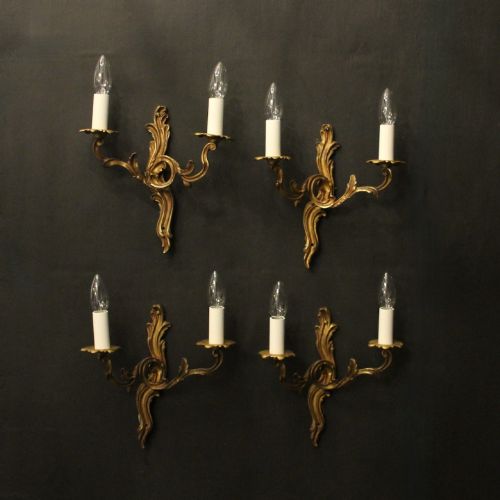
When you search for antique twin lights, you encounter wall-mounted sconces, girandoles, and occasional table lamps designed with two distinct arms or branches. The examples on this page span from the nineteenth century into the nineteen-thirties, crossing Victorian, Edwardian, and Art Deco periods.
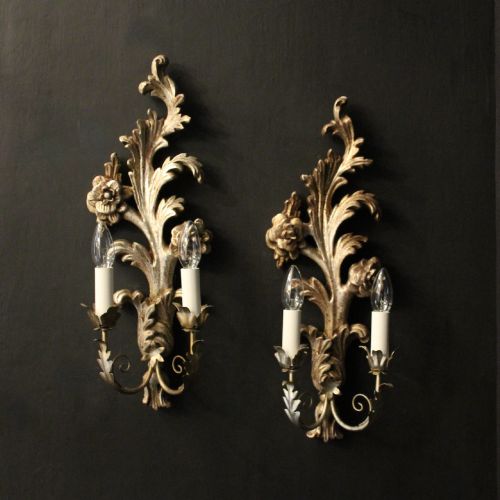
French and Florentine pieces dominate the selection, heavily favouring gilded brass, gilt bronze, and carved giltwood alongside English bronze and brass alternatives. Wall lights form the vast majority of the inventory, often arriving in matched pairs or larger sets of four and six.
Forms range from restrained neoclassical ribbons and empire motifs to ornate rococo curves and Florentine giltwood frames. Alongside wall sconces, the selection includes specialised lighting such as bouillotte desk lamps and convex half lanterns.
Materials and construction methods
Foundry-cast metals form the core of these pieces, utilising brass, bronze, and ormolu that take crisp surface chasing and detail well. Gilded finishes are common, applied as gold leaf on wood or fire-gilding on metal bases.
Carpenters and carvers shaped the wooden components, such as the giltwood and gesso frames found on Florentine girandoles. Glass and crystal elements appear as drops or shades, wired later to accommodate electrical fittings while retaining their original structural metalwork.
The listings on this page span the Victorian, Edwardian, and Art Deco periods, predominantly featuring French and Florentine wall lights.
Assessing quality in twin lights
The precision of the casting and the depth of the metal chasing dictate the visual sharpness of floral swags, ribbons, and scrollwork. Heavier gauge brass and solid bronze retain crisp edges and structural rigidity over generations of use.
The execution of the gilding separates standard production from finer workshop output, with hand-applied gold leaf or heavy ormolu holding a warm tone rather than a flat, modern sheen. Original backplates, drip pans, and matching arm configurations indicate a cohesive, high-status manufacture.
Bruce Talbert·Casier
The Antique Twin Lights Glossary
- Ormolu
- Gilded bronze, typically produced by applying a mercury-gold amalgam to a bronze base and heating it. This technique creates a rich, durable golden surface seen on nineteenth-century French lighting.
- Girandole
- An ornamental wall-mounted candlestick or light fixture featuring a mirror or reflective backplate. The reflective glass multiplies the illumination from the twin arms.
- Giltwood
- Wood that has been coated with a thin layer of gold leaf over a prepared gesso and bole ground. It appears frequently on Florentine wall lights and girandoles.
- Bouillotte lamp
- An adjustable desk or table lamp featuring a central shade and twin candle arms. Originating in France, they were traditionally used during card games.
- Sconces
- Wall-mounted light fixtures designed to project illumination into a room. In this collection, they most commonly support two parallel branches.
Antique Twin Lights: Frequently Asked Questions
How are antique twin lights wired?
Most antique twin lights retain their original metal sockets or have been modernised with rewiring to meet current electrical safety standards.
Qualified electricians can thread modern wiring through the existing hollow arms without altering the outer metal or wood structure.
Can I hang wall lights on drywall?
Hanging these fixtures requires securing them directly into wall studs or using appropriate heavy-duty cavity fixings. The solid bronze and brass constructions carry significant weight that standard plasterboard anchors cannot support.
Distributing the weight evenly across the backplate prevents the fixture from pulling loose over time.
How do I clean gilded brass?
Dust gilded surfaces gently with a soft, dry microfibre cloth to remove surface particles without wearing away the finish. Avoid commercial metal polishes, as abrasive compounds strip the historical ormolu or gold leaf from the base metal.
Moisture can damage fragile gesso under giltwood, so keep water away from wooden frames.
How do I date a wall sconce?
Dating relies on examining the casting methods, fastening screws, backplate design, and stylistic markers such as neoclassical ribbons or rococo revival asymmetry. Material choices, including nineteenth-century brass compositions versus later twentieth-century alloys, also provide clear chronological clues.
Maker stamps or stamps on the reverse offer definitive points of origin.