

Antique Twin Arm Lights
Antique twin arm lights bring dual illumination to interiors through wall fixtures, sconces, and girandoles crafted in brass, bronze, and giltwood.
Antique Twin Arm Lights
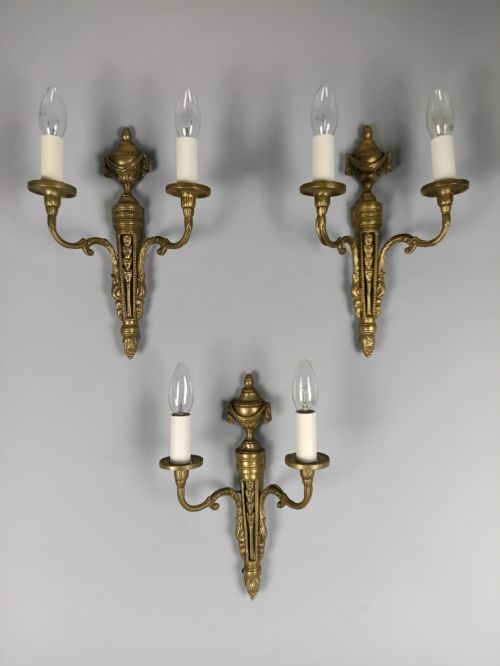
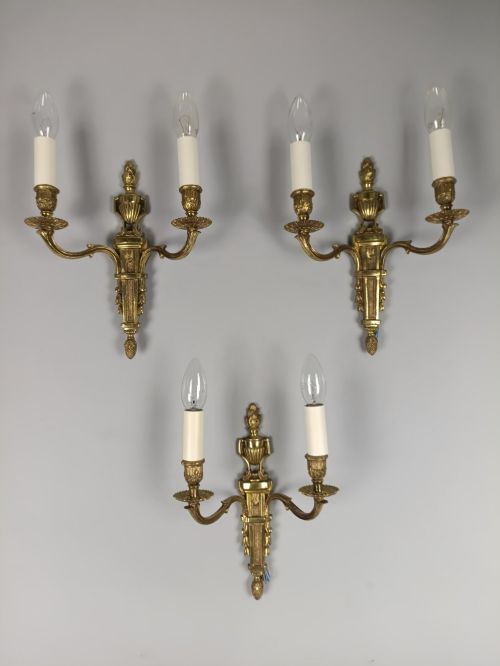
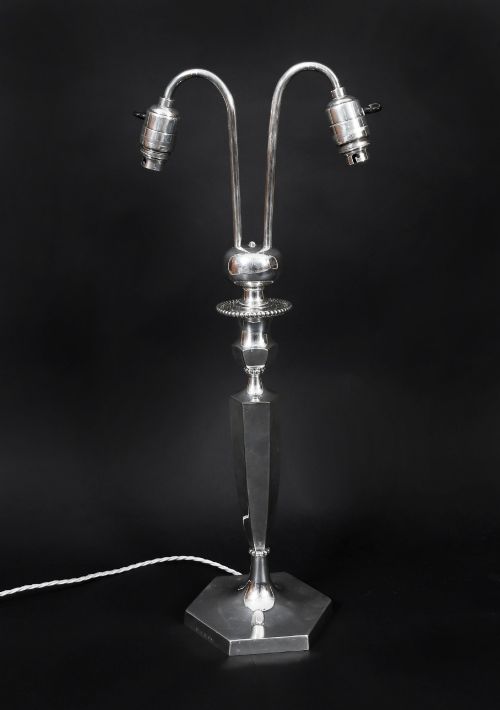
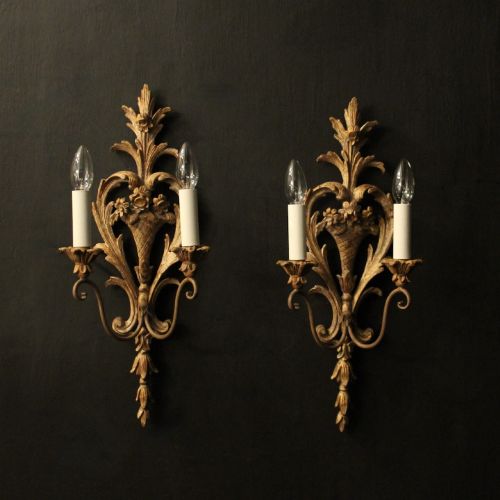
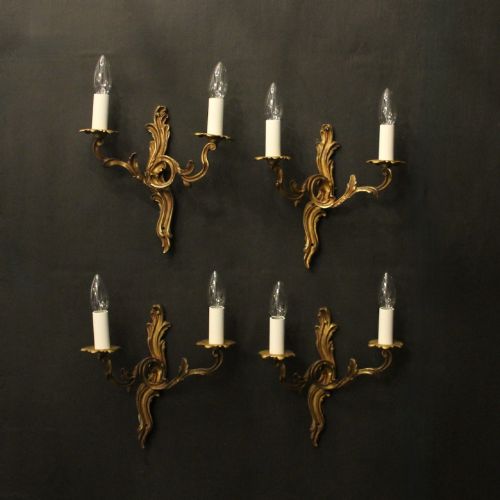
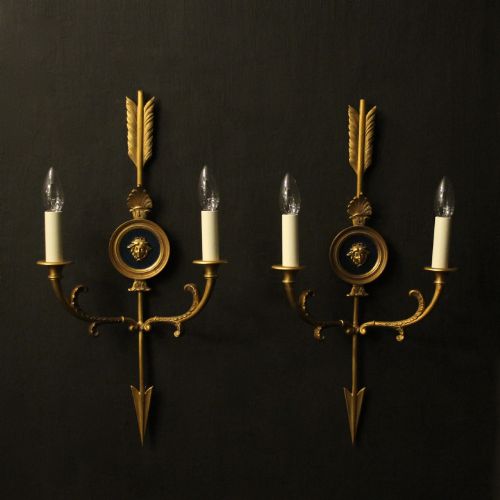
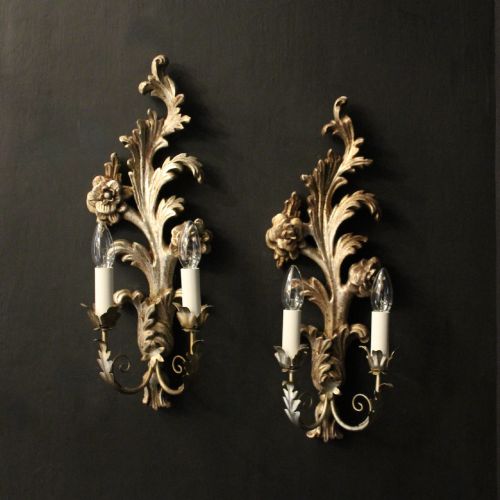
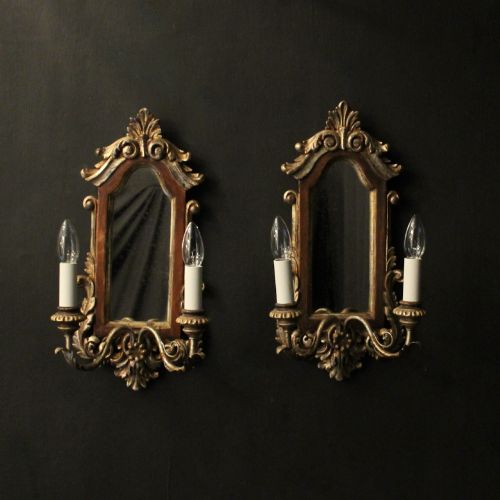
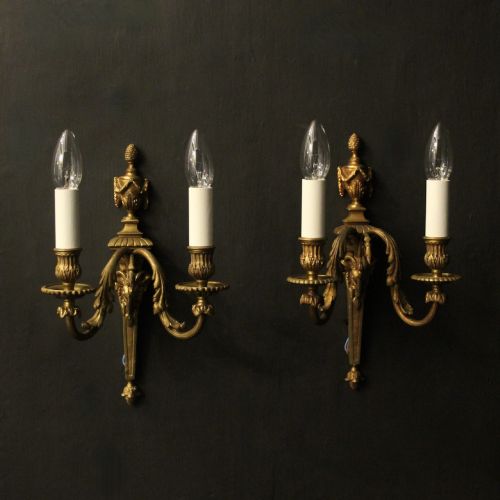
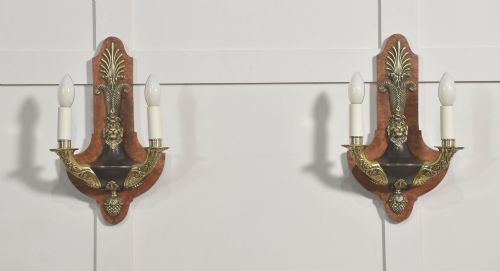
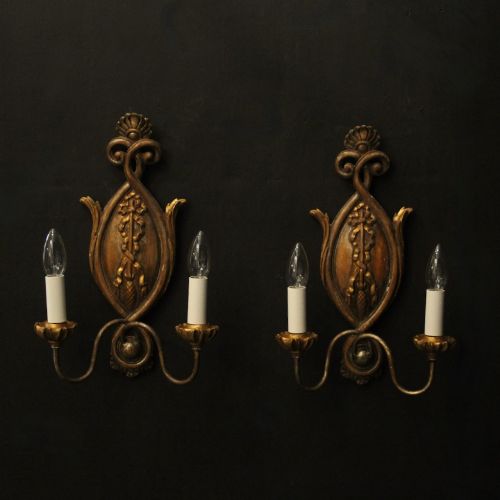
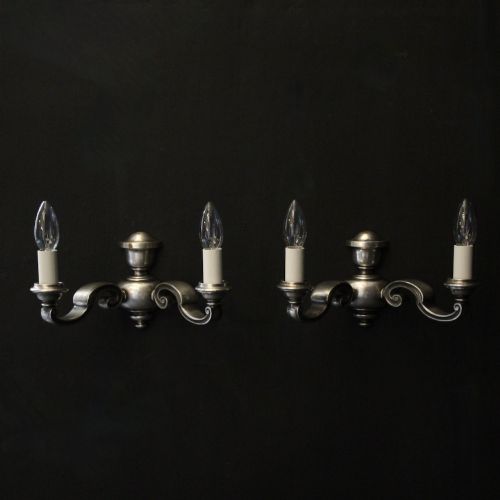
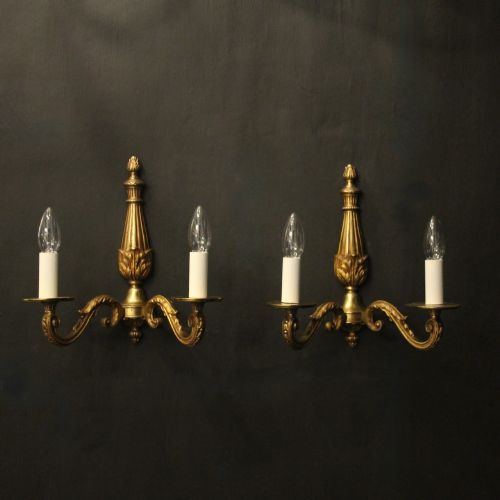
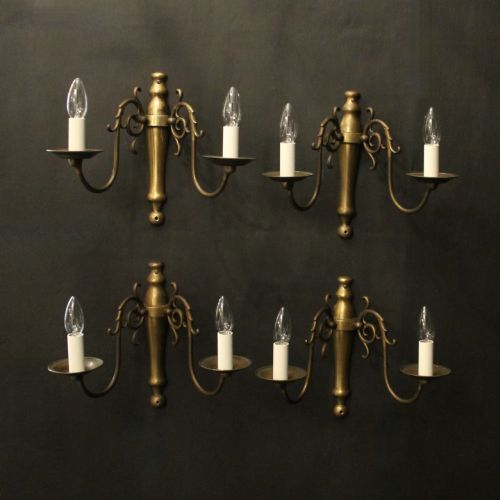
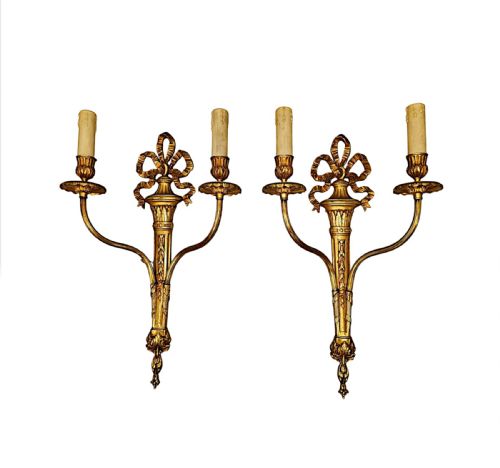
Antique twin arm lights comprise wall-mounted fixtures, girandoles, and lamps designed with two projecting branches for illumination. These dual-branch pieces appear primarily as wall sconces and wall lights originating from French and English workshops.
The selection on this page spans the Victorian and Edwardian eras alongside the 1920s and 1930s. Styles range from French Rococo and Empire to Florentine and Neoclassical designs.
Makers and designers such as Casier and Bruce Talbert contribute to the diverse physical forms available. Buyers encounter sets of multiple pieces alongside matched pairs.
Materials and Construction
Metalwork forms the core of these fixtures, utilising brass, bronze, and gilt bronze. Foundries cast these metals into ornate arms and backplates.
Gilded surfaces and giltwood elements appear frequently, providing decorative sheen through applied gold leaf or gilding. Woodcarving shapes the Florentine giltwood girandoles.
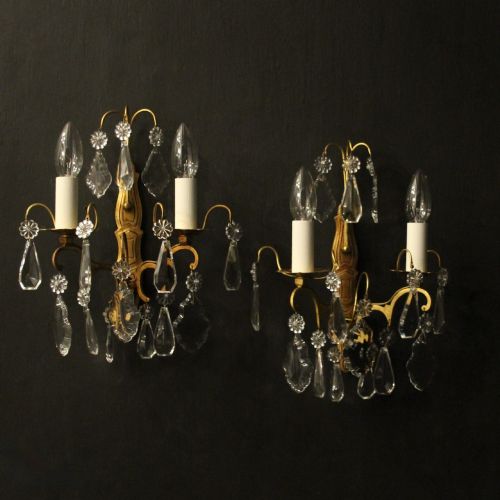
Secondary elements include crystal drops, silver plating, burr walnut, and green toleware shades. Assembly involves mechanical joining of branches to central backplates.
Antique Twin Arm Lights Retail Price Guide 2026
Typical asking prices for twin arm lights among the pieces listed under this phrase on Sellingantiques today, from the lower quarter to the upper quarter. They describe what is for sale here now, not the wider market.
Some reading lamps angle their brass arms just right for a late-night volume of poetry.
Factors of Quality
The crispness of casting detail in the bronze and brass elements distinguishes superior pieces. Finer fixtures exhibit sharply defined acanthus leaves, scrollwork, and rococo motifs.
The quality of the gilding and surface finish dictates visual depth. Thick application of gold leaf or well-preserved fire gilding on bronze outlasts thin painted coatings.
Structural integrity in the arm joints and backplate mounting determines longevity. Heavier cast components maintain rigidity across the twin branches better than thin stamped metal.
Casier·Bruce Talbert
The Antique Twin Arm Lights Glossary
- Girandole
- An ornamental wall light featuring a mirror or branches for candles or bulbs. These fixtures reflect light deeper into a room.
- Sconce
- A wall-mounted lighting fixture attached by a bracket. The backplate secures directly to the wall surface.
- Gilt Bronze
- Bronze metal coated with a thin layer of gold. This technique provides a lustrous and durable decorative finish.
- Toleware
- Painted or lacquered metalware originating from France and England. It frequently forms decorative shades on desk and bouillotte lamps.
- Rococo Revival
- A design style from the nineteenth century reviving ornate asymmetrical scrollwork and naturalistic motifs. It heavily influences French wall light design.
Antique Twin Arm Lights: Frequently Asked Questions
Where should I place twin arm wall lights?
These fixtures suit hallways, flanking fireplaces, or framing mirrors in formal rooms. Their dual branches cast balanced light across surrounding wall spaces.
Ensure mounting heights match eye level or frame architectural focal points effectively. Spacing multiple sets requires equal intervals along larger wall surfaces.
How do I identify French Rococo wall lights?
French Rococo pieces display asymmetric scrollwork, C-scrolls, and naturalistic plant motifs. The bronze or brass castings curve organically rather than following strict symmetry.
Look for detailed acanthus leaf overlays and shell forms on the backplates. These stylistic markers typically date pieces to the nineteenth or early twentieth century.
Are these lights compatible with modern electrical wiring?
Most antique fixtures adapt readily to modern electrical standards during installation. Professional rewiring ensures safe connection to contemporary household circuits.
Original sockets or candle tubes sometimes require updating for standard bulb sizes. Consult a qualified electrician to inspect internal wiring before mounting.
What is the difference between brass and bronze fixtures?
Bronze is an alloy of copper and tin, while brass combines copper and zinc. Bronze generally allows for sharper cast details and heavier structural weight in antique lighting.
Both metals develop patinas over time through exposure to air and handling. Gilt finishes often conceal the raw metal underneath on decorative pieces.