
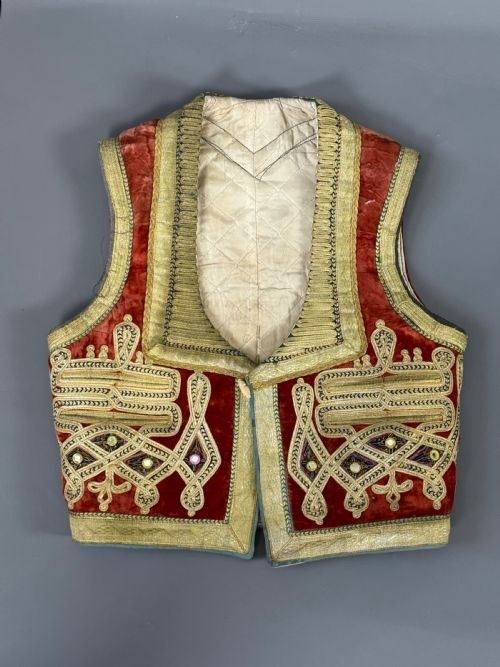


Antique Turkish Textile
These antique turkish textile pieces bring centuries of Ottoman and Anatolian craft into modern rooms through rich embroidery and flatweave rugs.
Antique Turkish Textile
An antique turkish textile encompasses a diverse range of items from waistcoats and jackets to cushions, prayer rugs, and wall-hanging panels. These pieces reflect the rich heritage of Ottoman court workshops and Anatolian tribal weavers.
Buyers exploring this category most frequently encounter nineteenth-century works, including embroidered fragments, silk tülbent scarfs, and nomadic saddle bags. Many pieces display the intricate metal-thread work and velvet covers characteristic of the region.
The assortment spans formal court creations and nomadic flatweave rugs, demonstrating the varied domestic and ceremonial functions these textiles served across different communities in Turkey.
Materials and construction methods
Artisans combined silk, wool, cotton, and linen as base fabrics, frequently embellishing them with metallic thread and velvet applique. These foundational materials determined the drape, weight, and initial purpose of each garment or furnishing.
Skilled hands executed gold embroidery and specialised techniques such as the cicim embroidery seen on Konya panels. Nomadic weavers also produced sturdy flatweave structures for functional items like saddle bags and kilim cushions.
Nomadic weavers packed their worldly belongings into colourful saddle bags that now double as striking floor cushions.
Evaluating quality and execution
Quality reveals itself in the density of the weave, the precision of the gold-embroidered motifs, and the preservation of the original fibres across silk, wool, and velvet. Finer examples retain their structural integrity and display complex, harmonious colour palettes.
The distinction between standard domestic items and superior court or tribal commissions lies in the intricacy of the design work and the finesse of the needlework utilised by the maker.
The Antique Turkish Textile Glossary
- Cicim
- A decorative embroidery technique where supplementary pattern wefts are added to a flatweave foundation, creating raised surface designs.
- Kilim
- A tapestry-woven carpet or flatweave rug produced without a pile, traditionally utilised for floor coverings or cushions.
- Heybe
- A traditional nomadic saddle bag woven in pairs, designed for transport and featuring distinct tribal geometric patterns.
- Juval
- A large face-bag used by nomadic groups for storage inside a tent, characterised by intricate flatweave or pile construction.
Antique Turkish Textile: Frequently Asked Questions
How were antique turkish textile items used?
Many of these textiles served practical daily functions within nomadic and settled households, from horse transport bags to warm coverlets and garments.
Other pieces held ceremonial or decorative roles, functioning as wall-hanging panels, prayer rugs, or waistcoats for court and domestic attire.
How do I care for silk and wool textiles?
Protect delicate silk, wool, and metallic thread pieces from direct sunlight to prevent fading and degradation of the natural and metallic fibres.
Limit handling and avoid harsh cleaning methods, opting instead for gentle dusting and professional textile conservation advice when needed.
What is the difference between court and tribal pieces?
Court textiles from Ottoman workshops often utilise refined materials like velvet and dense gold-embroidered silk intended for formal garments and coverlets.
Tribal pieces from Anatolian and Kurdish groups tend to focus on durable flatweave rugs, saddle bags, and geometric cushions made from wool.
How can I date an Ottoman textile?
Dating relies on examining the specific types of natural dyes, the weave structure, and the style of metallic thread or embroidery used in the piece.
Comparative analysis with documented examples from periods such as the eighteenth and nineteenth centuries helps establish a reliable timeline.