

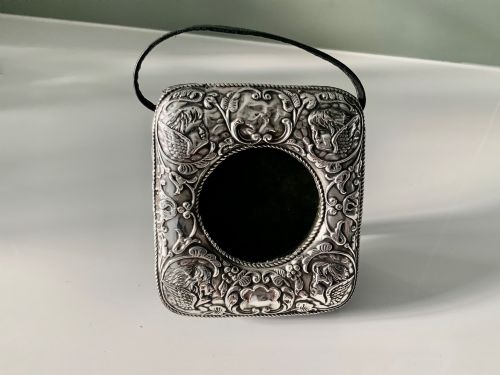
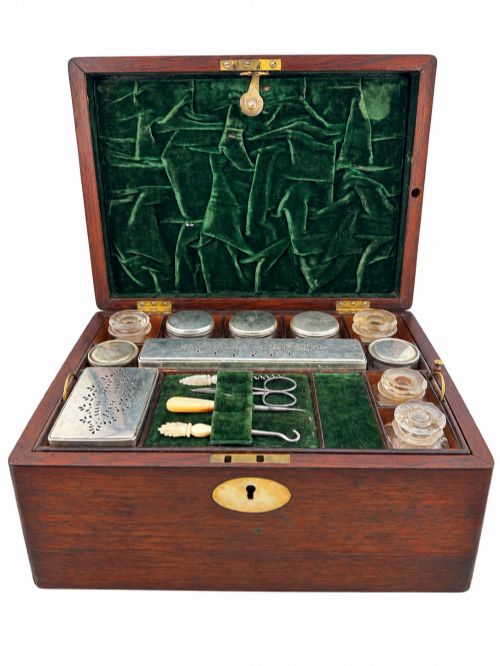
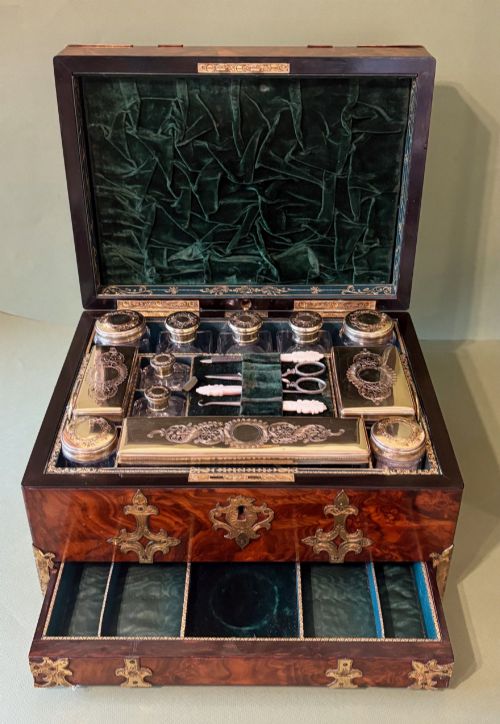
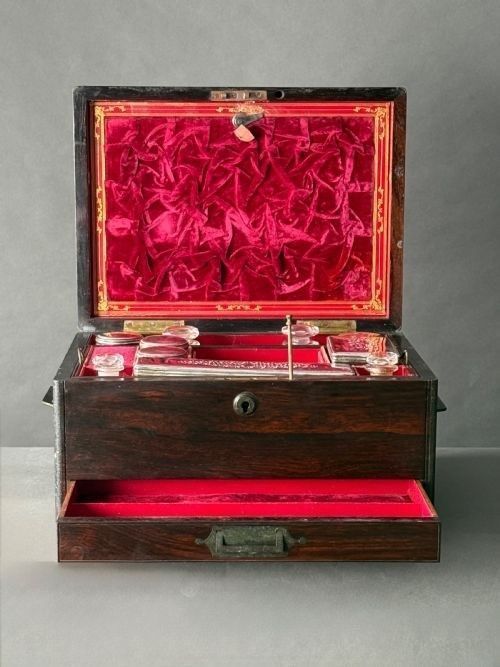


Antique Travelling Vanity
These antique travelling vanity pieces are portable personal dressing sets and fitted cases designed to hold grooming gear, scent bottles and jewellery on the move.
Antique Travelling Vanity
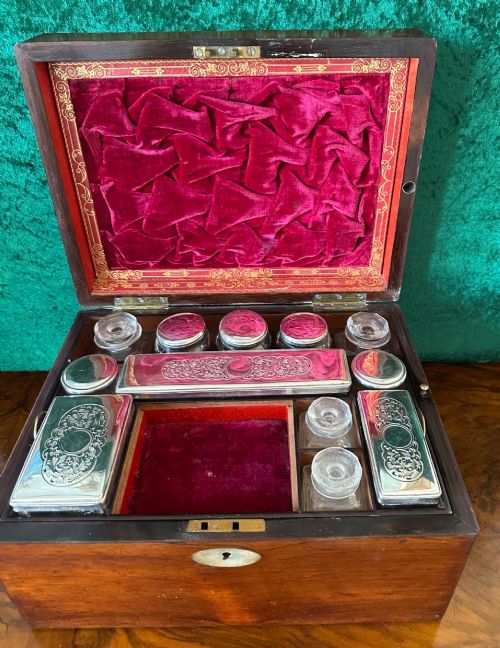
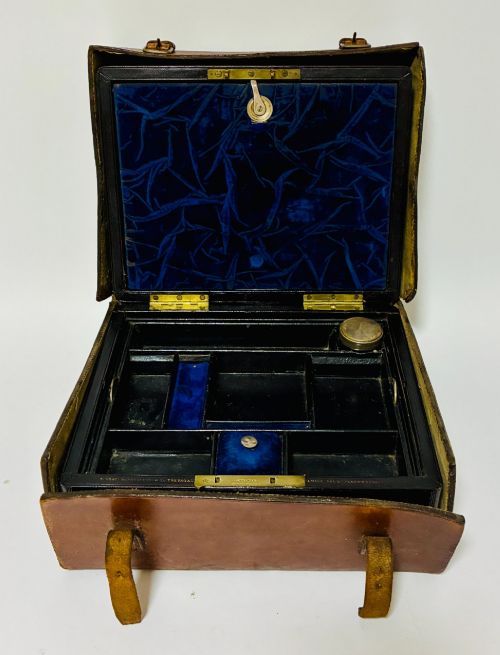
An antique travelling vanity encompasses fitted wooden dressing boxes, leather suitcases, campaign mirrors and compact grooming kits built for movement. Buyers find these items grouped across periods spanning the Georgian era, the Victorian reign, Edwardian years and Art Deco designs into the 1930s.
The most common formats on this page are Victorian wooden vanity boxes, leather suitcases from the early twentieth century and portable campaign mirrors. Makers constructed these objects for personal grooming and storage during transit by rail, carriage or ship.
The selection ranges from ladies' jewellery and dressing cases lined in velvet to gentleman's valet cases fitted with silver, glass bottles and razors. Originating mainly in England, pieces occasionally reflect broader reach through materials and styles like Qing dynasty influences or Sorrento olive wood.
How they were made
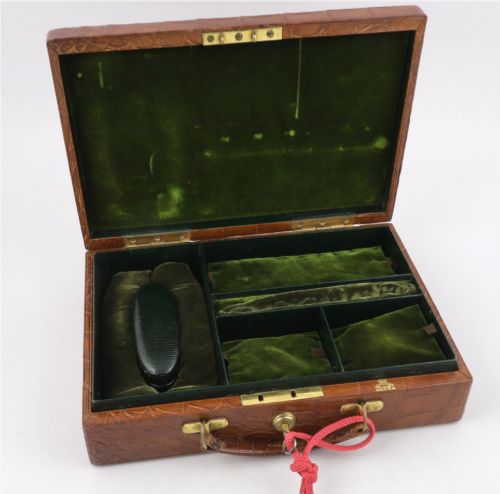
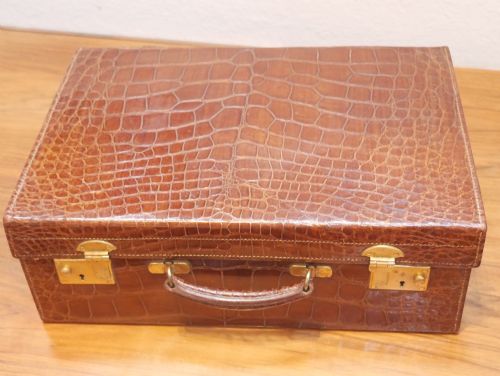
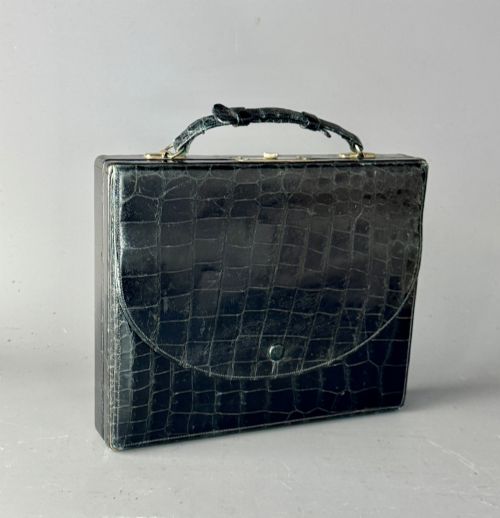
Craftsmen built these portable objects using dense timbers such as mahogany, rosewood, burr walnut and coromandel, frequently reinforcing corners and edges with brass banding. Outer shells often utilise structured leather, vellum or crocodile skin over wooden carcases to withstand the rigours of travel.
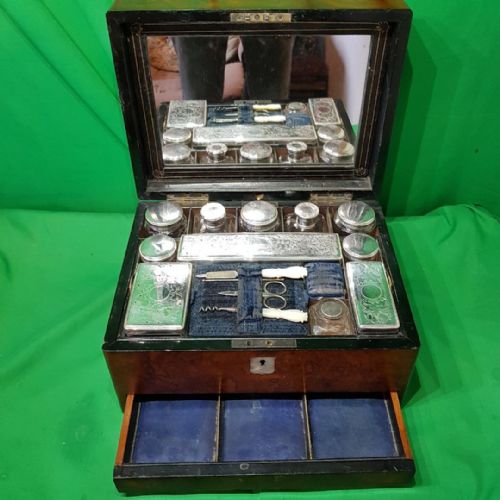
Interiors rely on precision carpentry to house removable trays, secret compartments, mirrors and fitted glass bottles with silver caps. Metals like sterling silver and silver gilt appear alongside enamel, velvet and celluloid to equip the internal compartments for personal care.
Antique Travelling Vanity Retail Price Guide 2026
Typical asking prices for travelling vanity among the pieces listed under this phrase on Sellingantiques today, from the lower quarter to the upper quarter. They describe what is for sale here now, not the wider market.
Some gentleman's valet cases include hidden compartments designed specifically to conceal pocket watches and collar studs from prying eyes.
What varies in quality
The distinction between standard and superior pieces rests on the complexity of the internal fitment and the integrity of the materials. Fine examples feature complete, matching sets of cut glass scent bottles with original silver mounts, intricate Tunbridge ware or solid exotic woods like coromandel rather than simpler veneers.
Maker attribution elevates a piece significantly, with signed items from established firms demonstrating superior metalwork, precise lock mechanisms and original leather outer boxes. The survival of the complete fitted interior, from manicure tools to folding mirrors, defines the highest tier of these travelling boxes.
J C Vickery·F. West·Jane Brownett Alexander Jones·Drew & Sons·John Pound·Harrods·Asprey
The Antique Travelling Vanity Glossary
- Campaign case
- A portable piece of furniture or container designed for military officers or travellers, typically featuring brass corners and flush handles for durability.
- Dressing box
- A fitted box containing compartments, mirrors and jars for personal grooming and cosmetics, often doubling as a writing surface.
- Coromandel
- A dense, heavily figured exotic timber from Asia with dark brown and black graining, utilised in high-end nineteenth-century luxury boxes.
- Guilloche enamel
- A decorative metal technique where a precise geometric pattern is engraved beneath a translucent layer of coloured enamel.
- Burr walnut
- Timber taken from a tree growth featuring intricate, swirling grain patterns highly prized for decorative box veneers.
Antique Travelling Vanity: Frequently Asked Questions
What is an antique travelling vanity?
An antique travelling vanity is a portable box or suitcase fitted with compartments, mirrors, scent bottles and grooming tools designed for personal care while away from home.
These pieces range from compact leather cases to elaborate wooden dressing boxes lined with velvet and silver.
How were these boxes used?
Travellers used them to transport personal cosmetics, jewellery, shaving gear and grooming accessories securely during journeys by carriage, train or ship.
The fitted interior ensured that glass bottles and silver items remained protected against movement in transit.
How do I date a vanity case?
Dating relies on material choices, construction methods, locks, and hallmarks found on internal silver components. Georgian and Victorian pieces often feature heavy hardwoods and brass banding, while Edwardian and 1920s versions lean towards leather suitcases and Art Deco styling.
How do I care for leather cases?
Leather and crocodile skin cases require stable humidity and gentle cleaning to maintain the flexibility of the hide without damaging historic surfaces.
Wooden boxes benefit from periodic polishing of the timber and careful handling of internal velvet linings.