


Antique Travel Writing Desk
An antique travel writing desk is a portable companion for correspondence, built to journey across empires and counties alike.
Antique Travel Writing Desk
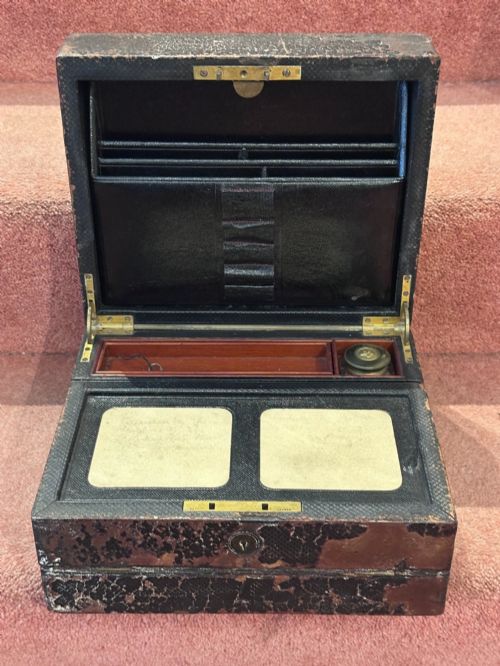
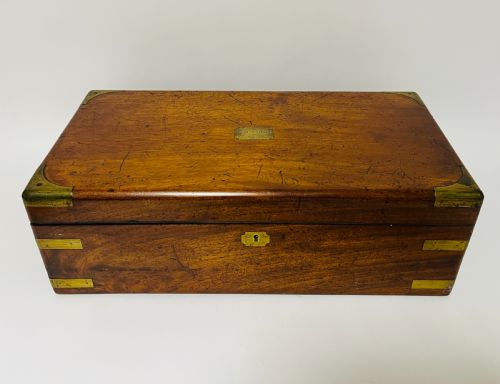
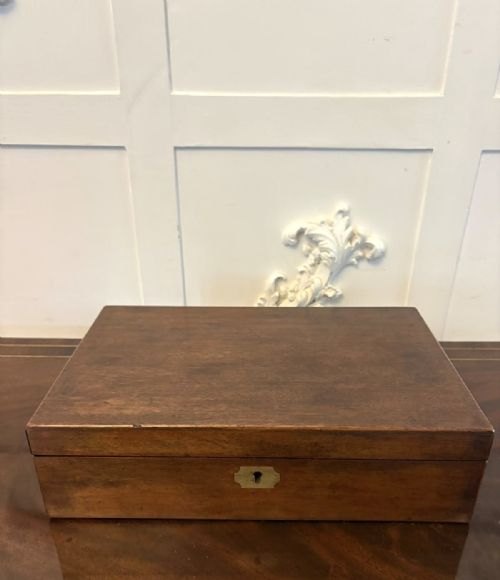
The antique travel writing desk appears in several guises across the Georgian and Victorian periods, taking the form of folding slopes, fitted boxes, and campaign chests. These pieces were designed to be packed into carriages or ships, folding down into secure wooden volumes with recessed brass handles and corner brackets.
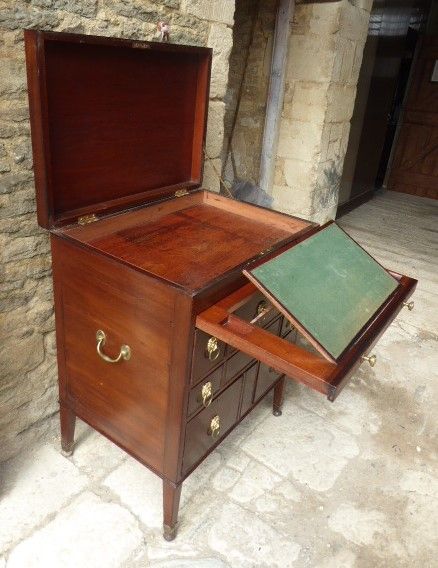
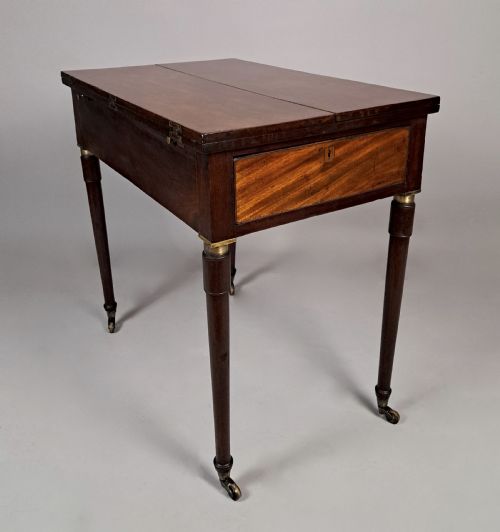
Most examples encountered on this page date from the nineteenth century, built in mahogany, walnut, or teak, with interiors lined in leather and fitted with inkwells and secret compartments. Alongside box slopes, the selection includes larger military secretaire chests and travelling bureaux resting on tables.
Materials and construction
Cabinet makers utilised dense hardwoods such as mahogany, walnut, camphor wood, and teak to withstand the rigours of transit without warping. These timbers were often bound in brass corners and straps to protect the edges from knocks during deployment.
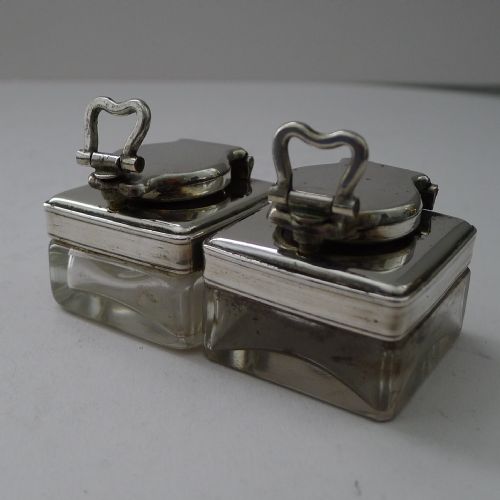
Interiors combined fine leather writing surfaces with glass and silver plate inkwells, baize linings, and concealed drawers released by hidden spring catches. Folding mechanisms relied on robust brass hinges and flush-fitting locks designed to keep papers secure on the move.
Listings feature items spanning the eighteenth, nineteenth, and early twentieth centuries, constructed in mahogany, walnut, camphor wood, teak, and crocodile skin.
Craftsmanship and appointment
Quality rests upon the integrity of the timber selection, the crispness of brass mounts, and the complexity of the internal fittings. Superior boxes display figured veneers like burr walnut or rosewood, coupled with well-executed secret compartments and signed maker's plaques.
Simpler utilitarian pieces made for military service prioritise sturdy construction over decorative flourishes, whereas domestic examples feature fine tunbridgeware inlay or crocodile leather bindings tailored for stationery.
Gillows·Mappin & Webb·P&F Shafer
The Antique Travel Writing Desk Glossary
- Campaign chest
- A chest of drawers built in two or more sections with recessed brass pulls and corner brackets, designed for easy dismantling and transport by military officers.
- Writing slope
- A portable box with a sloping hinged lid that opens to reveal a writing surface, pen tray, and compartments for ink and paper.
- Secretaire
- A cabinet or chest incorporating a fitted writing drawer or drop-front desk section behind a larger exterior drawer facade.
- Tunbridgeware
- A form of decorative woodwork characterised by tiny mosaic tiles assembled from different coloured woods to form geometric or pictorial patterns.
- Secret compartment
- A hidden drawer or recess concealed behind movable panels, accessible only by operating a secret spring or removing a specific divider.
Antique Travel Writing Desk: Frequently Asked Questions
How do I open the secret compartments?
Many writing slopes conceal small drawers behind false pen trays or sliding vertical partitions. Investigating these requires checking for spring-loaded catches or panels that slide only when specific internal dividers are lifted.
Forcing these mechanisms damages the surrounding wood. Patience and careful examination of the grain alignment usually reveal the concealed path.
Were these desks used only by the military?
While many portable desks were commissioned by officers on active campaign, a significant proportion served civilian travellers, clergymen, and diplomats. These domestic versions often used more decorative veneers like rosewood or burr walnut rather than plain mahogany or camphor.
The inclusion of travelling inkwells and letter racks shows they were intended for correspondence on the road rather than battlefield dispatches.
How should I clean the leather writing surface?
Original leather writing surfaces benefit from gentle dusting with a dry cloth rather than wet washing. Conditioning wax can preserve old skiver leather if it feels dry, but modern cleaning agents should be avoided.
Keeping the surface free of moisture prevents the underlying wood from swelling and preserves any gold tooling that remains along the edges.
Can I travel with an antique writing box?
Travelling with these pieces is entirely feasible provided the glass inkwells are emptied and removed to prevent leaks. The exterior brass locks and carrying handles were originally engineered for transit.
Protecting the outer veneer from modern luggage friction keeps the polish intact during journeys.