



Walnut Campaign Lap Desk
A walnut campaign lap desk is a portable wooden writing box built for travel, offering a folding slope and compartments for correspondence on the move.
Walnut Campaign Lap Desk
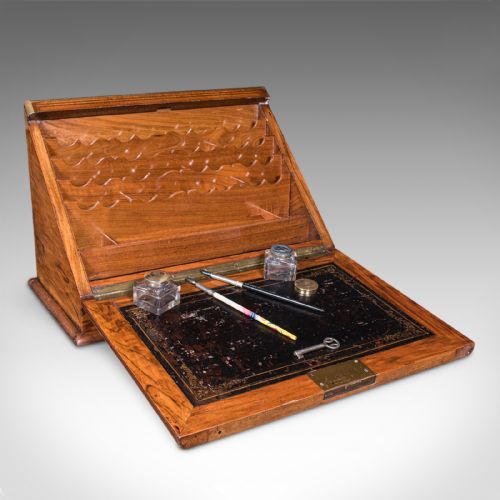
When you search for a walnut campaign lap desk, you are looking at portable writing boxes designed for travel during the Georgian, Regency, William IV, and Victorian periods. These pieces open to form a sloping surface lined for writing, with internal compartments for paper, ink, and pens.
How they were made
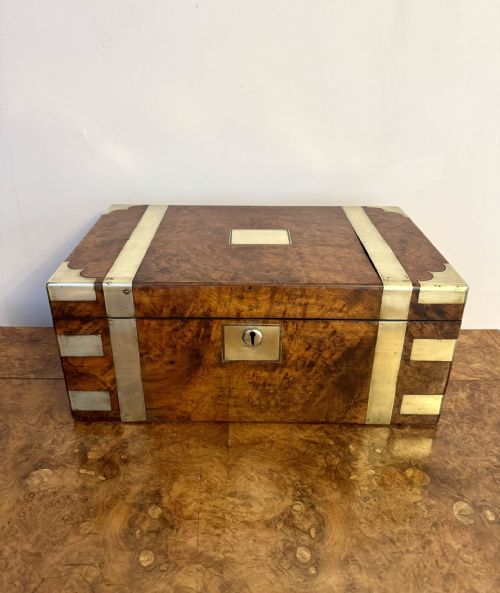
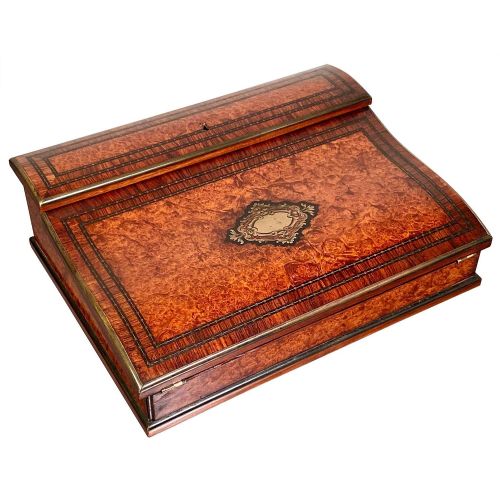
Cabinet makers constructed these boxes using solid walnut or applied veneers of burr and figured walnut over a secondary timber carcase. The exterior surfaces were frequently accented with brass banding, flush-fitting campaign handles, and brass corner mounts to protect the wood during transport.
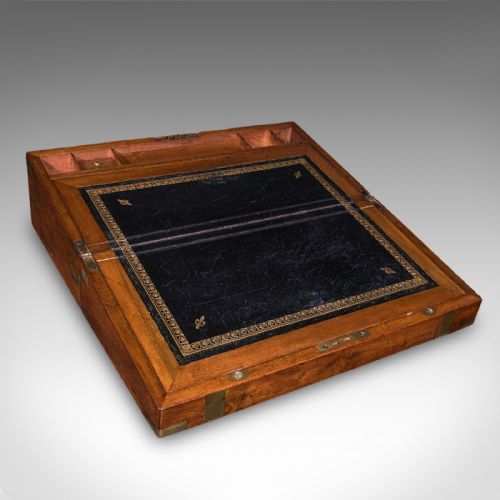
The folding writing surfaces were traditionally lined with leather to provide a smooth plane for quill or pen. Interiors were fitted with small wooden drawers, partitions for letters, and sometimes secure locking mechanisms like a Bramah lock operated by a matching key.
Secret drawers tucked away behind false panels ensure your private thoughts stay hidden, even from the person polishing your desk.
What varies in quality
The standard of a walnut campaign lap desk often depends on the choice of timber, with highly figured burr walnut veneers marking out finer examples. The precision of the brass work, from flush corner mounts to engraved escutcheons, indicates the level of care taken in construction.
Internal complexity also distinguishes individual pieces, particularly those featuring well-integrated secret drawers or specialised stationery compartments. The presence of original hardware, such as functioning locks and matching keys, contributes to the integrity of the piece.
Mappin and Webb
The Walnut Campaign Lap Desk Glossary
- Burr walnut
- A veneer taken from the knotted growth of a walnut tree, prized for its swirling grain patterns. It adds distinct visual texture to the exterior of a box.
- Brass bound
- A method of reinforcing the exterior edges and corners of a box with brass strips and plates. This provides structural protection during travel.
- Writing slope
- A portable box with a hinged lid that opens to form an inclined writing surface. It typically houses compartments for paper and writing implements.
- Secret drawers
- Concealed small drawers hidden behind removable partitions or false bottoms within the box. They were used to store valuables or sensitive letters.
- Bramah lock
- A high-security cylindrical lock patented by Joseph Bramah in the late eighteenth century. These locks are frequently found on better quality nineteenth-century boxes.
Walnut Campaign Lap Desk: Frequently Asked Questions
What is a walnut campaign lap desk?
A walnut campaign lap desk is a portable wooden box designed for writing while travelling, featuring a hinged sloping lid and internal compartments for stationery.
These pieces were used during the Georgian, Regency, and Victorian periods by individuals who needed a portable workspace on journeys.
How were these desks used?
Owners opened the hinged box to create an inclined writing surface lined with leather, keeping paper, inkwells, and pens stored safely inside.
Secret drawers within the interior provided secure storage for correspondence, coins, or small personal items while on the move.
How do I date a walnut writing box?
Dating relies on stylistic details, timber choices, hardware types, and construction methods associated with periods like the Regency or Victorian eras.
Brass binding, flush campaign handles, and cabinet maker signatures or lock types can also help narrow down the decade of manufacture.
Can I use one for daily writing?
Many of these boxes remain sturdy enough for contemporary use as decorative storage or portable desks in a modern home.
Care should be taken with antique leather surfaces, original brass hardware, and delicate internal mechanisms during regular handling.