



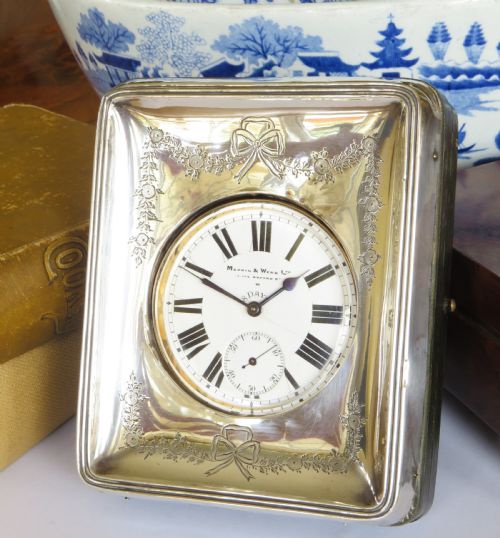
Antique Travel Desk
An antique travel desk offers a portable workspace, bringing sturdy mahogany, fitted leather, and polished brass into motion.
Antique Travel Desk
When you search for an antique travel desk, you encounter pieces designed to hold writing materials, timepieces, and personal effects on the move. These items span Georgian campaign tables, Victorian writing boxes, and Edwardian leather-bound accessories.
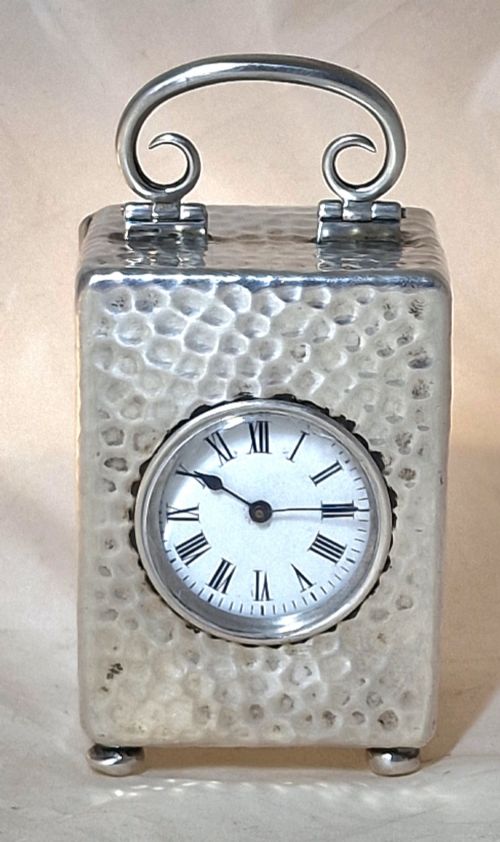
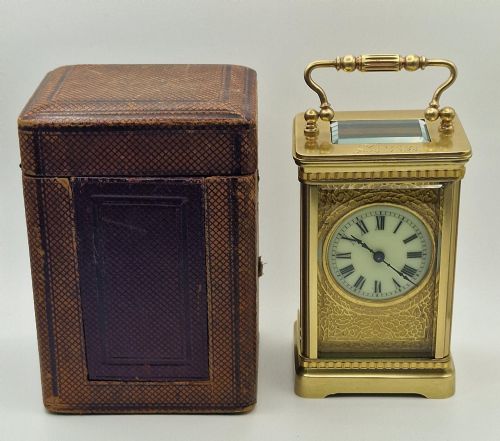
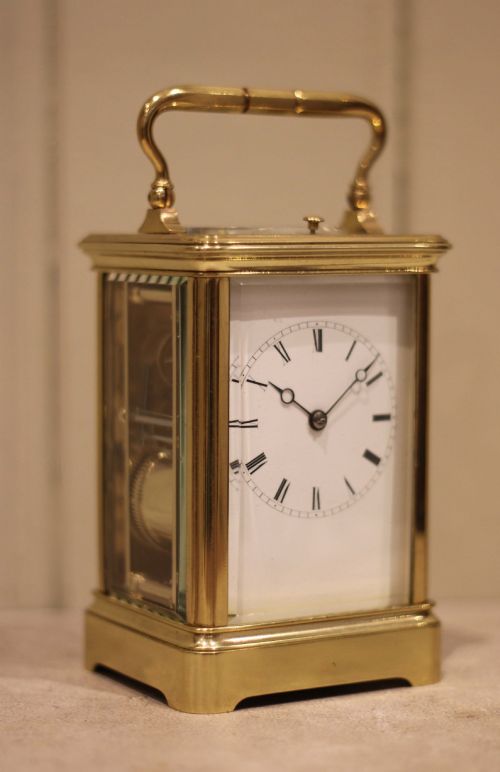
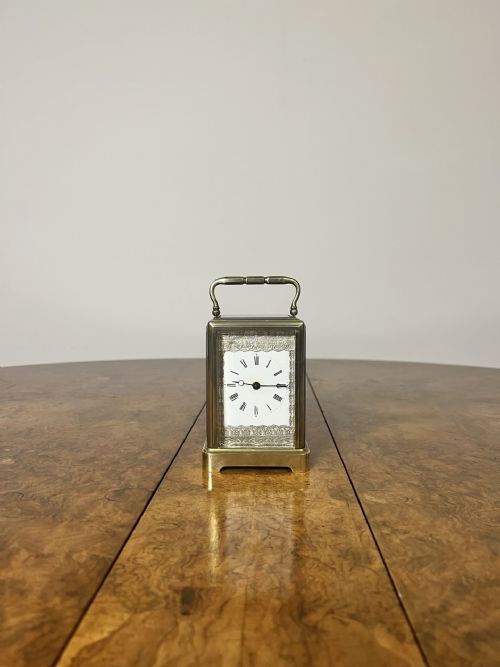
You meet a variety of forms on this page, including carriage clocks in brass and gilt cases, folding campaign desks, and travelling inkwells in glass and silver plate. French and English examples predominate, dating from the eighteenth century through to the Edwardian era.
Many of these objects incorporate fitted interiors, secret compartments, and original travel cases. They reflect a period when portable writing and timekeeping required robust construction to withstand long journeys.
How they were made
Cabinet makers utilised dense hardwoods such as mahogany, constructing campaign chests and writing slopes with flush brass handles and protective corner brackets. These structural elements allowed pieces to endure transit without sustaining damage to their joints.
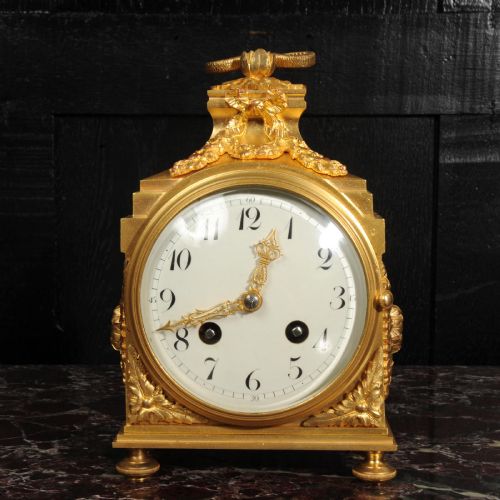
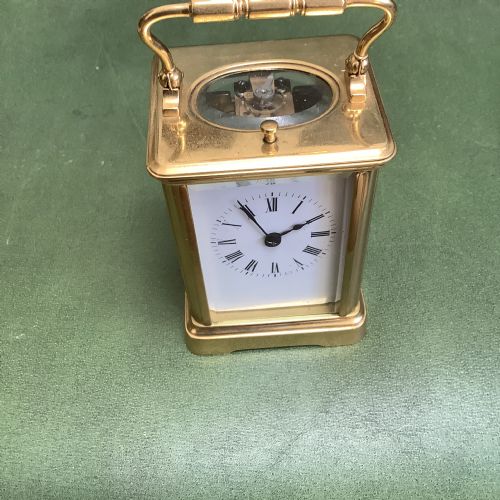
Metalworkers cast and engraved brass, gilt brass, and ormolu for carriage clock cases, travelling mounts, and inkwells. Clockmakers fitted Swiss and French movements into these housings, often incorporating repeat striking mechanisms and alarm functions.
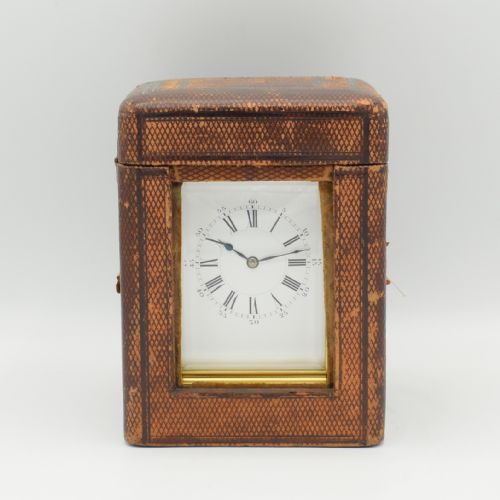
Leather workers bound writing boxes and travel cases, lining interiors with velvet or leather and mounting glass flasks with silver and enamel collars. These mixed media constructions combined durability with refined desk organisation.
Antique Travel Desk Retail Price Guide 2026
Typical asking prices for travel desk among the pieces listed under this phrase on Sellingantiques today, from the lower quarter to the upper quarter. They describe what is for sale here now, not the wider market.
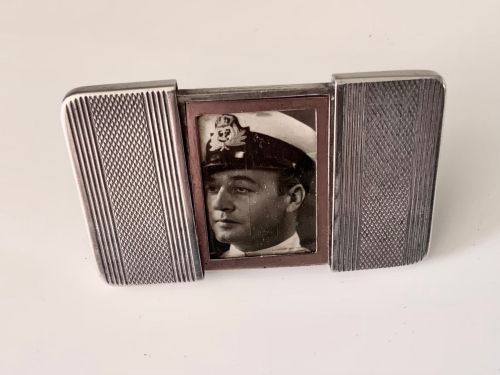
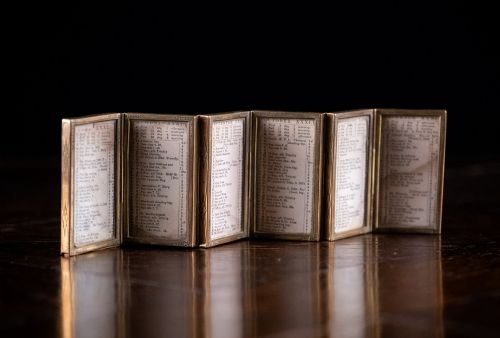
Miniature glass-glazed travelling mounts managed to carry a six-fold London almanac from 1878 safely across the miles.
What varies in quality
The degree of hand-engraving on brass cases and the complexity of internal fitted compartments separate standard production from superior pieces. Fine carriage clocks display fully engraved gilt brass framing, while better writing slopes feature secret drawers and well-executed joinery.
The integrity of original movements and fitted travel cases dictates the standing of a timepiece. Signed mechanisms by established makers and surviving leather outer cases enhance the structural and historical completeness of the object.
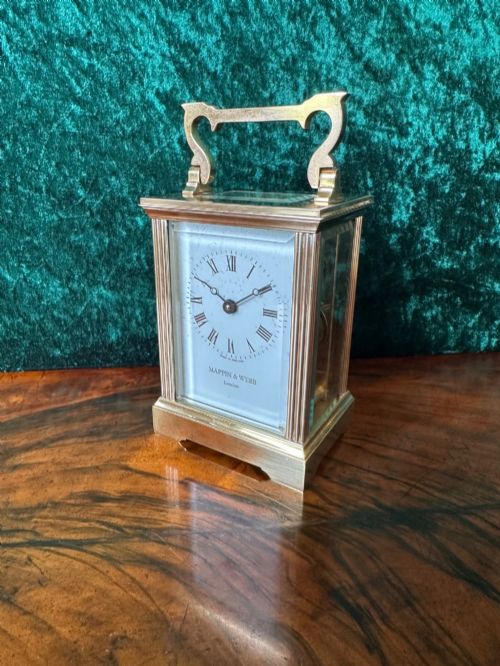
Henri Jacot·Mappin & Webb·Pickford of London·Antoine Redier·Duverdrey & Bloquel·Asprey London·Gillows
The Antique Travel Desk Glossary
- Carriage clock
- A portable spring-driven clock designed for travelling, typically housed in a brass and glass case with a swing handle on top. These clocks often include striking or alarm mechanisms.
- Writing slope
- A portable box with a slanted writing surface that opens to reveal compartments for stationery, inkwells, and pens. Many feature secret drawers hidden beneath the interior fittings.
- Campaign chest
- A modular set of drawers constructed in sections with brass corners and recessed carrying handles, built to be dismantled and transported easily on military campaigns.
- Gorge case
- A stepped brass carriage clock case style with a distinctively shaped top moulding, characteristic of better-quality French timepieces.
- Divit qalamdan
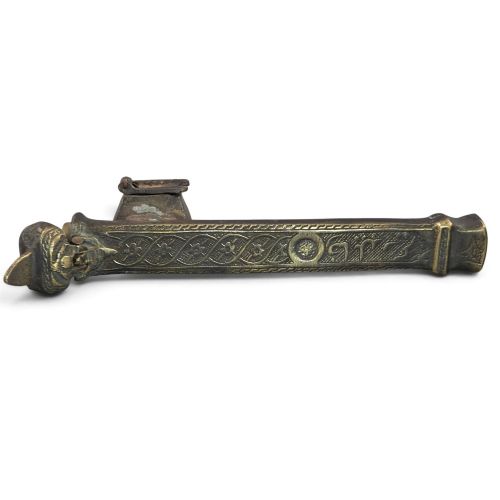
- A traditional portable writing set and ink case, often made of brass, used by Ottoman scribes and travellers to hold reed pens and ink.
Antique Travel Desk: Frequently Asked Questions
What is an antique travel desk?
An antique travel desk is a portable writing box, campaign desk, or slope designed to hold stationery and writing materials securely during journeys.
These pieces typically feature folding surfaces, internal compartments, and durable timber construction with brass mounts.
How do carriage clocks work?
Carriage clocks operate on spring-driven movements rather than pendulums, allowing them to keep time while being transported.
Many examples include platform escapements, striking mechanisms, and travel cases to protect the glass and brass housing.
How do I date a campaign chest?
Campaign chests are dated by examining their timber, construction methods, brass hardware, and secondary woods used in the drawers.
Georgian and Victorian examples often feature dovetail construction, flush brass handles, and sectional carcasses designed for military transport.
Were travel desks used only for military campaigns?
While many campaign desks and chests were commissioned by officers for military service, civilians also used portable writing slopes and travelling inkwells for ordinary travel.
Lawyers, diplomats, and wealthy travellers relied on these fitted boxes to maintain correspondence away from home.