


Antique Transfer Print Plate
An antique transfer print plate brings crisp pictorial scenes and blue and white stories directly onto earthenware and pearlware bodies from the nineteenth century.
Antique Transfer Print Plate
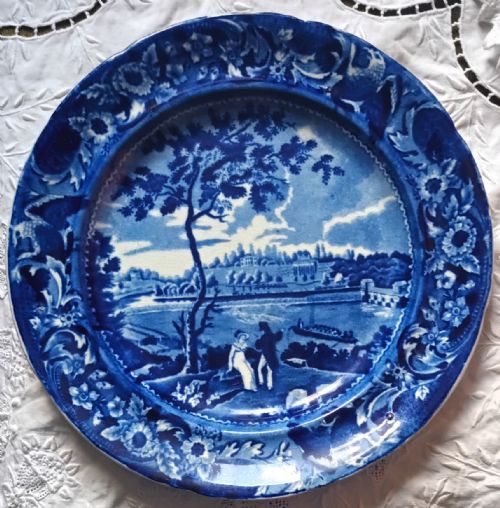
An antique transfer print plate is a ceramic or earthenware dish decorated using a printed tissue pull rather than hand painting. When buyers search for an antique transfer print plate, they encounter nineteenth century wares including Georgian and Victorian examples featuring pictorial patterns.
The selections on this page span decorative plates, platters, and serving dishes created in Britain. Most pieces display blue and white designs such as classical ruins, pastoral subjects, and Chinoiserie motifs.
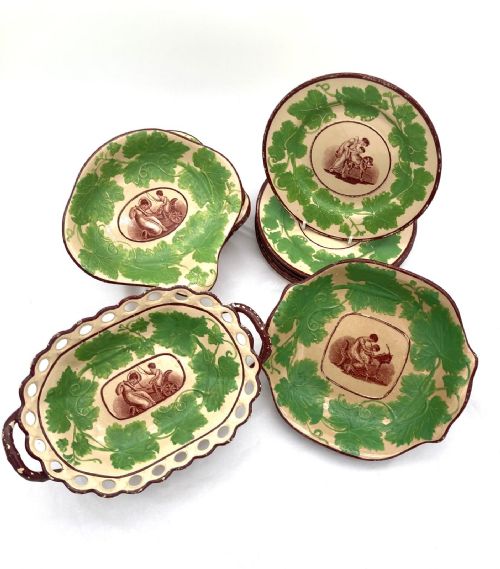
Forms range from standard dinner and dessert plates to large meat platters, bread stands, and child's plates. These items serve as functional table ware or decorative wall pieces depending on their size and depth.
How they were made
Potters shaped earthenware, pearlware, and ceramic bodies before applying cobalt pigment designs via copperplate transfer printing. This method allowed intricate patterns like London Bridge and pictorial landscapes to be replicated cleanly across multiple pieces.
A lead glaze or ceramic glaze was then applied over the printed surface to seal the pigment and give the pottery a glossy finish. Firing in kilns set the cobalt blue securely beneath or within the glaze layer.
Buffalo bread stands and elephant motifs remind us that nineteenth century dinner tables doubled as safari adventures.
What varies in quality
Quality rests in the clarity of the transfer print and the crispness of the cobalt pigment against the ceramic or pearlware body. Finer examples show sharp outlines in complex pictorial scenes without blurring or smudging.
The sophistication of the pattern and the reputation of the maker distinguish superior plates from standard kitchenalia. Wares associated with documented factories command attention for their artistic execution.
Stubbs·Thomas Lakin·Brameld and Co·John Rogers and Son·Spode
The Antique Transfer Print Plate Glossary
- Transfer print
- A decorative technique where an engraved copper plate transfers a design onto paper, which is then pressed onto unfired pottery. This process revolutionised ceramic decoration in the nineteenth century.
- Pearlware
- A refined earthenware developed in the late eighteenth century with a bluish glaze that pooled in recesses to mimic Chinese porcelain. It forms the base of many early nineteenth century plates.
- Prattware
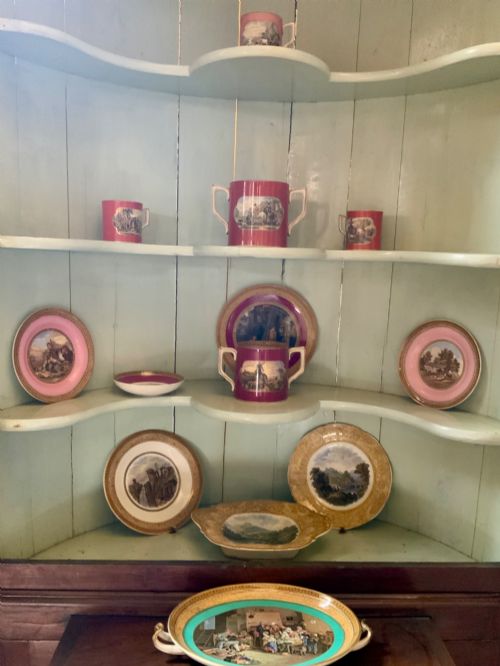
- A type of English earthenware often associated with multicoloured underglaze decoration produced during the nineteenth century. These items include plates and service pieces.
- Chinoiserie
- A European artistic style reflecting Chinese motifs and imaginary landscapes, frequently utilised in blue and white transfer patterns. It appears prominently on Georgian and Victorian dishes.
- Meat plate
- A large, sturdy platter or dish designed for serving joints of meat at the dining table. They often feature deep wells and channels to catch juices.
Antique Transfer Print Plate: Frequently Asked Questions
How do I date an antique transfer print plate?
Dating relies on the ceramic body type, such as pearlware versus later earthenware, alongside stylistic clues in the border designs. Makers' marks on the reverse also help narrow the period.
Changes in glaze formulation and blue pigment tones further assist in distinguishing early nineteenth century pieces from later Victorian examples.
Can I use these plates for serving food?
While these items were originally created for dining and serving, age and historic glaze composition mean many modern collectors prefer display use. Hand washing preserves the historic ceramic surface.
Avoid thermal shock from microwaves or dishwashers to protect the nineteenth century glaze and earthenware body.
What is the difference between earthenware and pearlware?
Pearlware is an earlier refined earthenware featuring a subtle blue tint in the glaze that pools around foot rims. Standard earthenware of the later nineteenth century often presents a whiter or creamier ground.
Both materials accept transfer printing well, but pearlware generally indicates production closer to the early eighteen hundreds.
Why are some plates called meat platters?
Meat platters are substantially larger than standard dining plates and were made to hold roast joints at the table. Their heavier ceramic construction prevented cracking under large portions.
Many incorporate drainage channels and wells to collect cooking juices during carving.