



Antique Tortoiseshell Jewellery
Antique tortoiseshell jewellery comprises wearable pieces and small receptacles fashioned from hawksbill shell, prized for translucent amber and dark brown mottling.
Antique Tortoiseshell Jewellery
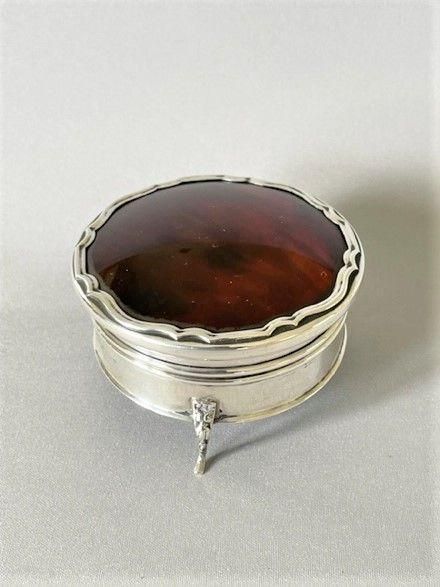
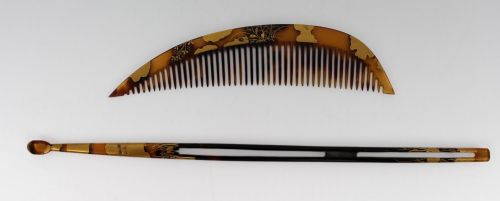
Antique tortoiseshell jewellery and associated dressing table items encompass a diverse range of personal adornments and receptacles spanning the nineteenth and early twentieth centuries. Pieces found in collections typically include trinket boxes, brooches, pendants, earrings, and hair ornaments reflecting Victorian, Edwardian, and Regency tastes.
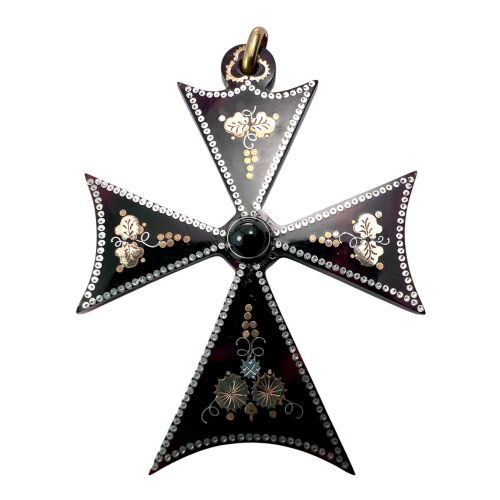
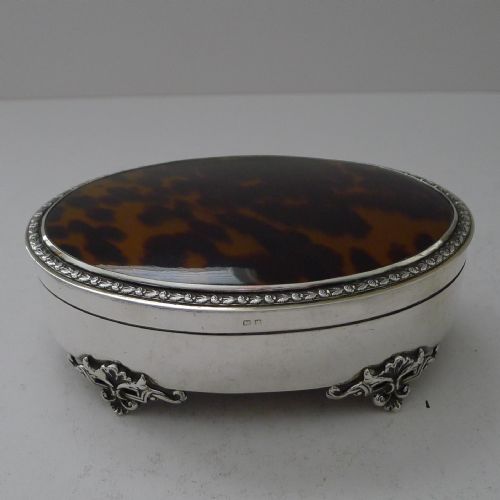
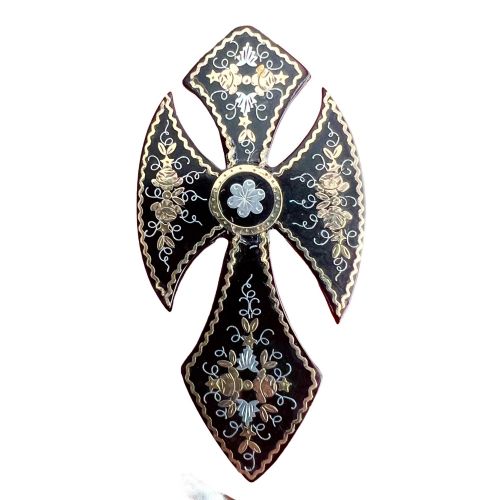
The material appears across distinct regional styles, from English sterling silver mounted boxes to Japanese hair ornaments and Dutch Colonial caskets. Buyers encounter smaller personal ornaments like gold-inlaid crosses alongside larger fitted dressing table boxes intended for vanity surfaces.
Materials and construction
Craftsmen utilised the natural scutes of the hawksbill turtle, exploiting the material's inherent warmth, flexibility, and layered transparency. Plates were softened in hot water, pressed into moulds, and scraped to thin tolerances before being joined.
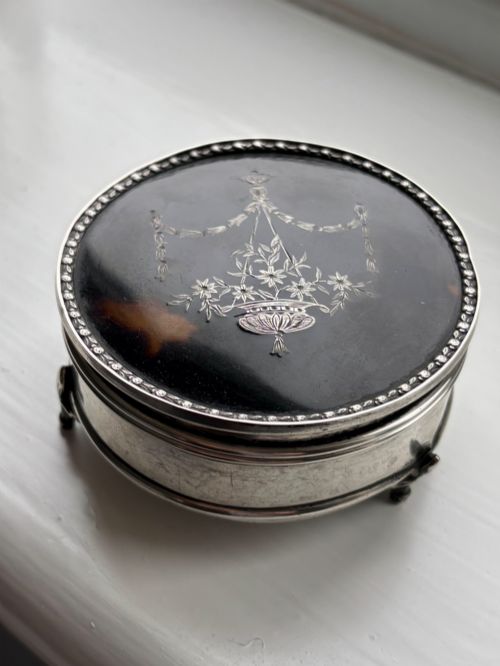
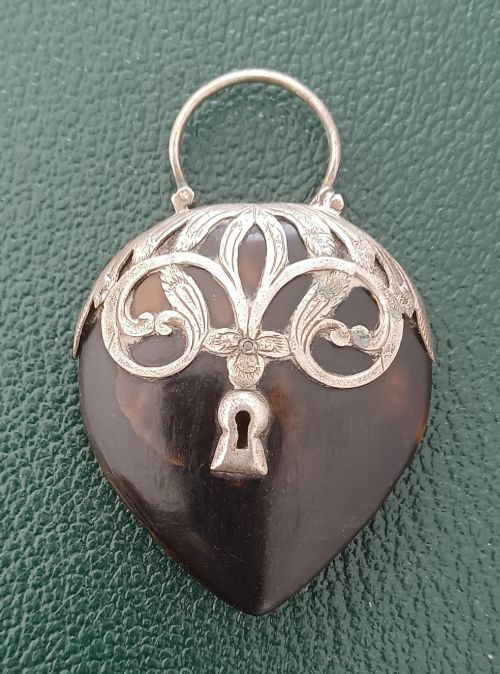
Metal mounts in sterling silver, gold, and brass frequently secure the organic shell. Piqué work involves inlaying tiny pins and strips of gold and silver directly into the softened surface to create intricate geometric or floral patterns.
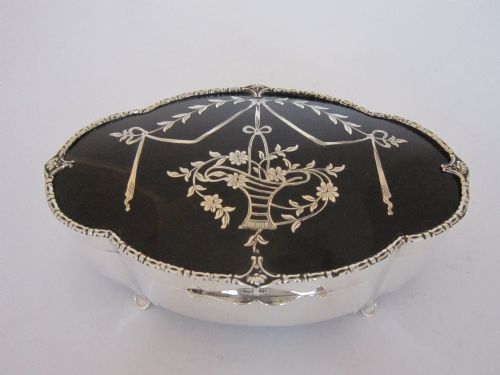
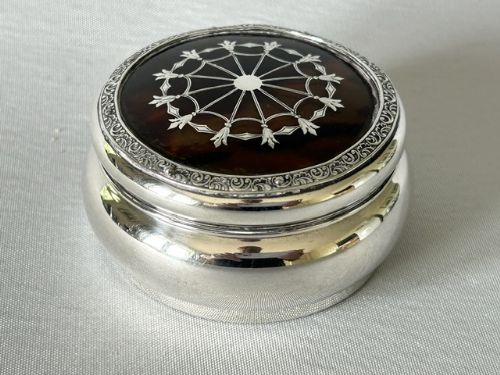
Listings feature Victorian and Edwardian trinket boxes combining tortoiseshell with sterling silver and intricate piqué gold inlay.
Evaluating craftsmanship
Quality rests upon the depth of the natural mottling and the precision of the metal inlay. Finer examples display seamless joins where multiple shell plates are fused together under heat.
The delicacy of the piqué work distinguishes superior items, requiring exact placement of gold and silver wire without fracturing the brittle ground. Hallmarked silver mounts and maker marks add documentary weight to the construction.
Ollivant & Botsford·Asprey & Co.·Lund Of Cornhill·William Comyns·Charles Boyton·James Deakin & Sons
The Antique Tortoiseshell Jewellery Glossary
- Piqué
- A decorative technique involving the inlay of gold, silver, or tortoiseshell pins into a tortoiseshell or ivory ground to form delicate patterns.
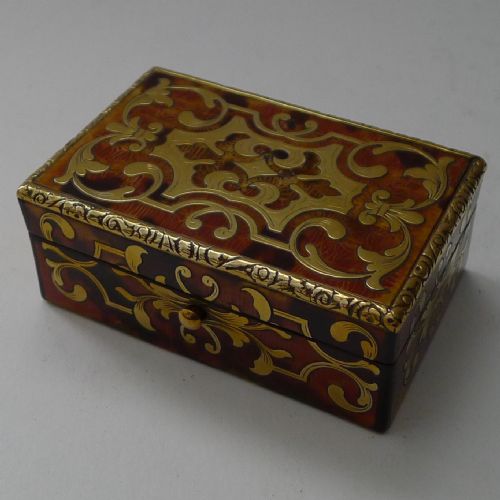
- Boulle
- A method of marquetry utilising tortoiseshell and brass inlaid together, named after the French cabinetmaker.
- Pique work
- The meticulous insertion of precious metals into organic materials using heat and pressure to secure tiny studs.
- Sterling silver
- An alloy of silver containing ninety-two point five percent pure silver and seven point five percent other metals, commonly used for box mounts.
Antique Tortoiseshell Jewellery: Frequently Asked Questions
How do I clean antique tortoiseshell?
Clean tortoiseshell gently using a soft, dry cloth to remove dust. Avoid chemical solvents, alcohol, or prolonged immersion in water, which can dull the natural sheen and warp the material.
Condition the surface occasionally with a tiny trace of mineral oil or almond oil applied sparingly with a lint-free cloth. Buff gently to restore the warm lustre.
Is antique tortoiseshell genuine?
Authentic antique tortoiseshell derives from the hawksbill turtle, possessing natural warmth, irregularity in the dark and amber mottling, and a layered structure under magnification.
Imitation materials, such as early plastics or celluloid, lack the organic depth and varied translucency found in genuine nineteenth-century examples.
How do I date a tortoiseshell box?
Dating relies on accompanying silver hallmarks, construction methods, and stylistic cues. English silver mounts frequently bear assay office marks and date letters.
Hinges, interior fabric linings, and the style of the piqué inlay provide further context to narrow the period of manufacture.