

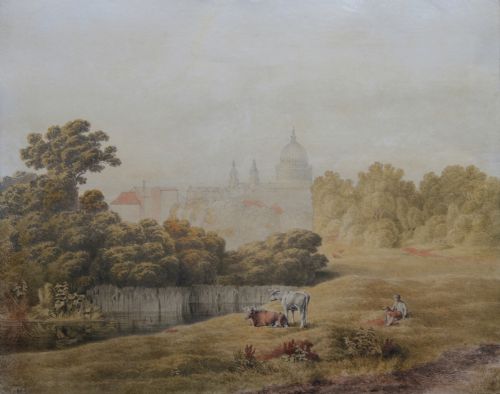
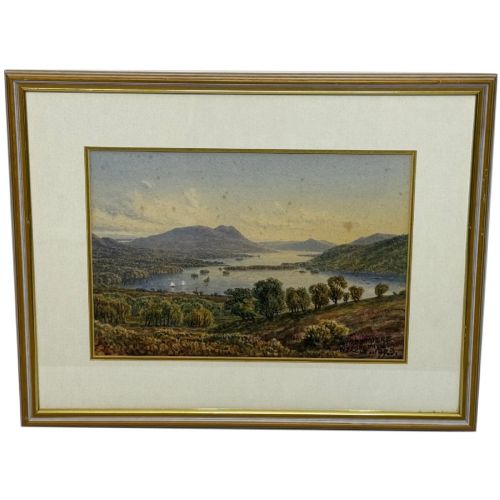
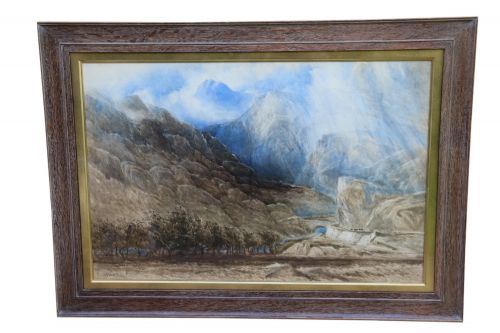


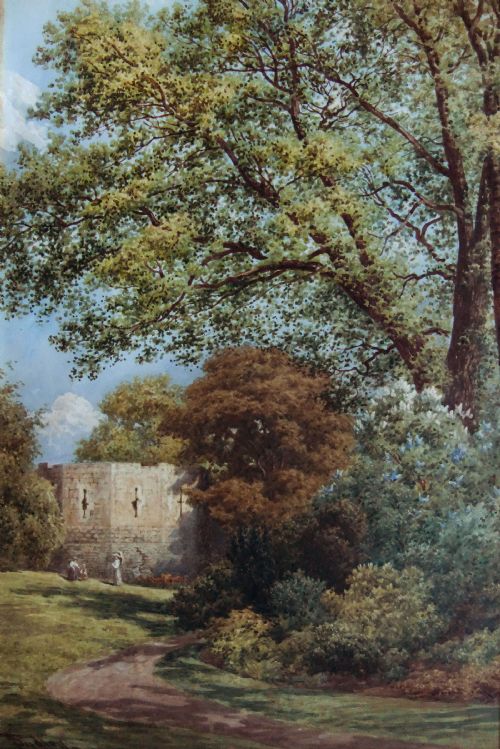


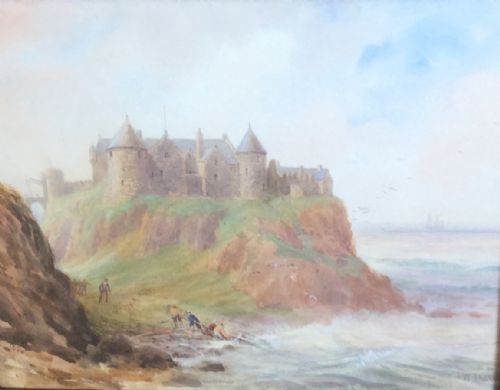


Antique Topographical Watercolour
An antique topographical watercolour captures a specific landscape or city view on paper, offering a direct record of places both familiar and distant.
Antique Topographical Watercolour
When you search for an antique topographical watercolour, you find framed paintings and wall art depicting specific places, monuments, and buildings. These works document locations ranging from English lakes and Welsh passes to Middle Eastern scenes and Italian landmarks.
The selections span various periods including the Georgian, Regency, Victorian, and Edwardian eras. You will encounter individual landscapes, architectural studies, and cityscapes executed on paper or board, often preserved behind glass in wood or gilt frames.
How They Were Made
Artists applied watercolour pigment and ink to paper or board to build up their compositions. Many works incorporate monochrome ink underdrawing beneath the washes of colour to establish architectural details and topographical accuracy.
Completed paintings were usually mounted and framed behind glass in wood or gilt frames to protect the delicate paper surface from moisture and light damage over the decades.
Antique Topographical Watercolour Retail Price Guide 2026
Typical asking prices for topographical watercolour among the pieces listed under this phrase on Sellingantiques today, from the lower quarter to the upper quarter. They describe what is for sale here now, not the wider market.
The listings feature works from the Georgian, Regency, Victorian, and Edwardian periods executed on paper and board.
What Varies in Quality
The quality of a topographical painting rests upon the sureness of the draftsmanship, the control of the pigment, and the precision of the perspective. Stronger works capture the specific light and atmosphere of a location rather than relying on formulaic formulas.
The preservation of the paper and the vibrancy of the pigments also distinguish examples. Works that retain their original framing and lack heavy fading or foxing sit higher in the range.
William Taylor Longmire·Henry Martin Pope·Thomas Cooper Moore·Amos Green·Tom Dudley·Claude Muncaster·William A. Macdonald·George De Paris·Herbert John Finn·Joseph William Carey
The Antique Topographical Watercolour Glossary
- Topographical watercolour
- A painting on paper that depicts a real place, building, or townscape with an emphasis on accurate recording. These works served as visual records before the widespread use of photography.
- Foxing
- Brown spots and patches that develop on old paper due to chemical reactions over time. This common form of ageing affects works kept in damp conditions.
- Wash
- A thin, fluid layer of transparent watercolour pigment spread across the paper. Artists use washes to create expansive skies or smooth expanses of water.
- Gilt frame
- A wooden picture frame coated with a thin layer of gold leaf or metallic paint. These frames were frequently used during the Victorian and Edwardian periods to display important watercolours.
Antique Topographical Watercolour: Frequently Asked Questions
Where should I hang these paintings?
Display topographical watercolours away from direct sunlight to prevent the pigments from fading. Interior walls with stable humidity levels protect the paper and the frame.
Keep them out of damp rooms like kitchens or unheated spaces to avoid paper degradation.
What is the difference between a landscape and a topographical painting?
A landscape focuses primarily on natural scenery, moods, and artistic composition. A topographical work records a specific real-world location or building with factual intent.
Topographical art often includes named views of towns, castles, and historical monuments.
Are these works always unique?
Yes, watercolours are hand-painted original works rather than mechanical reproductions. Even when artists painted multiple views of the same landmark, each sheet contains individual brushstrokes.
Sets of topographical paintings by the same hand remain intact as cohesive collections.