

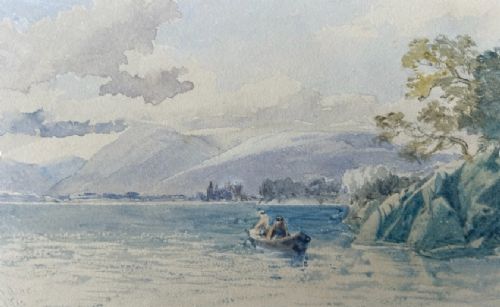


Blue Lake Watercolour
A blue lake watercolour brings the quiet expanse of water and sky straight to the wall.
Blue Lake Watercolour
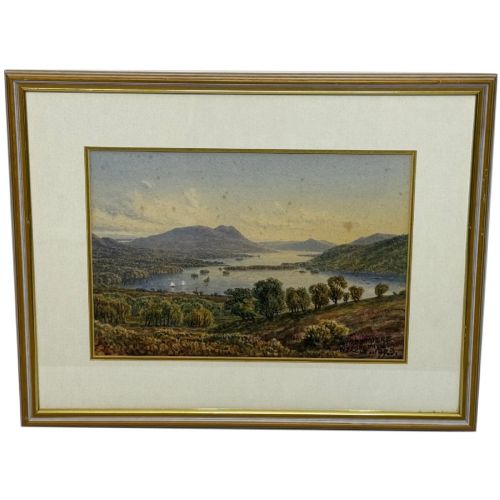
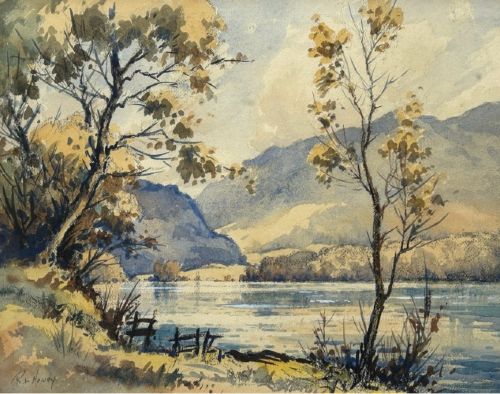
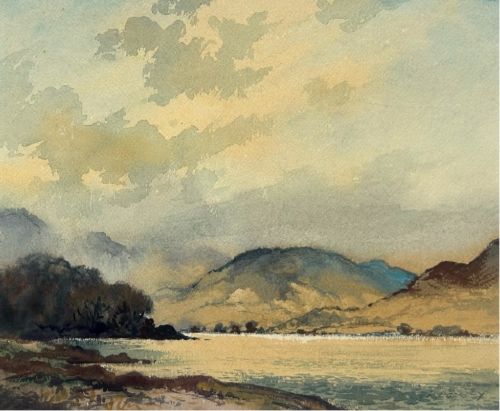
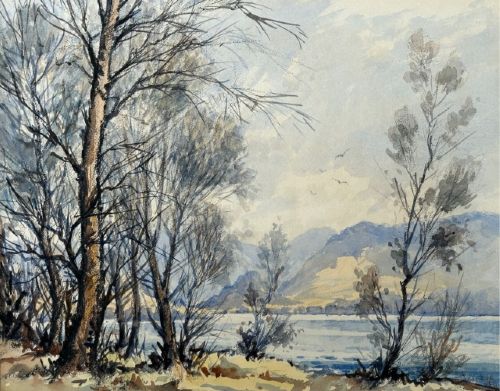
A blue lake watercolour captures bodies of water and surrounding landscapes through pigment applied to paper. These works range from Scottish and Cumbrian views to Italian and French scenes.
Buyers meet pieces spanning the Victorian and Edwardian eras, alongside mid-century British school examples and architectural prints. The selection includes both signed original paintings and topographical landscapes.
Depicting locations such as Windermere, Loch Awe, and Lake Garda, these artworks reflect various regional landscapes. The forms vary from framed paintings to wall art and architectural drawings.
How they were made
Artists apply watercolour pigment and ink onto paper support, sometimes employing gouache for heavier opacity. These mediums allow for fluid washes of blue and grey to represent water and atmospheric mist.
Many works are housed in period frames constructed from wood and gilded wood, occasionally protected by glass. Gilt accents on the framing enhance the visual depth of the painted scenes.
Blue Lake Watercolour Retail Price Guide 2026
Typical asking prices for blue lake watercolour among the pieces listed under this phrase on Sellingantiques today, from the lower quarter to the upper quarter. They describe what is for sale here now, not the wider market.
One American artist braved a French winter to capture the mist at St Mihiel.
What varies in quality
The sophistication of the brushwork and the handling of light define the upper tier of these watercolours. Works by named artists demonstrate a firmer command of composition and atmospheric perspective.
The preservation of the paper and the quality of the surrounding frame contribute to the overall standing of each piece. Superior examples retain their original pigment vibrancy without excessive fading.
William Taylor Longmire·Thomas Miles Richardson Jnr·Robert Leslie Howey·Claude Muncaster·Milton Drinkwater·Tom Dudley
The Blue Lake Watercolour Glossary
- Watercolour
- A painting method in which the paints are made of pigments suspended in a water-based solution. It is typically applied to paper to create translucent layers of colour.
- Gouache
- A water-based paint consisting of pigment and other inert materials designed to be opaque. It often appears alongside watercolour to add highlights and solid areas of tone.
- Gilt
- Covered thinly with gold leaf or gold paint. This finish frequently adorns the wooden frames enclosing 19th-century and Edwardian works.
Blue Lake Watercolour: Frequently Asked Questions
Where were these watercolours painted?
The works depict various bodies of water, including English lakes like Windermere and Coniston Water, alongside Scottish lochs and continental scenes in Italy and France.
Artists recorded specific topography ranging from Cumbrian landscapes to architectural pavilions and foreign lakesides.
How should I frame and hang a watercolour?
Watercolours require protection behind glass to prevent atmospheric damage and fading to the paper and pigment over time. Keeping them away from direct sunlight preserves the subtle blue and grey washes.
Matching the period of the frame to the Victorian or Edwardian date of the painting maintains historical consistency on the wall.
How do I identify the date of a piece?
Dating relies on artist signatures, stylistic markers of the Victorian or mid-century British school, and framing materials. Inscriptions on the reverse or front often name specific locations and years.
Paper type and stylistic movements such as 19th-century romanticism or post-war impressionism offer further chronological clues.
What is the difference between watercolour and gouache?
Watercolour relies on translucent washes that allow the white of the paper to shine through the pigment. This creates luminous effects for water and sky.
Gouache uses added binding agents to create an opaque medium, providing solid blocks of colour and distinct highlights within the painted landscape.