








Antique Topographical Engravings
Antique topographical engravings capture historic views and townscapes on paper, offering collectors a detailed window into past landscapes and architecture.
Antique Topographical Engravings
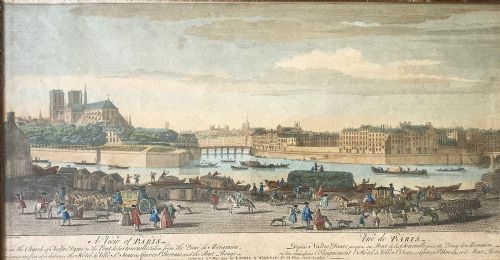
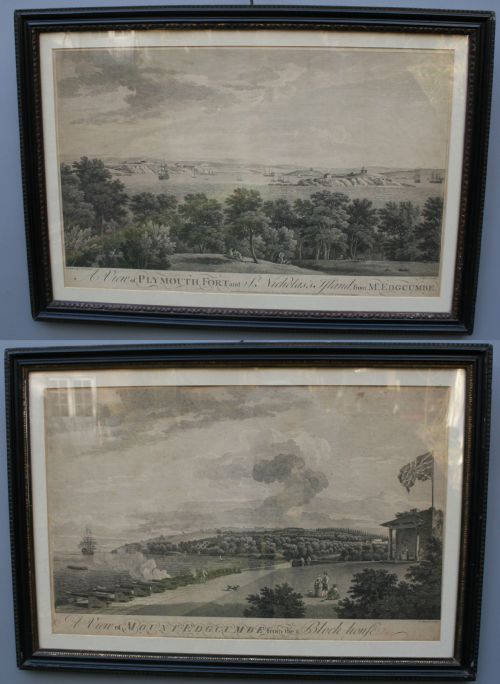
When you search for antique topographical engravings, you are looking at printed views of specific places, buildings, and rivers from centuries past. These works record historic townscapes, country seats, and distant lands before modern development altered their contours.
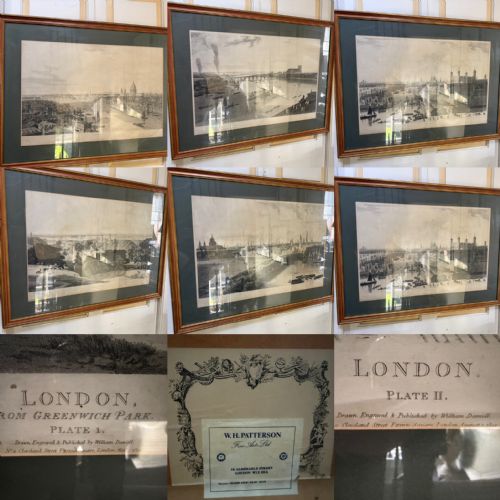
The pieces on this page span several centuries, reaching from the eighteenth century through the Regency and Victorian periods into the early twentieth century. You will encounter individual plates of specific cities alongside framed sets depicting rivers and regional maps.
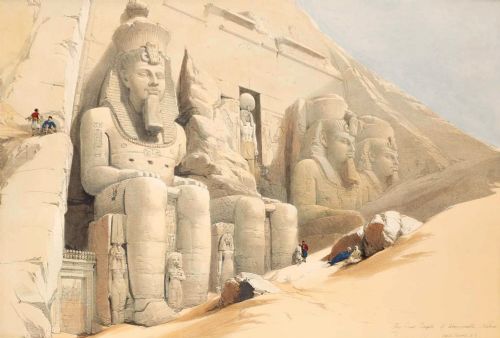
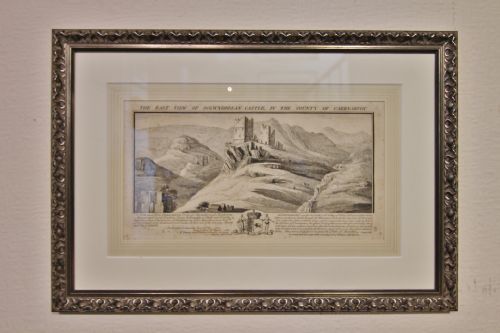
The subjects range from familiar London landmarks and the River Thames to views of Paris, the Middle East, and Welsh castles. Many examples arrive framed in wood, often accompanied by hand colouring or tinting applied over the ink lines.
What varies in quality
The clarity of the printed line and the precision of the plate impression distinguish finer works from simpler productions. Sharp details in distant buildings and clean margins demonstrate the care taken during the printing process.
The application of hand colouring creates another distinction between examples. Subtle, well-preserved washes applied to the ink lines enhance the visual depth without obscuring the original engraving underneath.
Antique Topographical Engravings Retail Price Guide 2026
Typical asking prices for topographical engravings among the pieces listed under this phrase on Sellingantiques today, from the lower quarter to the upper quarter. They describe what is for sale here now, not the wider market.
Listings feature paper works utilising ink, watercolour, and gold leaf, housed within wood and glass frames across the 18th, 19th, and early 20th centuries.
Robert Morden·Joseph Constantime Stadler·David Roberts·Edgar J. Maybery·J.R. Thompson
The Antique Topographical Engravings Glossary
- Engraving
- A printmaking technique where an artist cuts lines directly into a metal plate with a sharp tool to hold ink. This method produces crisp, precise lines capable of rendering fine architectural detail.
- Etching
- A process where acid bites lines into a metal plate covered with an acid-resistant ground. It allows for free-flowing lines that resemble hand-drawn sketches.
- Aquatint
- A printmaking variation that produces tonal areas resembling watercolour washes rather than simple lines. Printers use resin on the plate to create gradients of shade.
- Lithograph
- A planographic printing method based on the repulsion of oil and water on a flat stone surface. It enables faithful reproductions of drawings and paintings.
- Hand-coloured
- The practice of adding watercolour or tinting by hand to a monochrome print after the impression is made. This adds realistic colour to architectural and landscape views.
Antique Topographical Engravings: Frequently Asked Questions
What is an antique topographical engraving?
An antique topographical engraving is a printed image depicting a specific real-world location, such as a city view, building, or landscape, produced centuries ago.
These prints serve as historical records of how places appeared before modern architectural changes took place.
How should I hang topographical prints?
Keep framed paper works away from direct sunlight to prevent the ink and any added watercolour from fading over time.
Ensure the room maintains stable humidity levels to protect both the paper and the wooden framing materials.
How can I tell the period?
Examining the paper type, framing style, and any inscribed publication dates or artist signatures helps determine the era of creation.
Stylistic cues such as Regency or Victorian framing often provide clues to the decade when the print was published or mounted.
Are these prints hand coloured?
Many examples feature original or later hand-applied watercolour washes over the ink lines to add realistic hues to the scenery.
Close inspection under magnification reveals the delicate brushwork applied on top of the printed plate impression.