





Antique Landscape Prints Set
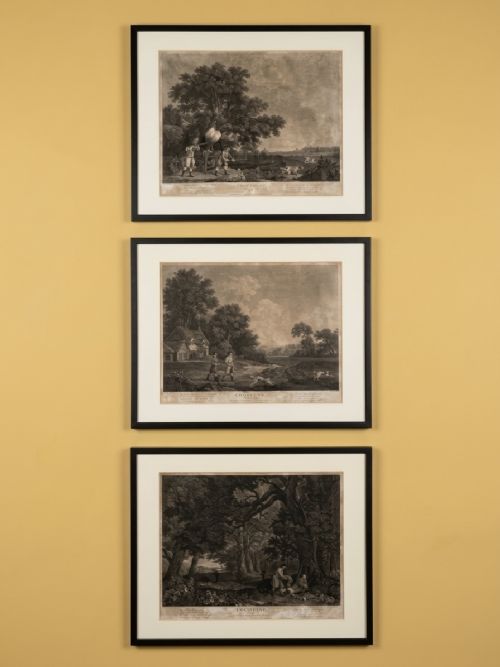
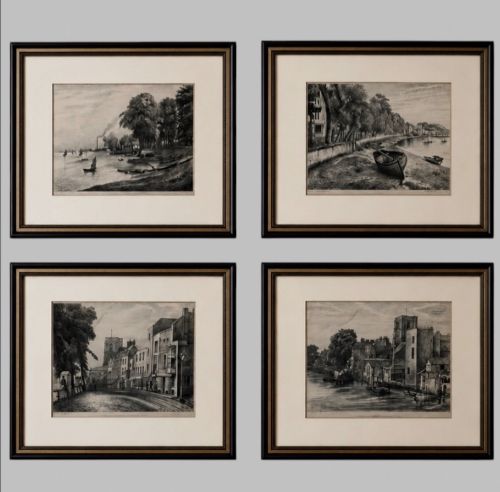
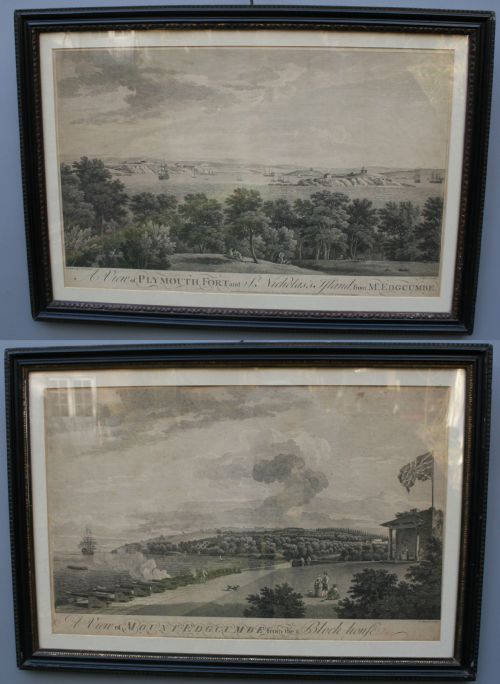
These antique landscape prints set selections bring topographical views and architectural scenes directly to your walls, offering framed groupings ready for hanging.
Antique Landscape Prints Set
When you search for an antique landscape prints set, you encounter curated groupings of historical paper works, ranging from four to twenty-seven pieces. The examples available here lean heavily into nineteenth-century subjects, including Georgian and Regency periods alongside Edwardian watercolours and 1900s topographical views.
You meet framed art prints and wall art spanning architectural scenes, river views of the Thames, and Alpine photography. The origins stretch across British, French, and Italian subjects, housed behind glass in wood, gilt wood, and burr walnut frames.
Materials and methods
The pieces in these sets utilise paper as the primary medium, often enhanced with hand tinting or watercolour application over engraved, lithographic, or photographic bases. Printers and artists employed traditional techniques to produce monochrome or coloured views of landmarks and foreign vistas.
Framing materials support the paper works, incorporating wood, oak, and burr walnut, frequently finished with gold leaf or gilt wood. Protective glass fronts safeguard the delicate paper surfaces from environmental damage while maintaining visibility.
Antique Landscape Prints Set Retail Price Guide 2026
Typical asking prices for landscape prints set among the pieces listed under this phrase on Sellingantiques today, from the lower quarter to the upper quarter. They describe what is for sale here now, not the wider market.
The periods represented span from 1750 through the Georgian, Regency, and Victorian eras into the Edwardian period.
Quality variations
Quality in these sets rests upon the crispness of the underlying impression and the precision of any hand-applied colour or tinting. Finer examples display sharp architectural lines and carefully preserved paper tones without excessive fading.
The framing and mounting standards also distinguish sets, where period-appropriate wood and gilt work enhance the presentation of the art. Complete groupings with uniform framing across all included pieces hold stronger visual cohesion.
William Day·David Roberts RA·H. Alken·Otto Pilny
The Antique Landscape Prints Set Glossary
- Lithograph
- A print made from a planographic process where an image is drawn on limestone or a metal plate with a greasy medium. This technique allows for fluid lines and tonal gradations.
- Engraving
- A print pulled from a metal plate into which lines are incised manually with a burin. It produces fine, sharp details particularly suited to architectural and topographical subjects.
- Hand Tinted
- Colour applied by hand to a monochrome print or photograph using watercolours or washes. This process adds vibrancy and highlights specific details within the scene.
- Topographical
- A genre of art focused on the accurate depiction of specific places, landscapes, or buildings. These views serve as historical records of locations as they appeared in past centuries.
Antique Landscape Prints Set: Frequently Asked Questions
How do I hang a set?
Arrange the pieces on a flat surface first to test spacing before putting fixings in the wall. Keep consistent gaps between frames to maintain visual balance.
Ensure your fixings match the weight of the wood and glass frames, using wall plugs where necessary for heavier oak or gilt frames.
Where should I place these prints?
Select rooms away from direct sunlight and damp conditions, such as hallways, studies, or living rooms. Paper and watercolour pigments fade permanently when exposed to strong ultraviolet light.
Keep frames away from radiators and moisture sources to protect the paper and wooden surrounds from warping.
How do I date an antique set?
Examine the printing technique, paper characteristics, and style of the framing materials. Hand-tinted engravings and early lithographs often carry publication dates or stylistic markers specific to the Georgian or Regency eras.
Look at the back of the frames for old labels, inscriptions, or framing methods that indicate the period of assembly.
Can I separate the prints?
Splitting a curated set disrupts the historical grouping and visual narrative established by the collection. Most buyers prefer to keep the pieces together as originally assembled.
Keeping the set intact preserves both the aesthetic balance and the collective provenance of the works.