


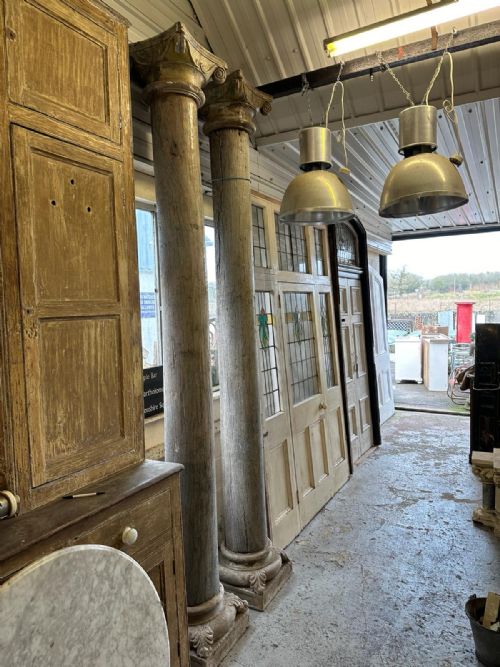


Antique Timber Pillars
These antique timber pillars bring architectural presence and sculptural form into a room, offering rich historical character.
Antique Timber Pillars
When you search for antique timber pillars, you are looking at structural supports, decorative columns, and carved fragments sourced from buildings and architectural salvage. These pieces range from monumental portico supports to smaller decorative pedestals and torchere stands.
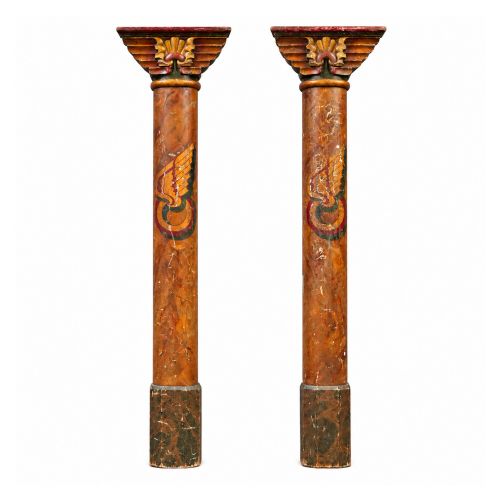
You are most likely to meet 19th century pairs and early 20th century examples on this page, often fashioned as architectural columns, bedposts, or carousel fairground components. The selection draws on periods spanning from the 17th century through the Georgian, Regency, and Edwardian eras, alongside Indian architectural carvings.
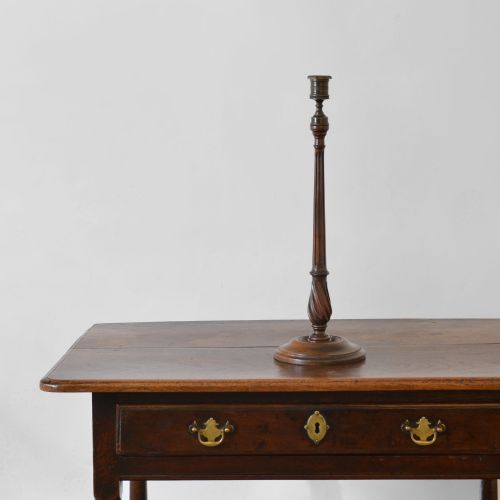
The forms vary widely from turned wood candlesticks to large hardwood columns featuring carved Ionic capitals and stone bases. Some pieces present as matched pairs ready for display, while others are offered as architectural salvage for restoration.
How they were made
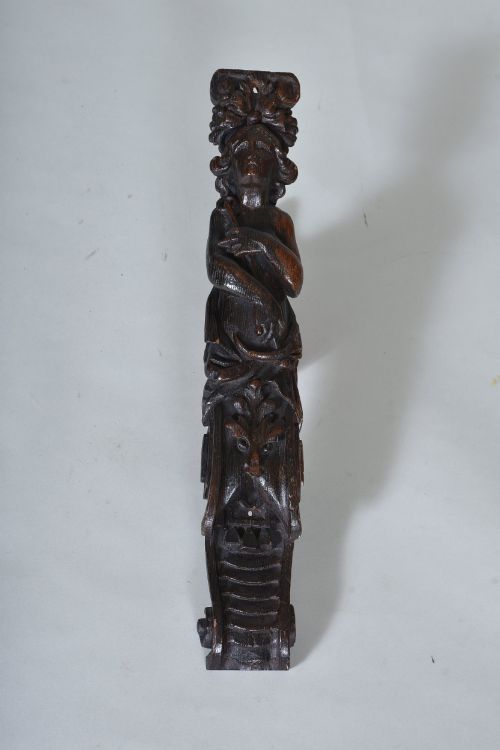
Maker construction relies heavily on solid woods such as mahogany, oak, pine, and diverse hardwoods, sometimes paired with stone bases or brass elements. Carvers shaped the timber by hand, producing intricate surface details, fluting, and classical capitals.
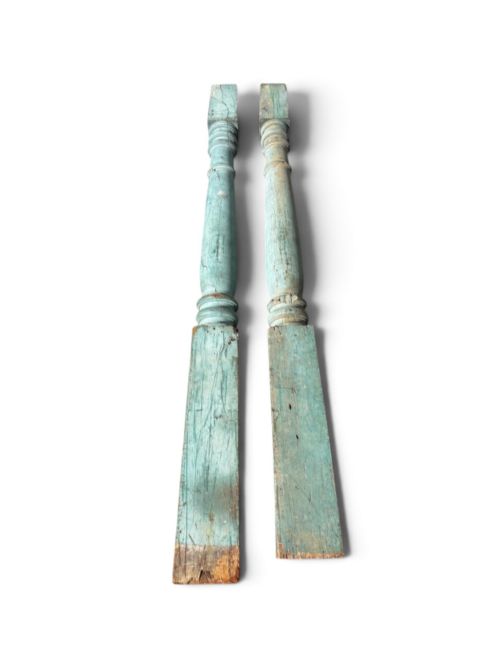
Surfaces frequently show traces of historic paint, stained finishes, or natural patination developed through age and use. Joinery techniques reflect the specific architectural or domestic function of each piece, from robust bedposts to decorative pedestals housing secret compartments.
One pair of carved wood pedestals includes a secret compartment for hidden treasures.
What varies in quality
The distinction between standard items and superior examples rests upon the crispness of the hand-carving and the integrity of the timber. Finely articulated capitals and robust proportions elevate a column above simpler turned supports.
Condition and originality dictate desirability, particularly where historic paint surfaces, carved detail, and matching pairs remain intact without excessive structural alteration.
The Antique Timber Pillars Glossary
- Ionic Capital
- The uppermost member of a column, distinguished by spiral scroll ornaments known as volutes. This classical feature appears frequently on architectural columns from the 19th century.
- Torchere
- A tall ornamental stand designed to support a light or decorative object. Examples in this category include carved pinewood standards from around 1900.
- Architectural Salvage
- Building components and decorative elements recovered from structures slated for demolition or alteration. These items retain their original utilitarian or decorative context.
- Pedestal
- A base or support for a statue, urn, or column. Some antique timber versions incorporate concealed compartments for storage.
Antique Timber Pillars: Frequently Asked Questions
How are antique pillars used in modern interiors?
These pieces function as striking decorative accents, framing doorways, supporting mantelpieces, or standing alone as sculptural objects.
Larger columns and pedestals also serve as display surfaces for art or plants within a room.
Can I use architectural columns outdoors?
Most antique timber pillars are intended for interior display and lack weatherproofing treatments suitable for constant exposure to the elements.
Placement in sheltered indoor environments preserves the historic timber, paint finishes, and carved details.
How do I identify a Georgian pillar?
Georgian pieces often display restrained classical proportions and fine hardwoods like mahogany, reflecting the architectural tastes of the 18th century.
Examining the turning technique and tool marks helps confirm the period manufacturing methods.
What does architectural salvage mean for timber pillars?
This term indicates that the pillars were rescued from older buildings, porticos, or fairgrounds rather than manufactured for the retail market.
Such items often show wear, paint layers, and weathering consistent with their previous structural service.