


Pine Architectural Salvage
Pine architectural salvage brings rescued timberwork and fittings into modern interiors, offering authentic period character for restoration projects.
Pine Architectural Salvage
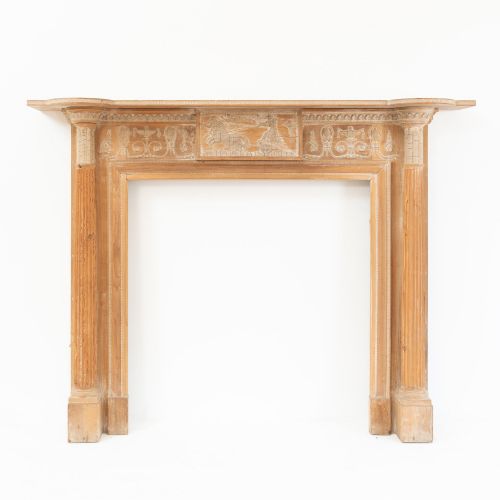
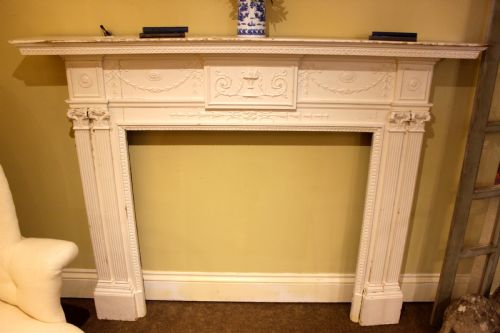
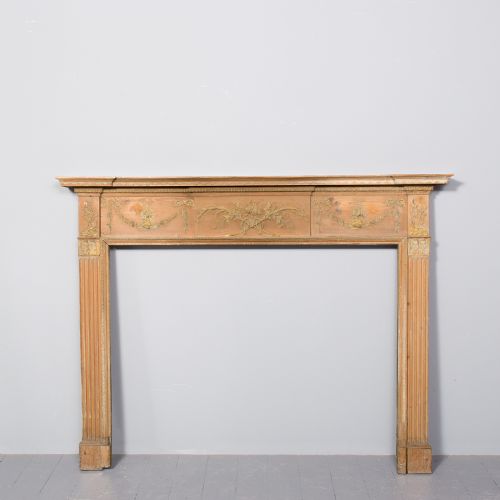
When searching for pine architectural salvage, buyers encounter reclaimed fixtures and structural elements drawn mainly from the eighteenth, nineteenth, and early twentieth centuries. These items range from fireplace surrounds and mantelpieces to doors, church tracery panels, and stained glass windows.
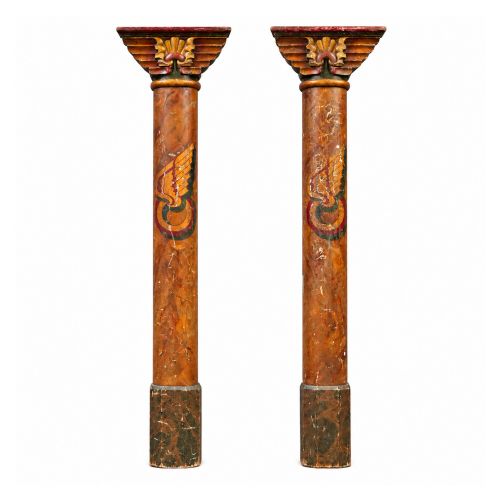
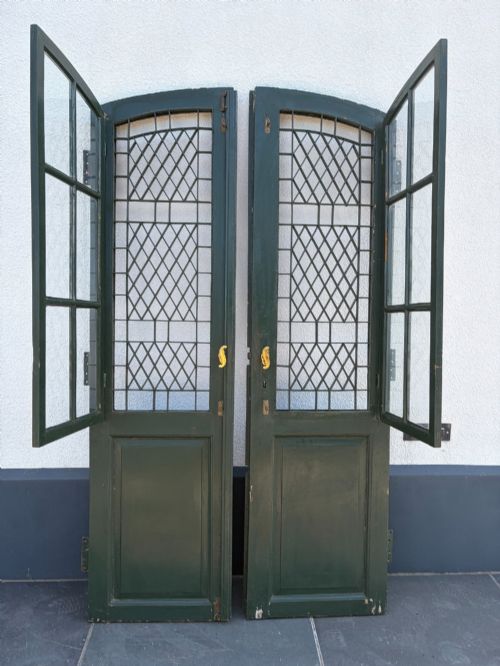
The pieces on this page reflect diverse domestic and institutional origins, including Victorian houses, chapels, railway carriages, and fairgrounds. French provincial shutters and Georgian neoclassical chimney pieces sit alongside Gothic Revival panels and Edwardian doors.
Fireplace surrounds and doors dominate the selection, often retaining traces of original paint schemes, scumble finishes, or bare timber surfaces. Buyers utilise these rescued elements to anchor interior renovations with genuine period heft.
Materials and construction
The primary material across the inventory is solid pine, frequently worked by hand and combined with secondary elements such as wrought iron hinges, lead cames, and glass panes. Carved details utilise gesso and applied wood mouldings to achieve architectural depth.
Surface treatments vary widely from plain timber left to wax or paint, to intricate hand-painted flowers on glass and simulated faux oak graining known as scumbling. Structural joinery relies on traditional methods suited to heavy use in ecclesiastical and domestic settings.
What separates the best from the rest
Quality in pine architectural salvage rests upon the crispness of hand carving, the integrity of original joinery, and the survival of secondary materials like wrought ironwork and stained glass. Pieces featuring detailed Gothic tracery or neoclassical proportions demonstrate superior artisan input.
The preservation of original surface finishes, whether early white paint, scumbled graining, or bare pine with natural patination, defines the upper tier of pieces. Proportion and scale also dictate value, with matched pairs and monumental dimensions commanding greater architectural utility.
The Pine Architectural Salvage Glossary
- Overmantel
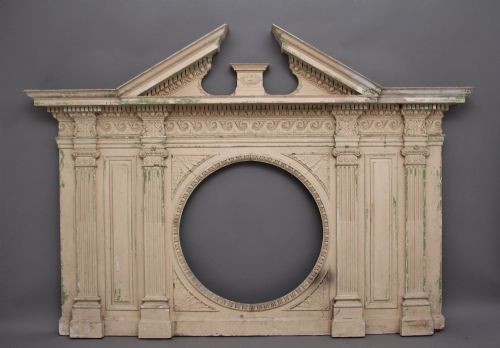
- A decorative panel or mirror frame designed to sit directly above a fireplace mantelpiece. They often feature carved mouldings or painted surfaces matching the fireplace surround.
- Scumble
- A decorative paint technique involving a translucent top layer dragged over a lighter base to imitate the grain of costlier timbers like oak. It appears on nineteenth-century cupboard doors and joinery.
- Tracery
- Openwork stonework or woodwork pattern forming decorative ribs within windows or panels. In pine salvage, this typically manifests as Gothic church arches and geometric screen partitions.
- Corbel
- A structural bracket projecting from a wall to support a weight above. Wooden examples in salvage are frequently carved with scrolls or foliage.
- Gesso
- A plaster mixture applied to wood surfaces as a base for intricate moulded ornamentation. It is found on eighteenth-century mantelpieces supporting crisp neoclassical relief details.
Pine Architectural Salvage: Frequently Asked Questions
How do I clean salvaged pine?
Wash timber surfaces gently with warm water and mild soap to remove decades of accumulated grime without stripping the underlying patina. Avoid harsh chemical strippers unless you intend to completely refinish the bare wood.
Preserve original paint layers where possible, as these historic surfaces contribute significantly to the character and authenticity of the salvaged piece.
Can I install salvaged doors in modern frames?
Most salvaged doors require careful trimming or custom framing because historic doorways frequently differ in standard dimensions from modern openings. Joinery adjustments should be handled by a carpenter familiar with aged timber.
Check the swing direction and hardware placements before purchasing to ensure the door accommodates your intended interior layout.
How do I date an architectural pine piece?
Examine the tool marks, construction methods, and hardware styles to establish a chronological baseline for the item. Hand-sawn boards and wrought iron fixings typically point towards earlier eighteenth and nineteenth-century production.
Stylistic cues such as neoclassical swags, Gothic tracery, or Art Nouveau glass also indicate the specific design period of the manufacture.
Are leaded glass windows structurally sound for interior walls?
Historic leaded and stained glass windows require additional timber framing or steel reinforcement when integrated into interior partition walls for structural support. The lead cames holding the glass panes weaken over long periods.
Consult a specialist glazier to assess the stability of the leadwork before mounting windows in high-traffic residential areas.