
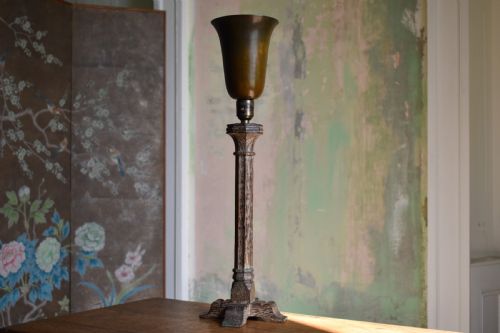


Antique Timber Candlesticks
Antique timber candlesticks bring warmth to a room through centuries of turned grain and hand-carved form.
Antique Timber Candlesticks
When you search for antique timber candlesticks, you are looking at items designed to hold wax or tallow candles for illumination before electric lighting became common. The pieces recorded here span from the 17th century through the Georgian and Victorian eras up to the 1920s.
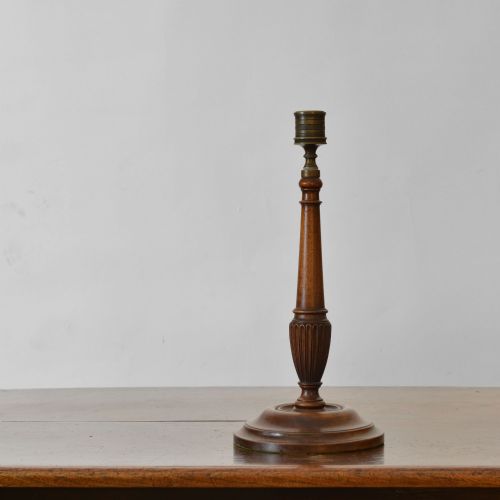
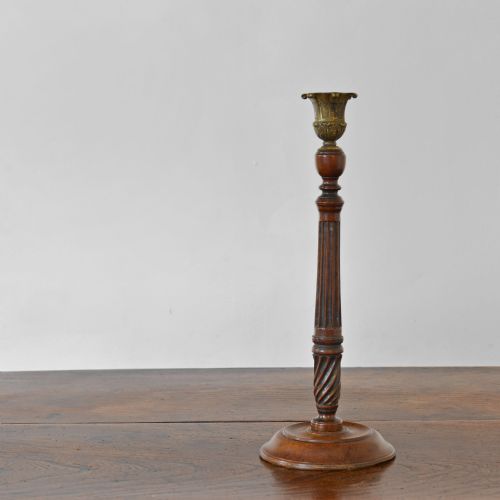
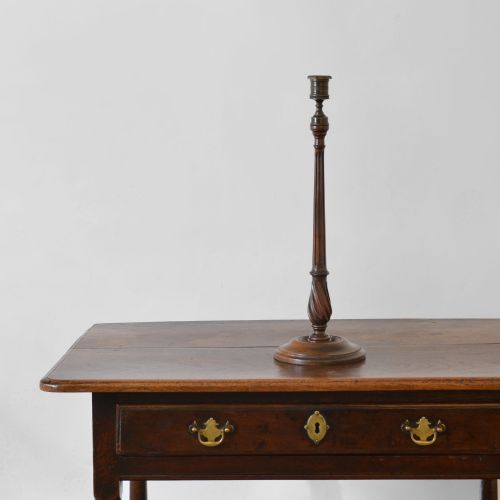
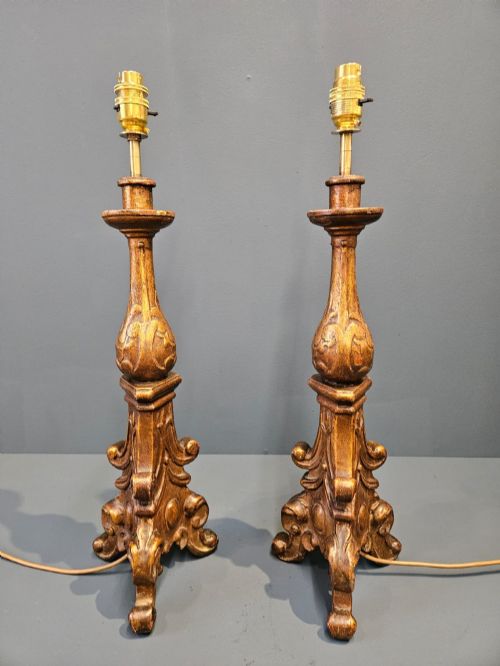
The most frequent examples on this page are turned mahogany or lignum vitae sticks from the Georgian and Victorian periods, alongside decorative pairs from the 19th century. You will also find carved wooden table lamps, torchere stands, and folk art pieces.
Functionality meets decorative craft in these objects, which range from simple utilitarian treen tapers to grand Italian Baroque Revival or French Chateau candle holders. Each item reflects the interior tastes and domestic routines of its original era.
How they were made
Brass fittings frequently accompany the timber, often appearing as nozzles or drip pans to protect the wood from melting wax. Surface treatments range from clear polish on hardwood grain to painted finishes and gilt highlights on carved pinewood or oak.
The object forms on this page include standard candlesticks, table lamps, tall torchere stands, and folk art figures carrying game.
What varies in quality
The distinction between ordinary and exceptional antique timber candlesticks lies in the choice of material and the precision of the turning or carving. Dense timbers like lignum vitae and well-figured mahogany hold crisp details and patination better than softer, painted woods over decades of handling.
Proportion and balance also define the upper tier of pieces, where the taper of the stem and the weight of the base display deliberate aesthetic harmony rather than hasty mass production. Original surfaces, such as untouched old polish or authentic folk art pigment, preserve the integrity of the object.
The Antique Timber Candlesticks Glossary
- Treen
- Small handmade wooden household objects. These items show the everyday skill of turning and carving timber for domestic use.
- Torchere
- A tall ornamental stand for a candle or lamp. They elevate the light source and often feature elaborate carving from the Italian or French traditions.
- Baluster
- A moulded column of square or circular profile. This architectural form provides the central support for many traditional candlestick designs.
- Lignum vitae
- A dense and heavy dark wood derived from tropical trees. Its natural weight and oily grain make it exceptionally stable for turned objects.
- Gilt
- A thin layer of gold leaf applied to a surface. This technique adds metallic brilliance to carved wooden candle holders and lamp bases.
Antique Timber Candlesticks: Frequently Asked Questions
How do I date antique timber candlesticks?
Dating relies on examining the turning style, timber species, and tool marks left on the underside or inside the socket. Georgian pieces often display different proportions and wood selections compared to later Victorian or 1920s examples.
Comparing the wear patterns around the candle nozzle and the base helps confirm the age of the turning. Certain styles, such as Gothic Revival or folk art, also align with specific nineteenth and early twentieth-century design movements.
Can I convert these candlesticks into lamps?
Many antique timber candlesticks and torchere stands have been adapted into table lamps over time. This process often involves running a cord through the centre or mounting electrical fittings discreetly to the top.
Purists prefer sticks that retain their original untouched candle sockets without internal wiring modifications. However, converted pieces remain a practical way to use historic turned wood in modern domestic lighting.
How should I clean wooden candle holders?
Maintenance requires gentle dusting with a dry, soft cloth to remove surface particles without disturbing the underlying polish or wax. Avoid using harsh chemical polishes or water, which can damage aged timber and remove desirable patination.
Applying microcrystalline wax occasionally helps nourish dry hardwood surfaces and protect them from moisture. Careful handling ensures the historic finish remains intact for future years.
What is the difference between treen and standard candlesticks?
Treen refers specifically to small, functional wooden items made by turners and carvers for domestic utility. Taper candlesticks in this category are often compact and designed for carrying around the home.
Standard candlesticks can include larger architectural forms, decorative pairs, and heavily carved exhibition pieces. Both categories share woodworking traditions but serve different domestic scales.