


Antique Tiered Sideboard
An antique tiered sideboard is a practical serving surface and storage piece that brings substantial timber character to a dining room.
Antique Tiered Sideboard
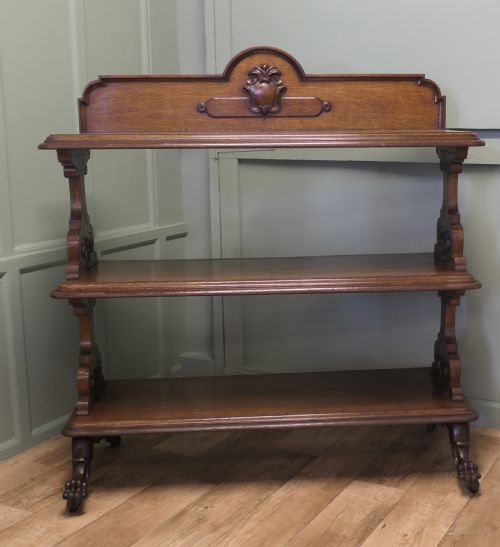
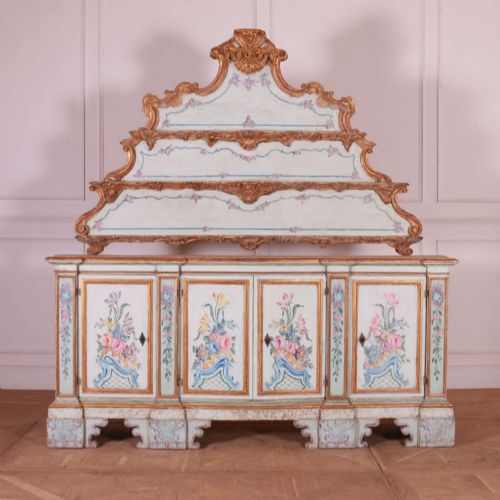
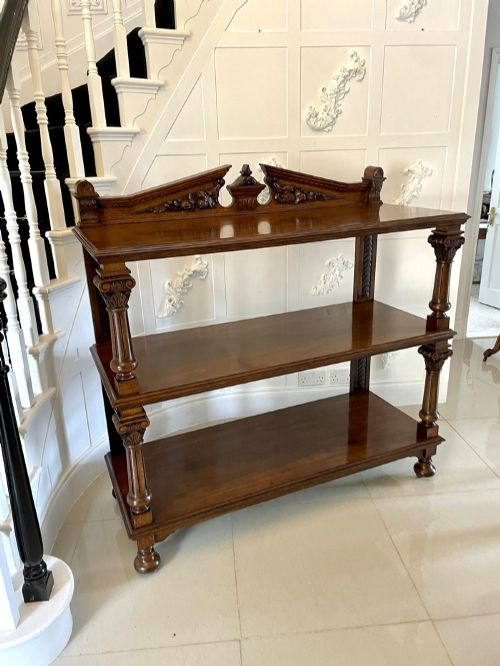
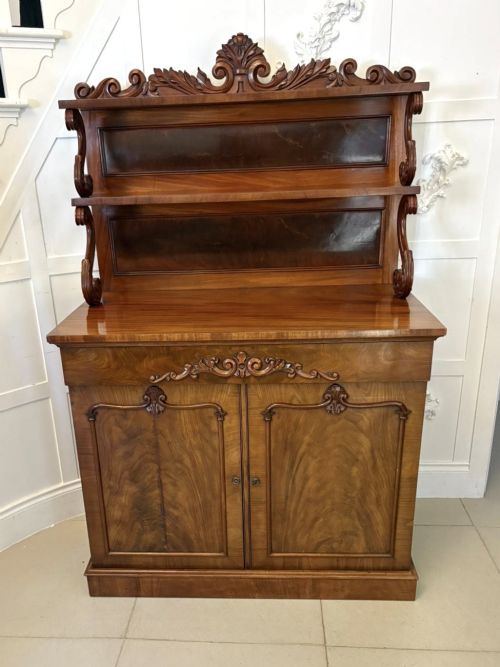
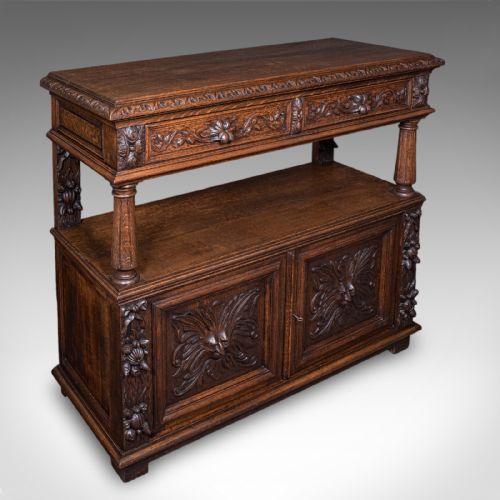
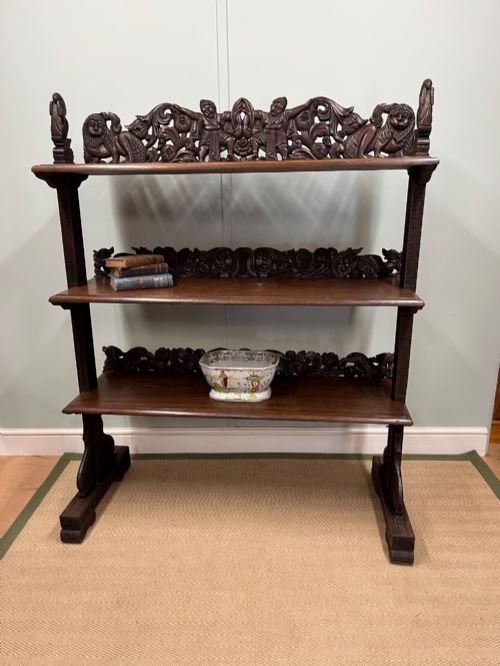
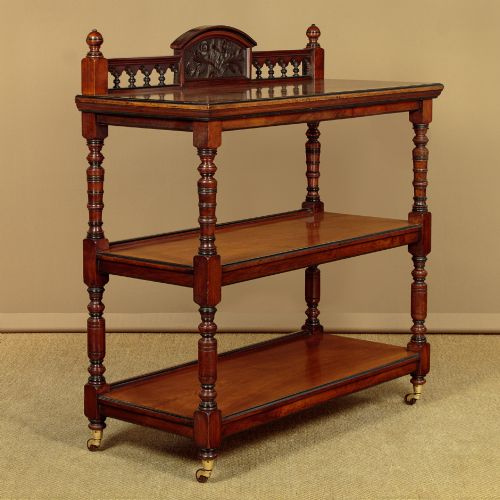
When you examine an antique tiered sideboard, you are looking at multi-level serving furniture designed to hold dishes, glassware, and dining accessories. These pieces range from compact two-tier chiffoniers to large architectural buffets with display shelves.
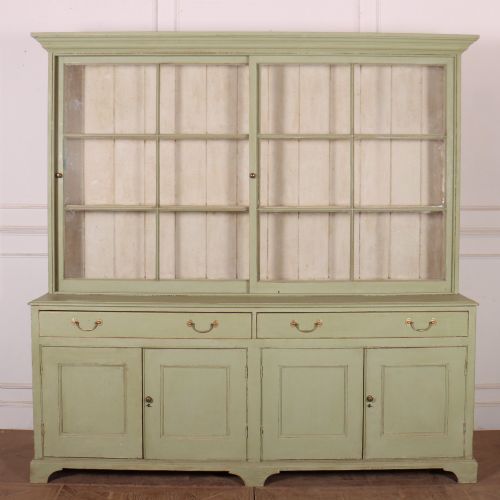
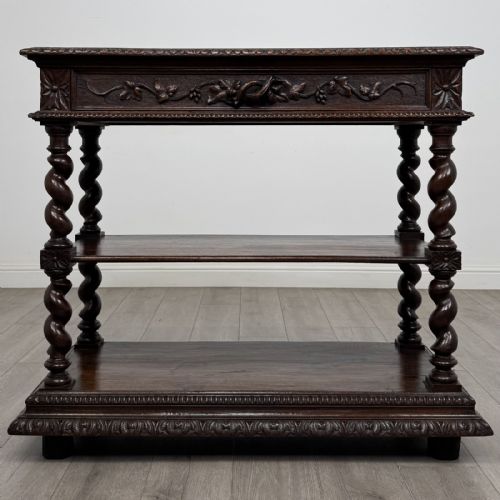
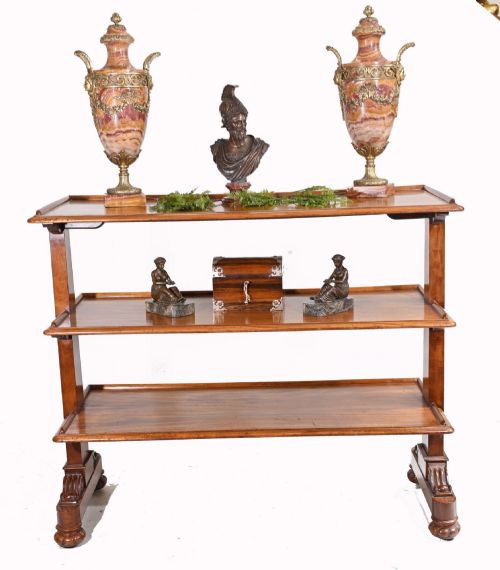
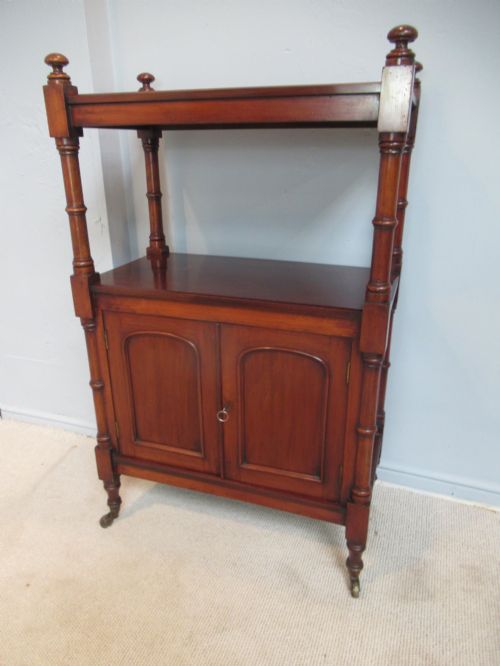
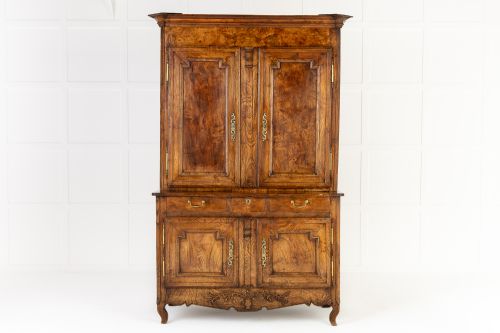
The selections available draw heavily from the 19th century and Victorian eras, though earlier Georgian and Regency examples also appear. Formats vary from English mahogany dumbwaiters on castors to French carved oak hunting cabinets and Welsh country cupboards.
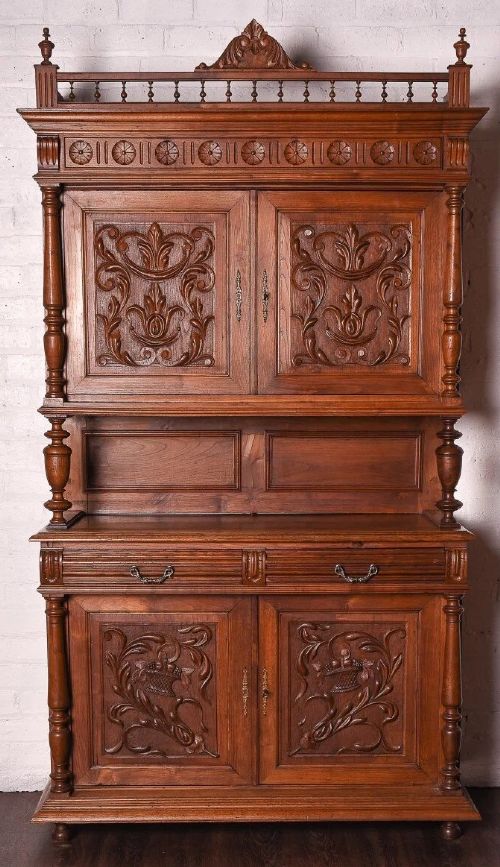
Many items function as servers, cabinets, or two-part buffets deus corps. The overarching design priority remains the provision of stacked surfaces for domestic service and display.
Materials and construction
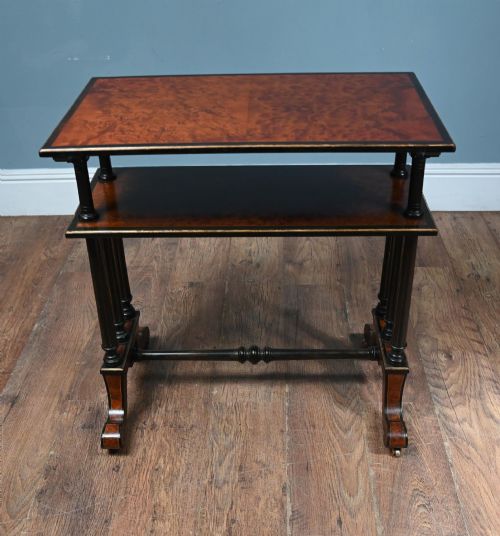
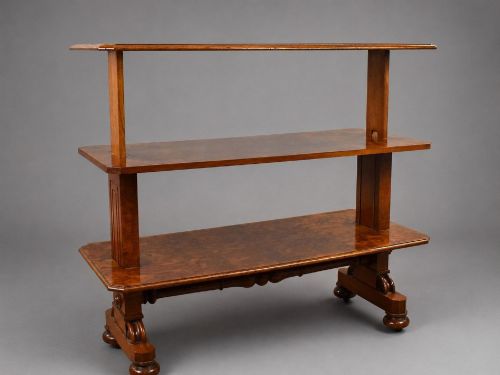
These items rely on solid and veneered hardwoods, predominantly mahogany, oak, and walnut, often enhanced by burr walnut or pollard oak figuring. Secondary timbers support internal framework and backingboards.
Joinery techniques involve traditional framing, dovetailing for drawers, and hand-carved ornamentation for panels, cornices, and structural supports. Brass fittings, castors, and glass panels frequently complete the assembly.
Antique Tiered Sideboard Retail Price Guide 2026
Typical asking prices for tiered sideboard among the pieces listed under this phrase on Sellingantiques today, from the lower quarter to the upper quarter. They describe what is for sale here now, not the wider market.
Listings feature woods including mahogany, oak, walnut, burr walnut, and pollard oak across Victorian and earlier periods.
What determines quality
Quality rests upon the selection of timber veneers and the crispness of hand-carved details. Pieces displaying highly figured mahogany, burr walnut, or pollard oak command greater visual interest.
Structural integrity, original hardware such as brass castors, and balanced proportions distinguish finer workshops from standard production. The integration of functional elements like metamorphic tiers or sliding shelves elevates the standing of a piece.
The Antique Tiered Sideboard Glossary
- Chiffonier
- A low sideboard or cabinet featuring one or more tiers on top, commonly used for serving or displaying china during the Victorian period.
- Dumbwaiter
- A freestanding piece with multiple graduated circular or rectangular tiers supported by a central column or uprights, traditionally used to hold food and plates.
- Buffet deux corps
- A large two-part cupboard originating in France, comprising a lower sideboard base beneath an upper shelving or cabinet section.
- Campaign style
- Furniture designed for military portability, typically featuring flush brass handles, corner brackets, and sectional construction.
- Pollard oak
- Oak timber harvested from trees that have been pollarded, producing a dense, highly swirled grain pattern prized for decorative veneering.
Antique Tiered Sideboard: Frequently Asked Questions
What is an antique tiered sideboard used for?
These items serve primarily as dining room furniture for organising tableware, serving food, and displaying decorative objects.
The multiple shelves provide convenient staging areas during meals while adding vertical presence to a room.
How do I date an antique sideboard?
Dating relies on identifying characteristic styling details, timber choices, and construction methods associated with periods like the Regency or Victorian eras.
Examining secondary woods, drawer dovetails, and hardware can also help confirm the manufacturing timeframe.
Where should I place a tiered sideboard?
Dining rooms remain the traditional location for these serving cabinets, positioned against a primary wall near the table.
Smaller tiered versions also function effectively in hallways or living spaces as display surfaces for lamps and collections.
What woods were commonly used?
Mahogany, oak, and walnut dominate the construction of these pieces, often selected for durability and rich grain patterns.
Cabinetmakers frequently utilised burr walnut and pollard oak veneers on primary surfaces for decorative impact.