


Antique Tiered Buffet Stand
An antique tiered buffet stand serves as a practical multi-level surface, offering distinct tiers for organising dishes or displaying decorative items in a dining space.
Antique Tiered Buffet Stand
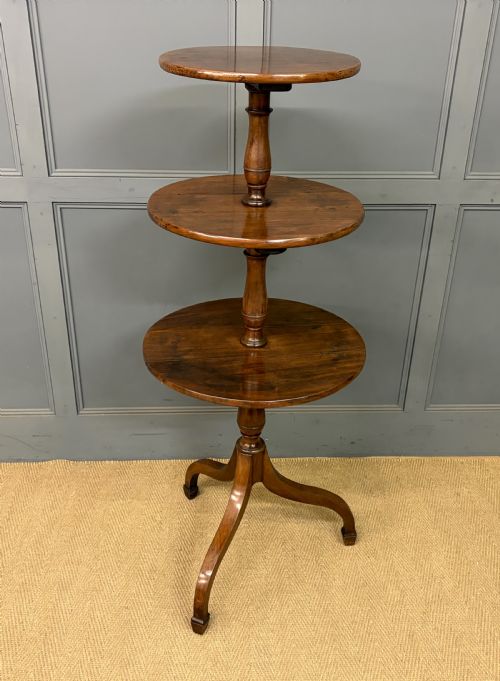
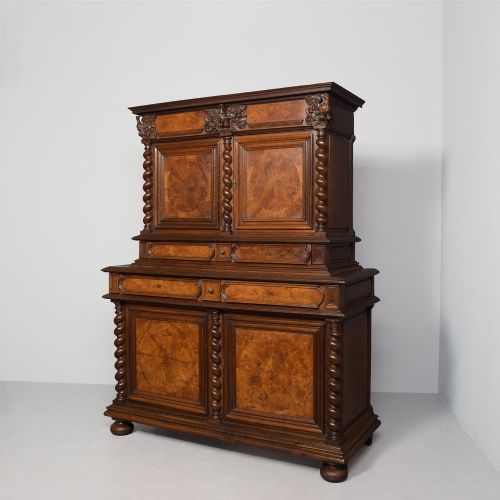
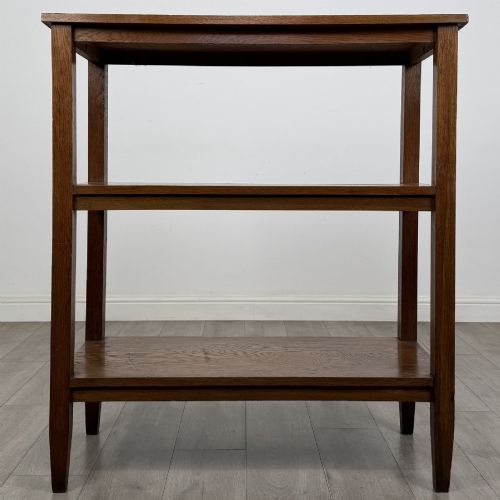
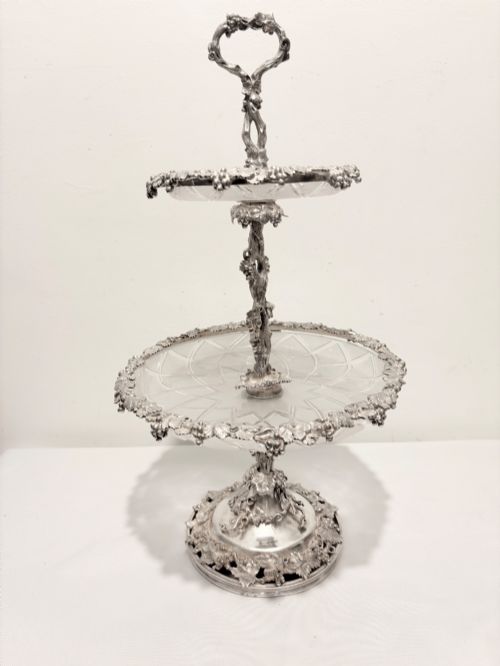
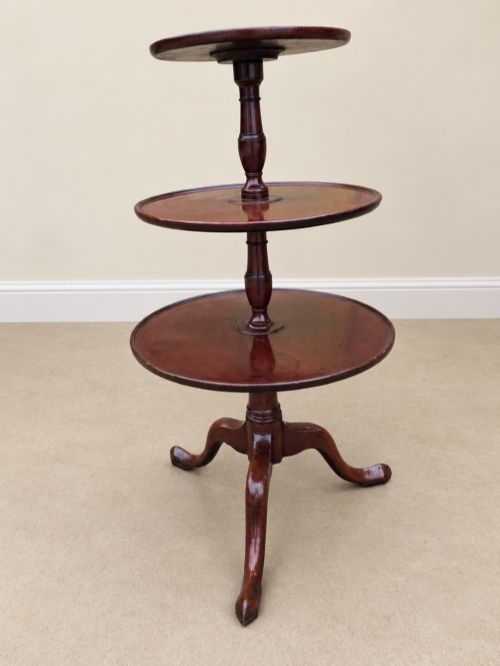
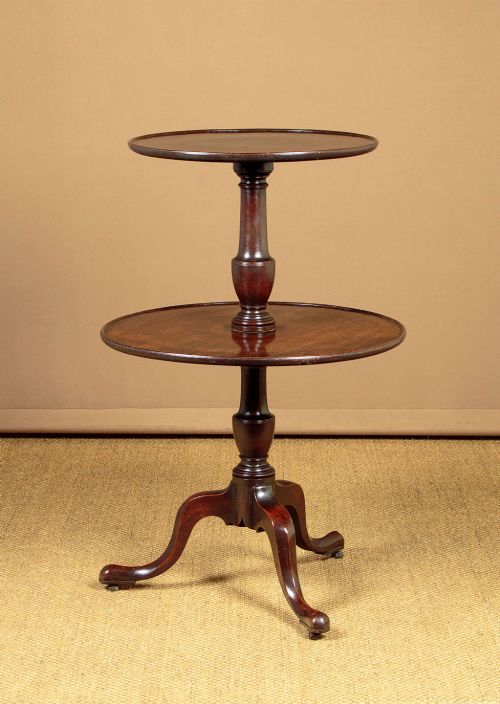
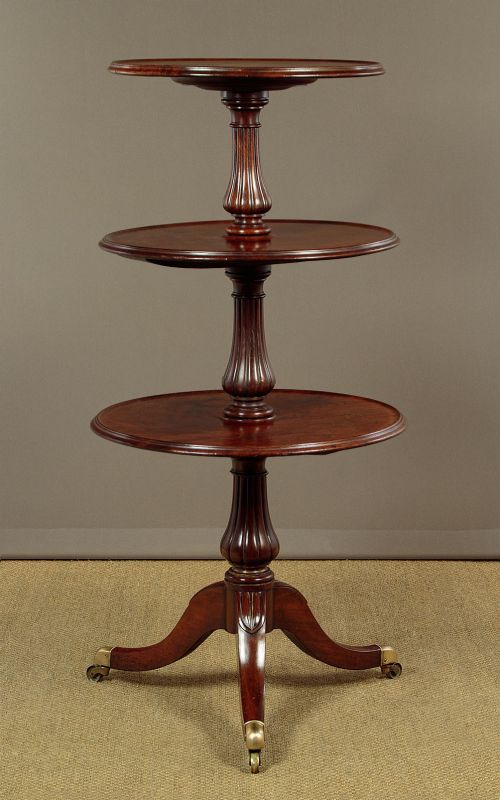
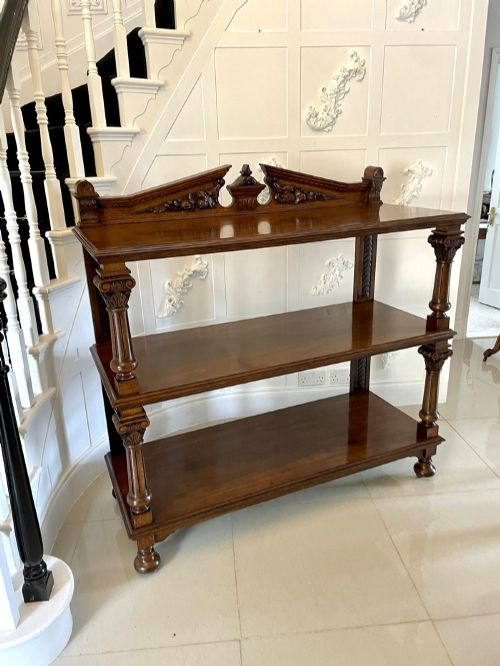
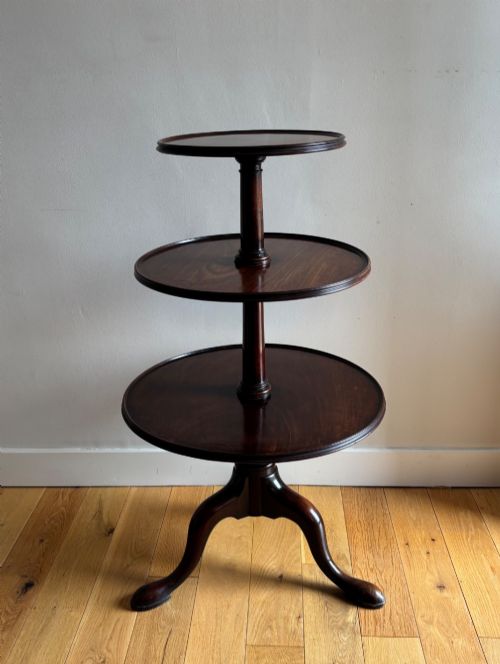
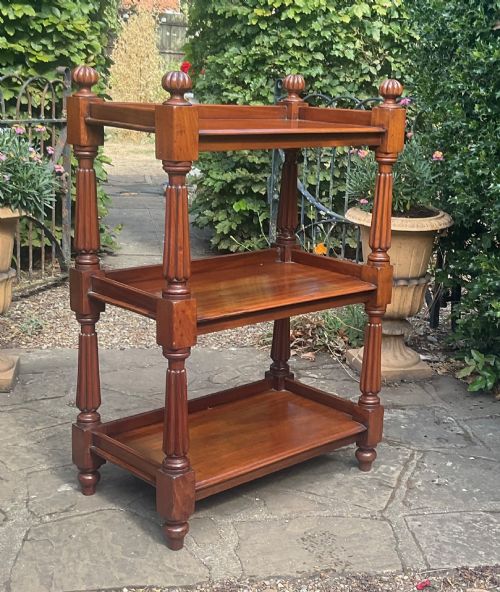
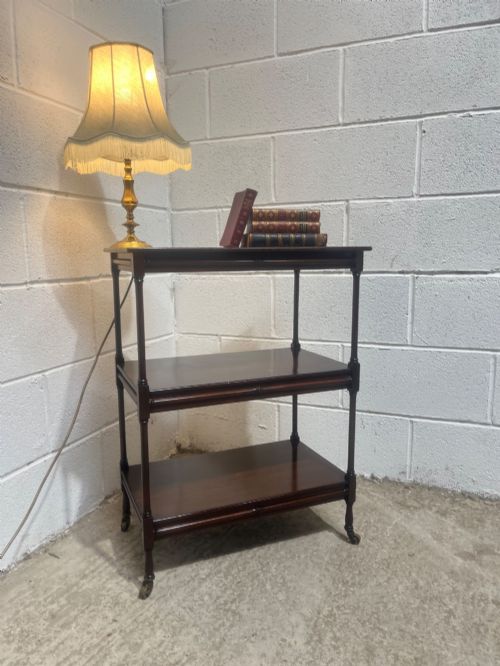
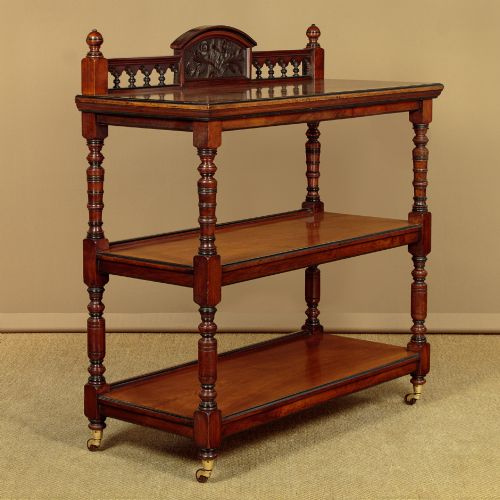
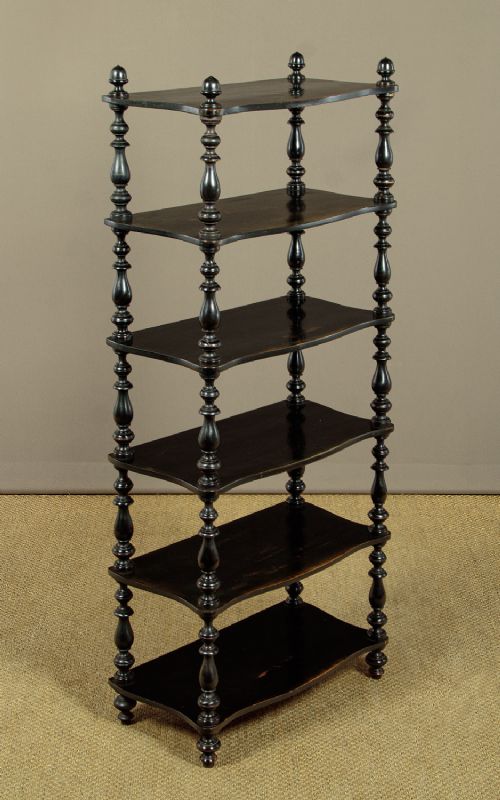
An antique tiered buffet stand typically appears as a multi-level serving piece designed for dining rooms or reception spaces. These items encompass forms such as dumb waiters, etageres, and tiered tables spanning from the eighteenth century through the Edwardian era.
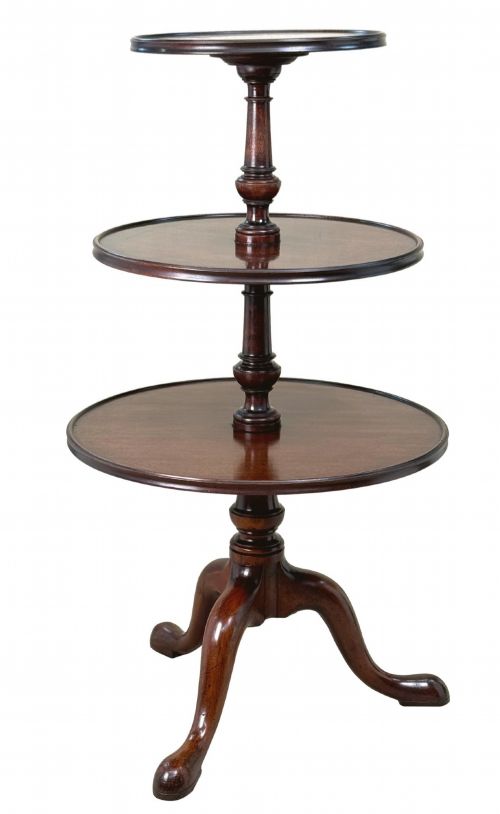
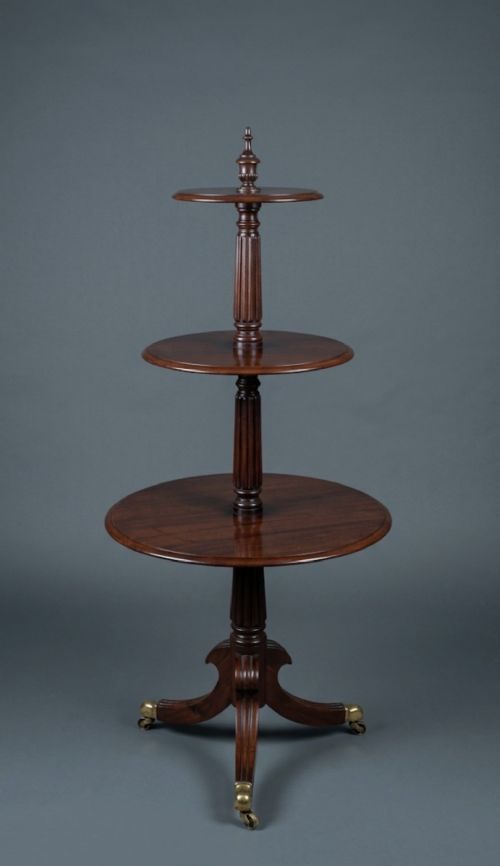
The most common examples on this page are mahogany dumb waiters featuring three circular graduated tiers supported on tripod or pillar bases. Pieces range from simple utilitarian serving stands to folding designs and revolving models.
Origins represented across the selection include Georgian, Regency, and Victorian periods, alongside specific regional interpretations such as Anglo-Indian and Baronial styles. These configurations reflect the evolving domestic dining habits of past centuries.
Materials and construction
Cabinet makers utilised dense hardwoods, predominantly mahogany, alongside walnut, oak, and rosewood to construct sturdy tier supports and central pillars. Selected timbers frequently display figured grain patterns or veneer applications, supported occasionally by brass hardware.
Structural joinery involves turning, carving, and tripod leg arrangements designed to bear the weight of heavy tableware across multiple levels. Revolving mechanisms and folding hinges on specific examples demonstrate period mechanical ingenuity.
Antique Tiered Buffet Stand Retail Price Guide 2026
Typical asking prices for tiered buffet stand among the pieces listed under this phrase on Sellingantiques today, from the lower quarter to the upper quarter. They describe what is for sale here now, not the wider market.
Listings feature mahogany, walnut, oak, rosewood, and teak across Georgian, Victorian, and Edwardian periods.
Judging quality
Superior examples demonstrate timber selection with consistent grain depth and rich natural colour across all tiers, paired with finely turned central columns and stable tripod legs. The integrity of rotating mechanisms and the crispness of carved details distinguish workshop output.
Lesser pieces exhibit utilitarian secondary woods, simpler turned posts without secondary detailing, or replaced components that alter the original proportions of the stand.
Elkington and Co·Gordovil Spain
The Antique Tiered Buffet Stand Glossary
- Dumb waiter
- A freestanding tiered serving table utilised during meals to hold dishes without requiring servants present. These typically feature two or three graduating circular trays.
- Etagere
- A set of open shelves or tiers used for displaying objects or serving items. This form provides multiple accessible display surfaces.
- Tripod base
- A three-legged support structure commonly found beneath the central pillar of circular tiered stands. This design ensures stability on uneven dining room floors.
- Veneer
- A thin layer of figured timber applied over a secondary wood base to provide a decorative surface. Figured walnut and mahogany are frequently applied in this manner.
Antique Tiered Buffet Stand: Frequently Asked Questions
How were dumb waiters used?
These stands functioned as auxiliary serving surfaces placed beside dining tables. Diners used the rotating or fixed tiers to access extra plates, glassware, and dishes independently.
This arrangement reduced the need for domestic staff to remain in the room throughout the meal.
What woods appear most often?
Mahogany forms the primary material for the vast majority of these serving stands, often selected for its structural strength and rich dark tone. Walnut, oak, and rosewood also appear across specific Victorian and Edwardian examples.
Cabinet makers frequently matched these timbers with brass fittings and turned columns.
How do I identify a Georgian tier?
Georgian pieces generally display solid mahogany construction with simple graduated circular trays supported on robust tripod bases. Turned central columns and clean joinery characterise the work from this period.
Later Victorian versions often introduce ebonised finishes, heavier carvings, or mechanical adjustments.
Where should I place a buffet stand?
These pieces fit effectively in dining rooms as functional serving surfaces or in living spaces as display etageres. Their multi-tier design allows for vertical storage of decorative objects without occupying excessive floor area.
Placing them away from direct heat sources protects the timber and veneer surfaces from drying out.