
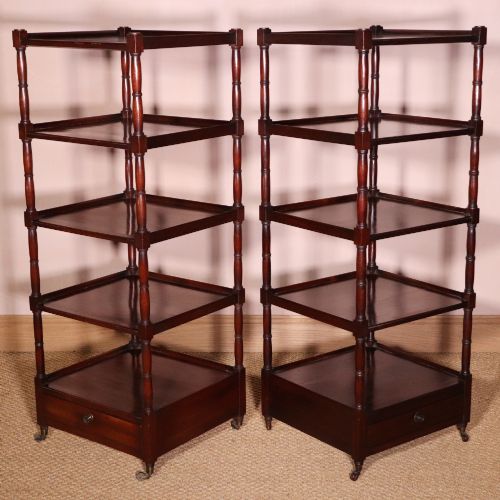
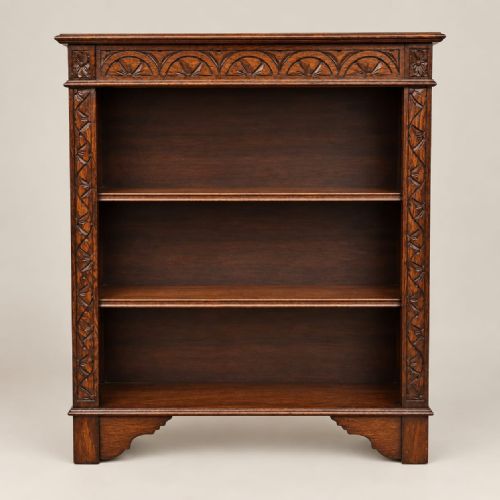
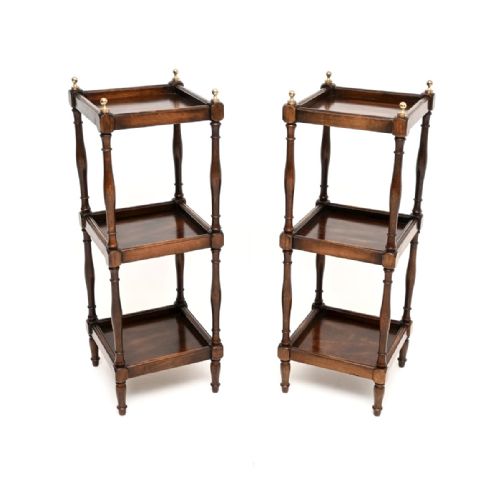
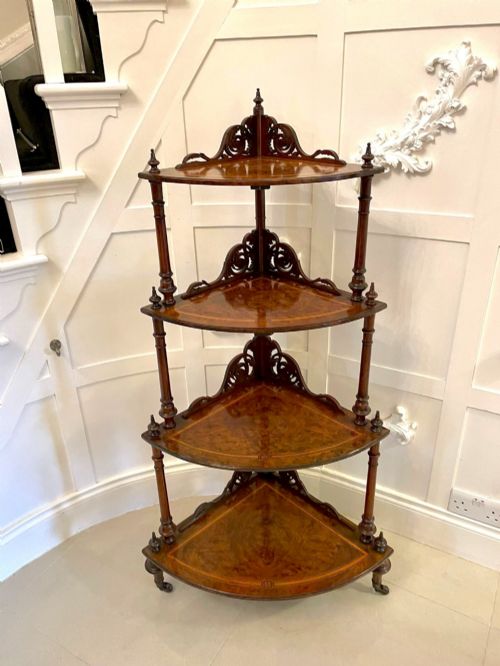


Antique Tier Display Shelf
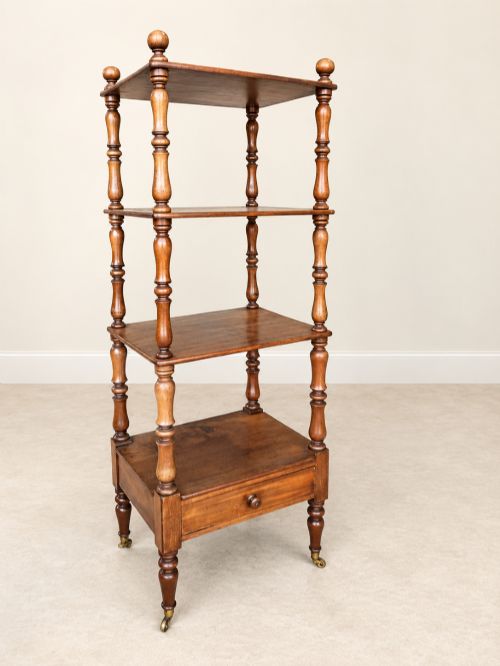
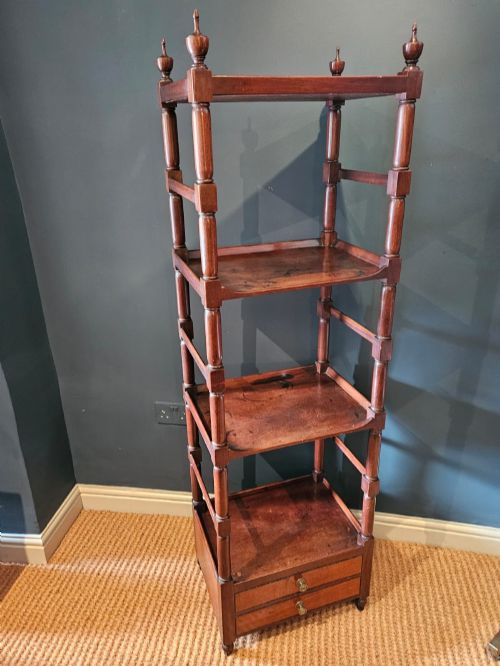
An antique tier display shelf provides functional multi-level storage, typically taking the form of a whatnot, etagere, or hanging set.
Antique Tier Display Shelf
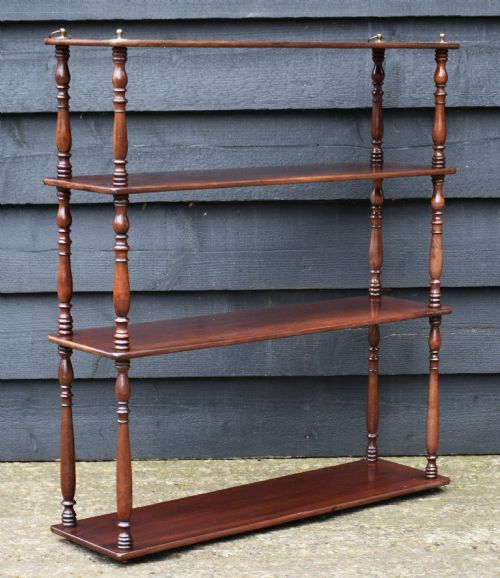
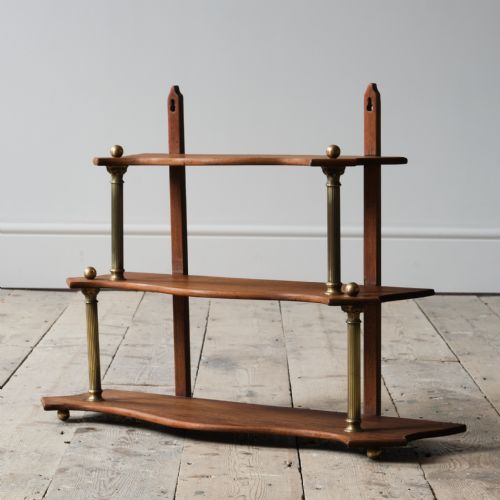
When you search for an antique tier display shelf, you encounter pieces designed to hold books, ornaments, and collections across multiple horizontal surfaces. The selection spans distinct forms including whatnots, etageres, wall-hanging shelves, and open bookcases.
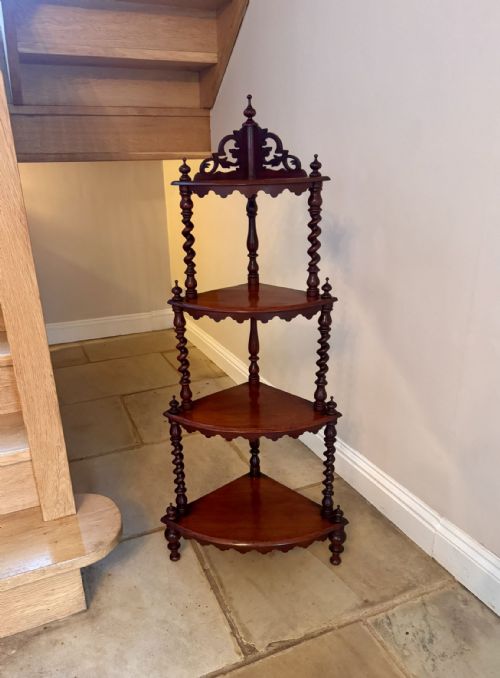
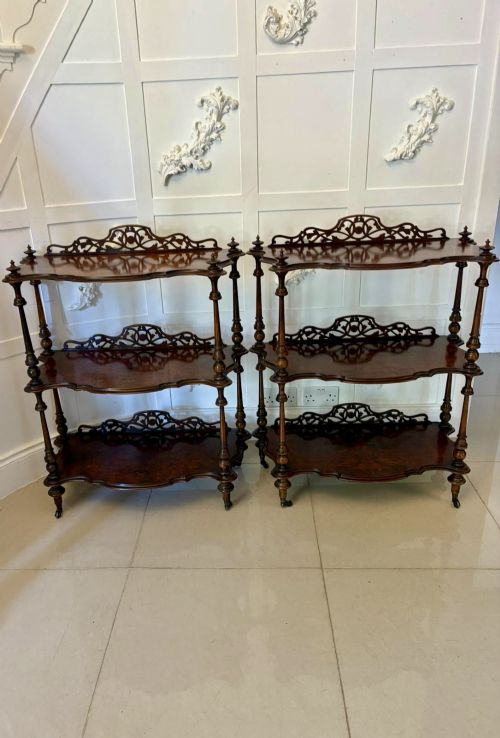
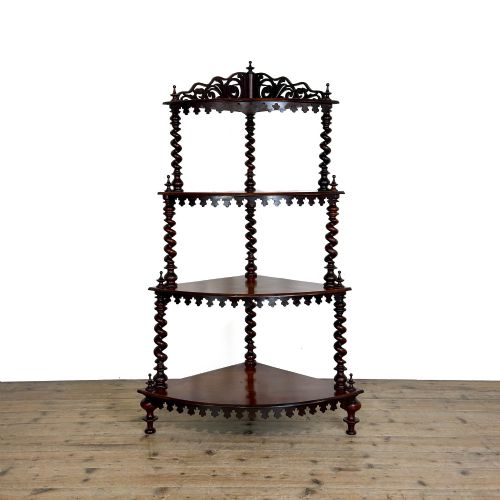
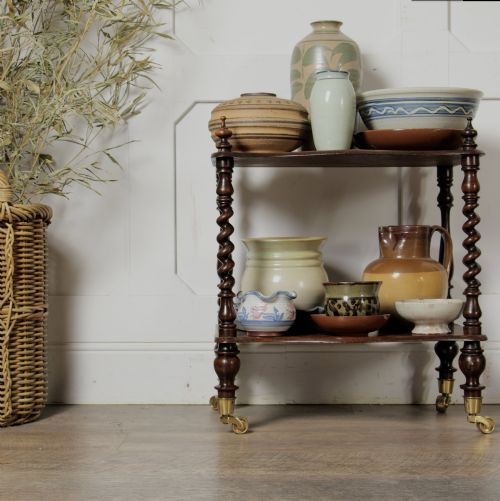
Victorian and nineteenth-century examples dominate the offerings, frequently rendered in mahogany, walnut, and rosewood. Pieces range from corner designs and barley twist stands to serpentine burr walnut cabinets and compact waterfall bookcases.
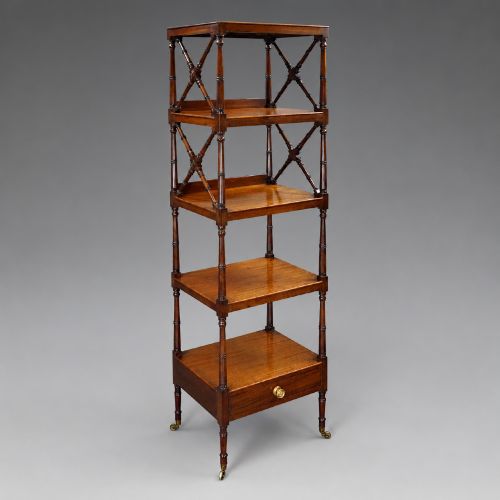
Earlier Georgian and Regency specimens sit alongside later Edwardian and rustic country variants. This variety means you find everything from towering four-tier bookcases to slender three-tier etageres and small wall-hung compartments.
Evaluating the Craftsmanship
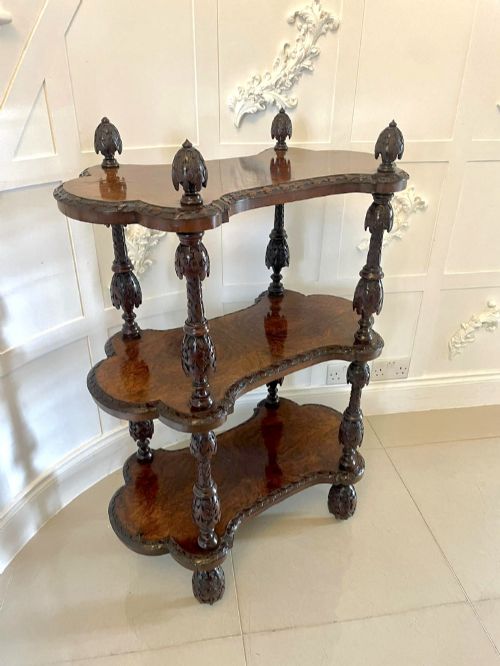
The distinction between ordinary and exceptional pieces lies in the choice of timber and the precision of the turnery. Highly figured burr walnut, rich rosewood, and finely grained mahogany indicate superior material selection by the maker.
Structural refinement separates standard items from the best examples. Subtle details like serpentine shaping, intricate carving, inlaid parquetry, and integrated drawers elevate a tier display shelf beyond basic utility.
Some nineteenth-century whatnots feature tiny secret drawers tucked beneath the bottom shelf for storing forgotten treasures.
The Antique Tier Display Shelf Glossary
- Whatnot
- A freestanding open piece of furniture with multiple shelves for displaying ornaments or books. Originating in the eighteenth century, these units often incorporate lower drawers or turned uprights.
- Etagere
- A set of open shelves for displaying small objects and bric-a-brac. These are typically lighter in construction than a bookcase and frequently employ exotic woods or ebonised finishes.
- Waterfall bookcase
- A set of open shelves where each tier steps back progressively from the one below it, creating a cascading profile. These pieces are commonly rendered in mahogany.
- Barley twist
- A decorative turning technique resembling a twisted rope, used for the vertical corner supports of stands and whatnots. This style is particularly prevalent in nineteenth-century pieces.
- Parquetry
- A geometric mosaic of wood pieces used for decorative veneer on tabletops and shelf surfaces. This technique showcases contrasting timber tones and meticulous joinery.
Antique Tier Display Shelf: Frequently Asked Questions
What is the difference between a whatnot and an etagere?
A whatnot is traditionally a multi-tiered freestanding shelving unit, often fitted with corner posts or turned uprights and occasionally a base drawer. An etagere serves a similar open display function but frequently adopts lighter, more decorative proportions.
Both forms accommodate books and ornaments, though etageres lean towards decorative display in reception rooms while whatnots historically functioned as versatile storage across various domestic spaces.
How do I hang wall shelves safely?
Wall-hanging shelves require secure fixings into solid masonry or direct attachment to wall studs using appropriate brackets suited to the weight of the timber. Solid mahogany and rosewood units carry considerable heft and demand robust support.
Distributing weight evenly across the tiers prevents undue strain on the historic joints and the wall fixings alike.
Are these shelves suitable for heavy books?
While many pieces double as bookcases, older freestanding whatnots and etageres were primarily designed for lighter display items, ceramics, and small volumes. Sturdier open bookcases in oak or mahogany handle heavier reading collections with ease.
Assessing the thickness of the shelf boards and the rigidity of the upright supports helps determine whether a specific tier display shelf suits heavy library use.
How do I care for polished wood shelves?
Maintaining polished timber surfaces involves dusting regularly with a soft, dry cloth and avoiding silicone-based sprays that build up over time. Natural beeswax applied sparingly helps nourish antique rosewood, walnut, and mahogany.
Keeping the furniture away from direct sunlight and sudden radiator heat prevents the timber from drying out and the veneer from lifting.