




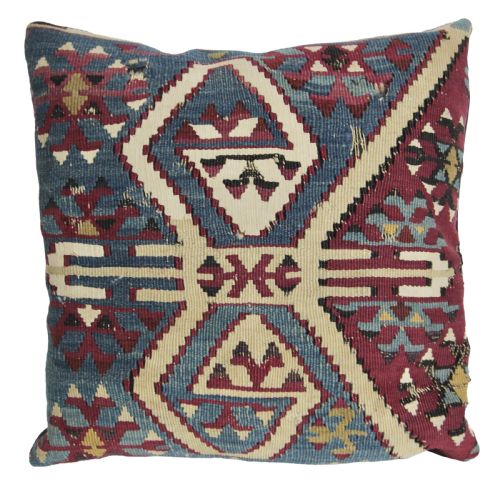

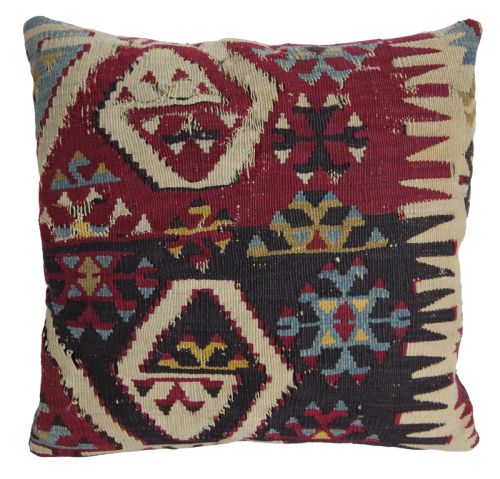


Antique Throw Cushion
An antique throw cushion brings centuries of textile artistry into a room, offering genuine historical character through woven kilims, rich tapestries, and antique silks.
Antique Throw Cushion
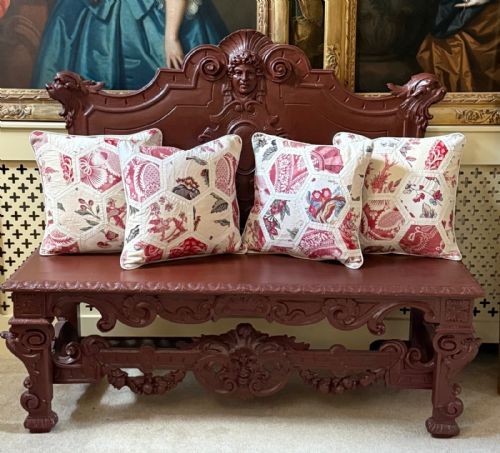
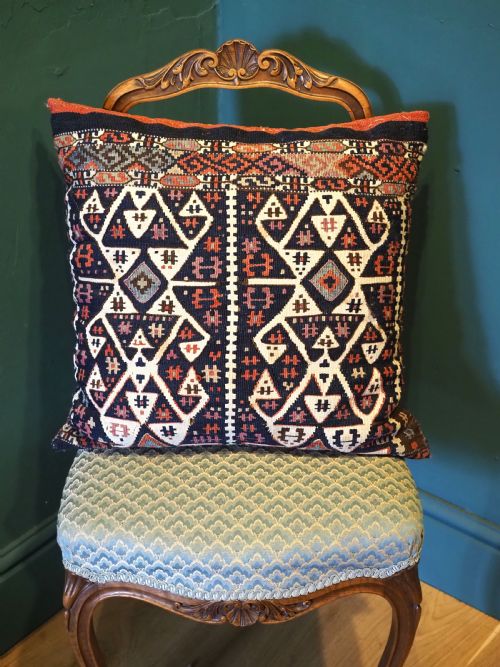
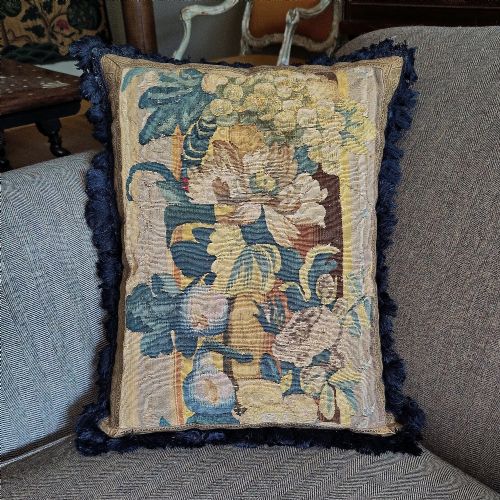
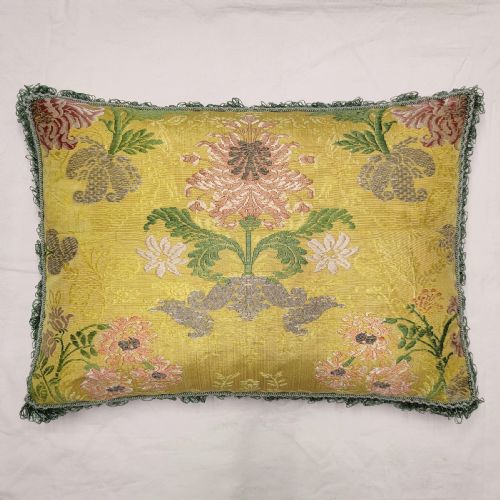
An antique throw cushion represents a practical second life for historical textiles, transforming fragments of carpets, rugs, and decorative panels into comfortable soft furnishings. Buyers seeking an antique throw cushion will frequently encounter pieces fashioned from tribal kilims, Anatolian traditional weaves, and French tapestry fragments.
The objects take various forms, including square scatter cushions, bolster shapes derived from saddle bags, and cushion covers paired with feather inners. Dating spans widely from the seventeenth century through the Edwardian era and the early twentieth century.
Stylistic origins range from French Chateau and Aubusson designs to tribal Baluch, Kurdish, and Persian motifs. These pieces add texture and colour to seating areas while preserving historical weaving traditions.
What varies in quality
The distinction between tiers rests upon the age, integrity, and origin of the textile fragment utilised in the construction. Pieces incorporating seventeenth-century Flemish tapestry or early French silk display finer handwork and rarer provenance than later tribal rug conversions.
Structural integrity depends on the condition of the underlying weave and the quality of the backing materials, such as period linen. Original hand woven surfaces that retain their vibrant natural dyes command greater interest from collectors.
A nineteenth-century nomadic weaver creating a humble saddle bag could hardly imagine it resting quietly on a London sofa.
The Antique Throw Cushion Glossary
- Kilim
- A flat woven carpet or rug produced in countries of the former Ottoman Empire, Persia, and Central Asia. These durable textiles are frequently repurposed into cushion faces.
- Tapestry
- A form of textile art traditionally woven on a vertical loom, often depicting pictorial scenes or floral motifs. Pieces from French and Flemish workshops appear frequently in older cushions.
- Aubusson
- A style of tapestry and carpet named after the French town where production flourished. These designs often feature classical floral and architectural motifs.
- Bag Face
- The decorative front panel of a nomadic storage bag, such as a saddle bag, removed and transformed into a decorative textile. They display dense tribal geometric patterns.
- Feather Inner
- The soft interior filling used to pad the cushion and give it shape. Many listings pair antique covers with new feather inserts for modern use.
Antique Throw Cushion: Frequently Asked Questions
How do I clean an antique cushion?
Historic textiles require gentle handling and professional specialist cleaning rather than standard domestic laundering. Surface dust can be carefully removed using low suction through a mesh screen.
Friction and moisture risk damaging fragile wool, silk, and antique linen fibres. Spot cleaning should be avoided unless managed by a textile conservator.
Are these cushions made from original textiles?
Many examples utilise genuine historical fragments, such as seventeenth-century tapestry borders or nineteenth-century tribal kilims. These antique panels are stitched onto supportive backings, sometimes paired with new feather inners.
The listings record specific periods for the textile components, ranging from the seventeenth century to the Edwardian era.
How do I style an antique cushion?
These decorative pieces work well on plain leather or upholstered sofas where their complex patterns and textures can stand out. Mixing tribal kilim designs with French Chateau tapestries creates a layered interior aesthetic.
Scale and colour palette help integrate older textiles into contemporary rooms without overwhelming the space.
What is a bag face cushion?
A bag face cushion is made from the decorative front panel of a nomadic tribal storage bag. These panels were originally woven by hand on portable looms by tribal makers.
Translating these functional items into cushions preserves their intricate geometric patterns and durable wool construction for modern display.