







Vintage Textile Pillow
These vintage textile pillow examples bring character and tactile history into a room through repurposed tribal bags, antique tapestries, and historic French linen.
Vintage Textile Pillow
A vintage textile pillow encompasses decorative cushions created from older woven fragments, tribal bag faces, and historic fabrics. Buyers search for these pieces to introduce authentic texture, pattern, and age into an interior scheme.
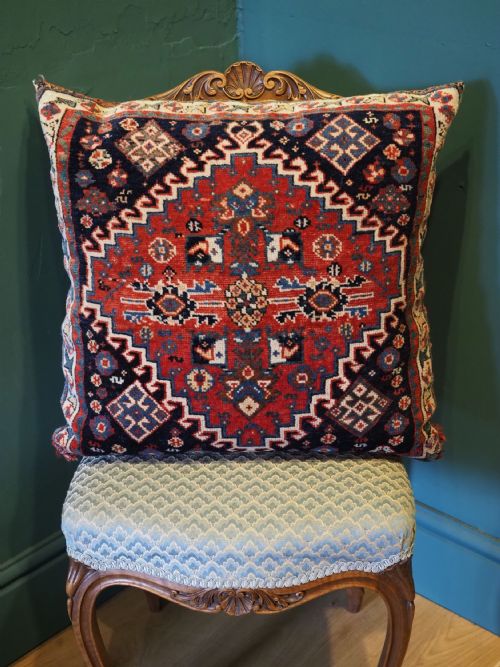
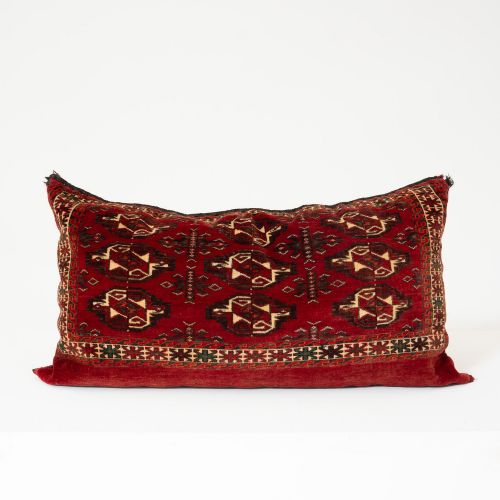
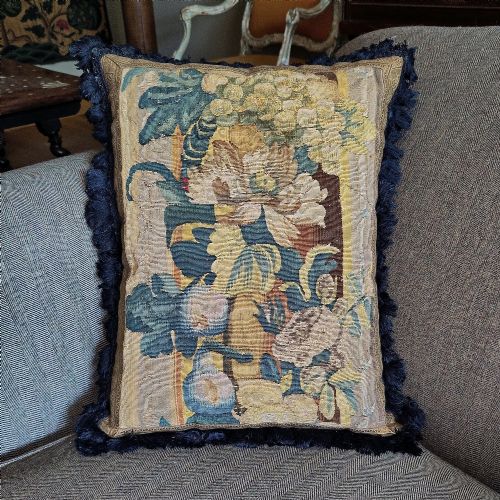
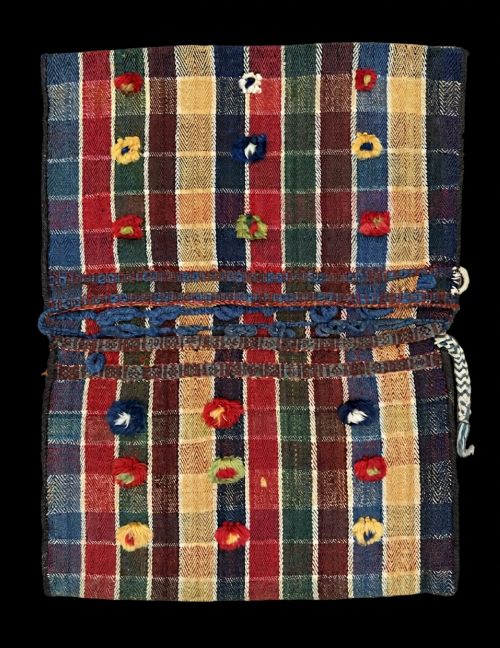
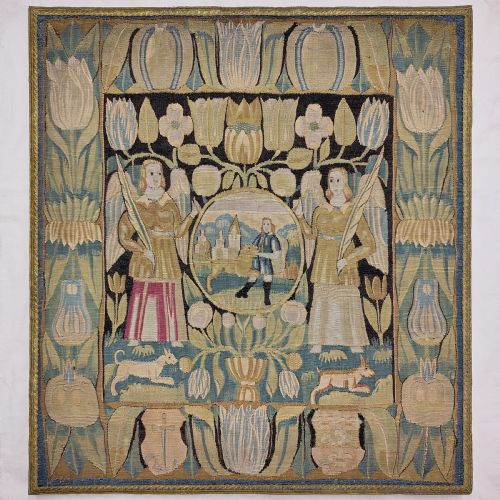
The selections available here range from seventeenth century Flemish tapestry fragments and Edwardian toile covers to nineteenth century Persian and Turkmen tribal bag faces. Tribal weavings and French country silks form the most common iterations on this page.
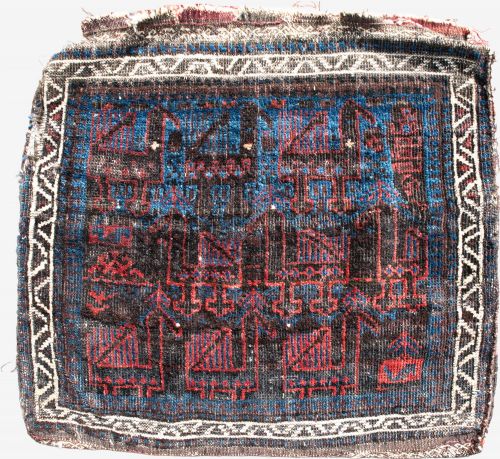
Makers often repurposed utilitarian items such as saddle bags, storage sacks, and saddle bag carpets into cushions, giving nomadic and folk weavings a domestic role. These transformations preserve historic textiles that might otherwise have been lost.
How they were made
Artisans constructed these pieces using natural materials including wool, cotton, silk, and linen, often enhanced with natural dyes. Many incorporate feather inners to provide form and support to the antique covers.
Makers utilised traditional hand weaving techniques, flatweave designs, and tapestry methods to produce the original bag faces and textile panels. Skilled hands then assembled these fragments into cushions, frequently backing them with historic linen or pairing them with turned wood and hardwood elements where appropriate.
Vintage Textile Pillow Retail Price Guide 2026
Typical asking prices for vintage textile pillow among the pieces listed under this phrase on Sellingantiques today, from the lower quarter to the upper quarter. They describe what is for sale here now, not the wider market.
Listings span periods from the seventeenth century through the Victorian era and the early twentieth century, utilising wool, silk, linen, and natural dyes.
What varies in quality
Quality rests upon the structural integrity and original condition of the textile fragment used for the cushion face. Finer examples display tightly packed knots, well-preserved natural dyes, and minimal wear to the historical weave.
The provenance and artistic merit of the underlying weaving dictate the upper tier of the range. Master weavers in Persian and Turkmen communities produced balanced proportions and sophisticated tribal motifs that elevate a cushion far above standard decorative furnishings.
The Vintage Textile Pillow Glossary
- Bag face
- The decorative front panel of a nomadic storage sack or saddle bag. These panels were frequently salvaged and made into cushions.
- Flatweave
- A textile produced without knotted piles, such as a kilim or soumak. This technique creates a smooth, durable surface often utilised in cushion covers.
- Chuval
- A large Turkmen tent storage bag. Surviving faces are often repurposed into decorative pillows.
- Torba
- A small Turkmen storage bag used for household items. The front panels provide distinctive geometric patterns for cushions.
- Toile
- A traditional printed cotton fabric featuring pastoral scenes. Edwardian examples appear on this page as cushion covers.
Vintage Textile Pillow: Frequently Asked Questions
What is a tribal bag face cushion?
A tribal bag face cushion is made from the decorative front panel of an antique nomadic storage bag. These panels display traditional tribal motifs and hand-woven patterns.
Nomadic groups originally wove these bags for practical storage inside tents. Repurposing them into cushions preserves the historic textile art for modern interiors.
How do I care for an antique textile pillow?
Care for these pieces requires gentle handling to protect fragile historic fibres and natural dyes. Keeping them out of direct sunlight prevents the colours from fading.
Professional cleaning is recommended when necessary due to the age of the materials. Regular light shaking helps maintain the feather inner without stressing the antique fabric.
Are these cushions made from original antique textiles?
The selections utilise authentic period fragments, including seventeenth century Flemish tapestry and nineteenth century Persian tribal weavings. These historical materials give each cushion distinct character and age.
Some items combine antique fronts with period linen backs or new feather inners. This construction method supports fragile textiles while making them suitable for everyday use.
Where do tribal bag cushions originate?
Tribal bag cushions originate from regions such as Persia and Central Asia, created by nomadic groups like the Qashqai, Yomut, and Baluch. Each group developed distinct colour palettes and geometric designs.
Other pieces stem from European traditions, including French folk art and Flemish tapestry weaving. This geographic spread offers a diverse range of aesthetic styles.