


Antique Telescopic Candlesticks
Antique telescopic candlesticks are clever mechanical lighting pieces that adjust in height for the table, bringing handsomely engineered versatility to any room.
Antique Telescopic Candlesticks
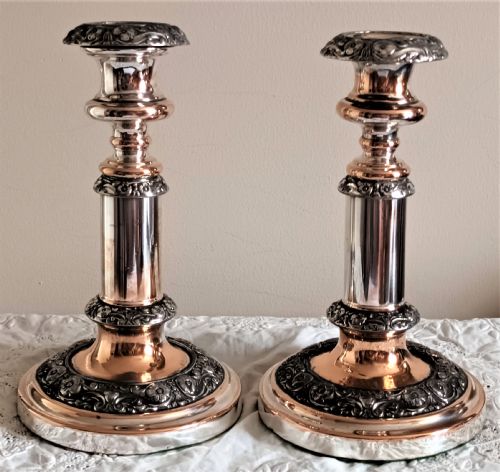
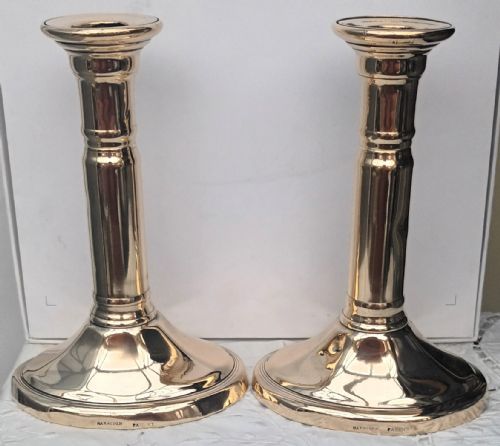
When you search for antique telescopic candlesticks, you encounter practical lighting devices engineered to alter height by sliding an inner shaft within a lower column. The pieces on this page span the Georgian, Regency, George III, George IV, and Victorian periods, reflecting a sustained demand for adjustable illumination across the nineteenth century.
You are most likely to meet pairs rendered in Old Sheffield plate or solid brass, often matching the styles of the early eighteen hundreds. These dual-purpose objects allowed householders to lower the flame for intimate dining or raise it for reading and writing.
How they were made
Makers constructed these items primarily from solid brass or copper fused with silver to create Old Sheffield plate. The sliding mechanism required precise interior engineering so the candle sconce remained secure at whichever height the user selected.
Workshops employed patent designs, such as those by Harrison, to ensure smooth extension without slipping. Plated versions required careful silver application over copper bases to withstand the friction of the moving shafts.
Some makers patented their sliding tubes so ingeniously that a gentle pull raises the candle like a tiny silver lighthouse.
What varies in quality
The distinction between standard examples and the finest work lies in the smoothness of the sliding mechanism and the crispness of the cast details on the base and nozzle. Superior pieces hold their adjusted height firmly without wobbling in the inner column.
The preservation of the original plating or the integrity of the heavy brass casting separates ordinary survivors from truly desirable specimens. Weight and balance also indicate a higher standard of manufacture from the period.
Harrison Patent
The Antique Telescopic Candlesticks Glossary
- Telescopic
- An adjustable design featuring nested tubes that slide into one another to alter the overall height. This mechanism allowed users to customise the level of the flame.
- Old Sheffield Plate
- A material made by fusing a thin sheet of silver to a thicker copper base before rolling them together. It represents an early method of producing silver-appearance items before electroplating.
- Sconce
- The socket at the top of a candlestick that holds the base of the candle. It often includes a removable drip pan.
- Regency
- A British design style spanning the early nineteenth century, characterised by classical restraint and clean proportions. Pieces from this era often draw inspiration from ancient Roman and Greek forms.
Antique Telescopic Candlesticks: Frequently Asked Questions
How do telescopic candlesticks work?
These pieces feature an inner stem that slides up and down inside the main column to change the height. A friction fit or internal stop keeps the candle at the desired level.
This clever engineering allowed users to lower the flame as the candle burned down or to adjust the light output for different social occasions.
Are these candlesticks safe to use?
While they remain functional, most modern owners use them primarily for display or with secure, appropriately sized tapers. The internal mechanism should be handled with care to preserve the original metal.
Keeping burning candles supervised is essential, particularly with antique brass and plated pieces that conduct heat through the column.
How do I date a telescopic candlestick?
Dating relies on the stylistic details of the base and column, such as the classical motifs of the Georgian period or the heavier proportions of the Victorian era. Patent stamps and manufacturing methods like Old Sheffield plating also provide clues.
Comparing the construction techniques with documented pieces from the eighteenth and nineteenth centuries helps narrow down the decade of production.
What is Old Sheffield plate?
Old Sheffield plate is an early fusion material where silver and copper are heated and rolled together into sheets. This technique predates modern electroplating.
Items made this way show a rich depth of metal, sometimes revealing a thin line of copper where the silver edge wears through at the seams.