



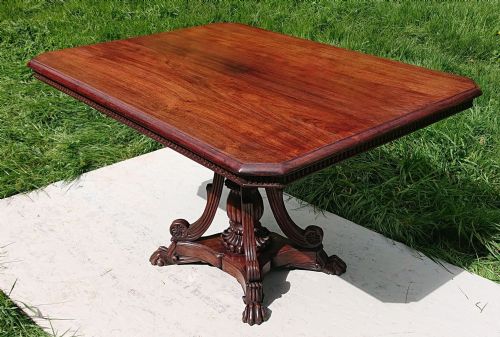
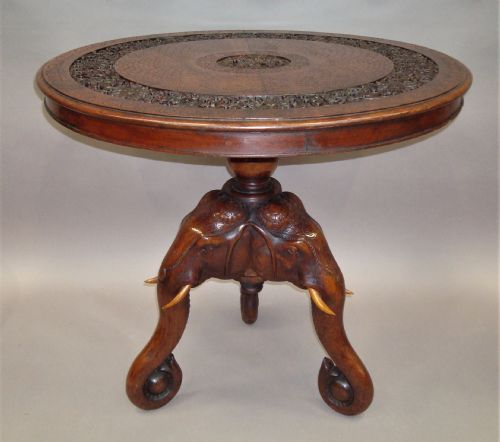


Antique Teak Centre Table
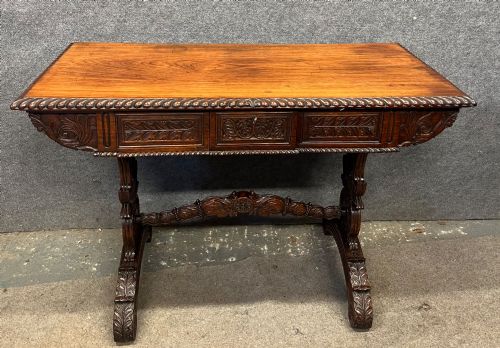
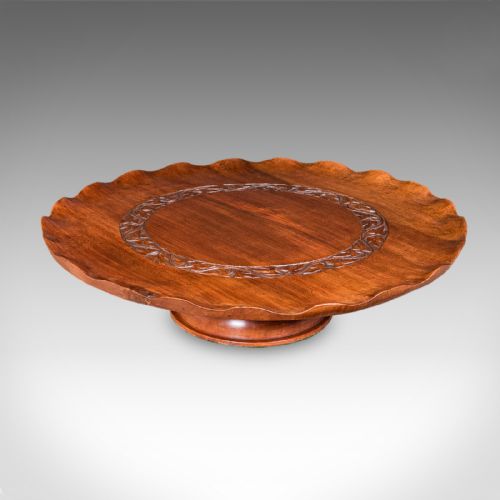
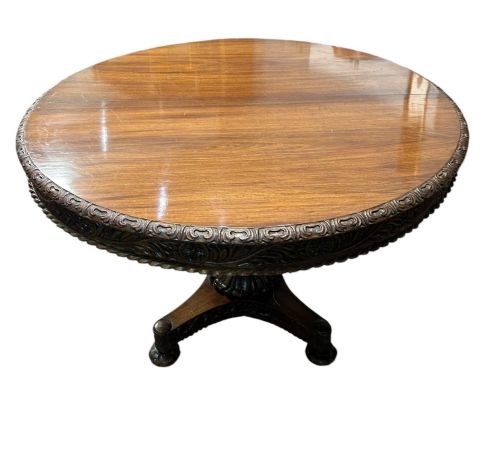
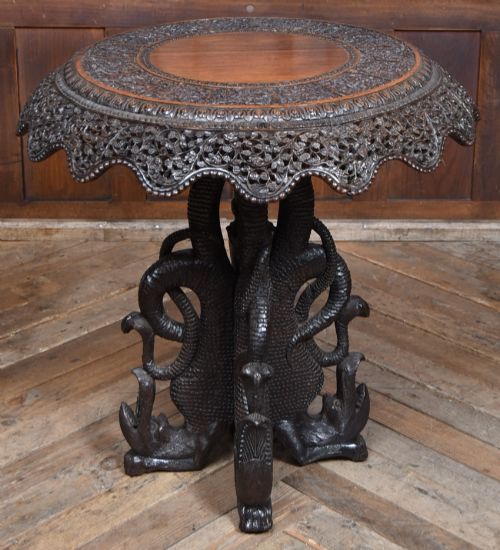
These antique teak centre table pieces bring heavy colonial carving and rich timber into a room with striking presence.
Antique Teak Centre Table
An antique teak centre table takes many forms across the nineteenth century, including occasional tables, tilt tops, coffee tables, and dining formats. You will most frequently meet pieces from the Victorian era and the broader nineteenth century, originating from Anglo-Indian or Burmese workshops.
The regional styles span Anglo-Indian, Anglo-Burmese, and Colonial Indian traditions, often featuring dense, deeply carved decoration. Makers deployed indigenous hardwoods and substantial teak structures to create tables intended to anchor a room.
These tables serve both practical and decorative functions, functioning as lamp tables, small dining surfaces, or large centrepieces. The inventory shifts between simpler occasional pieces and heavily carved tables bearing intricate motifs such as elephants.
How they were made
Craftsmen built these tables using dense tropical timbers, predominantly teak, padouk, and rosewood, sometimes supplemented with bone or iron elements and pigment. The choice of wood dictated the depth and intricacy of the carving possible.
Joinery techniques combined traditional framing with extensive surface carving, where artisans cut deep floral, geometric, and figural reliefs directly into the solid hardwood. Tilt-top mechanisms utilised robust wooden or iron pivots to allow the circular table tops to fold.
Antique Teak Centre Table Retail Price Guide 2026
Typical asking prices for teak centre table among the pieces listed under this phrase on Sellingantiques today, from the lower quarter to the upper quarter. They describe what is for sale here now, not the wider market.
Listings span the nineteenth century, featuring Victorian, Anglo-Indian, and Burmese styles in teak, padouk, and rosewood.
What varies in quality
Quality rests primarily on the depth and crispness of the carving, distinguishing deeply undercut, detailed foliage from flat or hurried work. The choice of primary timber also influences value, with dense teak, padouk, and rosewood forming the upper tier.
Proportion and stability separate the finer tables from standard examples, particularly in how well tilt-top bases lock or how evenly heavy pedestal bases support the top. The inclusion of specialised materials like bone inlay or complex figural motifs marks out superior pieces.
The Antique Teak Centre Table Glossary
- Anglo-Indian
- A style describing furniture made in India during the British period, combining British furniture forms with local carving traditions. These pieces often feature dense foliate patterns.
- Tilt Top
- A table construction where the top hinges vertically to save space when not in use. It relies on a wooden or iron catch beneath the surface.
- Padouk
- A heavy, durable tropical hardwood with a reddish hue, frequently utilised alongside teak in colonial furniture. It takes a fine carved finish.
- Takhat
- A low Indian table traditionally used for sitting or low-level serving. In modern interiors, these function as coffee tables.
- Occasional Table
- A small, movable table designed for specific, intermittent uses such as holding a lamp or books. They appear frequently in nineteenth-century domestic settings.
Antique Teak Centre Table: Frequently Asked Questions
How do I date an antique teak centre table?
Dating relies on stylistic markers, construction methods, and recorded period traits such as Victorian or nineteenth-century origins. Examining the timber choice and the style of the carving helps narrow down the decade of production.
Makers in regions like Bombay or Burma shifted their decorative vocabulary across the nineteenth century, moving from simpler colonial lines to heavier, deeply carved figural motifs by the eighteen-seventies.
Were these tables made in Britain or abroad?
These tables were produced primarily in workshops in India and Burma during the colonial period for both local British residents and export to Britain. The design reflects a fusion of British furniture forms with local artisan carving.
Local craftsmen utilised regional timbers such as teak and padouk, applying techniques passed down through generations of woodworking traditions.
How do I care for a teak table top?
Teak is a durable hardwood that requires minimal intervention, benefiting from dusting with a dry cloth and occasional mild conditioning. Avoid placing these tables near direct heat sources to prevent the timber from splitting.
Because many surfaces feature deep relief carving, a soft brush helps remove dust from the intricate recesses without damaging the wood grain or pigment.
What is the difference between a centre table and an occasional table?
A centre table is traditionally sized and shaped to stand free in the middle of a room, finished on all sides for viewing from any angle. Occasional tables are generally smaller and designed to sit against walls or beside seating.
Both forms appear across nineteenth-century Anglo-Indian and Burmese inventories, utilising the same dense hardwoods and heavy carving styles.