
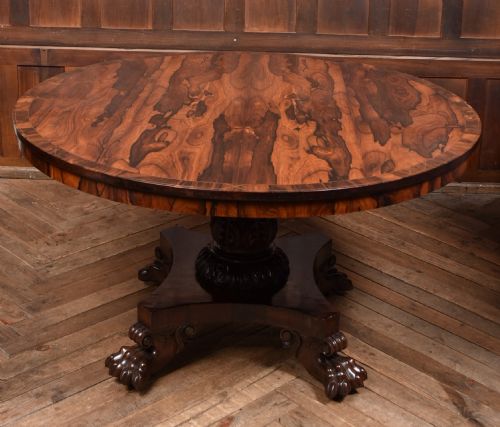
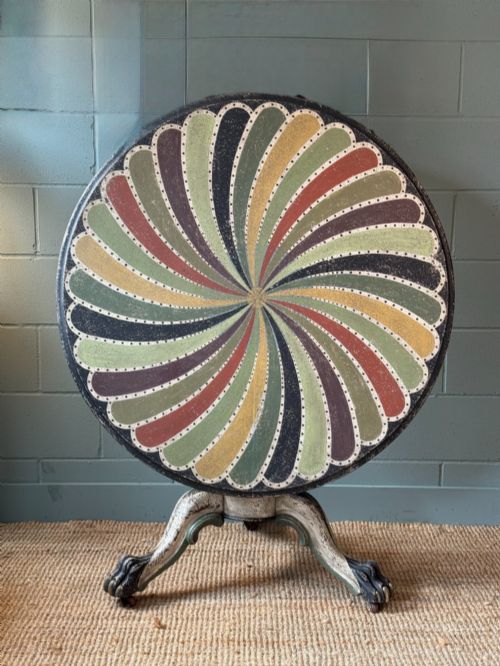

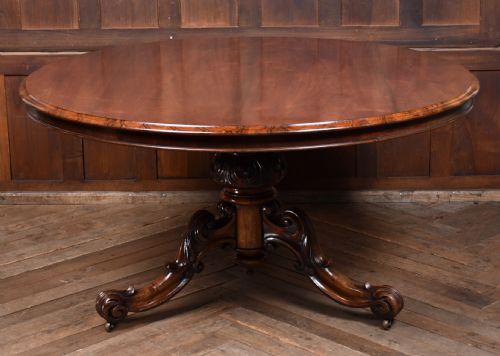


Carved Snap Top Table
A carved snap top table combines a tilting mechanism with a pivoting top, offering practical space-saving utility alongside period craftsmanship.

Carved Snap Top Table
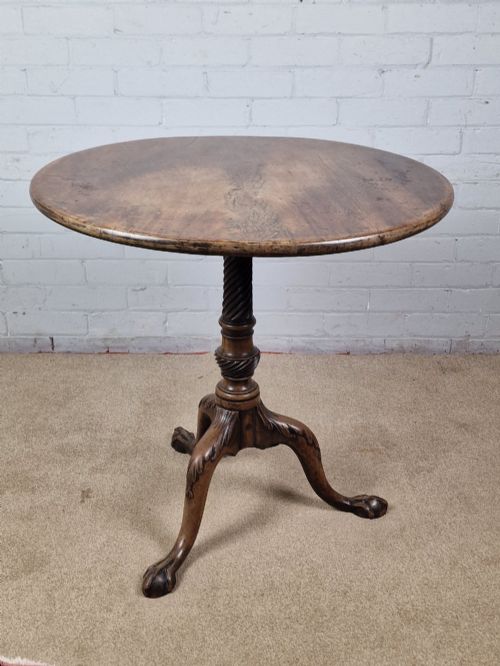
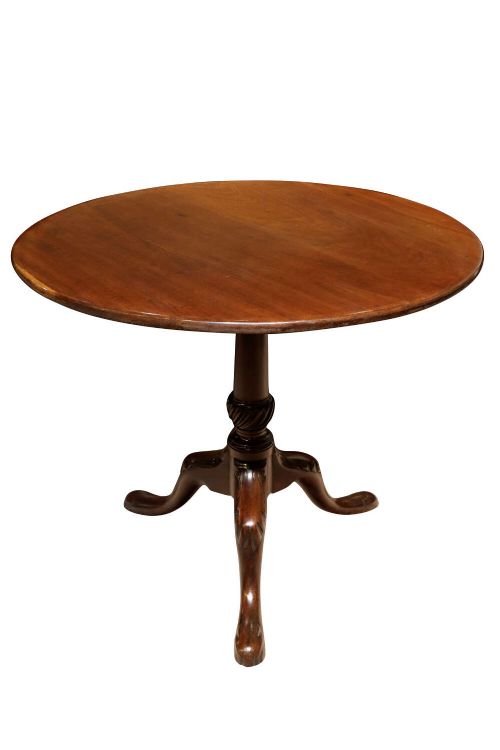
A carved snap top table is a versatile surface designed to tilt upright when not in use, allowing it to sit flat against a wall. The pieces found here span the eighteenth century, the Georgian era, and the Victorian period, frequently taking the form of tea tables, tripod tables, and occasional tables.
How they were made
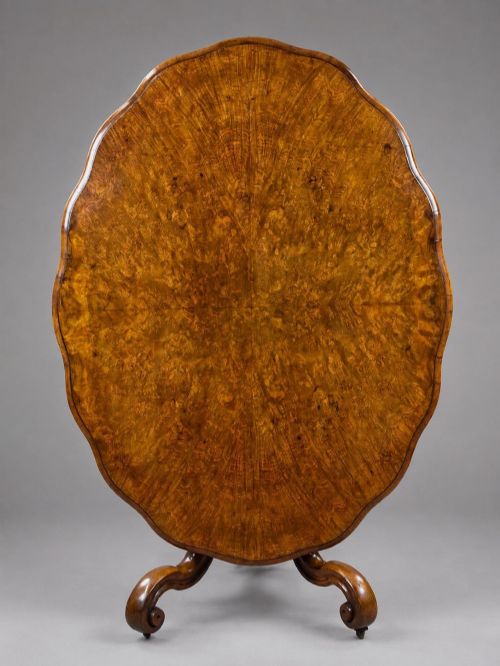
Cabinet makers constructed these tables primarily using solid mahogany, walnut, and rosewood, sometimes incorporating burr walnut veneer or marquetry inlay onto the surfaces. Structural elements relied on dense hardwoods to support the pivoting mechanism and the carved pillar columns.
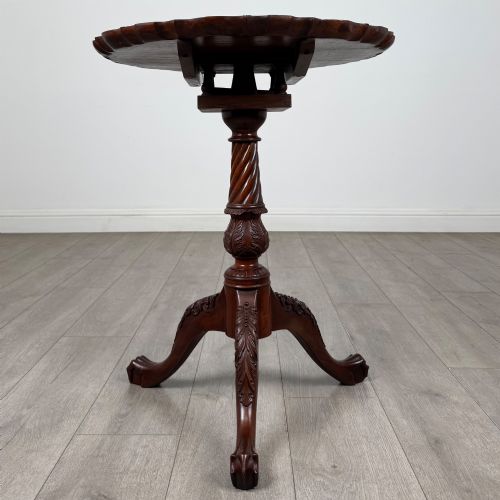
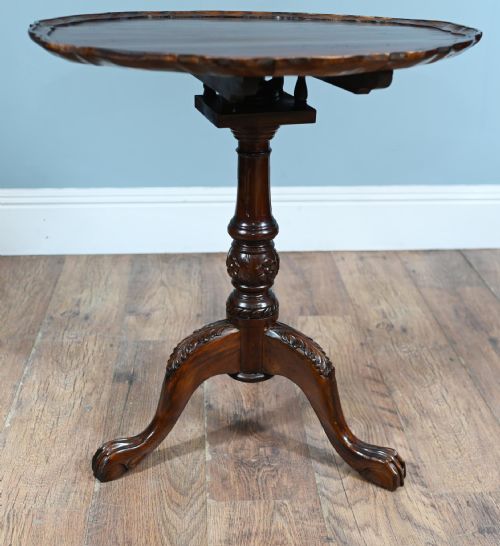
Joinery involved sturdy tripod bases secured to central pedestals, alongside specialised birdcage mechanisms or snap catches that allowed the top to lock securely into a horizontal position.
Form variations on this page include occasional tables, tea tables, loo tables, and tripod supper tables.
What varies in quality
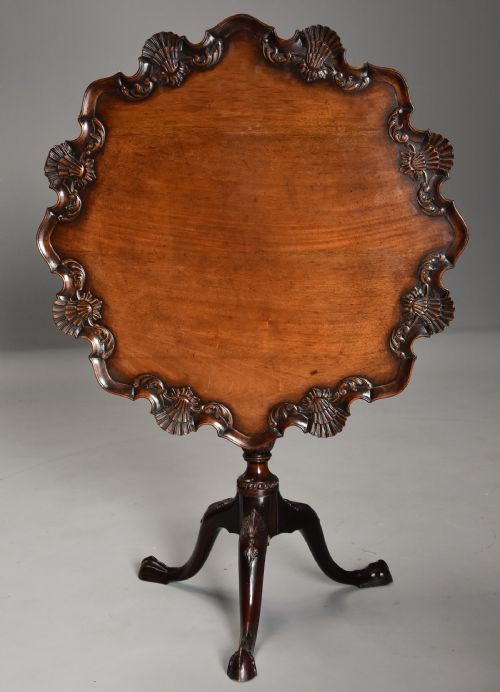
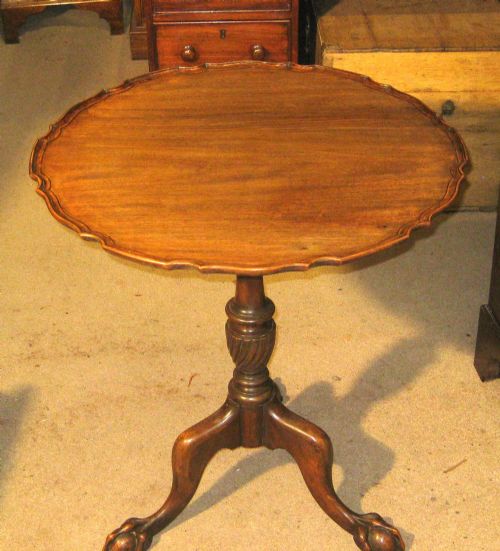
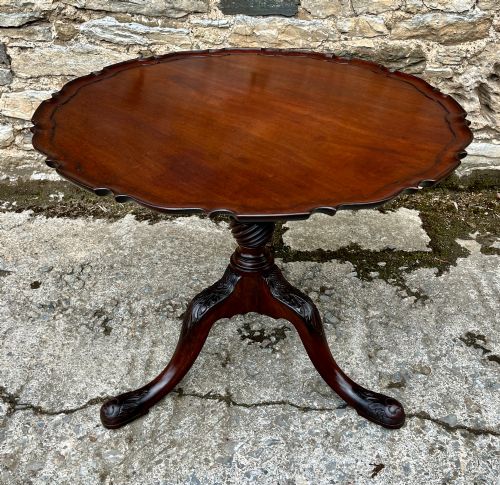
Quality rests in the crispness of the carving on the pillar and the feet, alongside the proportion of the tripod base relative to the top. Tables with piecrust edges and intricate hand-carving show a higher level of artisan skill than plain versions.
The integrity of the pivoting mechanism dictates daily utility, with smoother action and tighter joints distinguishing superior workshop production from simpler domestic furniture.
The Carved Snap Top Table Glossary
- Snap-top
- A table top fitted with a catch mechanism that locks the surface flat or releases it to tilt vertically. This device allowed the furniture to be stored against a wall when floor space was required.
- Tripod base
- A three-legged support structure beneath the central pillar column. This design ensured the table remained stable on uneven floors.
- Piecrust edge
- A raised, scalloped rim carved directly from the solid wood of the table top. It frequently appears on Georgian tea tables.
- Birdcage mechanism
- A small wooden cage structure beneath the top that allows the surface to both pivot and rotate. It is a hallmark of superior eighteenth-century tables.
Carved Snap Top Table: Frequently Asked Questions
What is a snap top table used for?
These tables served primarily as tea tables or supper tables in period homes, providing a stable surface for dining or social gatherings.
Because the top tilts upright, the table could be pushed out of the way against a wall when the room was needed for other activities.
How do I tell an 18th century table apart from a Victorian one?
Eighteenth-century examples often feature finer proportions, crisper tripod carvings, and elements like birdcage mechanisms or piecrust edges.
Victorian tables tend to use denser woods like rosewood and burr walnut, sometimes displaying heavier pedestals or later decorative additions.
How do I care for a mahogany tilt top table?
Keep the table away from direct sunlight and strong heat sources to prevent the wood from drying out or the veneer from lifting.
Dust the surface regularly with a soft cloth and apply traditional beeswax occasionally to nourish the polished timber.
Why does the top tilt?
The tilting mechanism was an ingenious space-saving device used in British homes before rooms were permanently furnished.
It allowed large round surfaces to be stored flat against the perimeter of a parlor or drawing room.