





Carved Hardwood Tripod Table
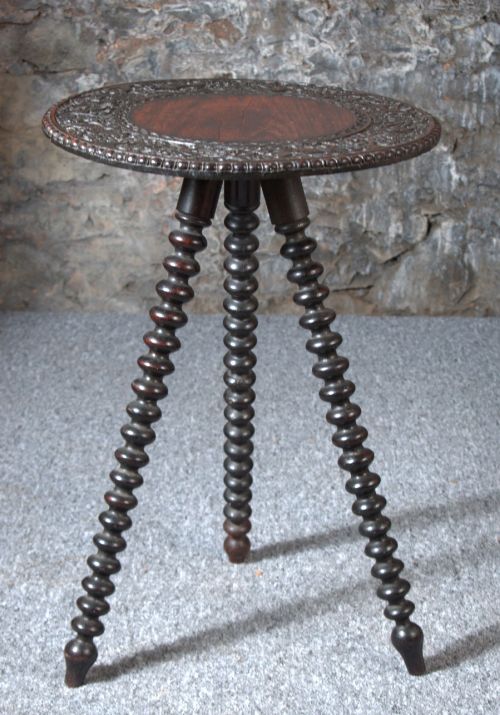
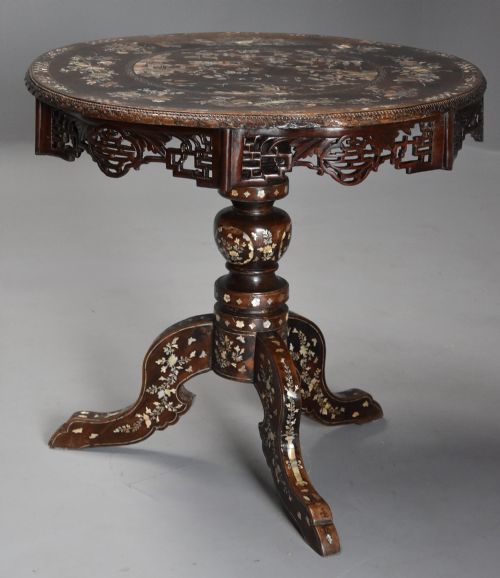
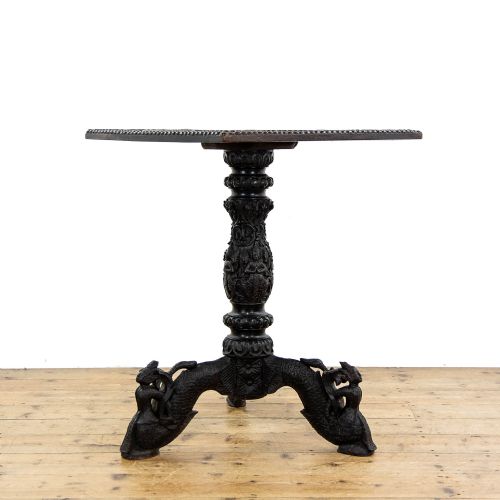
These pieces are a carved hardwood tripod table, bringing intricate regional artistry and rich timber into a room.
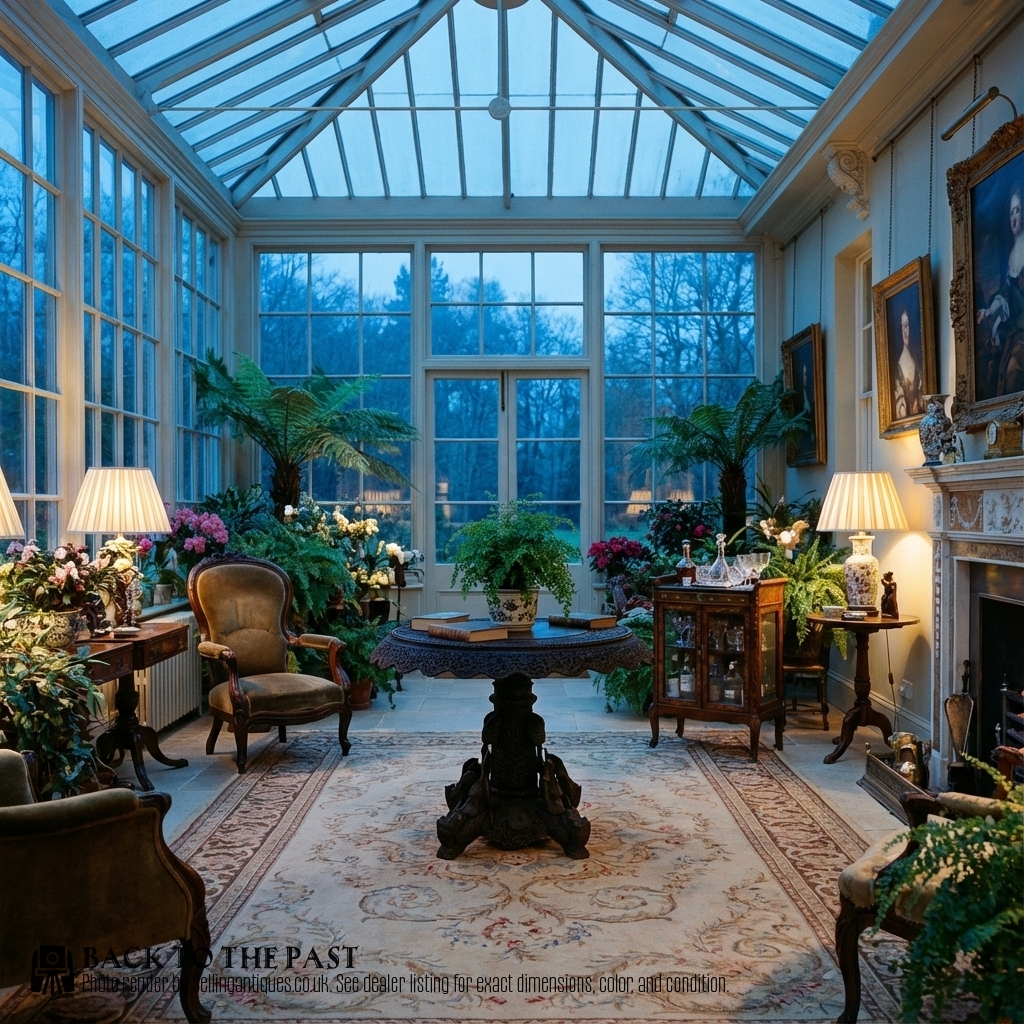
Carved Hardwood Tripod Table
A carved hardwood tripod table brings together regional Asian craftsmanship and British colonial taste, appearing primarily as side tables, occasional tables, centre tables, tilt top tables, and plant stands. The versions met on this page span the nineteenth century into the early twentieth century, originating from workshops across India, China, Vietnam, Burma, and Japan.
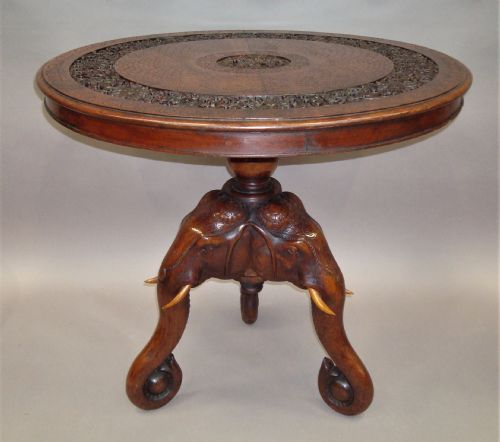
The decorative vocabulary encompasses Anglo-Indian, Chinese Qing Dynasty, Anglo-Burmese, and Meiji Period traditions. Forms range from simple circular surfaces to tables supported by carved elephant heads or dragons, reflecting diverse cultural motifs.
Materials and construction
Artisans utilised dense timbers such as padauk, teak, rosewood, and general hardwoods capable of supporting deep, undercut relief carving. These sturdy woods provided a stable base for intricate floral, fauna, and figural ornamentation.
Construction frequently integrated surface embellishments, incorporating bone inlay, mother of pearl, inset marble tops, and cloisonné enamel panels. These contrasting materials highlight the technical skill involved in combining wood with delicate inlay work.
Several tables rely on carved wooden elephant trunks to support the top, giving the impression that the entire surface rests entirely upon their heads.
Evaluating the craftsmanship
Quality rests in the depth and sharpness of the carving, distinguishing surface scratching from sculptural, undercut relief work where foliage and figures stand clear of the timber ground. Dense, heavy timbers like padauk and rosewood hold crisp detail far better than softer alternatives.
The integration of secondary materials such as bone, mother of pearl, or marble defines the upper tier of execution, requiring precise fitting into the primary hardwood structure without gaps or misalignment.
The Carved Hardwood Tripod Table Glossary
- Padauk
- A heavy, durable tropical hardwood with a reddish hue that darkens with age. It provides an ideal dense ground for deep relief carving.
- Tilt top table
- A table featuring a mechanism that allows the circular top to pivot to a vertical position when not in use. This space-saving form was popular in nineteenth-century interiors.
- Cloisonné
- An enamelling technique where metal wire creates cells on a panel surface, which are then filled with coloured paste and fired. In these tables, such panels serve as decorative table tops.
- Anglo-Indian
- A descriptive term for furniture made in India during the British colonial period, combining traditional local carving styles with European furniture forms.
- Qing Dynasty
- The final imperial dynasty of China, spanning from the seventeenth to the early twentieth century, associated here with formal hardwood furniture production.
Carved Hardwood Tripod Table: Frequently Asked Questions
How do I identify an Anglo-Indian table?
These tables typically feature dense floral relief carving, often incorporating figural elements such as elephant heads or figures. The timber used is frequently padauk or teak.
Origins are often linked to regional workshops in the Bombay presidency or wider British colonial trade networks of the nineteenth century.
What is a tilt top table used for?
The tilting mechanism originally allowed the table to be stored flat against a wall when floor space was needed. Today, the mechanism functions primarily as a structural feature.
When locked flat, it serves as a stable surface for lamps, plants, or decorative objects.
How do I care for a carved hardwood table?
Maintain the timber by dusting regularly with a dry, soft cloth to prevent particulate accumulation within deep carved recesses. Avoid placing the table near direct heat sources or strong sunlight.
Occasional application of appropriate wax polish helps preserve the finish of dense hardwoods like rosewood and padauk.
What is the difference between a centre table and a side table?
Centre tables are finished on all sides to stand freely in the middle of a room, often featuring elaborate tops or central pedestals. Side tables are generally designed to sit flush against a wall.
Both forms utilise the three-legged tripod base structure common to this group.