

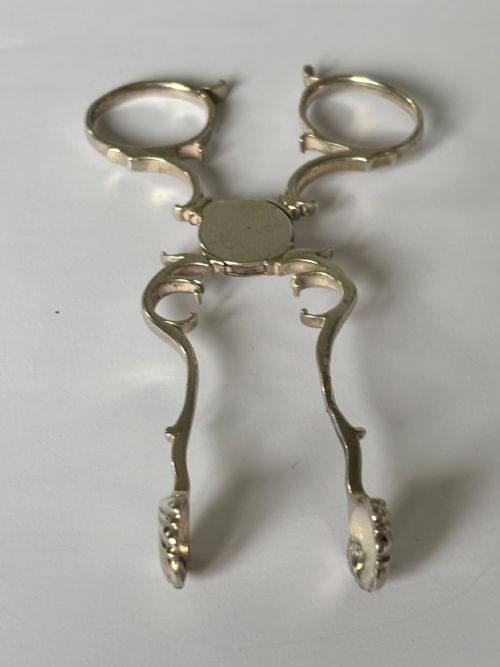


Antique Tea Tongs
Antique tea tongs are small implements designed to lift sugar lumps or leaves, spanning periods from the eighteenth century to the mid twentieth.
Antique Tea Tongs
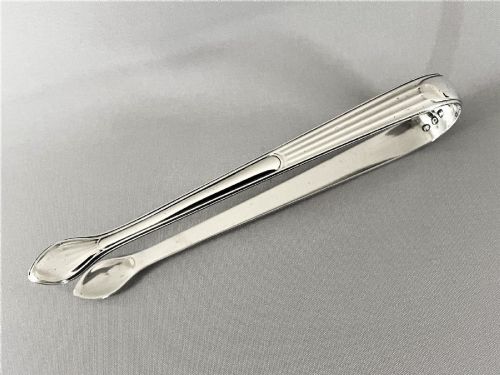
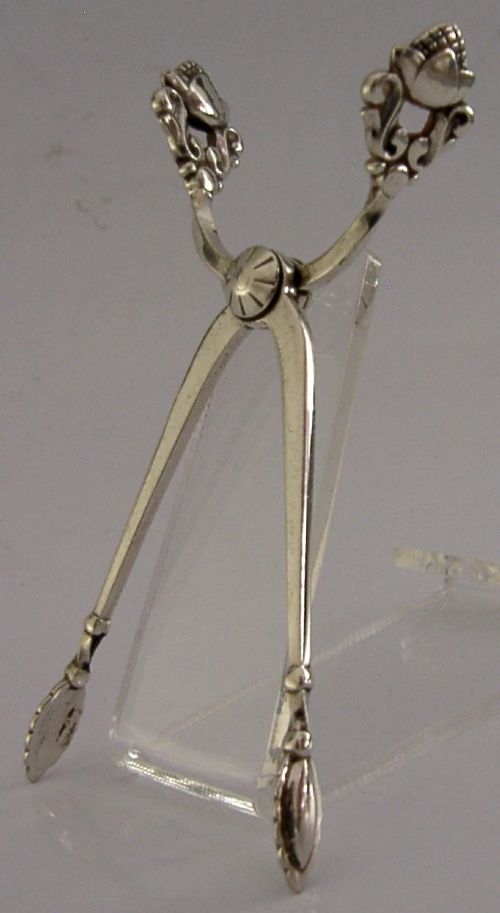
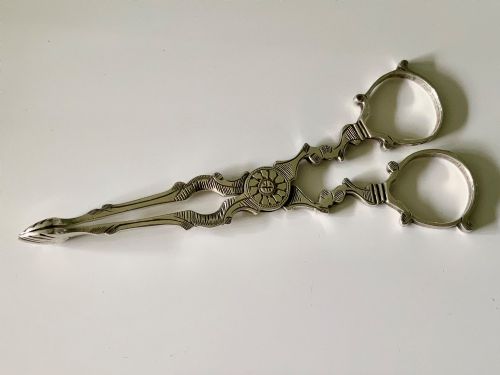
When you search for antique tea tongs, you encounter varied forms such as sugar tongs, sugar nips, and scissor-action items that often accompany teaspoon sets or cased cutlery. The majority on this page are fashioned from sterling silver or silver-gilt, originating across Georgian, Victorian, Edwardian, and Art Deco periods.
Makers and regional assay offices left distinct marks on these objects, from London and Birmingham to Newcastle and Exeter. Pieces range from plain eighteenth-century cast designs to elaborate nineteenth-century foliate motifs and twentieth-century modernist patterns like Acorn.
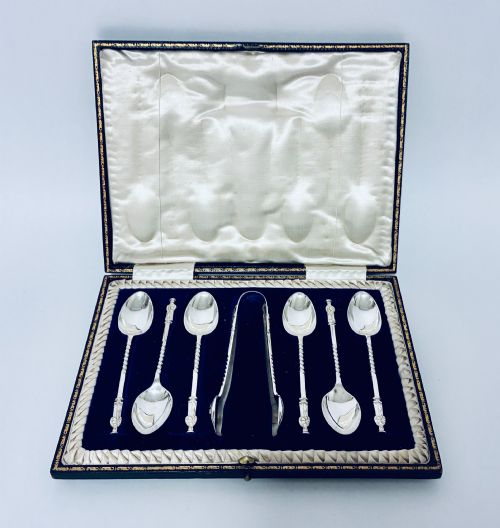
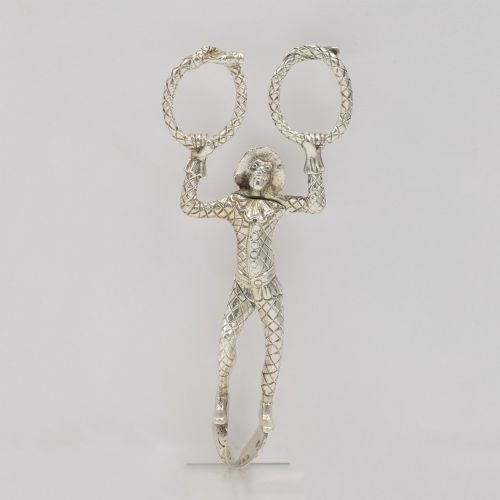
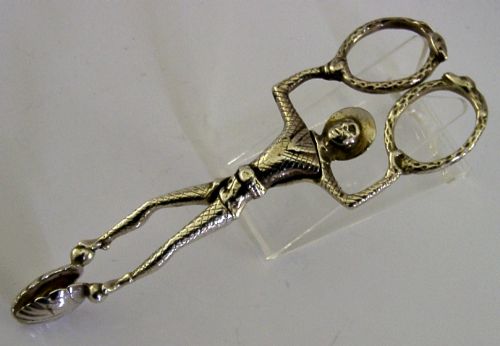
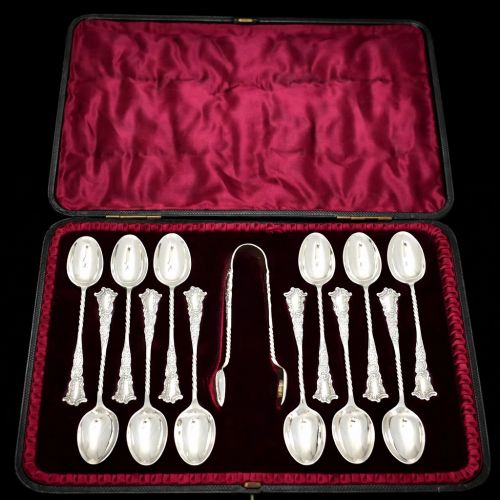
Certain pairs double as novelty items, including harlequin monkeys, jesters, and articulated eagle claws. Others arrive tucked into fitted cases lined with velvet, silk, satin, leather, or leatherette alongside matching spoons.
How They Were Made
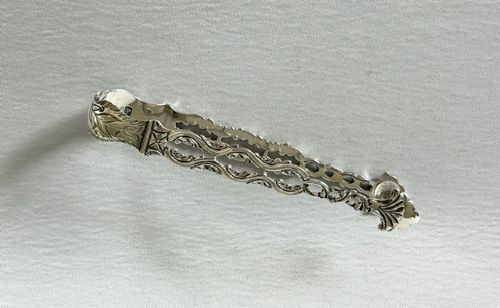
Silversmiths utilised sterling silver and silver-gilt, shaping the metal through casting, piercing, and hammering techniques. Pierced and cast eighteenth-century examples required meticulous hand-piercing to create delicate geometric or floral patterns in the arms.
Scissor-type sugar nips relied on pivot joints and finger loops formed by hand, whereas spring tongs depended on the natural resilience of bent silver stems. Later Victorian and Edwardian examples combined stamped components with hand-chased naturalistic foliate designs.
Hold an articulated eagle claw or a harlequin monkey pair up to the light and watch the miniature silver fingers snap shut.
What Varies in Quality
The distinction between standard utility items and superior work lies in the crispness of the casting and the spring tension of the arms. Master silversmiths maintained a precise balance that allowed the tongs to flex repeatedly without losing their original shape.
Hand-chasing and piercing depth separate simpler mass-produced output from exceptional workshop pieces. Maker marks and clear hallmarks from notable makers or regional offices add archival weight to the surviving metal.
Bateman Family·Dee and Fargus·Georg Jensen·Thomas Tookey·Josiah Williams and Co·John Walton·Francis Higgins·Robert Stebbings·Philippe Berthier·Henry Stuart Brown
The Antique Tea Tongs Glossary
- Sugar nips
- Small scissor-like implements with bowl-shaped ends used for grasping sugar lumps before the widespread adoption of spring tongs.
- Silver-gilt
- Sterling silver that has been coated with a thin layer of gold on the surface, sometimes referred to as vermeil.
- Assay office
- A statutory body that tested the purity of precious metals and stamped items with official hallmarks indicating the town and year.
- Harlequin
- A decorative theme incorporating figures like jesters or monkeys, often found in novelty nineteenth-century silverwork.
- Foliate
- Ornamentation modelled on leaves, vines, and foliage, frequently hand-chased onto Victorian handles.
Antique Tea Tongs: Frequently Asked Questions
What is the difference between sugar nips and sugar tongs?
Sugar nips typically feature a scissor action with finger rings and small bowls at the tips for gripping sugar lumps. Sugar tongs generally consist of a single bent strip of metal forming a spring mechanism with spoon or claw terminals.
Both tools served the tea table during the eighteenth and nineteenth centuries, though nips are more commonly associated with the earlier Georgian period.
How do I know what period my tea tongs are from?
Assay office marks, maker stamps, and stylistic details provide the primary clues for dating silver tea tongs. Georgian pieces often display simpler cast or pierced stems, while Victorian examples frequently showcase heavier foliate chasing.
Twentieth-century items introduce distinct modernist motifs like the Art Deco style or specific maker patterns. Examining the shape and the style of the hallmarks helps narrow down the decade.
Why do some tea tongs come with fitted cases?
Many Victorian, Edwardian, and later sets were produced as comprehensive tea or flatware services housed in boxes lined with velvet, silk, or satin. These cases protected the silver spoons and tongs from tarnish and damage during storage.
Cased sets were frequently given as presentation pieces or wedding gifts, which explains their survival in pristine fitted boxes.
Were tea tongs used exclusively for sugar?
While primarily designed to transfer sugar lumps into porcelain cups, smaller tongs were also utilised within cased sets for handling tea leaves or accompanying lemon slices. Their versatile size made them practical for delicate table service.
Specialist variants like strawberry sets included larger tongs alongside bowls and jugs for serving fruit.