


Antique Tavern Vessel
An antique tavern vessel is a historic drinking or measuring piece from a public house, offering a direct link to old British hospitality.
Antique Tavern Vessel
An antique tavern vessel encompasses the jugs, flagons, tankards and measures used in public houses across the seventeenth, eighteenth and nineteenth centuries. These utilitarian objects served both patrons and publicans for pouring, measuring and consuming ale, spirits and soup.
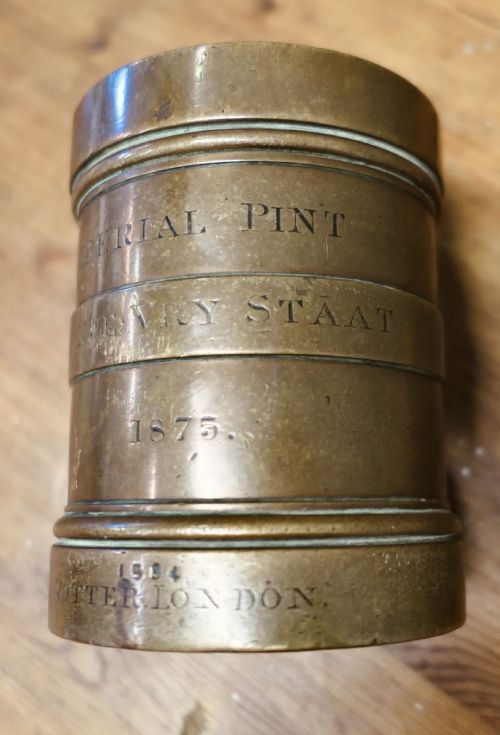
The pieces on this page span several distinct periods, most notably the Georgian and Victorian eras, alongside seventeenth-century earthenware and stoneware examples. Such survivals range from heavy copper and brass liquid measures to pewter flagons and Delft puzzle jugs.
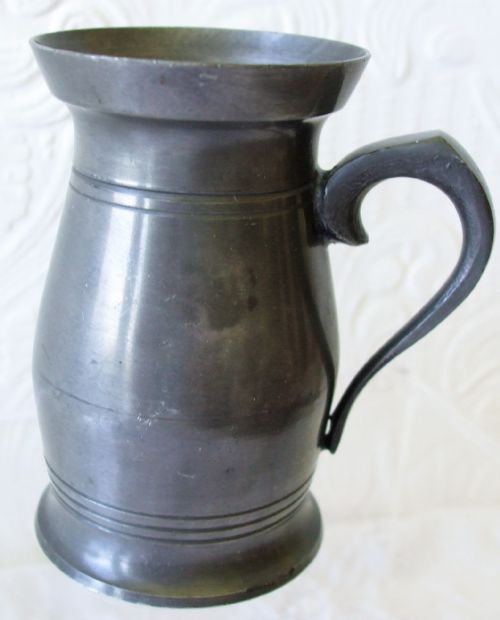
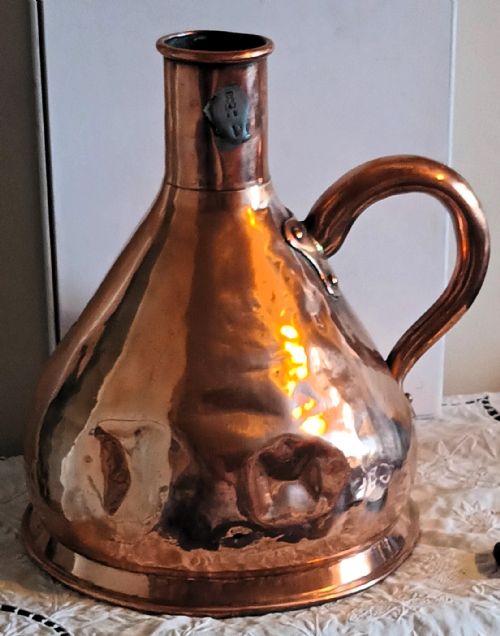
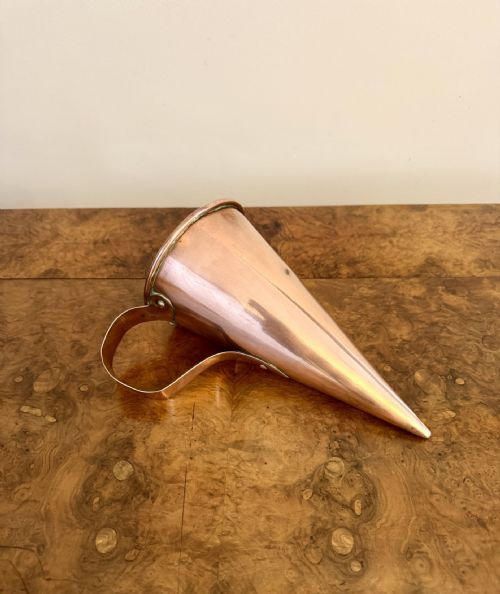
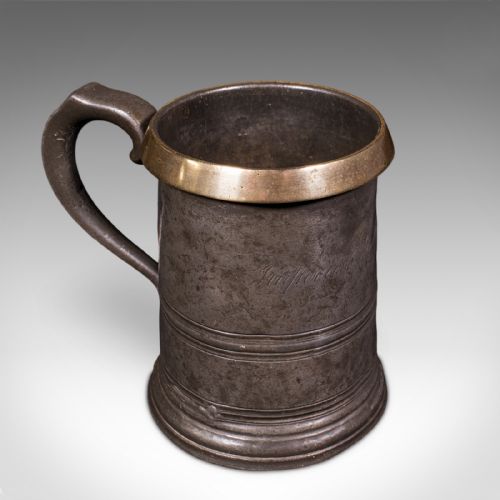
Among the most common forms encountered are copper gallon measures and pewter tavern tankards stamped for local inns or brewers. These items frequently display capacity marks or club associations, reflecting their practical commercial origins.
How they were made
Metals such as copper, brass, and pewter dominate the construction of these drinking vessels, often shaped by hammering, casting, or spinning by skilled metalworkers. Pewter relies on an alloy of tin, lead, and copper, whereas copper and brass sheets are joined and finished to hold liquids securely.
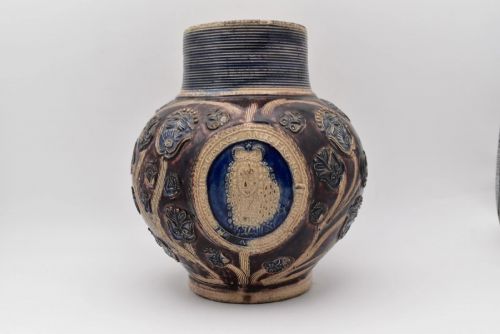
Ceramic examples utilise clay, stoneware, and earthenware, shaped on the potter's wheel and fired in kilns before receiving salt glazes or tin-glaze tin enamels. Pieces like Westerwald stoneware and Dutch Delft feature hand-painted or incised decoration applied prior to the final glaze firing.
The listings show materials spanning copper, pewter, stoneware, brass, earthenware, and glass across multiple centuries.
What varies in quality
The calibre of a tavern vessel rests upon the integrity of its material and the clarity of its original maker marks or touchmarks. Heavy-gauge copper and substantial pewter castings retain their structural form better than thinner, heavily worn alternatives.
Artistic execution and decorative detail differentiate standard utilitarian ware from superior examples, particularly on puzzle jugs and salt-glazed stoneware. Crisp relief moulding, well-balanced proportions, and intact historical inscriptions elevate a piece above ordinary tavern equipment.
Potter of London·J. Bower·C and A Painter·Doulton Lambeth·Frederic Sanders·Loftus of Oxford Street London
The Antique Tavern Vessel Glossary
- Flagons
- A large drinking vessel with a handle and usually a lid, designed for holding ale or wine in public houses. Many surviving examples feature flat lids typical of the eighteenth century.
- Haystack measure
- A distinctive nineteenth-century liquid measure made of brass or copper, characterised by its tall, tapering body resembling a stacked pile of hay. These were calibrated for exact volumes in trade.
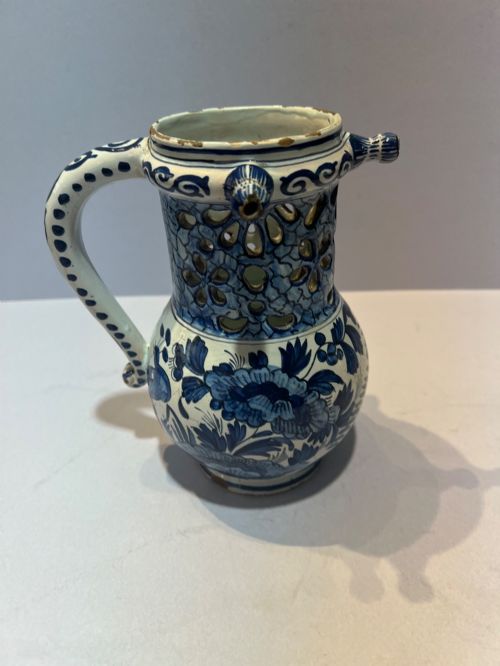
- Puzzle jug
- An interactive ceramic vessel featuring pierced necks and multiple spouts designed to challenge the drinker to consume the contents without spilling. They often date from the eighteenth and nineteenth centuries.
- Tyg
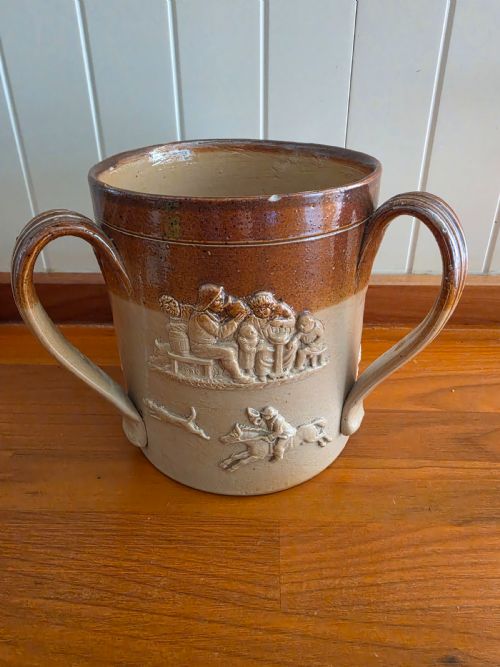
- A multi-handled drinking vessel intended for communal use, allowing several people to hold the same cup. Early examples appear in slipware and stoneware from the seventeenth century onward.
- Westerwald
- A German region renowned for producing salt-glazed stoneware vessels decorated with cobalt blue highlights and stamped medallions. These imported jugs frequently reached British taverns.
Antique Tavern Vessel: Frequently Asked Questions
What is a tavern vessel?
A tavern vessel is a historical drinking or measuring implement used in historic public houses. These items include metal measures, ceramic jugs, and pewter tankards.
They were employed daily by publicans to serve patrons and regulate portions of ale and spirits.
How were pewter measures used?
Pewter measures held exact volumes of liquid behind the bar for commercial trade. They allowed publicans to pour consistent pints and gills for customers.
Over time, many received verification marks from local authorities to guarantee their accuracy.
How do I identify a Georgian copper jug?
Georgian copper jugs typically display heavy-gauge construction with dovetailed seams and reinforced rims. They often bear capacity stamps or the names of benefit clubs and public houses.
The metal develops a deep, aged patina through years of use and polishing in tavern settings.
Where were salt glaze jugs made?
Salt glaze jugs originated in specialised potteries across England and continental Europe, such as Westerwald in Germany or Doulton Lambeth in London. Potters threw the clay and introduced salt into the kiln during firing to create the characteristic textured finish.
These durable ceramics survived the rigorous conditions of public house environments.
Can I use antique tavern vessels for drinking?
Most antique tavern vessels are collected as decorative historical artefacts rather than for modern culinary use. Older pewter and certain metal alloys may contain lead or other components unsuitable for contemporary consumption.
Displaying them preserves their physical integrity and historical markings.