


Antique Tavern Jug
These heavy public house vessels are the durable drink carriers and measures that once served ale and spirits in busy bars, built to survive daily trade.
Antique Tavern Jug
An antique tavern jug encompasses sturdy vessels used for holding and dispensing drink in public houses, taking forms such as liquid measures, flagons, and pitchers. The selection spans robust utility pieces from the seventeenth, eighteenth, and nineteenth centuries, including Victorian provincial examples and Georgian designs.
Buyers most frequently encounter metal and ceramic iterations on this page, ranging from plain pewter pint measures to large copper flagons and salt-glazed stoneware pitchers. Many carry capacity marks or pub names, linking them directly to the operational trade of old inns.
Materials and Construction
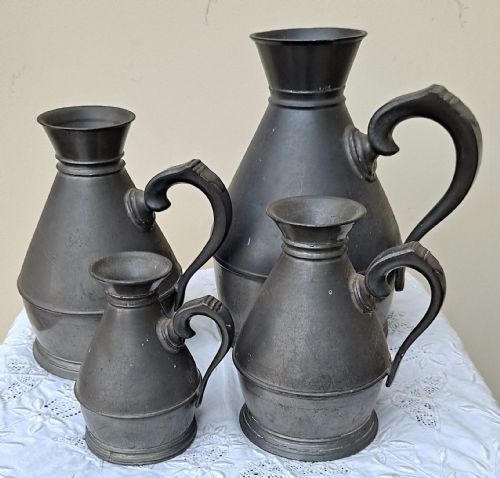
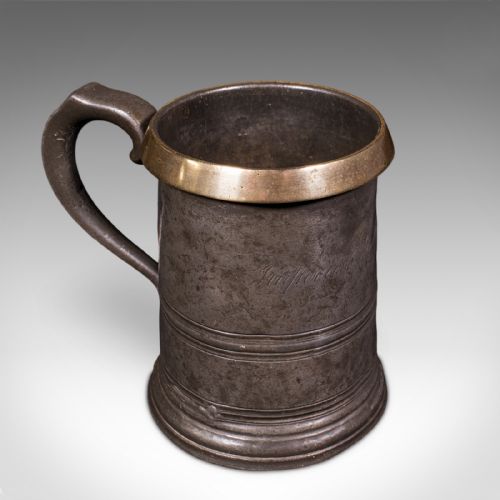
Makers shaped these vessels from durable materials like copper, pewter, earthenware, and stoneware, relying on substance to withstand the rough handling of public houses. Pewter was cast and hammered into shapes such as the distinctive haystack or tappit hen measures, while stoneware and earthenware were thrown on a wheel and fired in kilns.
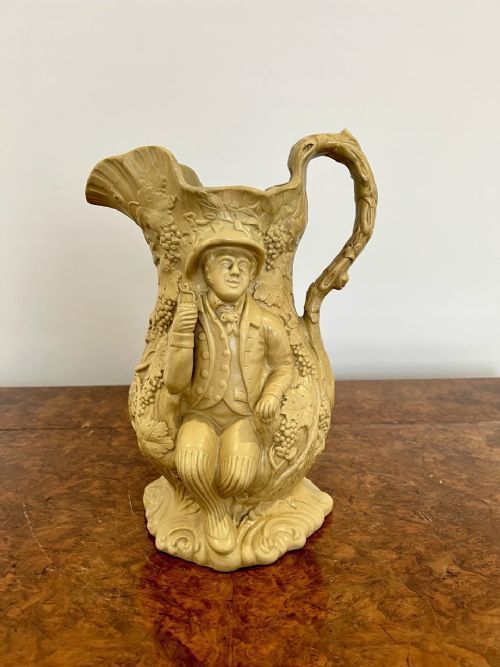
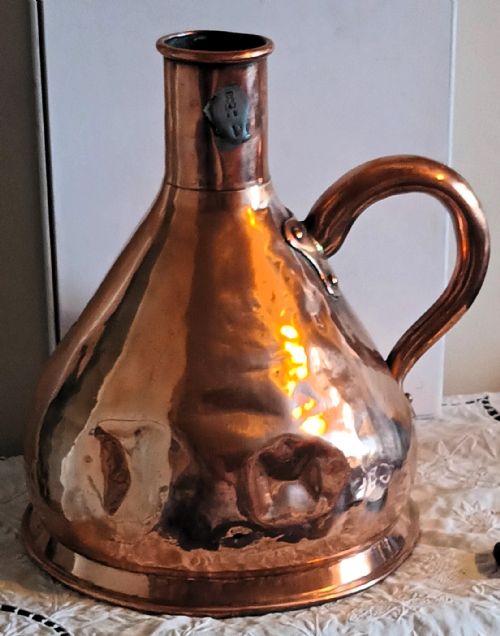
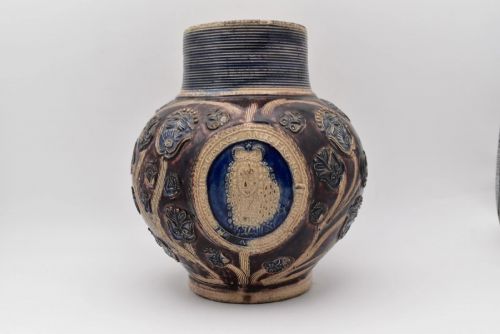
Surface treatments included salt glazing for stoneware and relief moulding for ceramic jugs, adding texture and durability. Metal vessels often featured soldered seams and applied handles, whilst copper flagons utilised folded and riveted joints to maintain liquid containment.
Materials span glazed ceramic, earthenware, brass, and silver-rimmed harvest cups.
Markers of Quality
Quality rests in the crispness of the form and the integrity of the original construction, distinguishing heavy utilitarian production from finer decorative output. A well-preserved vessel retains its original capacity stamps, clear touchmarks, and unblemished surface patination earned through decades of service.
The degree of hand-finishing defines the better examples, whether seen in the sharp detailing of a relief moulded ceramic body or the balanced proportions of a heavy copper measure. Pieces retaining intact lids, original spouts, and legible maker attribution sit at the upper end of the range.
J Bower·Doulton Lambeth·Loftus of Oxford Street London·John De St Croix·Thomas Smily
The Antique Tavern Jug Glossary
- Flagon
- A large vessel with a handle and spout used for holding and pouring liquids in a tavern setting. These pieces often feature substantial metal or ceramic walls to keep drinks stable.
- Haystack measure
- A distinct regional style of British and Irish pewter liquid container with a bulbous lower body tapering towards the top, resembling a stacked pile of hay. They were produced in graduated sets for accurate volume dispensing.
- Puzzle jug
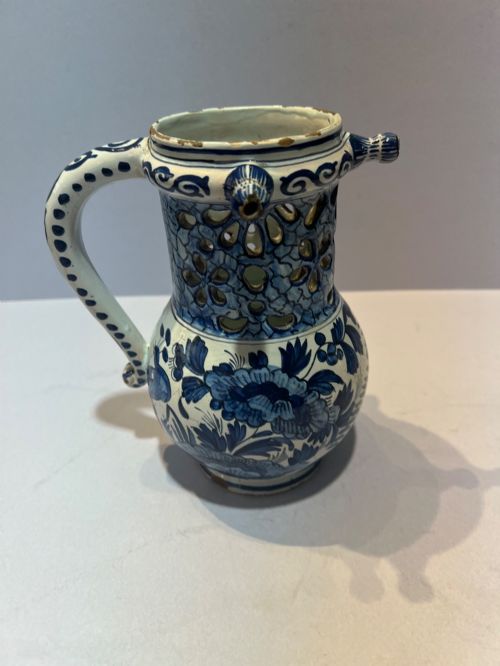
- An interactive ceramic vessel featuring a perforated neck and false spouts designed to spill its contents unless the drinker covers hidden holes in the handle. These pieces were popular tavern entertainments.
- Tappit hen
- A traditional Scottish pewter measuring jug featuring a lid with a knob and an internal capacity indicator. They were widely used in public houses for dispensing ale and wine.
- Westerwald stoneware
- German salt-glazed grey ceramic pottery decorated with blue cobalt incisions, frequently imported for use in European taverns. These jugs often display royal portraits or heraldic stamps.
- Breweriana
- Collectable items associated with the brewing and serving of beer, including public house tankards and measures. This category encompasses the commercial ephemera of historical drinking establishments.
Antique Tavern Jug: Frequently Asked Questions
What is an antique tavern jug?
An antique tavern jug is a historical drinking vessel or liquid measure used in public houses to serve ale, beer, and spirits. These pieces were essential tools for innkeepers to measure and pour drinks for patrons.
They appear in various forms, including stoneware pitchers, copper flagons, and pewter tankards, reflecting the diverse material culture of historical drinking establishments.
How were pewter measures used?
Pewter measures served as standardised containers for dispensing exact volumes of liquid in British pubs before modern metric systems. Landlords used them to pour consistent pints and quarts directly for customers.
Their heavy construction ensured they survived the constant washing and rough handling typical of busy taprooms.
How do I identify a Georgian copper jug?
Georgian copper jugs are characterised by heavy hand-beaten construction, often featuring folded seams and warm patination. Many carry contemporary verification marks or stamps indicating their volume capacity.
These pieces typically display utilitarian forms designed for heavy work rather than purely decorative display, often found in graduated sets.
Are puzzle jugs functional?
Puzzle jugs were functional drinking vessels designed as novelty items to test the drinker's skill without spilling the contents. The user had to cover specific hidden air holes in the tubular rim to draw liquid through the spout.
In period taverns, they served as parlour games for patrons seeking amusement during drinking sessions.