

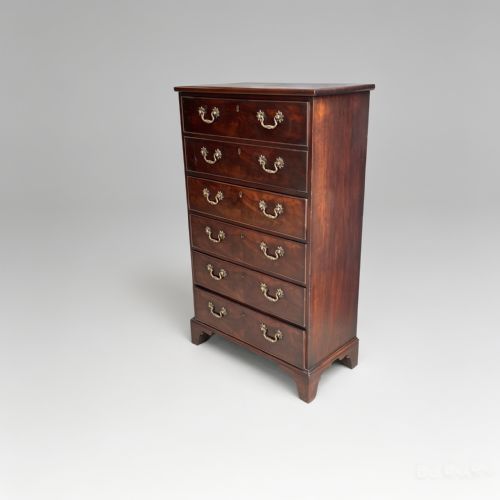


Antique Tall Desk Drawers
When you want antique tall desk drawers, you are looking at upright writing furniture designed to keep correspondence secure and orderly in rooms with high ceilings.
Antique Tall Desk Drawers
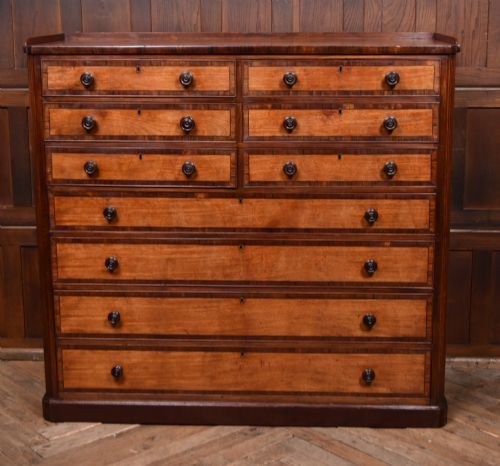
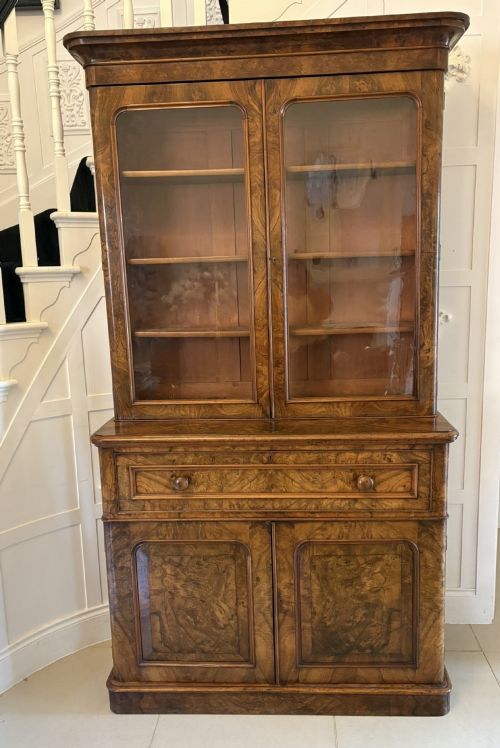
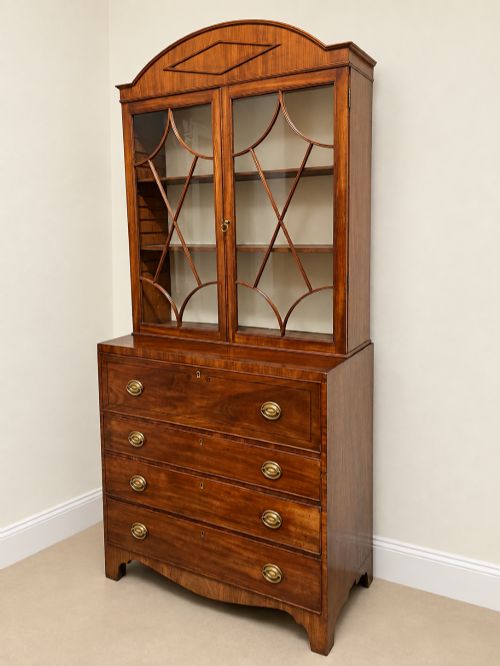
The search for antique tall desk drawers brings up upright writing pieces, primarily taking the form of secretaires, escritoires, and tall chests with integrated writing compartments. These vertically proportioned items allow a writer to work standing or seated at a drop-down flap while utilising minimal floor space in domestic or institutional settings.
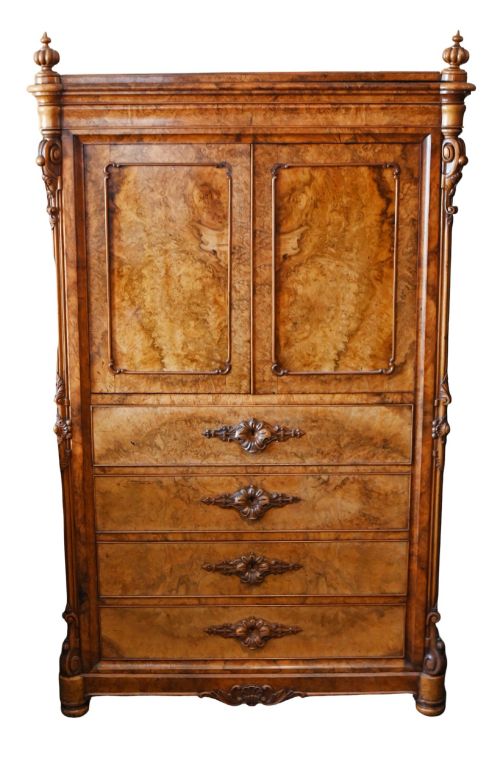
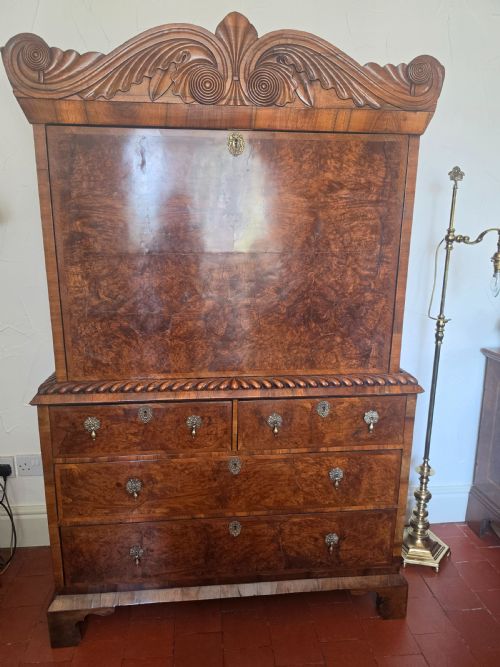
Pieces originating from the eighteenth and nineteenth centuries dominate the selection, spanning periods from early walnut escritoires to Victorian mahogany military versions and French marble-topped abattants. Makers frequently combined tall cabinetry with internal secret drawers, pigeonholes, and subsidiary banks of external drawers to serve multiple storage functions in one footprint.
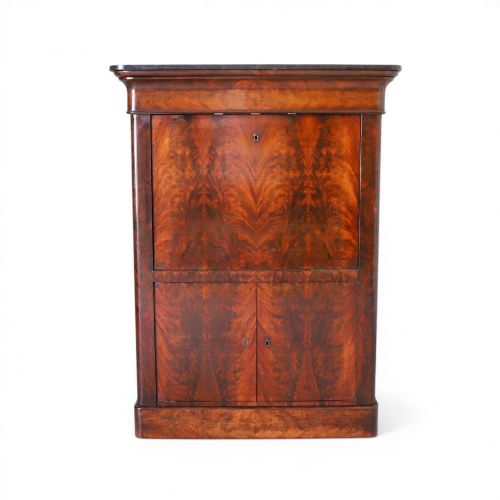
Regional variations include English chest-on-chest secretaires, Channel Island mahogany examples, and Continental Louis Philippe or Italian geometric marquetry pieces. Buyers encounter everything from simple pine variants to elaborate burr walnut, birds-eye maple, and flame mahogany veneered surfaces.
Materials and Construction
Constructors relied heavily on timbers such as mahogany, walnut, and oak for carcass stability, often applying flame mahogany veneer, burr walnut, or geometric marquetry to the exterior faces. These dense hardwoods provided the structural strength needed to support heavy fall fronts and numerous internal compartments without warping.
Surface treatments incorporated contrasting veneers, brass hardware for drop-fronts and drawer pulls, and marble tops on French models. Interior secret drawers and fitted writing compartments required precise joinery to operate smoothly within the narrow confines of tall, shallow cabinetry.
Antique Tall Desk Drawers Retail Price Guide 2026
Typical asking prices for tall desk drawers among the pieces listed under this phrase on Sellingantiques today, from the lower quarter to the upper quarter. They describe what is for sale here now, not the wider market.
Secret drawers often require pressing hidden wooden springs or removing false partitions to reveal where past owners hid their small treasures.
Judging Quality in Tall Writing Furniture
Quality rests in the precision of the internal mechanism, particularly how smoothly fall fronts, abattant flaps, and secret drawers release and close. Superior examples demonstrate tight tolerances in secondary timbers and seamless application of decorative veneers like flame mahogany or burr walnut.
The integrity of the structural joinery dictates longevity in taller forms, where height concentrates weight on the lower carcass. Finer pieces maintain balanced proportions between the upper writing section and the lower drawers, avoiding heavy-handed repairs or mismatched timber selections across the elevation.
Druce & Co.
The Antique Tall Desk Drawers Glossary
- Secretaire à Abattant
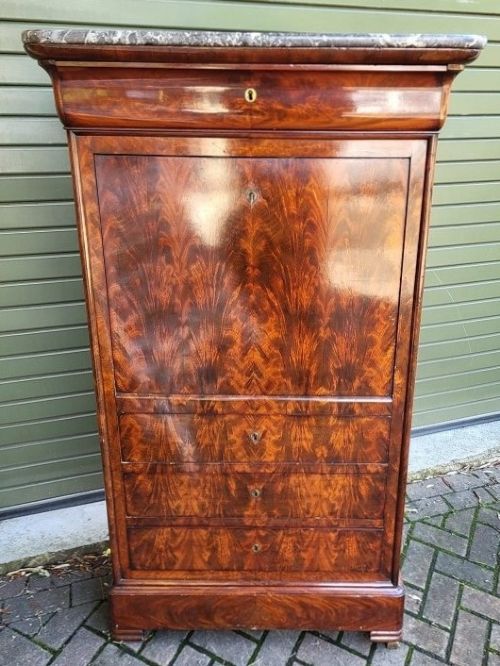
- A tall, upright cabinet featuring a drop-down writing flap that conceals a fitted interior of small drawers and pigeonholes. This French form often incorporates a marble top above the writing surface.
- Escritoire
- An antique writing cabinet or desk, typically tall and fitted with a fall-front writing surface. The term frequently applies to English walnut and mahogany pieces from the seventeenth and eighteenth centuries.
- Wellington Chest
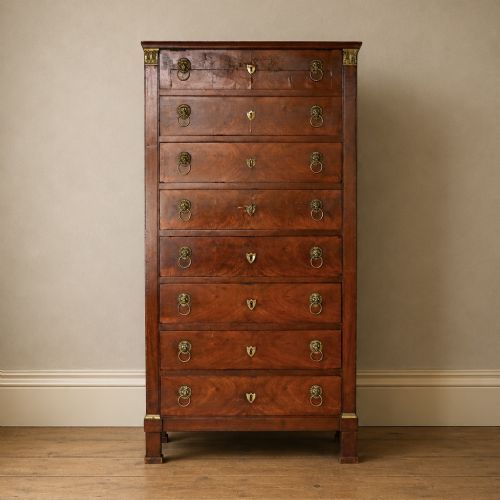
- A tall, narrow chest of drawers secured by a hinged locking stile on one side that fastens with a key. Named after the Duke, this form provides compact vertical storage.
- Flame Mahogany Veneer
- A timber preparation sliced from the point where branches join the main trunk, creating a distinctive flamed or undulating grain pattern. Cabinetmakers prized this veneer for principal drawer fronts and fall flaps.
- Secret Drawers
- Concealed compartments built behind pigeonholes or removable panels within writing furniture. These hidden spaces stored valuables and private papers.
Antique Tall Desk Drawers: Frequently Asked Questions
What is a secretaire à abattant?
A secretaire à abattant is a tall, vertical cabinet with a hinged front flap that pulls down to serve as a writing desk. Inside, it holds small drawers and pigeonholes for stationery.
This form keeps writing materials upright and tidy while concealing correspondence behind a locked vertical panel when not in use.
How do I use a tall desk in a modern room?
These tall pieces provide vertical storage and a fold-down writing surface without taking up much floor space. They work well in studies or living areas where surface area is limited.
The drop-down flap opens when you need to write and closes away clutter when the task is finished.
What is the difference between an escritoire and a chest on chest?
An escritoire is dedicated primarily to writing with a fall front, whereas a chest on chest is a tall storage unit built in two stacked sections. Some chest on chest examples incorporate a secretaire drawer within the upper section.
Both forms offer considerable height, but the escritoire prioritizes internal desk fittings over simple clothes storage.
How do I care for antique veneer?
Keep antique veneer surfaces away from direct sunlight and extreme temperature changes to prevent the timber from drying out or lifting. Dust gently with a dry cloth and avoid modern chemical polishes.
Applying a traditional wax occasionally helps nourish the wood and preserves the grain patterns of mahogany and walnut.