


Antique Table Glass Jar
An antique table glass jar brings refined function to a dressing table or dining surface through polished metal mounts and decorative glass.
Antique Table Glass Jar
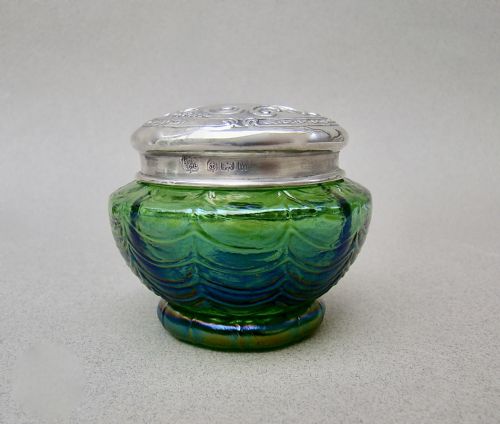
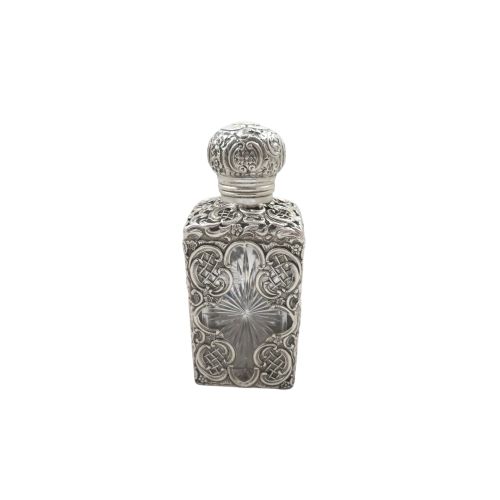
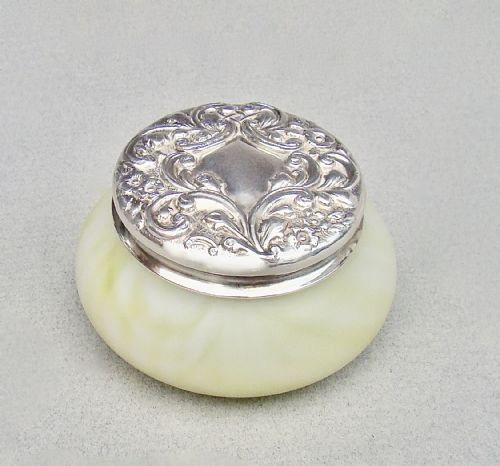
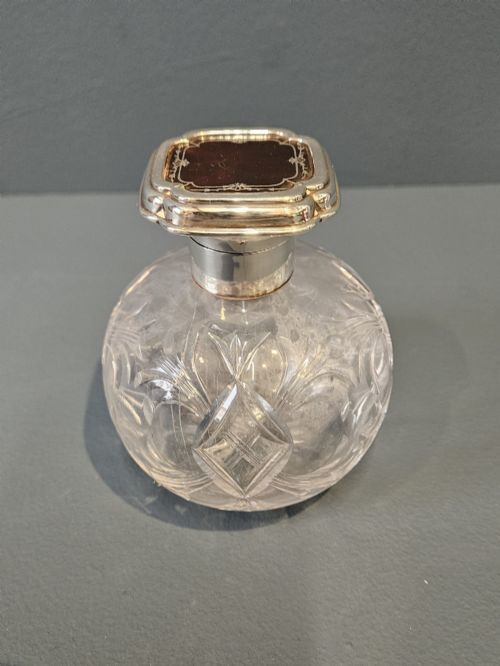
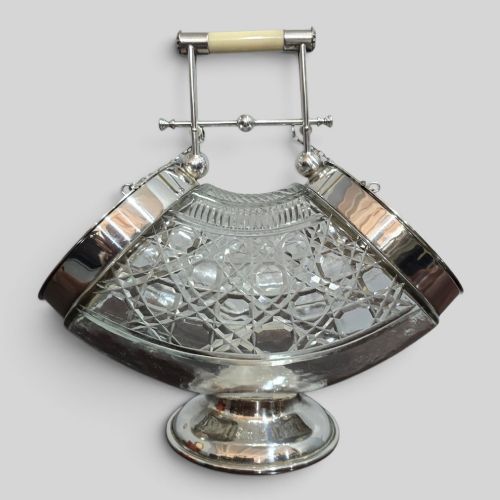
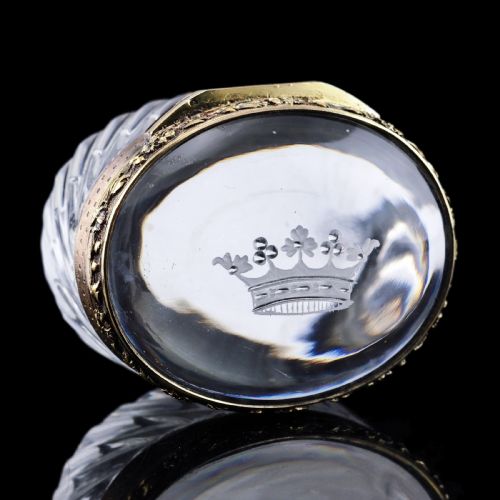
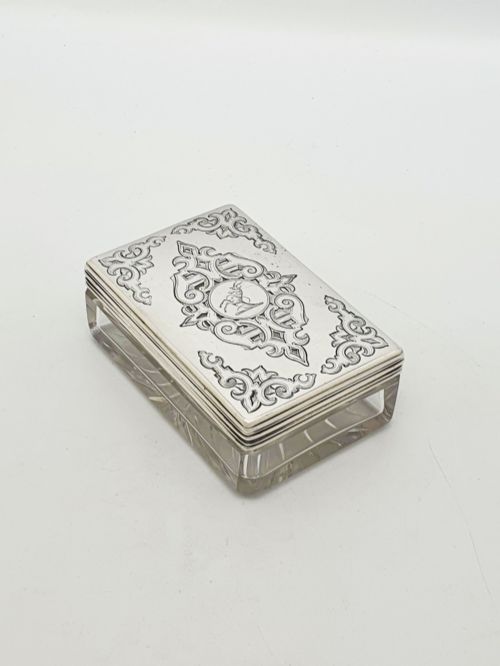
An antique table glass jar encompasses small functional vessels designed for domestic display and personal use, spanning scent bottles, trinket boxes, dressing table jars, and biscuit barrels.
The objects frequently combine transparent, cut, or coloured glass bodies with fitted metal lids, often executed in styles ranging from Victorian and Edwardian to Art Deco.
Many survivors originate from the nineteenth and early twentieth centuries, reflecting the domestic habits of the Georgian, Victorian, Edwardian, and Art Deco periods.
Materials and construction
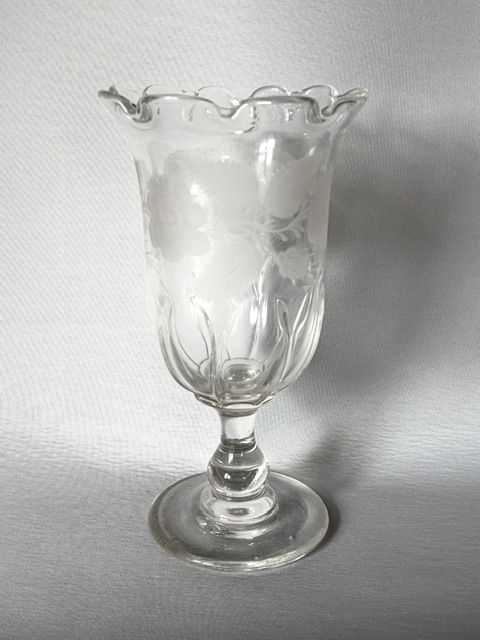
Vessels are formed from cut glass, crystal, satin glass, or coloured glass such as cranberry and Bristol blue, occasionally paired with enamel or porcelain components.
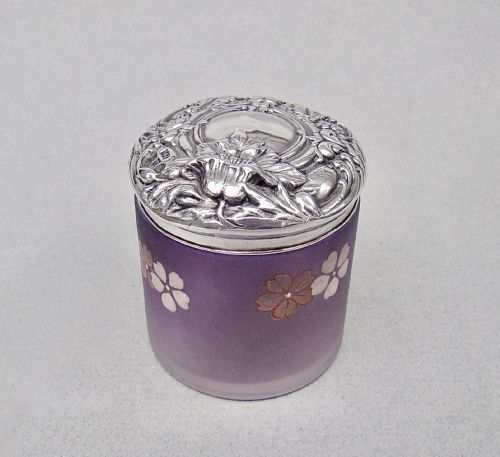
Lids, collars, and mounts employ sterling silver, silver plate, or brass, frequently shaped to fit the glass neck and secured with hinges or screw threads.
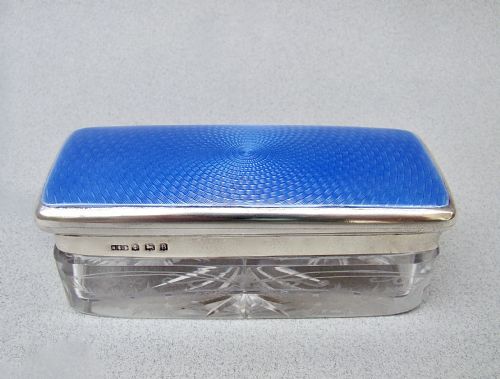
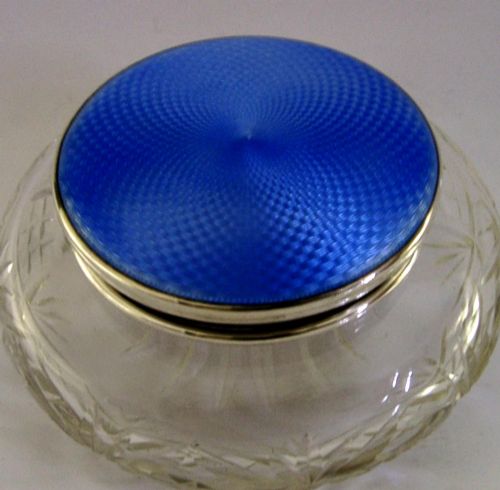
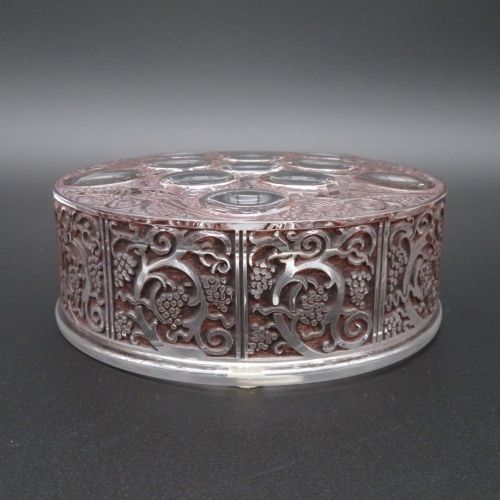
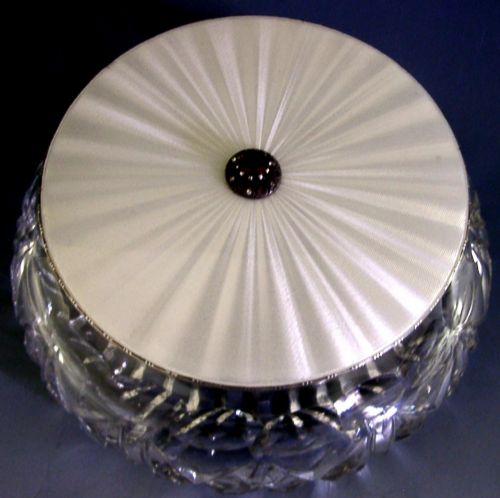
Surface ornamentation relies on hobnail cutting, etching, guilloché enamel work, and silver overlay techniques applied directly to the glass body or metal mount.
Listings feature items spanning the Georgian, Victorian, Edwardian, and Art Deco periods, created from cut glass, crystal, and coloured glass.
Assessing quality and execution
Quality rests in the precision of the glass cutting, the clarity of the crystal or glass body, and the weight of the silver or brass mounts.
Superior examples display crisp facets, well-defined guilloché enamel patterns, and hallmarks that confirm the maker and year of manufacture.
Balance between the glass vessel and its metal fitting indicates the skill involved in assembling the piece.
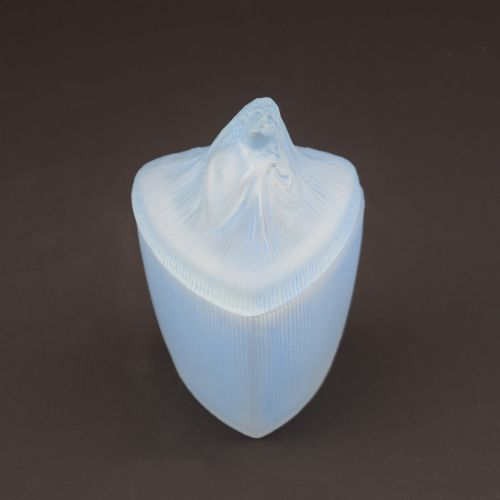
A. J. Pepper & Co·Henry Clifford Davis·A. Bromet & Co·Rene Lalique·Henry Perkins·Asprey & Co·Adie Brothers Ltd
The Antique Table Glass Jar Glossary
- Guilloché enamel
- Enamel decorated with intricate geometric engine-turned patterns beneath a translucent coloured layer. This technique is frequently seen on Art Deco dressing table jars.
- Hobnail cut
- A raised, faceted glass cutting pattern resembling the hobnails used in heavy boots. It provides tactile grip and catches the light on Victorian and Edwardian pieces.
- Satin glass
- Glass treated with an acid dip to produce a velvety, matte surface finish. It appears on various trinket boxes and dressing table containers.
- Biscuit barrel
- A covered ceramic or glass container designed for storing biscuits on the dining table. They often feature swing handles and silver plated mounts.
- Trinket box
- A small lidded container used for holding jewellery or small personal items. These boxes often combine glass bodies with hinged silver mounts.
Antique Table Glass Jar: Frequently Asked Questions
What were antique table glass jars used for?
These vessels served practical roles in domestic settings, holding cosmetics, perfumes, small trinkets, or biscuits on tables and dressing surfaces.
Their presence added ornamental value to bedrooms, dressing rooms, and dining rooms during the nineteenth and early twentieth centuries.
How do I identify the period of a glass jar?
Dating relies on stylistic clues, such as the geometric lines of Art Deco pieces or the ornate floral motifs typical of the Victorian and Edwardian eras.
Metal mounts often bear hallmarks and maker stamps that provide precise years of manufacture and assay office locations.
Are the metal lids usually solid silver?
Many lidded jars and scent bottles feature sterling silver tops, though silver plate and brass also appear across different pieces.
British hallmarks stamped into the metal typically confirm the exact standard of the silver used.
How should I care for glass and silver jars?
Regular dusting with a soft cloth keeps the glass body clear and maintains the finish of the metal mounts.
Harsh chemical cleaners should be avoided to protect delicate enamel work, gilt surfaces, and antique silver components.