
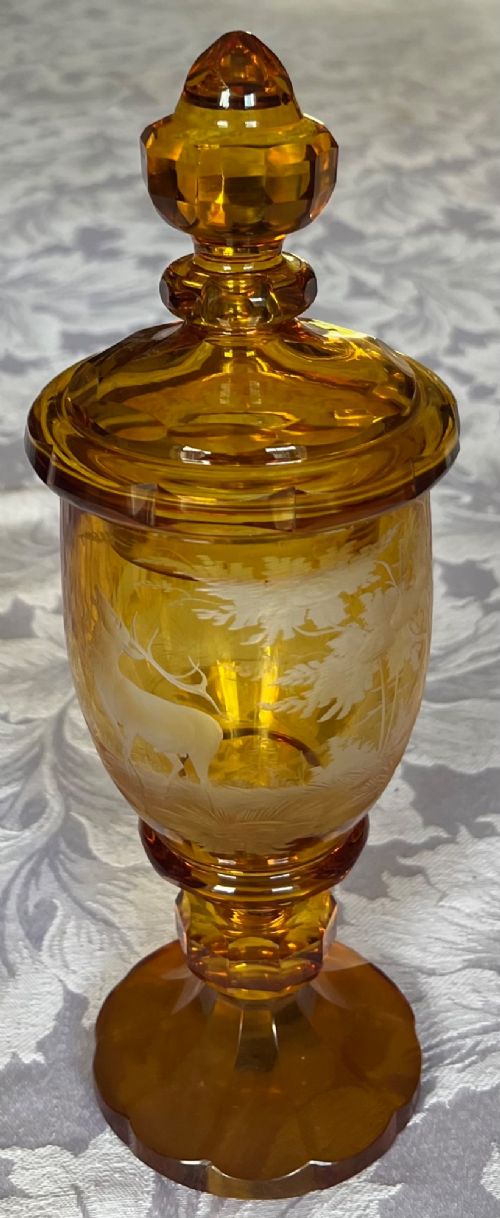
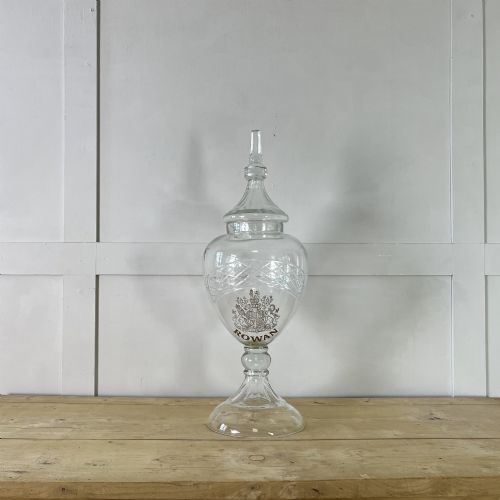


Cut Glass Lidded Vessel
These cut glass lidded vessel examples bring brilliant reflection and tactile weight to a room, holding everything from sweetmeats to preserves.
Cut Glass Lidded Vessel
A cut glass lidded vessel encompasses a variety of covered forms, from apothecary jars and sweetmeat jars to preserve pots and trinket boxes. These pieces serve functional and decorative purposes across domestic interiors, often featuring matching covers that complete the silhouette.
The selections encountered here span the Victorian, Edwardian, and later periods, alongside Bohemian and Georgian stylistic influences. Collectors meet diverse vessel types, including large lidded vases, table jars, and mounted preserve pots paired with spoons.
Makers and retailers such as Asprey appear among the entries, alongside unmarked Victorian and Edwardian work. The materials predominantly involve cut glass, clear glass, and lead crystal, frequently combined with sterling silver mounts and lids.
What varies in quality
Quality rests upon the crispness of the cutting and the depth of the facets, which determine how sharply the glass captures and refracts light. Superior pieces show precise alignment between the glass body and any fitted silver lid or mount.
The weight and clarity of the glass or lead crystal set finer examples apart from heavier, simpler utility jars. Maker attribution, such as work bearing marks from established firms, also distinguishes standard domestic items from high-end commissions.
Listings span the 19th Century, Victorian, and Edwardian periods, featuring materials such as lead crystal, amber glass, and sterling silver.
Asprey & Co.
The Cut Glass Lidded Vessel Glossary
- Sweetmeat jar
- A covered vessel traditionally used for holding small confectionery, sweet preserves, or dried fruits. These pieces typically feature pedestal bases and prominent decorative covers.
- Apothecary jar
- A utility container originally designed for medicines and dry drugs, adapted into domestic settings for display and storage. They often present substantial proportions with wide necks and heavy fitted lids.
- Preserve pot
- A small lidded container intended for table service of jams, jellies, or condiments. They frequently incorporate silver spoons and matched silver collars.
- Lead crystal
- A high-clarity glass variety containing metallic oxide that increases weight and refractive brilliance. This material accommodates deep, sharp cutting work exceptionally well.
Cut Glass Lidded Vessel: Frequently Asked Questions
What were cut glass lidded vessels used for?
These containers served practical roles in domestic and apothecary settings for holding sweetmeats, preserves, glue, or small trinkets. Their lidded designs kept contents protected while displaying the decorative qualities of cut crystal and silver.
Over time, many transitioned into pure display pieces or vanity table accessories. Their varied forms reflect the specific domestic rituals of the Victorian and Edwardian eras.
How do I date an antique lidded vessel?
Dating relies on stylistic clues, glass weight, cutting depth, and any accompanying silver hallmarks. Victorian pieces often display heavier proportions and deep hobnail or geometric cutting, while Edwardian examples can feature lighter mounts.
Maker marks on silver collars or lids provide specific chronological markers. Comparing the form against documented tableware styles helps narrow the period of manufacture.
How should I clean cut glass with silver mounts?
Wash the glass portions gently in warm soapy water using a soft cloth, avoiding harsh abrasives that scratch the surface. Keep silver polish away from the glass to prevent residue buildup in the cut facets.
Dry the pieces thoroughly immediately after washing, particularly around silver mounts and fitted rims. Remove silver lids during cleaning to protect any internal cork or lining materials.
Are silver mounts common on these jars?
Silver mounts and solid silver lids appear frequently on Edwardian and Victorian preserve pots, trinket boxes, and glue pots. These additions elevated functional glass containers into smart tabletop accessories.
Mounts were often stamped with hallmarks indicating the assay office and year of production. This metalwork is integrated directly with the glass rim or neck during assembly.