

Antique Table Centrepiece Dish
An antique table centrepiece dish anchors a dining table with the weight of sterling silver, cut glass or porcelain.
Antique Table Centrepiece Dish
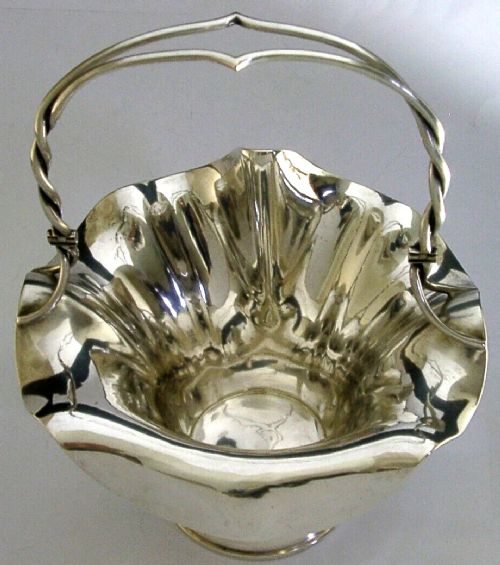
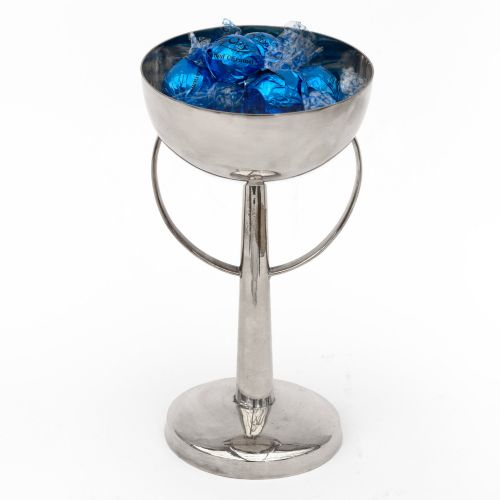
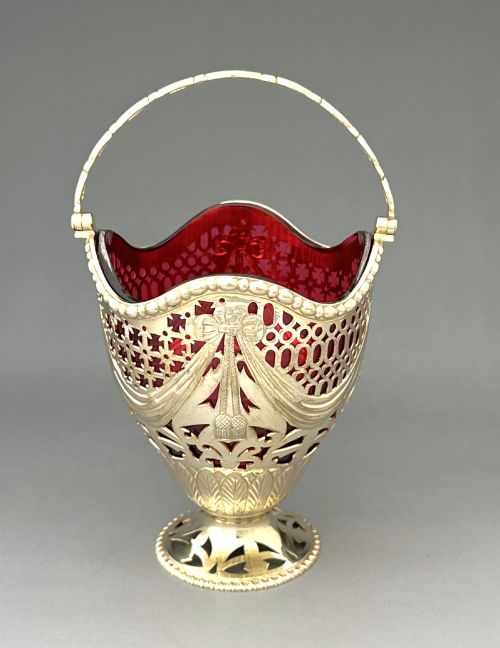
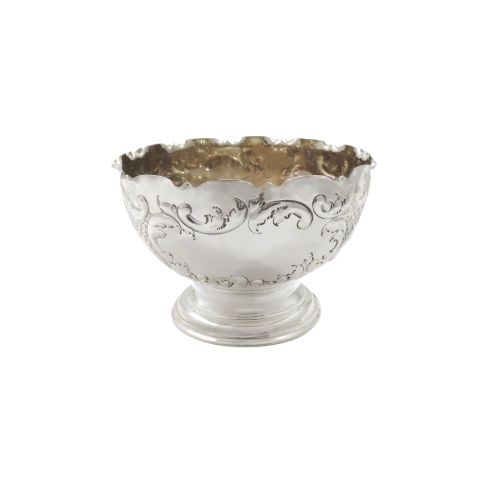
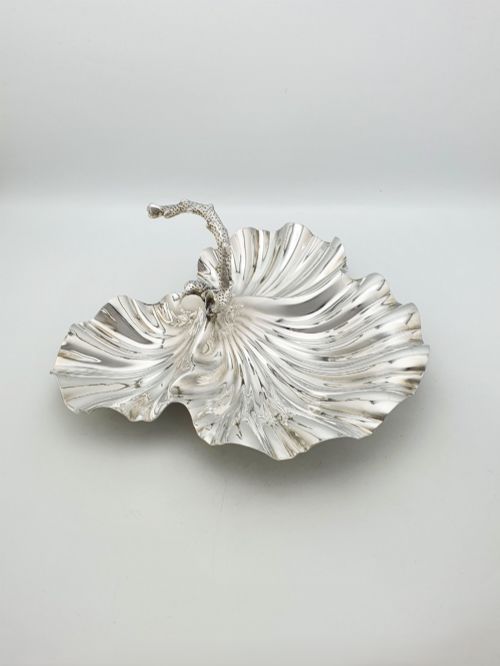
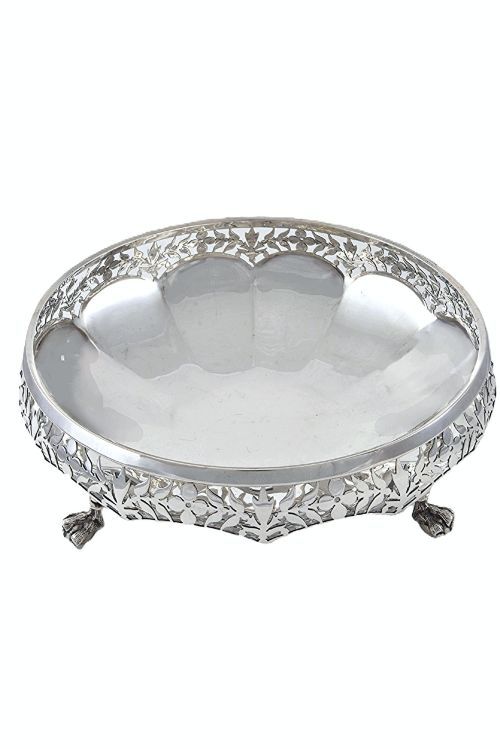
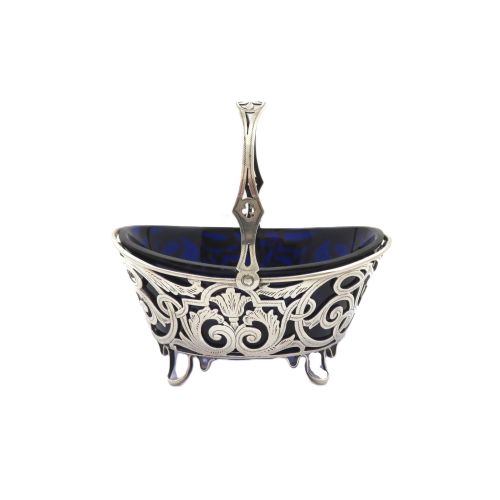
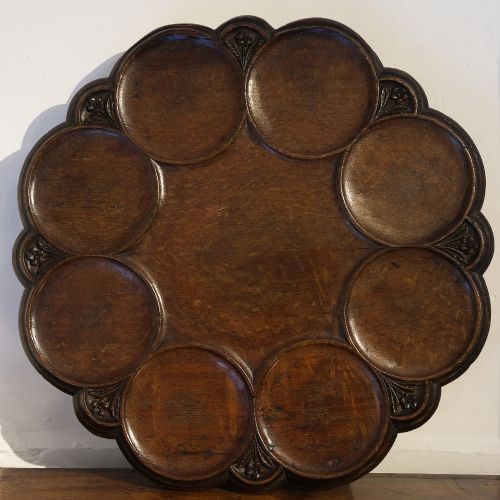
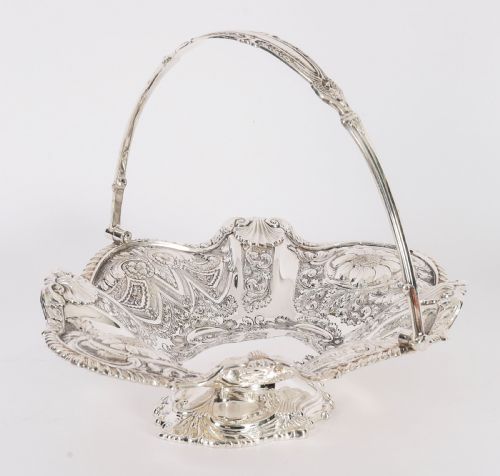
When searching for an antique table centrepiece dish, collectors encounter pieces designed to command the middle of a dining table or sideboard. The selection spans decorative bowls, sweetmeat stands, fruit baskets, and tazze originating across the nineteenth and early twentieth centuries.
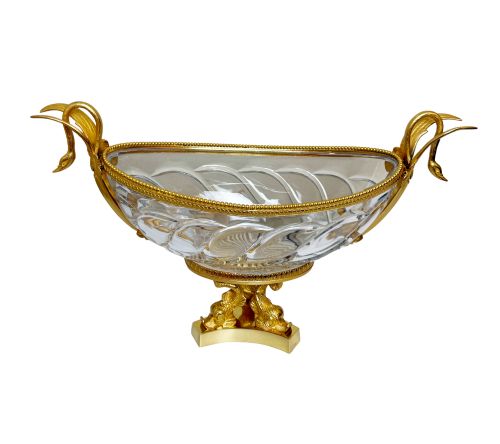
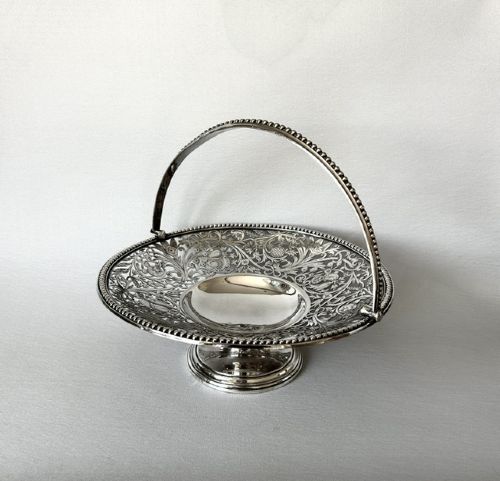
Victorian and Edwardian examples dominate the offerings, alongside items stretching back to the eighteenth century. Forms range from heavy sterling silver swing-handled baskets to crystal vessels mounted in gilt bronze and porcelain shells on pedestals.
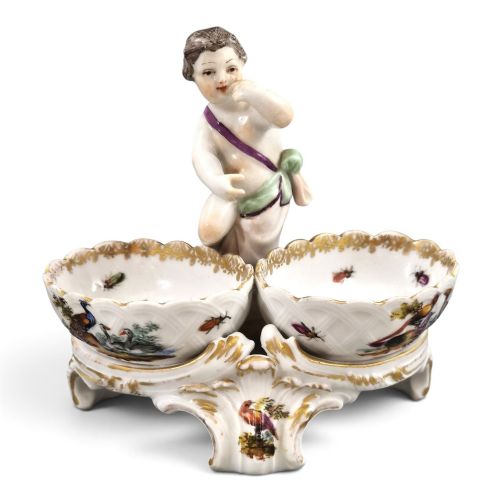
Buyers also meet specialised serving vessels including bread baskets, bonbon dishes, and figural double salt cellars. These items reflect formal dining rituals where centrepieces functioned as both functional tableware and decorative display.
Materials and Technique
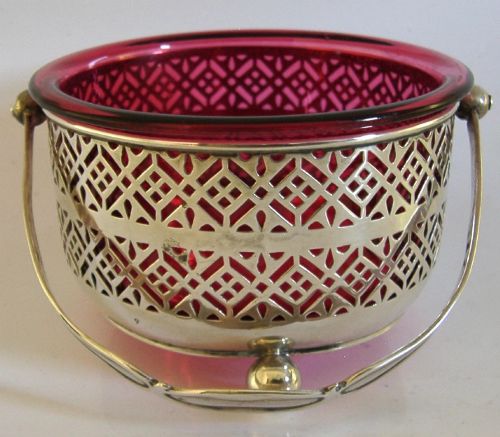
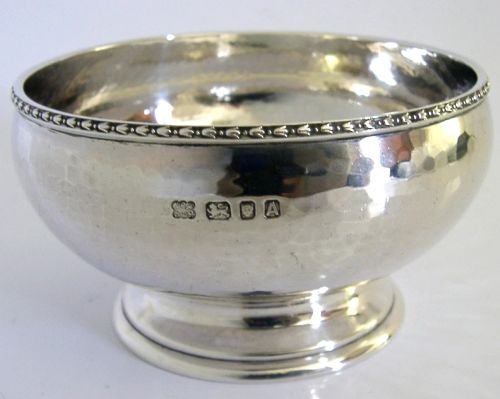
Makers shaped these centrepieces from sterling silver, Old Sheffield plate, and silver plate, often applying repoussé, pierced work, or planished hammering to the metal. Artisans combined these metals with glass liners in cranberry, ruby, amber, and green vaseline hues.
Crystal and cut glass components required skilled blowing and wheel-cutting to achieve deep optical clarity. Bronze, gilt bronze, and carved oak provided sturdy structural frames and decorative mounts for glass and porcelain bodies.
A palm tree centrepiece dish brings unexpected botanical architecture to the dining table.
Evaluating Craftsmanship
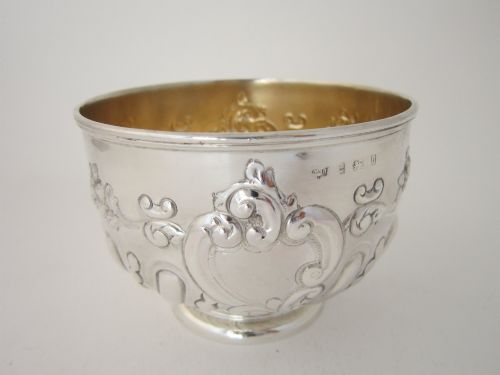
Quality rests in the crispness of chased and repoussé ornamentation, where deep, hand-worked floral and rococo relief separates superior metalwork from shallow pressing. Heavy gauge silver and thick crystal provide a substantive feel and structural integrity that lighter pieces lack.
The integration of materials dictates distinction, visible in the precise fit of coloured glass liners within pierced silver baskets and the quality of mercury gilding on bronze mounts. Maker marks and clear hallmarks further distinguish standard production items from workshop pieces executed by notable silversmiths and manufacturers.
Tiffany and Co·Mappin and Webb·Charles Boyton·George W Scott and Sons Ltd·Doulton Burslem·KPM Berlin·Mason·WMF
The Antique Table Centrepiece Dish Glossary
- Repoussé
- A metalworking technique where the artisan hammers the design from the reverse side to form raised relief on the front. This method creates tactile floral and scroll motifs on silver baskets and trays.
- Tazza
- A small shallow bowl or dish raised on a pedestal foot. These pieces function as decorative serving dishes for sweets or fruit.
- Old Sheffield Plated
- An early fusion method where a thin sheet of sterling silver is fused to a copper core by heat and rolling. Items produced this way display a warm tone distinct from electroplated nickel silver.
- Sweetmeat Stand
- A small raised dish or stand created specifically for serving confections, nuts, or dried fruits. Eighteenth and nineteenth-century examples often utilise porcelain or glass.
- Vaseline Glass
- A type of glass coloured with uranium oxide that exhibits a characteristic yellow-green fluorescence under ultraviolet light. It frequently appears in Edwardian bonbon dishes and centrepieces.
Antique Table Centrepiece Dish: Frequently Asked Questions
What were table centrepieces used for?
Dining tables featured these large dishes and baskets as focal points for serving fruit, bread, or sweetmeats during formal meals. They elevated the visual presentation of the table setting while holding edible refreshments.
Over time, many of these vessels transitioned into purely decorative objects displayed on sideboards or tables without food. Their scale and ornamentation ensured they remained central to interior decoration.
How do I clean antique silver?
Use a soft microfiber cloth and a mild, non-abrasive silver cleaner formulated specifically for antique metals. Avoid aggressive rubbing that can wear away thin silver plating or soften hand-chased details.
Store pieces in dry environments away from direct sunlight to minimise tarnishing. Glass liners should be washed separately in warm soapy water and dried thoroughly before replacement.
Are glass liners original?
Original glass liners fit snugly into the pierced or wirework frames of silver baskets and bowls without excessive movement. The colour and type of glass, such as cranberry or vaseline, typically match the manufacturing period of the metal holder.
Replacements remain common due to accidental breakage over decades of use. Look for bubbles, manufacturing imperfections, and wear patterns that correspond to the age of the outer frame.
How can I date my centrepiece?
Silver pieces carry hallmarks that indicate the assay office, standard of metal, and date letter corresponding to the year of manufacture. Stylistic indicators such as Art Nouveau curves or Victorian naturalism also help narrow down the decade.
Unmarked silver plate and glass items rely on stylistic comparison with documented manufacturer catalogues. Construction techniques, such as Old Sheffield plating methods, provide a reliable window of origin.