

Antique Table Card Holders
Antique table card holders bring character to dining tables through figural designs in sterling silver, enamel and glass.
Antique Table Card Holders
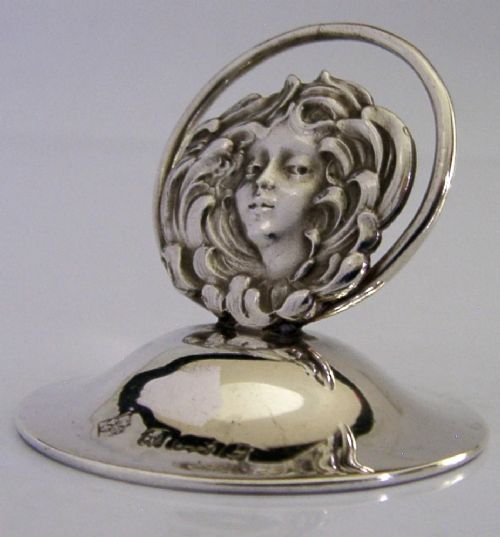
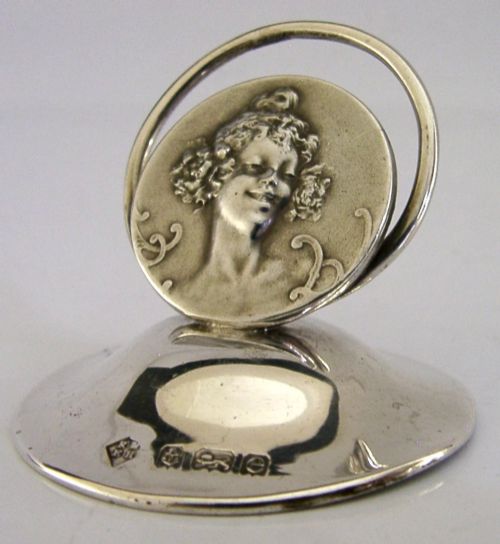
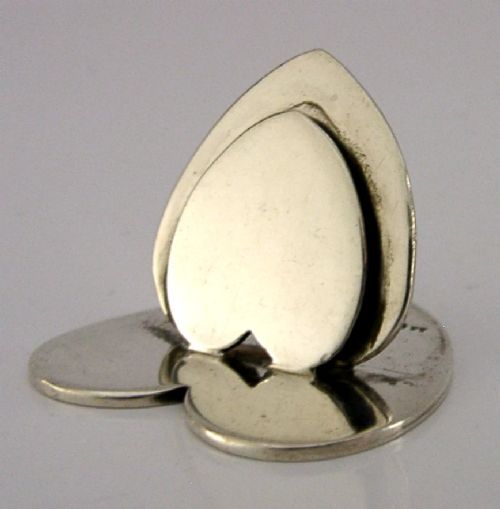
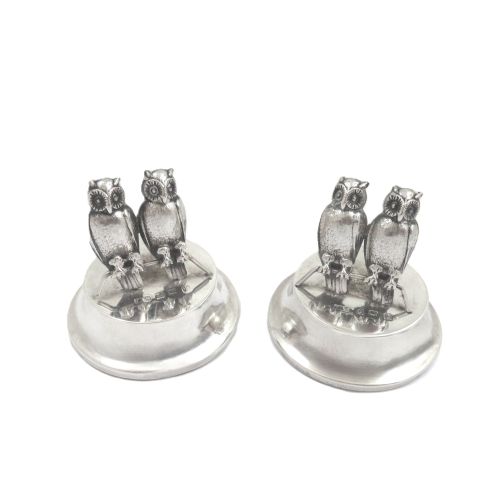
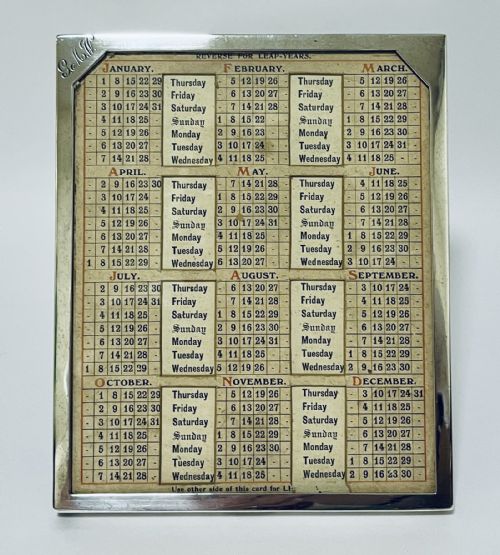
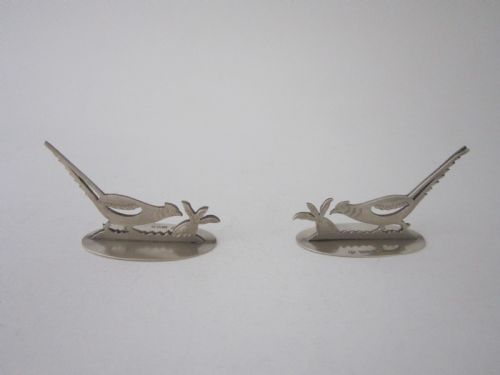
When you search for antique table card holders, you encounter small decorative pieces designed to display place cards, menus or table numbers. The selections here consist predominantly of menu holders and place card holders, alongside desk accessories and playing card boxes.
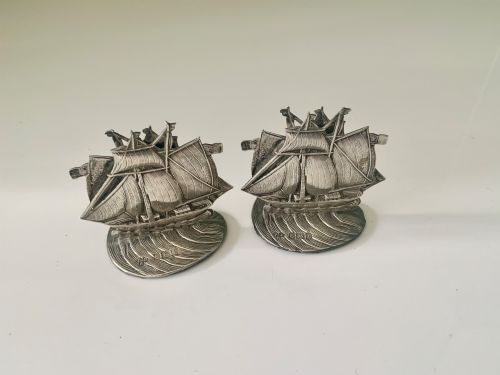
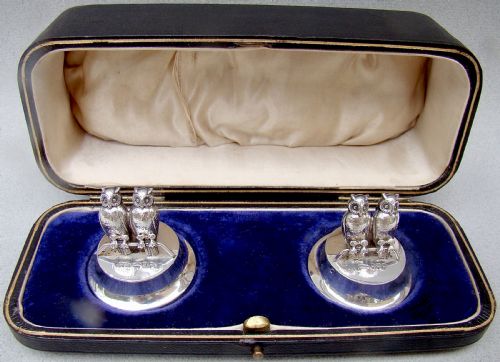
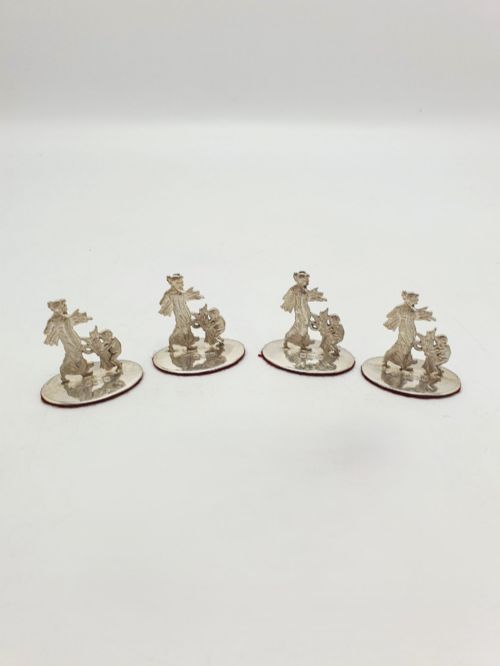
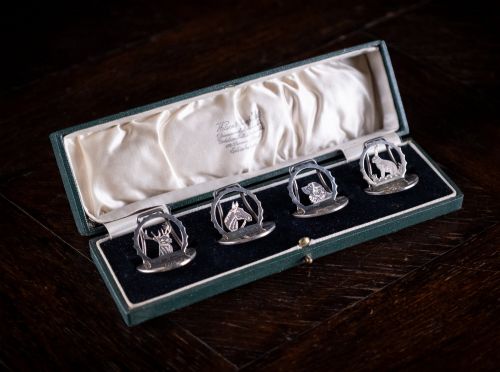
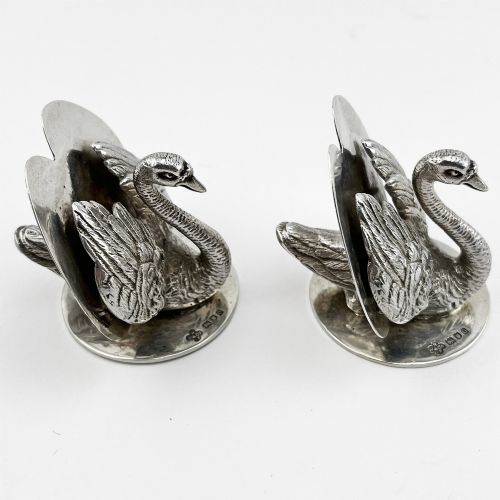
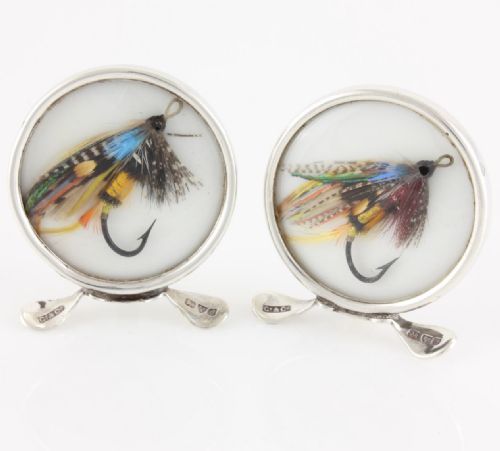
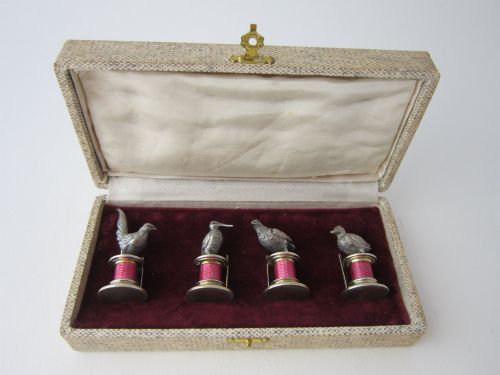
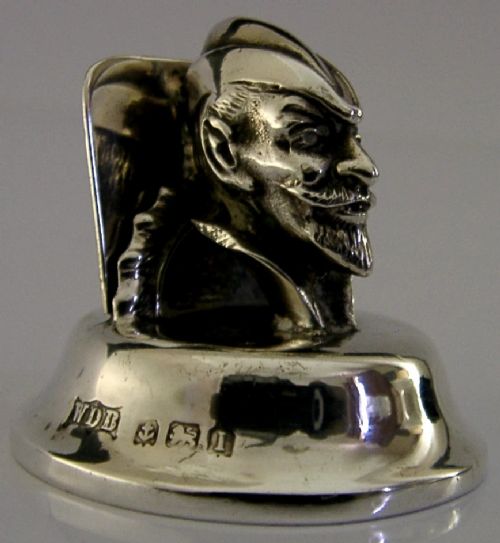
Most examples date from the Edwardian period and the early twentieth century, with Victorian, George V, George VI and mid twentieth century pieces also appearing. Makers and designers utilised diverse figural subjects, including animals, birds, military motifs and literary characters.
How they were made
Silversmiths constructed these items primarily using sterling silver and silver plate, frequently incorporating detailed casting and hand-finishing techniques. Enamel work adds colour to flags, birds and decorative panels on select pieces.
Textural contrast appears through secondary materials such as velvet, leather, silk and glass, particularly within boxes and calendar stands. Hallmarks stamped into the metal record the assay office, maker and year of production.
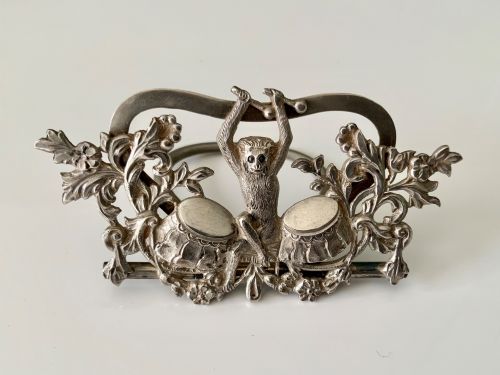
A solitary silver monkey playing drums stands ready to liven up the dining arrangements.
What varies in quality
Completeness within matched sets or pairs influences desirability, as does the crispness of applied enamel and the legibility of hallmarks. Original fitted presentation boxes elevate the preservation status of surviving pieces.
Levi and Salaman·Sampson Mordan·Asprey
The Antique Table Card Holders Glossary
- Menu Holder
- A small upright stand designed to hold printed dinner menus on a dining table. They frequently match smaller place card holders in a table setting.
- Place Card Holder
- A miniature tabletop accessory used to indicate seating arrangements for guests. These items mirror the decorative themes of larger menu stands.
- Sterling Silver
- A silver alloy containing 92.5 percent pure silver and 7.5 percent other metals, usually copper. British pieces carry hallmark stamps verifying this standard.
- Assay Office
- An official body that tests precious metals and applies hallmark stamps. Cities such as Birmingham, Chester and London operated distinct offices.
Antique Table Card Holders: Frequently Asked Questions
How were table card holders used?
Hosts placed menu holders and place card holders along dining tables during formal dinners to inform guests of the courses and seating arrangements.
They sat among tableware accessories to complement the decorative theme of the meal.
What periods do these pieces date from?
The available selection spans from the nineteenth century through the Edwardian era, George V and George VI periods, into the mid twentieth century.
Edwardian and early twentieth century items form the majority of surviving examples.
How are silver hallmarks read?
Hallmarks consist of stamped symbols indicating the assay office, the maker's mark and the date letter representing the year of testing.
These tiny marks verify the purity of the sterling silver used in the construction.
Are these pieces found in sets?
Makers produced both individual pieces and matched sets, including pairs, sets of four, or larger groupings for banqueting.
Complete sets featuring figural subjects like animals or military motifs remain particularly sought after.