

Antique Style Vanity Desk
These antique style vanity desk pieces bring rich timber grains and period elegance to dressing rooms and home studies.
Antique Style Vanity Desk
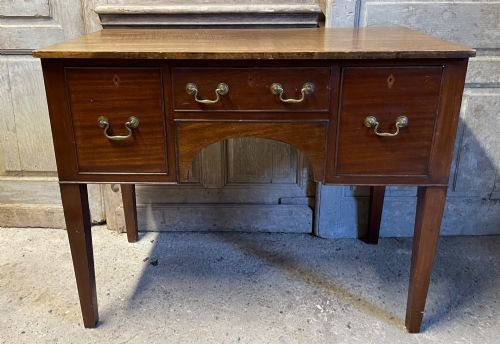
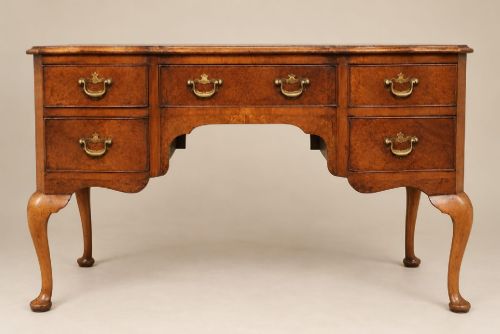
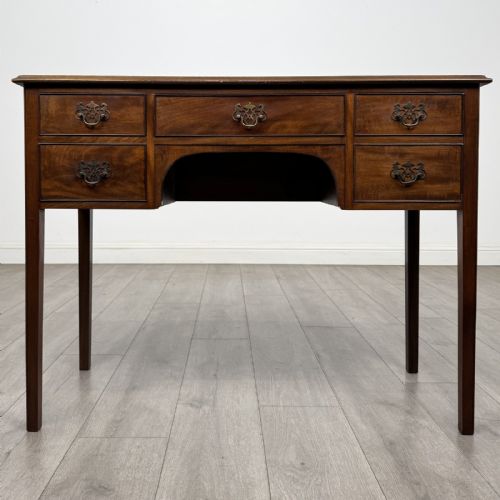
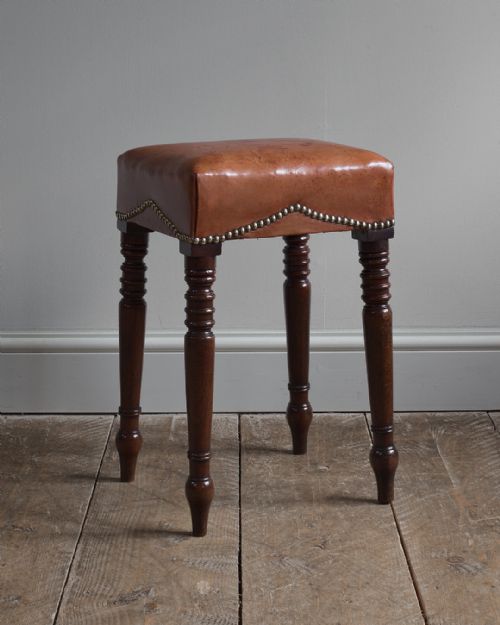
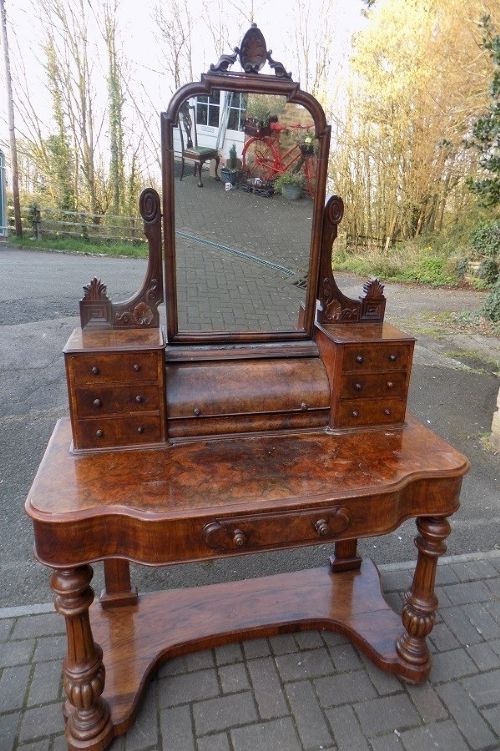
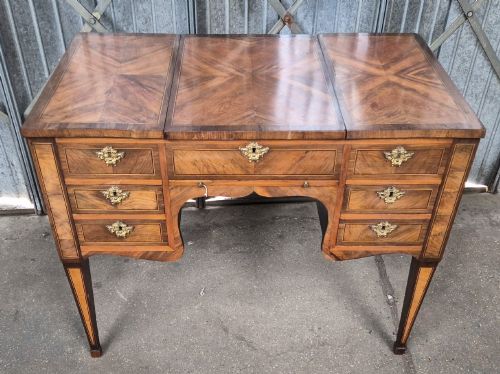
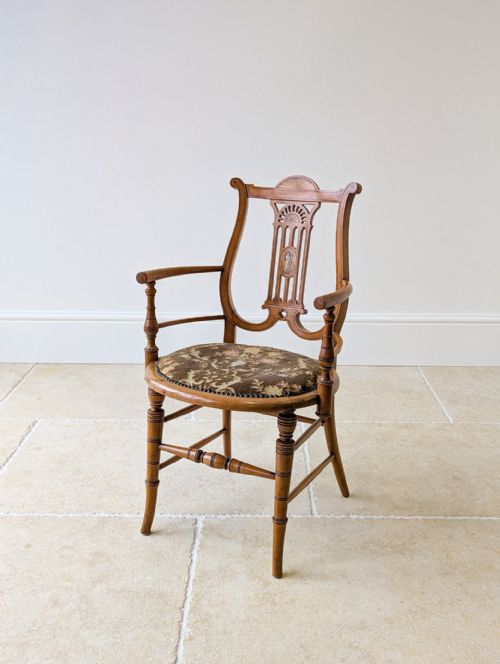
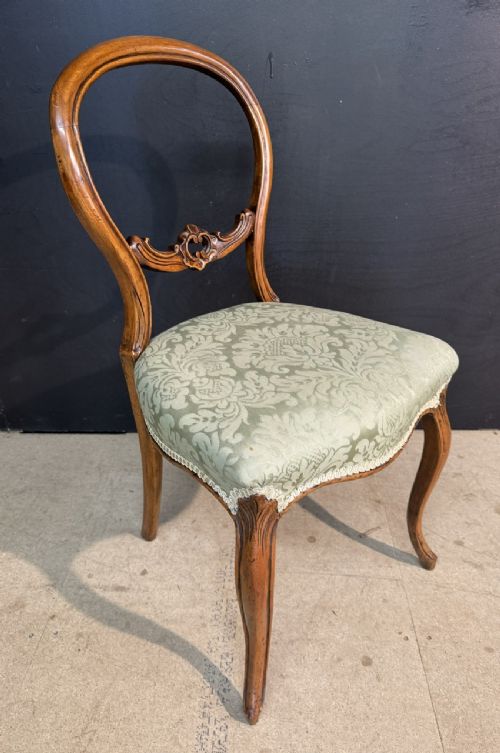
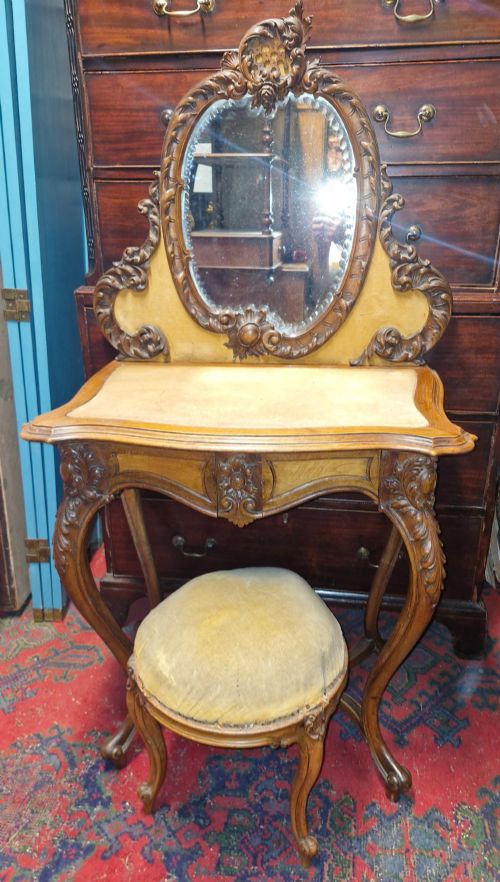
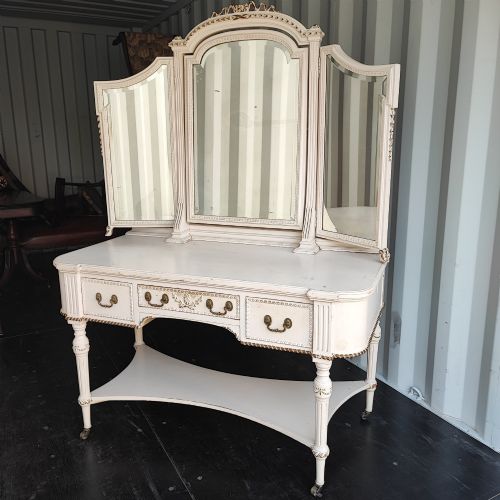
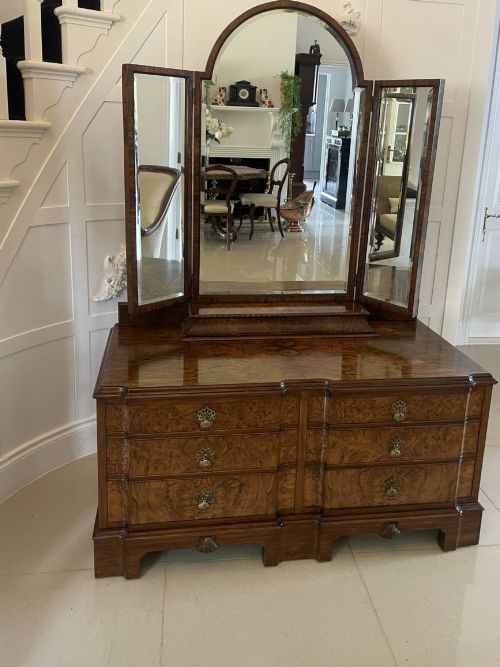
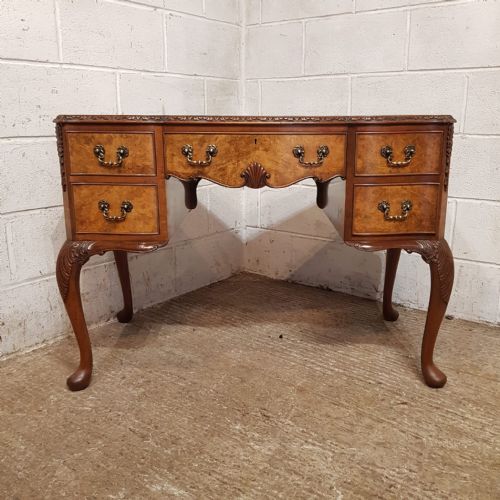
Buyers encounter numerous forms on this page, including kneehole desks, poudreuses, and dressing tables equipped with galleries or mirrors. Woods such as mahogany, walnut, and satinwood dominate the selection, often accompanied by matching chairs or stools.
Materials and construction methods
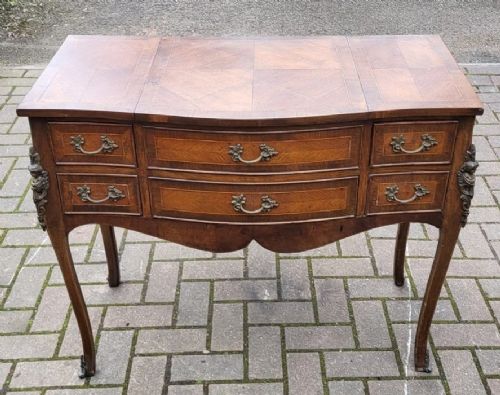
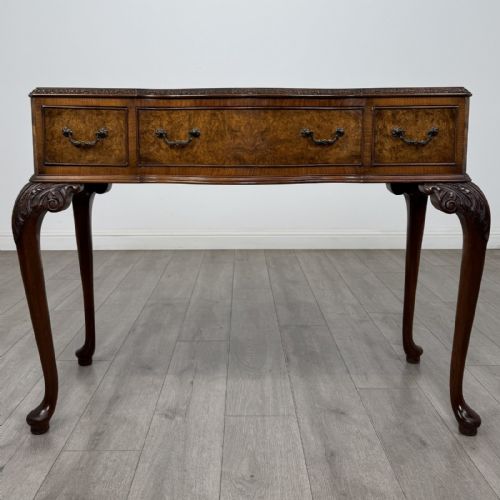
Cabinetmakers utilised solid timbers and choice veneers, applying burr walnut, flame mahogany, and satinwood to create highly figured surfaces. Inlaid details, tooled leather writing inserts, and hand-painted decorations appear across various regional styles.
Metal accents such as brass handles and ormolu mounts punctuate the timber frames, particularly on French pieces. Carved giltwood, lacquer work, and glass components complete the construction of mirrors and tabletops.
Antique Style Vanity Desk Retail Price Guide 2026
Typical asking prices for style vanity desk among the pieces listed under this phrase on Sellingantiques today, from the lower quarter to the upper quarter. They describe what is for sale here now, not the wider market.
Listings feature woods like satinwood, burr walnut, and mahogany paired with brass, leather, and glass across Victorian and Edwardian periods.
Distinctions in craftsmanship and finish
The standard of timber selection and veneer matching defines the visual weight of each piece, distinguishing simple utility items from finer decorative examples. Subtle carving work on cabriole legs or gallery frames shows the care taken by the maker.
The integrity of original brass hardware, fitted leather surfaces, and integrated mirror structures influences how completely a piece retains its period character. Uniformity in polish and the precision of joinery separate standard examples from exceptional ones.
Maples of London and Paris·Heals
The Antique Style Vanity Desk Glossary
- Poudreuse
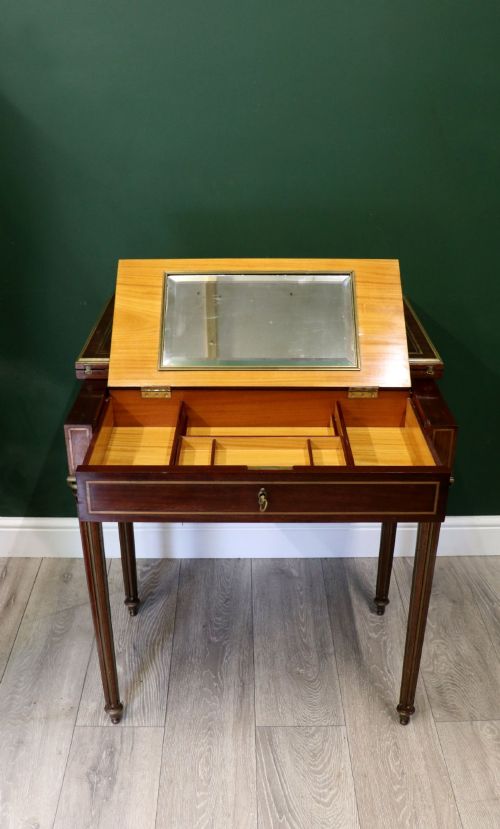
- A French dressing table featuring a folding top that conceals a mirror and partitioned compartments. These compact units served aristocratic dressing rooms.
- Kneehole desk
- A writing table or dressing chest featuring a central recessed space beneath the drawers for the user's knees. This form gained popularity during the Georgian and Victorian eras.
- Ormolu
- Gilded bronze mounts applied to furniture for decorative effect. It appears frequently on French Empire pieces.
- Gallery
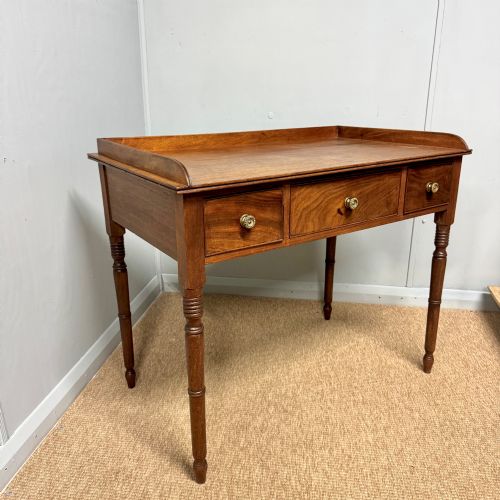
- A raised ornamental border running along the edge of a tabletop or shelf to prevent items from sliding off. These rails often feature pierced brass or carved timber.
- Chinoiserie
- European decorative style reflecting Chinese artistic motifs, often rendered in hand-painted lacquer on wooden furniture. Edwardian and earlier makers utilised this technique on dressing tables.
Antique Style Vanity Desk: Frequently Asked Questions
What is the difference between a vanity desk and a dressing table?
A vanity desk often combines a flat writing surface with drawers, serving dual functions for correspondence and grooming. Dressing tables prioritise mirror arrangements and compartments for cosmetics.
Many period examples bridge both categories, offering kneehole configurations alongside upper mirror superstructures.
How do I identify French versus English period styles?
French pieces often incorporate ormolu mounts, marquetry inlay, and forms like the poudreuse with concealed folding mirrors. English equivalents lean towards mahogany or walnut timbers with Georgian or Victorian structural lines.
Regional details such as brass gallery rails and satinwood crossbanding help distinguish the workshops of origin.
Where should I place a kneehole desk in a modern home?
These versatile tables fit well in bedrooms as dressing furniture or in home offices as compact writing desks. Their finished backs and compact proportions allow placement against walls or freestanding in rooms.
Pairing them with appropriate period chairs or stools maintains the design balance.
How do I care for burr walnut and mahogany surfaces?
Regular dusting with a soft, dry cloth preserves the polished finish of hardwoods and delicate veneers. Avoid placing wooden furniture in direct sunlight or near heat sources to prevent timber splitting.
Leather writing inserts benefit from occasional specialist conditioning to keep the material supple.