



Antique Style Night Tables
These antique style night tables bring period character beside a bed, offering useful surface space and fitted storage in classic wood finishes.
Antique Style Night Tables
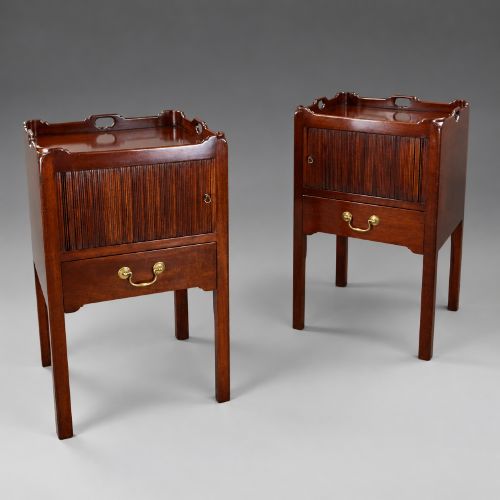
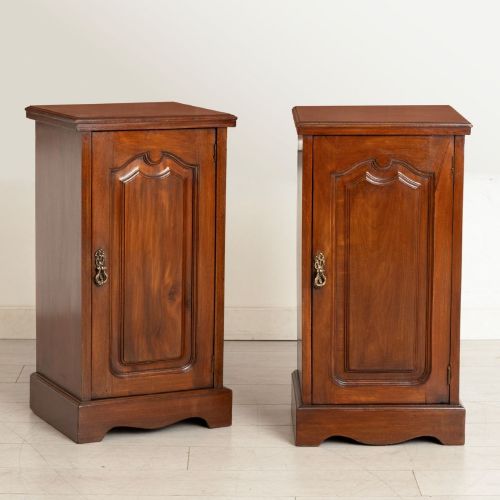
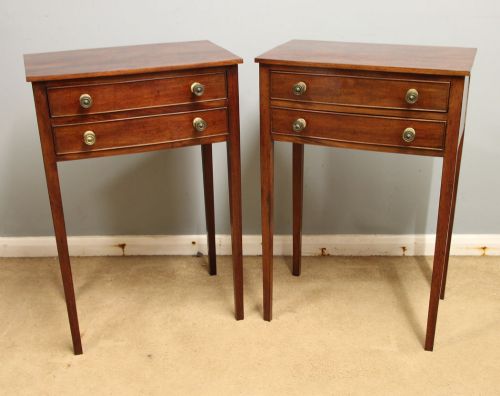
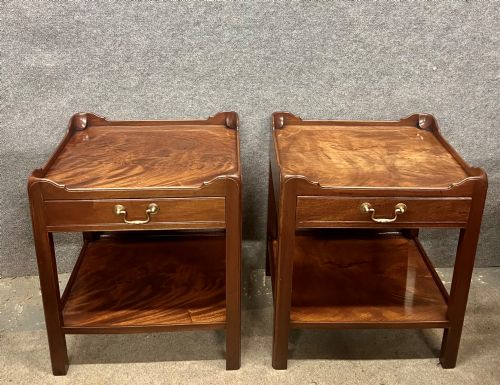
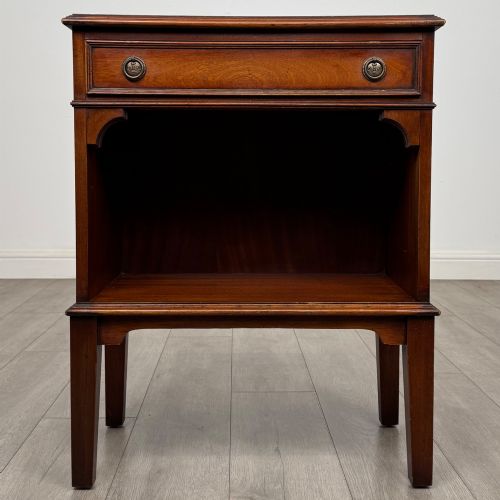
When searching for antique style night tables, buyers find a variety of bedside storage forms designed to sit beside a bed. The selection includes bedside tables, bedside cabinets, commodes, and pedestal cabinets shaped to hold lamps and nighttime essentials.
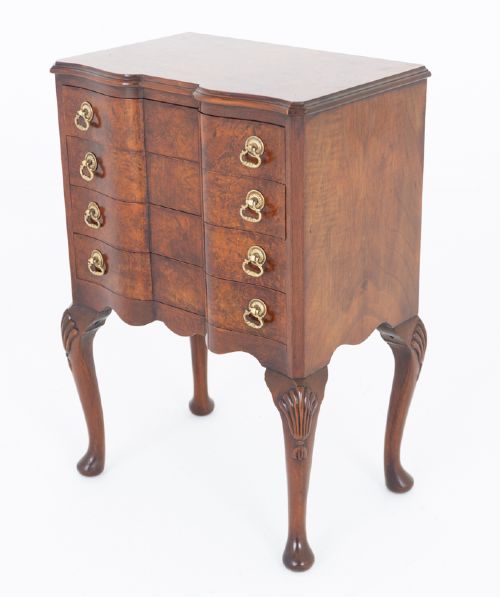
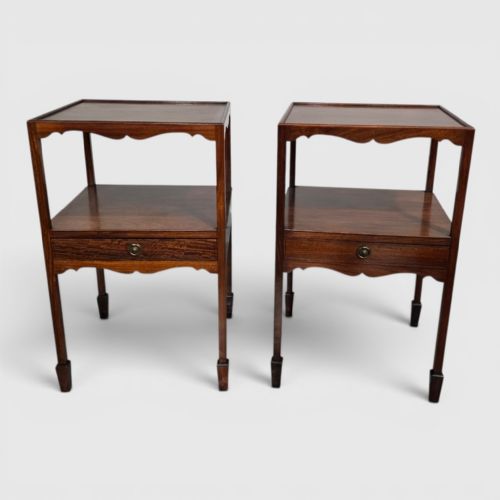
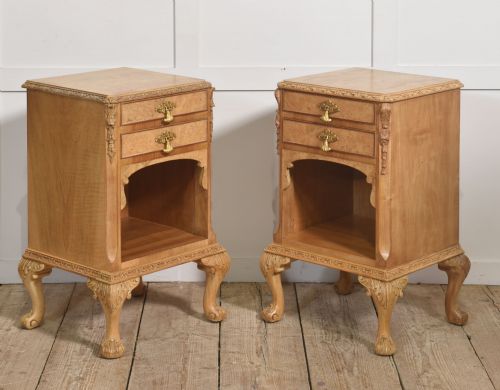
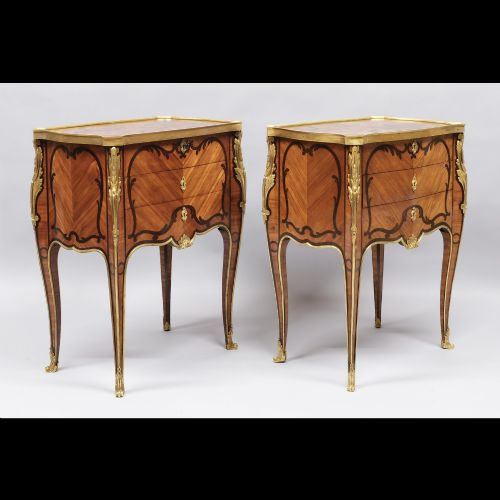
Most examples date from the late nineteenth century through the early twentieth century, spanning periods like the Edwardian era and the nineteen-twenties and thirties. Makers often drew on earlier design traditions, producing pieces in Georgian, Queen Anne, Louis XV, and Sheraton revival styles.
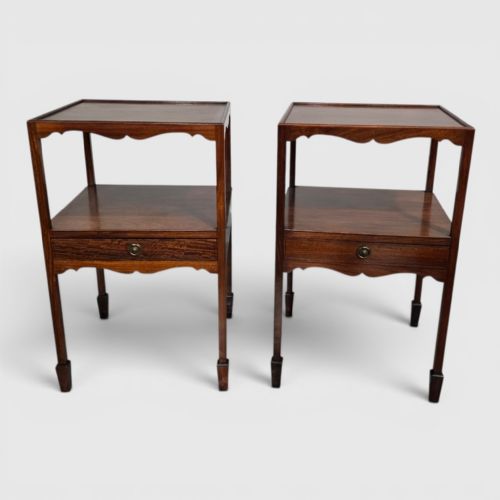
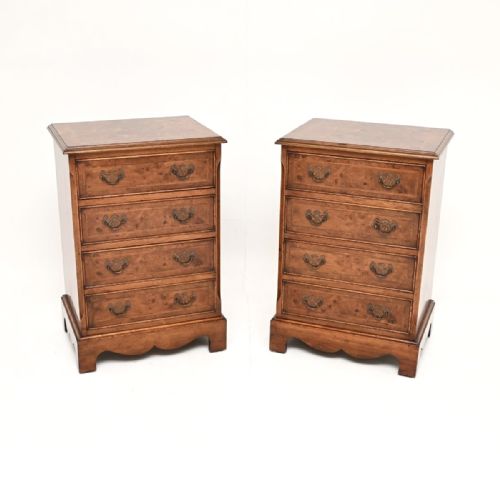
Buyers will encounter single pieces as well as matching pairs built from timber veneers and solid woods. Many serve multiple functions, doubling as lamp tables or occasional tables while retaining their compact bedside proportions.
How they were made
Cabinet makers utilised a foundation of solid timbers such as mahogany, walnut, and oak, frequently applying decorative veneers to visible surfaces. Burr walnut, rosewood, kingwood, and satinwood provided rich grain patterns for drawer fronts and top panels.
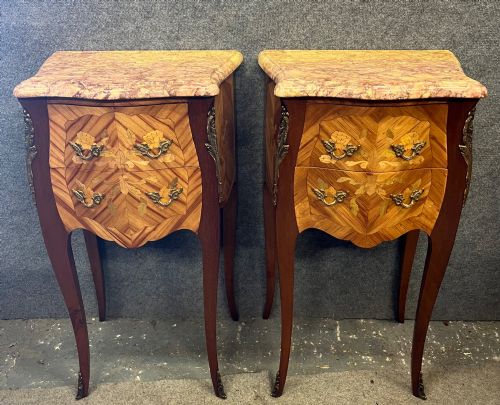
Surface decoration often incorporated marquetry and parquetry inlay work, alongside carved wooden details and brass hardware. Certain French and revival styles incorporated inset marble tops to provide a durable, polished surface beside the bed.
The selection spans late nineteenth-century Victorian pieces through to nineteen-thirties revival designs.
What varies in quality
Quality separates pieces through the precision of the cabinet work and the selection of timber veneers. Finer examples display carefully matched grain patterns across drawer fronts and smooth operation in doors and drawers.
The choice of decorative elements also distinguishes the range, from simple solid timber construction to intricate marquetry inlay, carved mouldings, and fitted marble tops. The integration of period revival styles reflects the skill invested by the workshop.
Maple & Co.
The Antique Style Night Tables Glossary
- Night table
- A small bedside table or cabinet designed to hold lamps, books, and personal items. These pieces match bedroom furniture and fit into compact spaces beside a bed.
- Commode
- A low cabinet or chest of drawers, often standing on legs and featuring enclosed storage. French examples frequently incorporate marble tops and intricate parquetry.
- Marquetry
- Decorative veneer work forming pictorial or geometric patterns using various coloured woods. Craftsmen cut thin pieces of timber and fit them together precisely.
- Pedestal cabinet
- A tall, narrow cabinet enclosing shelving or cupboard space on a compact footprint. They provide vertical storage where floor space is limited.
- Sheraton revival
- A late nineteenth or early twentieth century design movement recreating the lighter, elegant furniture styles of the eighteenth-century designer Thomas Sheraton.
Antique Style Night Tables: Frequently Asked Questions
What is a night table?
A night table is a small piece of furniture placed beside a bed to hold lamps, books, and night-time essentials. They offer a combination of surface top space and enclosed storage behind doors or inside drawers.
Historically known by various terms including bedside cabinets, commodes, and pot cupboards, these items are proportioned to sit at mattress height.
How were these tables used?
These pieces served practical storage and surface needs within the bedroom, holding lighting, reading materials, and personal items out of sight. Cupboard sections often concealed chamber pots or personal belongings.
Today they function similarly as bedside tables or lamp tables, providing convenient storage surfaces in contemporary bedrooms.
Are they sold in pairs?
Many listings feature matching pairs of bedside cabinets and tables to flank a larger bed symmetrically. Single tables also appear for tighter spaces or alternative room layouts.
Pairs often share identical timber veneers, carving details, and hardware from the same workshop production.
How do I identify the style?
Style identification relies on examining the decorative vocabulary, such as Queen Anne cabriole legs, Georgian proportions, or Louis XV curves. Cabinet makers often reproduced these historical aesthetics during the Edwardian period and the nineteen-twenties and thirties.
Materials like mahogany, burr walnut, and marquetry inlay further point towards specific revival movements and manufacturing eras.