




Pair Walnut Drawers
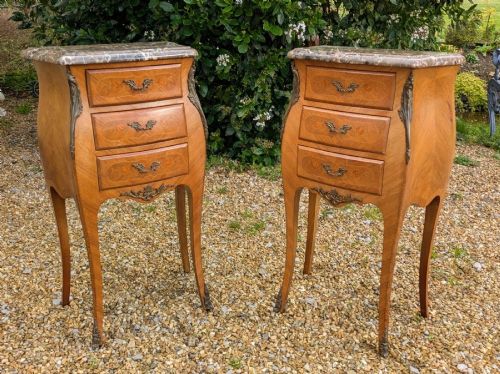
When searching for a pair walnut drawers, collectors encounter matching bedside cabinets, small chests, and lamp tables shaped by nineteenth and twentieth-century makers.
Pair Walnut Drawers
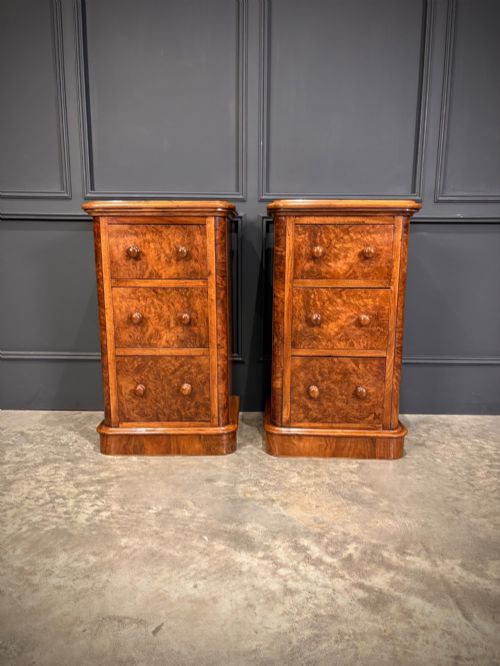
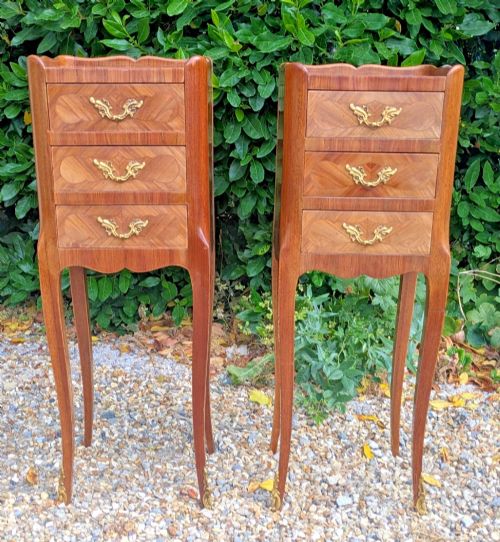
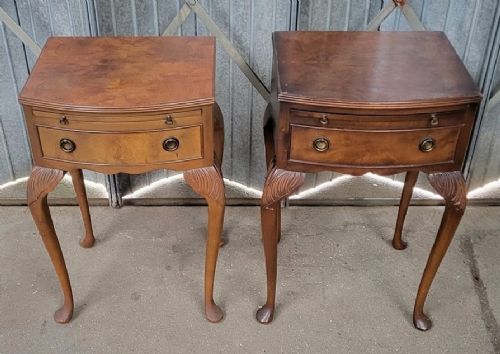
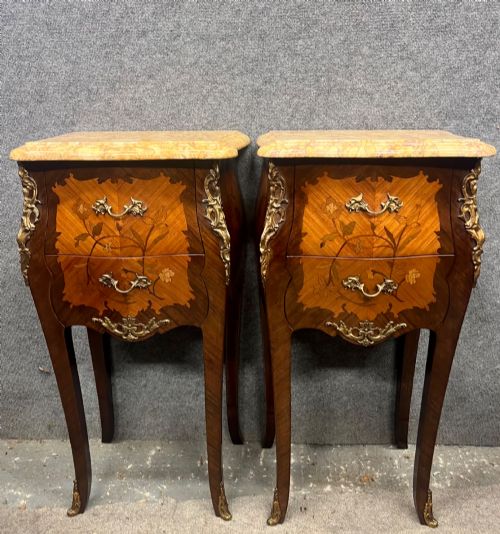
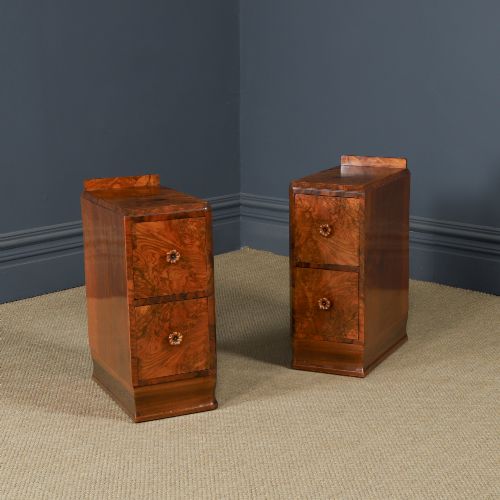
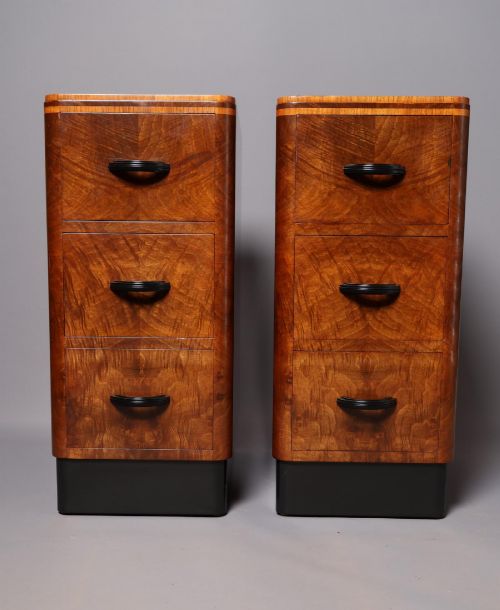
A pair walnut drawers encompasses small bedside chests, lamp tables, and matching miniature chests designed to sit symmetrically in a bedroom or drawing room. Most examples found here originate from the Victorian era up through the Art Deco period, alongside continental variations from French and Italian workshops.
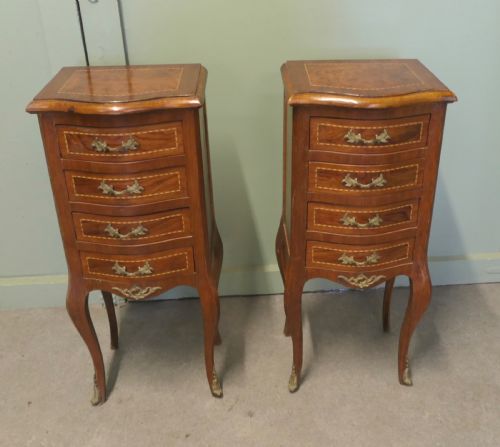
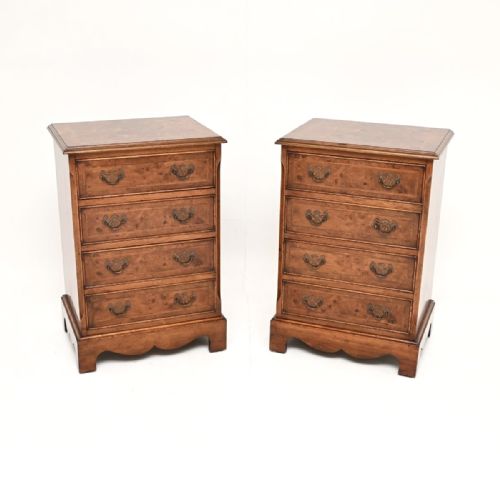
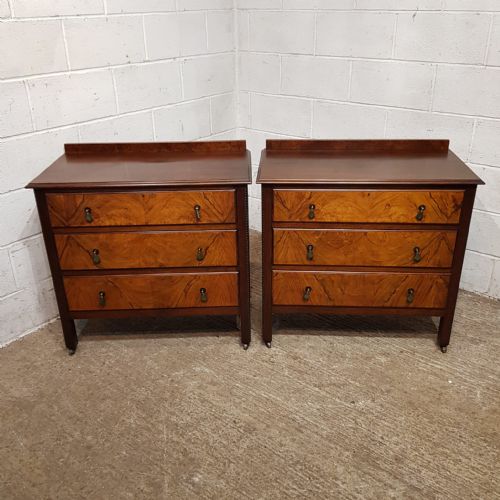
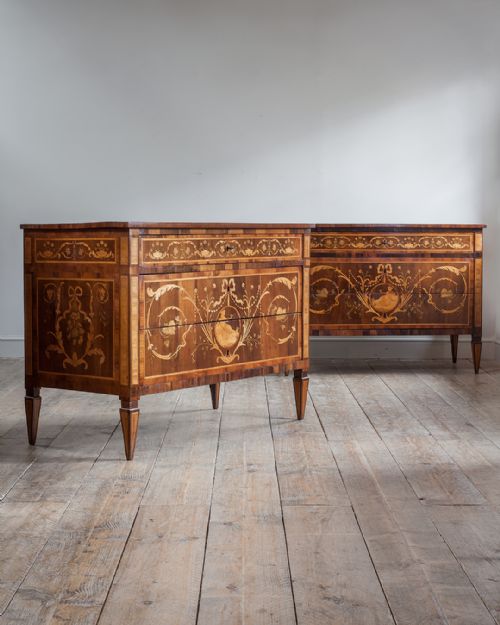
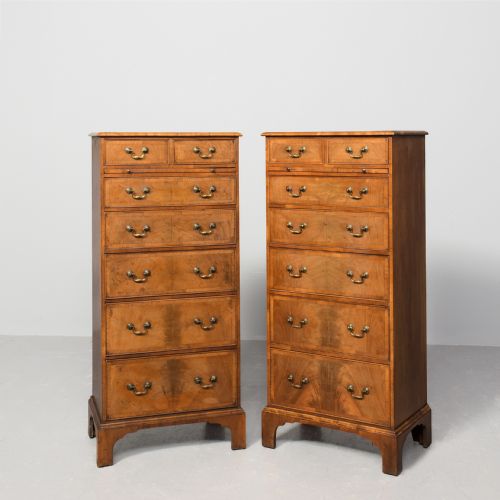
The scale ranges from compact two-drawer bedside lockers to taller four-drawer configurations and serpentine commodes. Buyers most frequently meet nineteenth-century Victorian walnut pieces or twentieth-century interpretations influenced by earlier Georgian and Louis styles.
Materials and construction
Cabinet makers utilised solid walnut alongside highly figured burr walnut veneers applied to carcases of secondary timber to create striking grain patterns across drawer fronts. Marquetry and parquetry inlays frequently decorate continental pieces, using contrasting woods to form geometric or floral designs.
Hardware typically includes cast brass handles, escutcheons, and occasionally ormolu mounts on French and Italian pieces. Marble tops appear on many bedside cabinets, providing a durable and decorative surface above the timber drawers.
Listings span multiple eras from the 18th century to the 1940s, featuring walnut, burr walnut, marble, and brass hardware across bedside and chest forms.
Indicators of quality
The distinction between standard utility items and superior examples lies in the selection of the veneer and the precision of the cabinetwork. Grain matching across multiple drawers demonstrates the maker's intent to create a cohesive visual field.
Construction methods such as hand-cut dovetails on drawer linings and well-fitted internal carcases separate finer workshops from mass production. The crispness of carved details or inlaid banding further indicates the level of craftsmanship invested in the pair.
The Pair Walnut Drawers Glossary
- Burr walnut
- A wood harvested from the wart-like growths on walnut trees, yielding intricate, swirling grain patterns highly prized for drawer fronts.
- Ormolu
- Gilded bronze ornamentation applied to the corners, feet, or mounts of French and Italian furniture.
- Bombe
- A swelling, outward-curving chest or commode profile characteristic of continental furniture styles.
- Parquetry
- Geometric wood inlay patterns assembled from small veneer tiles to form repeating shapes on table tops and drawer faces.
- Serpentine
- A furniture front curving inward centrally and outward at the ends in a gentle wave.
Pair Walnut Drawers: Frequently Asked Questions
How are bedside drawers cleaned?
Maintenance requires wiping timber surfaces with a soft, dry cloth to remove dust without harming the polish. Wax can be applied sparingly to nourish walnut grain.
Harsh chemical cleaners and excessive moisture must be avoided near antique veneers and marble tops to preserve the original finish.
Are these matching pieces original pairs?
Many pairs originate from the same workshop batch, sharing identical dimensions, timber selection, and hardware details. Others represent assembled matched sets united by similar age and proportions.
Examining the internal drawer construction and grain orientation helps confirm whether two individual chests were built together.
Where do marble tops originate?
Marble surfaces on bedside cabinets commonly appear on continental pieces, particularly French and Italian commodes from the nineteenth century. These stone inserts provided a heat-resistant and washable platform for bedroom items.
Original marble slabs typically feature edge moulding that matches the exact contour of the wooden carcase below.
How do I date walnut furniture?
Dating relies on observing construction techniques, hardware styles, and the specific tone of the walnut timber used in the carcase. Victorian pieces often display rich dark patination, while Art Deco items favor lighter finishes and geometric veneering.
Secondary woods inside the drawers and the style of dovetail joints offer further clues to the manufacturing decade.