


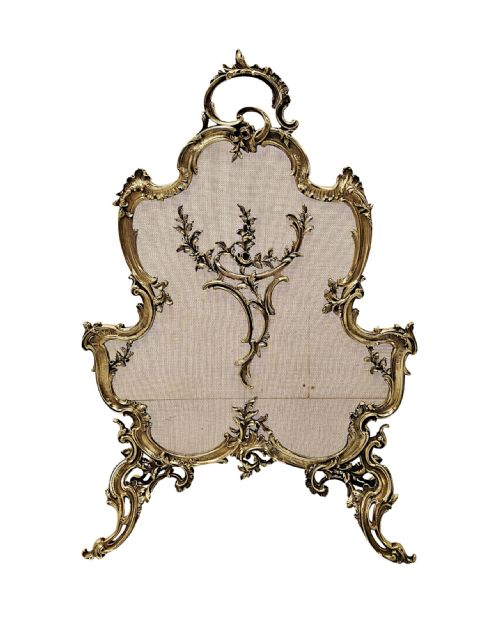
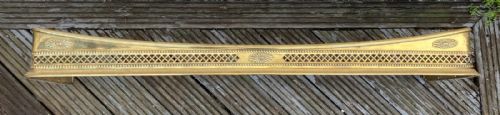
Antique Style Fireguard
These antique style fireguard designs control stray embers while framing a hearth with period metalwork.
Antique Style Fireguard
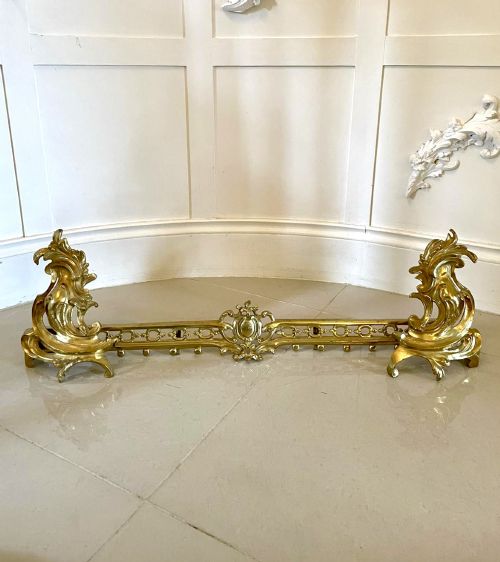
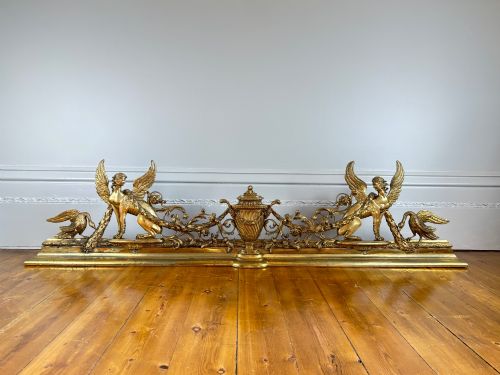
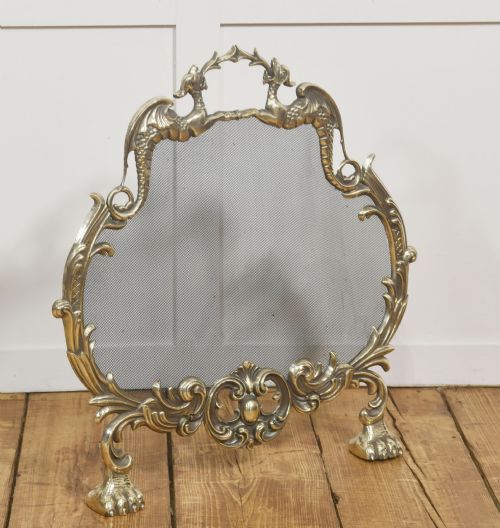
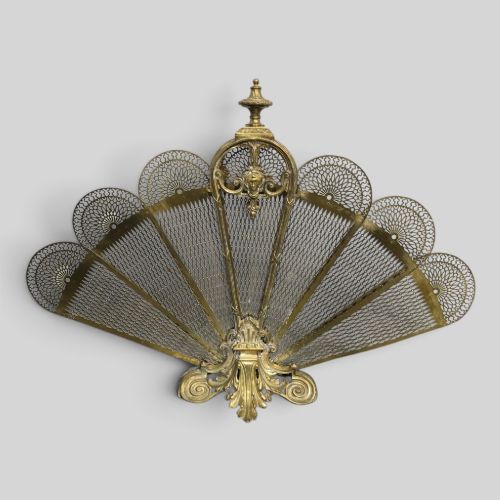
An antique style fireguard protects the room from sparks while anchoring the fireplace setup. The selection spans sturdy fire screens, folding spark guards, and decorative hearth fenders in various historical revivals.
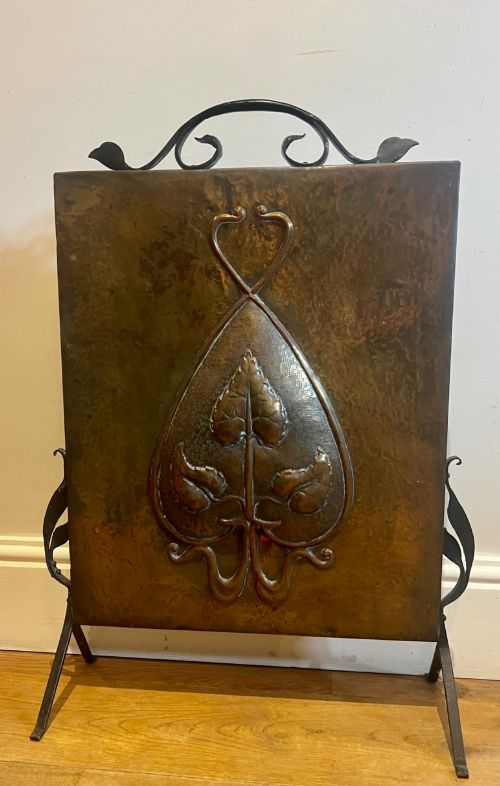
Most examples hail from the nineteenth and early twentieth centuries, drawing on Victorian, Edwardian, and Arts and Crafts traditions. You will encounter folding brass screens, iron frames with wire mesh, and low metallic fenders designed to keep logs in place.
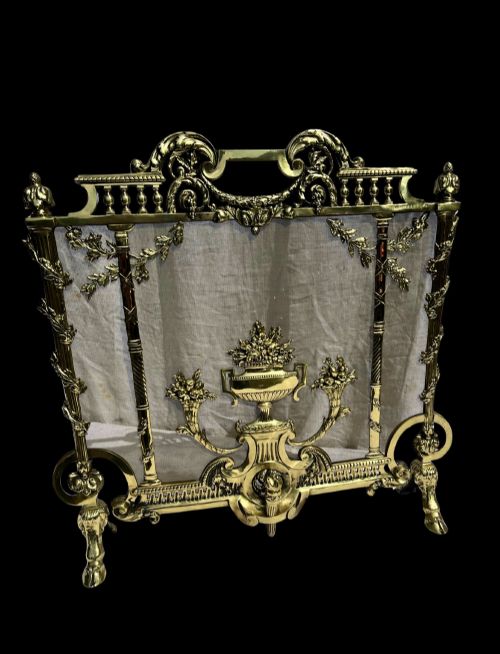
The assortment ranges from heavy wrought iron Gothic barriers to ornate gilt bronze and lacquered brass frames. These pieces serve both as practical fireplace accessories and as sculptural centrepieces for the living room.
How these pieces were made
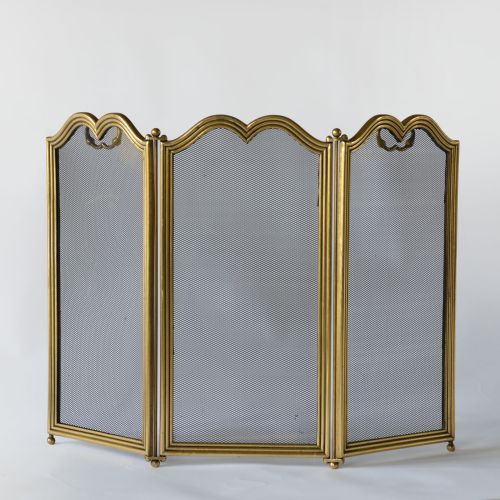
Makers utilised cast and wrought metals, shaping brass, iron, copper, and gilt bronze into intricate frames. Metal mesh and wire netting were secured within these structures to catch embers without blocking the warmth of the fire.
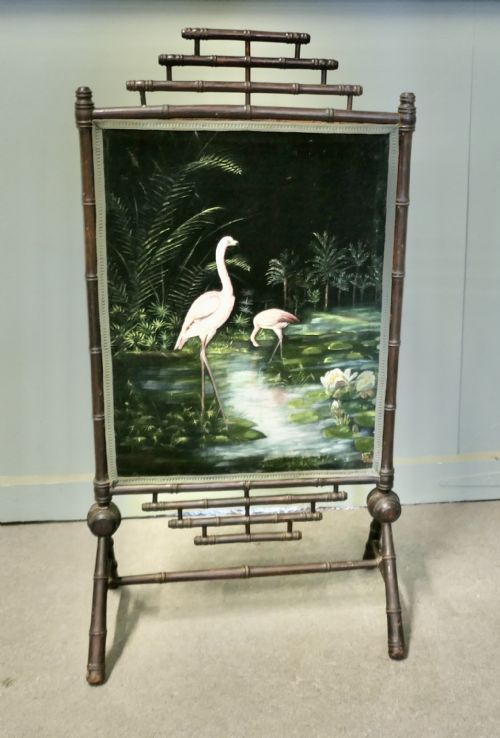
Decorative panels often featured painted oil scenes, black lacquer with oriental motifs, or cut glass inserts. Iron and steel components were joined through riveting and forging, while brass and bronze elements relied on detailed casting and gilding.
Flamingos occasionally guard your hearth, proving that nineteenth-century artisans loved an unexpected tropical bird by the coal fire.
What varies in quality
Quality rests in the weight of the metal, the rigidity of the folding hinges, and the clarity of the casting. Heavier gauge brass and thick wrought iron provide structural integrity that lighter stamped metal lacks.
Finishing details dictate the upper tier of pieces, seen in crisp chiselling on gilt bronze, secure riveting on iron frames, and well-preserved painted panels. Flimser constructions flex under daily use, whereas substantial frames maintain their alignment and stability over decades.
E F Caldwell New York
The Antique Style Fireguard Glossary
- Spark guard
- A fine metal mesh screen designed specifically to intercept flying embers from an open fire. These often feature folding tripartite panels for adjustable hearth coverage.
- Fender
- A low metal barrier placed on the floor around the hearth to contain rolling logs and ash. They appear in pierced brass, iron, and extending formats.
- Gilt bronze
- An alloy treated with a gold coating, frequently used in decorative French revival mounts. It provides a rich, non-tarnishing metallic lustre.
- Wrought iron
- Iron beaten and shaped by hand while hot, yielding a durable material with visible forge marks. It defines the robust character of Gothic and Arts and Crafts pieces.
- Rococo revival
- A nineteenth-century design style emulating eighteenth-century French asymmetry, scrolls, and natural motifs. It dominates many of the ornate brass and bronze screens.
Antique Style Fireguard: Frequently Asked Questions
Are these fireguards safe for daily use?
Most sturdy iron and heavy brass screens safely contain sparks from an open fire. Mesh panels effectively block stray embers while allowing heat to circulate.
Lighter decorative screens or those with painted panels are better suited for non-working hearths. Check the stability of the frame and hinges before placing near an active fire.
What is the difference between a fire screen and a fender?
A fire screen stands upright to block radiant heat and flying sparks from reaching the room. They are often taller, folding, or mounted on feet.
A fender sits flat on the floor around the base of the hearth to contain rolling logs and protect the carpet. Some period setups combine both accessories for complete hearth management.
How do I date an iron or brass fire screen?
Examine the construction methods, such as hand-forging versus machine stamping, along with the fastener types. Screws and rivets often point to nineteenth or early twentieth-century manufacturing techniques.
Stylistic cues like Gothic revival motifs or Arts and Crafts simplicity also help narrow down the production era. Match these details against the recorded periods of similar surviving hearth furniture.