
Antique Style Console Tables
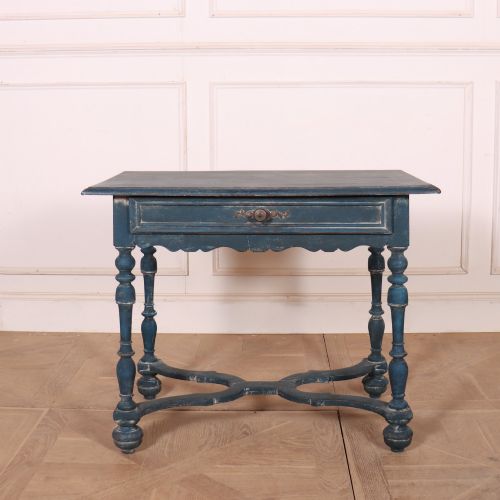
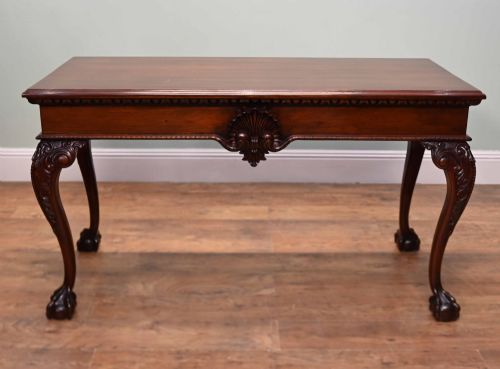
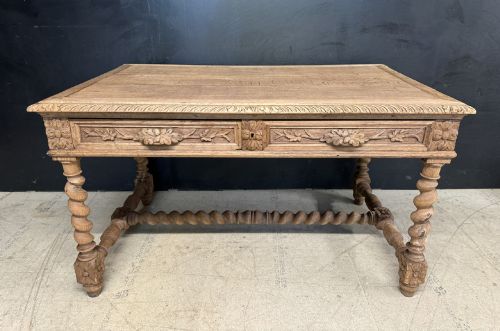
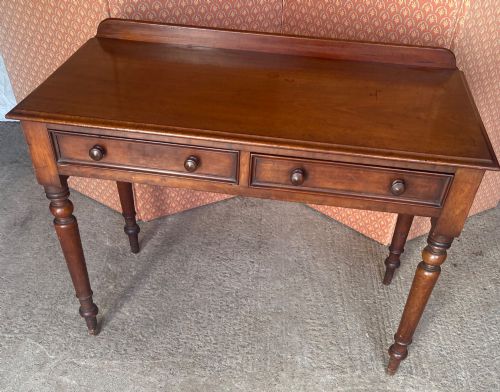
These antique style console tables bring historic form and surface to a room, offering surface space shaped by periods from the eighteenth century to the twentieth.
Antique Style Console Tables
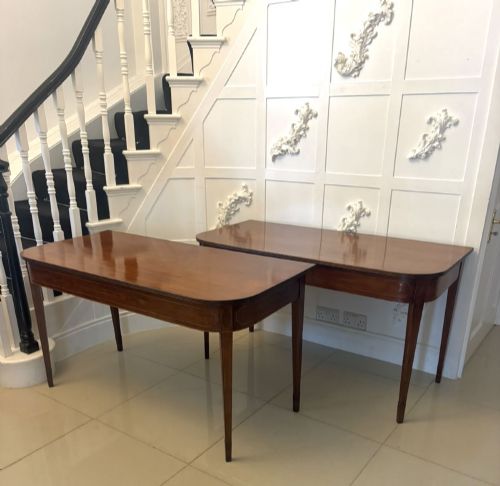
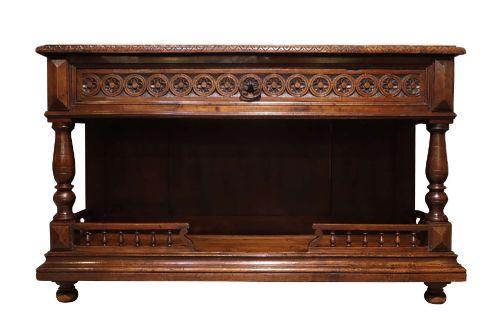
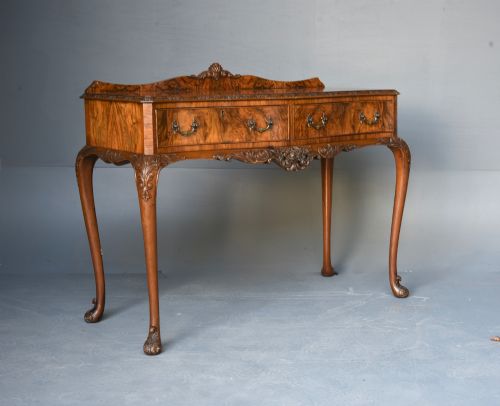
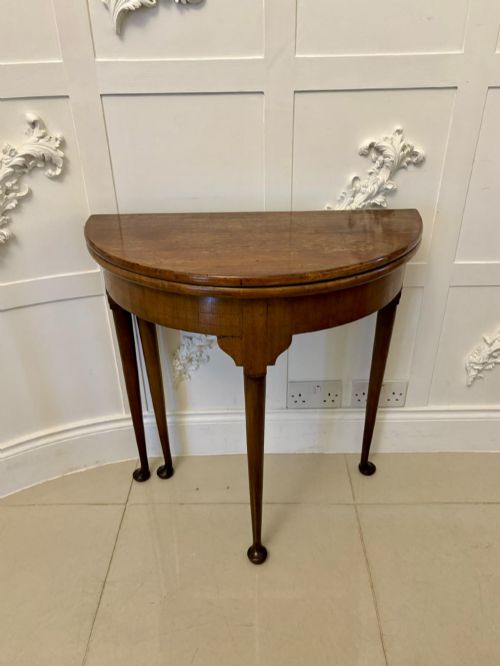
Antique style console tables appear in diverse structural formats across this selection, including demi-lune shapes, break-front silhouettes, and serpentine serving designs. These forms derive from nineteenth-century interpretations of earlier Georgian, Regency, and Queen Anne aesthetics.
Makers shaped these surfaces to fit against walls or function as freestanding hall and side pieces. The inventory includes variants with marble tops alongside folding card tables and dresser bases adapted to console use.
Materials and Construction
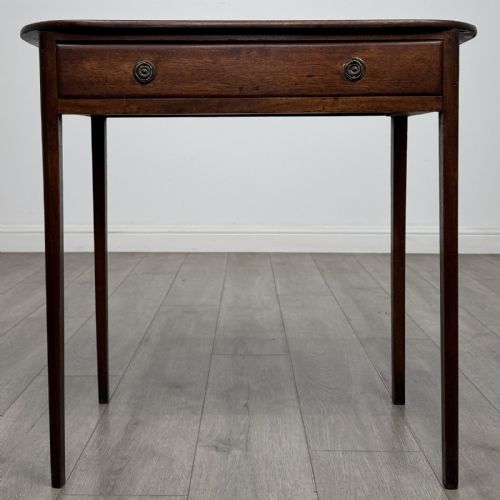
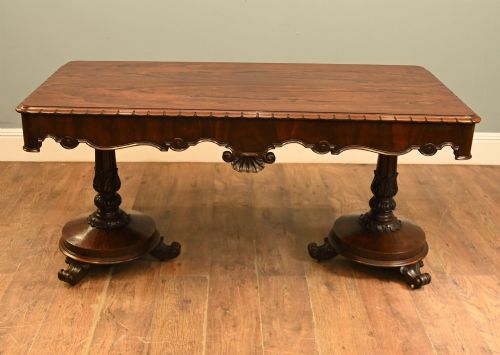
Carpenters utilised primary timbers such as mahogany, oak, walnut, and satinwood, frequently applying veneers of burr yew or kingwood. Structural enrichment relied upon carved giltwood, ormolu mounts, and brass inlays.
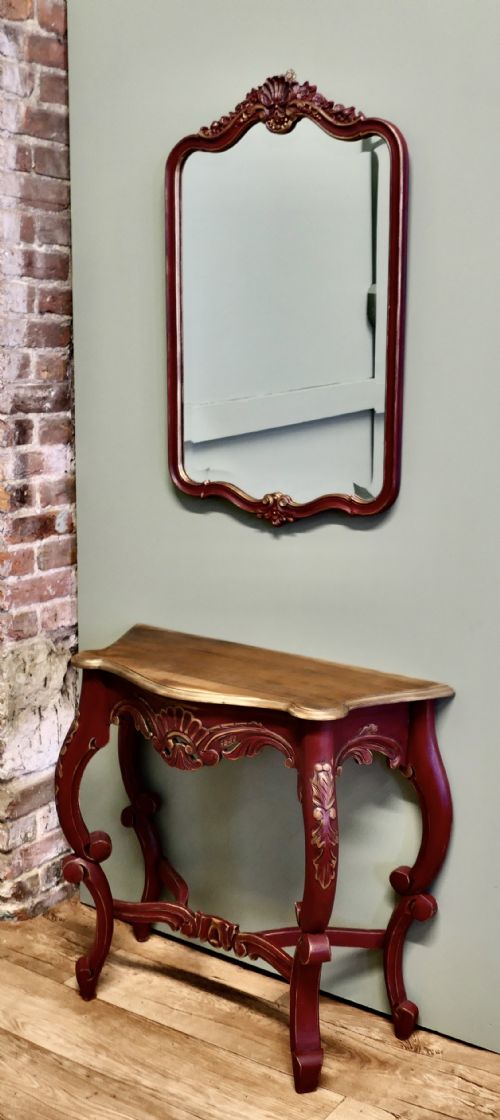
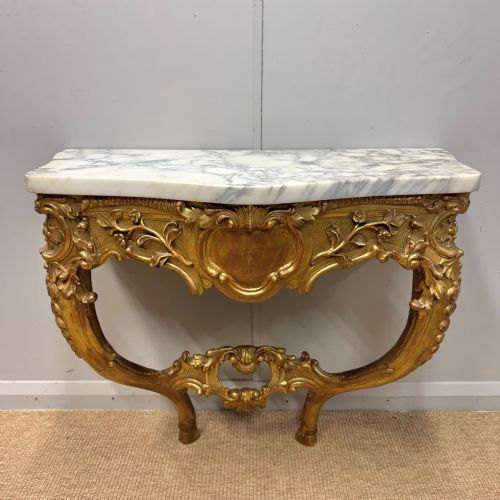
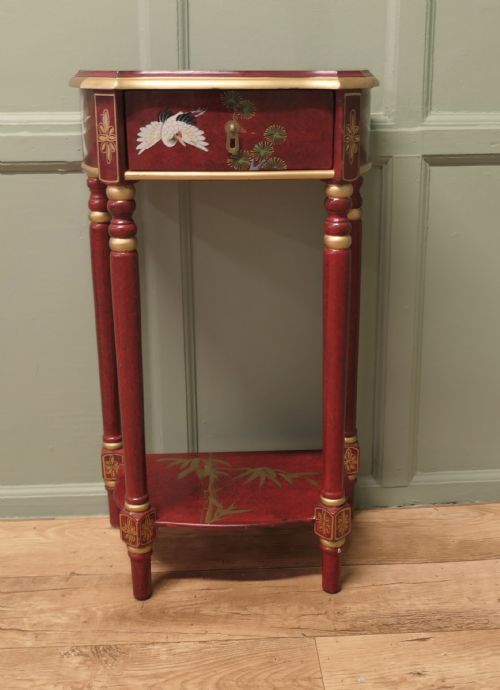
Surfaces frequently incorporate inset marble slabs, lacquer work, and painted finishes including faux bamboo and Chinoiserie. Joinery methods reflect the cabinet-making standards of the eighteenth, nineteenth, and early twentieth centuries.
Listings span periods from the eighteenth century through the Edwardian era, utilising mahogany, oak, walnut, marble, and giltwood.
Distinctions in Execution
Quality rests upon the selection of timber figures, such as figured mahogany or burr walnut, matched with the precision of neoclassical carving and giltwood application. Pieces carrying attribution to workshops like George Bullock or makers such as Felix-Alfred Ternisien demonstrate elevated standards of design.
The integrity of secondary materials, including rouge or white marble tops and brass hardware, determines the overall standard of execution. Finer examples maintain crispness in applied mouldings and balanced proportions in demi-lune or serpentine formats.
George Bullock·Felix-Alfred Ternisien·Giles Grendey
The Antique Style Console Tables Glossary
- Demi-lune
- A half-moon shape characteristic of console and card tables designed to sit flush against a wall. This format gained prominence during the neoclassical period.
- Ormolu
- Gilded bronze mounts applied to furniture for decorative enrichment. It appears frequently on pieces executed in French revival styles.
- Giltwood
- Timber coated with a thin layer of gold leaf. This finish defines the carved bases of many nineteenth-century display consoles.
- Dresser base
- A low wooden sideboard form utilised historically for storage and serving. Versions in oak and walnut appear within the console category.
- Serpentine
- A gently undulating curved line forming the front edge of a table top or frame. It requires skilled woodworking to execute cleanly.
Antique Style Console Tables: Frequently Asked Questions
What is an antique style console table?
These pieces are narrow tables designed primarily to stand against a wall, often serving decorative or functional roles in hallways and reception rooms.
The category encompasses original period pieces alongside revival iterations drawing upon Georgian, Regency, and Louis styles.
How were console tables used historically?
Historically, console tables functioned as decorative fixtures displaying ornaments, clocks, or candelabra beneath wall mirrors.
Many variants also served as serving surfaces or convertible card tables with fold-over tops for gaming.
How do you identify a marble top console?
Marble-topped examples feature inset stone slabs, frequently in white or rouge varieties, fitted directly into the wooden framework.
These tops originated primarily on nineteenth-century pieces influenced by French design aesthetics.
What woods are common on these tables?
Mahogany and oak form the structural foundation for many examples, alongside walnut and satinwood veneers.
More ornate items incorporate giltwood frames or exotic woods like kingwood and burr yew.