


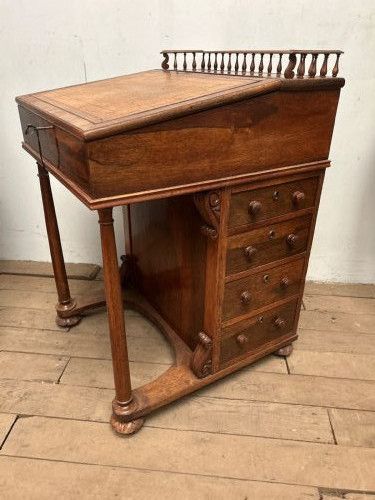
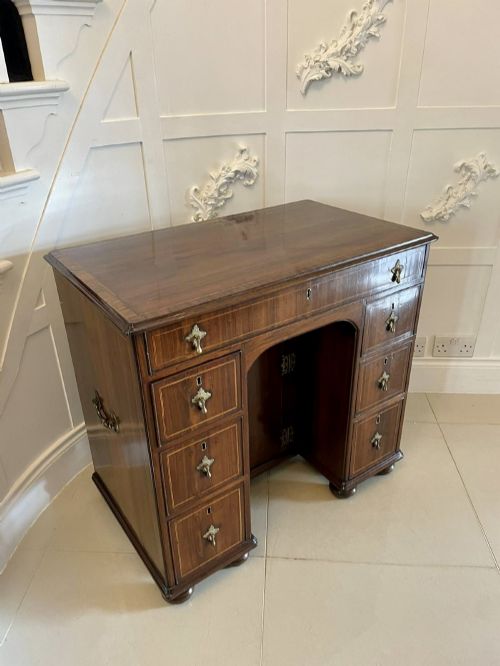
Antique Study Bureau
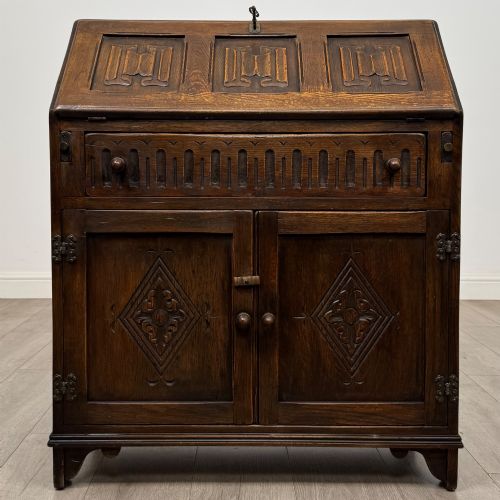
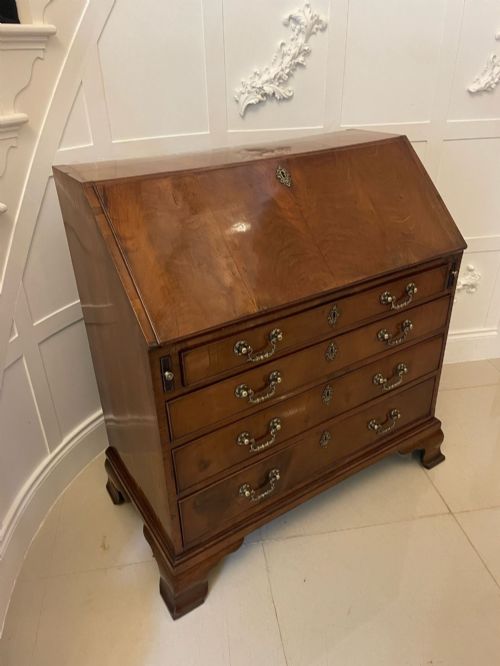
An antique study bureau brings disciplined elegance to a room, offering a private writing slope and hidden compartments behind a folding front.
Antique Study Bureau
When you search for an antique study bureau, you encounter a range of forms designed for correspondence and private administration, stretching from the robust woods of the Georgian era through to Edwardian interpretations and Art Deco workspace designs.
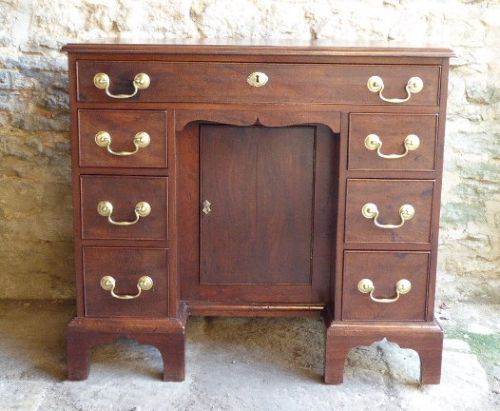
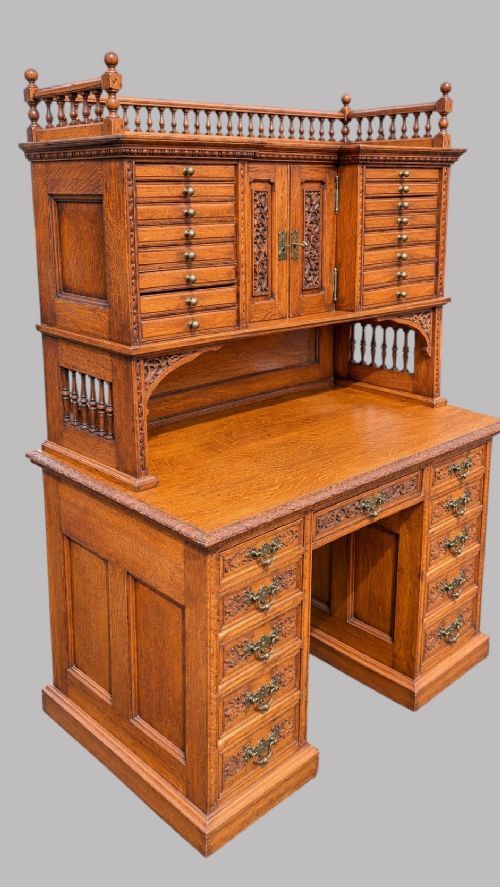
The selections span distinct centuries, including 18th-century walnut and mahogany drop-front chests, Victorian kneehole variants, and compact oak pieces from the early 20th century.
Most examples combine a sloping writing surface with internal pigeonholes and small drawers, housed either within a chest of drawers or mounted upon slender legs and stands.
Materials and construction methods
Cabinetmakers constructed these pieces primarily using dense timbers such as mahogany, oak, and walnut, often applying burr walnut or flame mahogany veneers to exterior surfaces for decorative grain patterns.
Internal elements frequently incorporate secondary softwoods alongside fine dovetail joinery on drawer construction, while hardware includes cast brass handles and escutcheons.
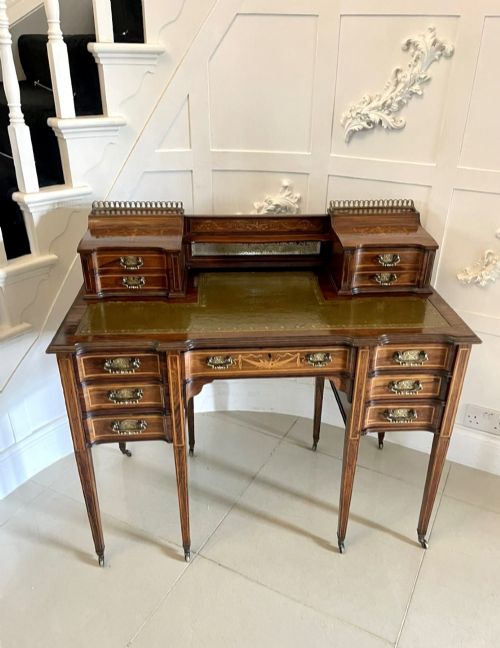
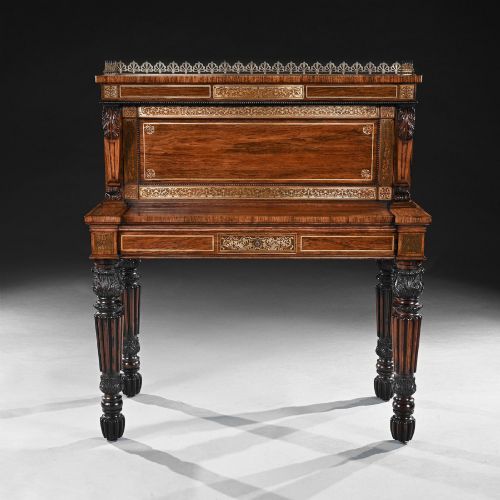
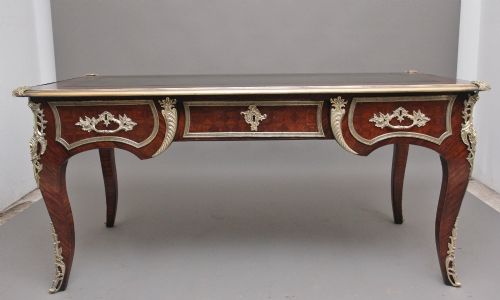
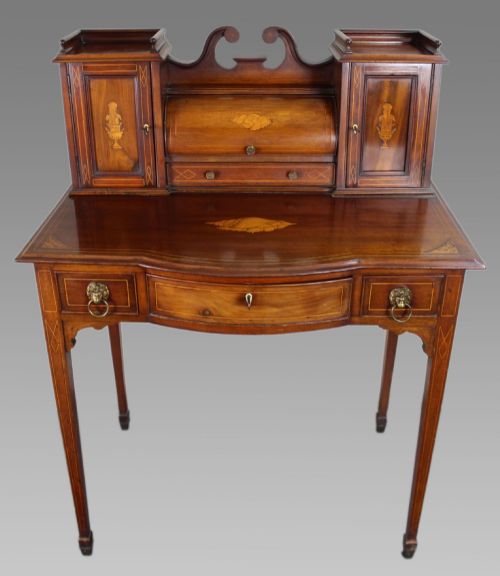
More elaborate examples utilise marquetry, parquetry, or brass inlay, and French iterations incorporate cast ormolu mounts around leather writing inserts.
Several desks hide secret spring-loaded compartments behind innocent-looking pigeonholes for concealing private letters and small valuables.
Distinctions in craftsmanship
The division between standard output and superior craftsmanship rests in the depth of timber selection, such as the choice of solid mahogany or richly figured burr elm over simpler deal carcasing.
Refined pieces display meticulous hand-cut dovetailing, intact original interior stationary fittings, and precise parquetry rather than printed or superficial decoration.
Structural integrity, the harmonious proportions of the writing slope, and the retention of original brass hardware or leather inserts elevate certain items above mass-produced utilitarian desks.
Maple and Co·Gillows·James Mein of Kelso·Heals of London
The Antique Study Bureau Glossary
- Bureau
- A writing desk featuring a sloping lid that folds down to reveal a fitted interior of small drawers and pigeonholes.
- Kneehole desk
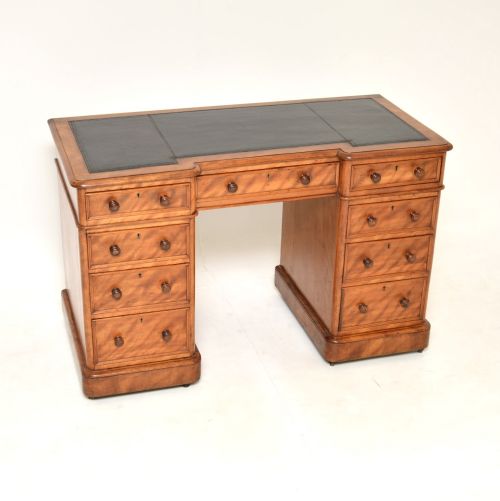
- A flat-topped pedestal desk featuring a central recess for the user's legs, flanked by columns of small drawers.
- Davenport
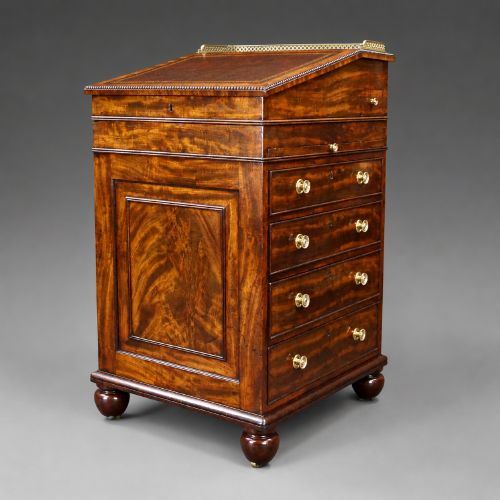
- A compact writing desk characterised by a sloped top, side drawers, and often a small superstructure for stationery.
- Pigeonhole
- A small, open compartment built into the interior of a desk or bureau for sorting letters and papers.
- Marquetry
- Decorative woodwork where pieces of various coloured veneers are fitted together to form pictorial or geometric designs.
Antique Study Bureau: Frequently Asked Questions
How do I use a bureau daily?
Lower the hinged writing flap to create a stable wooden slope for reading or correspondence, utilising the internal cubbies to keep paper and small items organised.
When your writing session concludes, simply lift the fall-front flap back into place and secure it to conceal your papers and maintain a tidy room.
Are these desks suitable for laptops?
Many compact versions accommodate modern laptops comfortably on the main writing surface when the flap is down, provided you check the interior depth first.
Consider the internal clearance height above the slope, as some 18th-century models possess lower stationary compartments that restrict clearance.
How do I tell Georgian from Victorian?
Georgian pieces generally showcase restrained architectural lines, rich mahogany or walnut grains, and understated bracket feet or straightforward bracket bases.
Victorian iterations often display heavier proportions, carved paw feet, roll tops, or machine-pressed decorative elements alongside darker oak or walnut finishes.
What is a tambour writing desk?
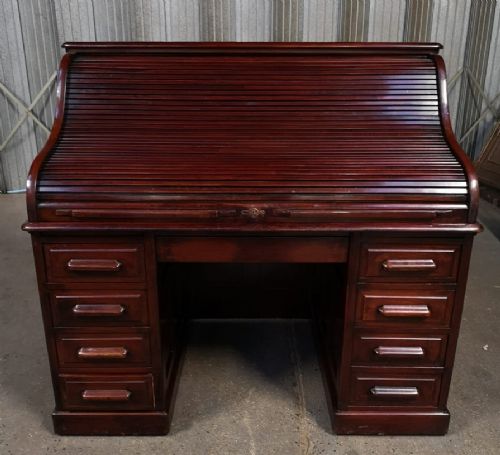
A tambour desk incorporates a flexible shutter made of narrow vertical strips of wood that slide smoothly in a track to cover the writing surface.
This mechanism allows the user to secure the desk surface quickly without lowering a heavy solid wooden flap.