
Antique Studded Desk Chair
An antique studded desk chair brings substantial mahogany or oak timber and hide upholstery to the workspace.
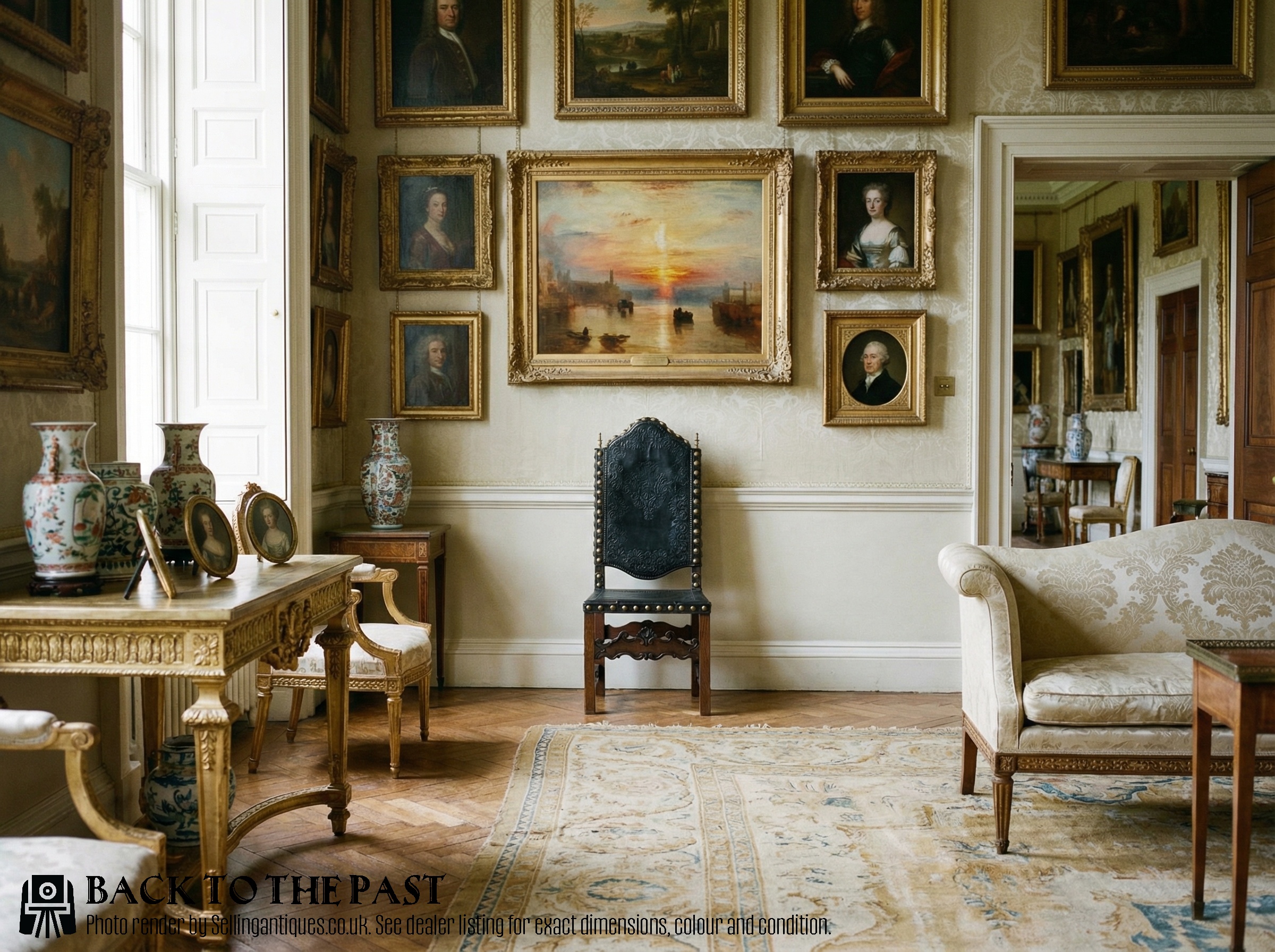
Antique Studded Desk Chair
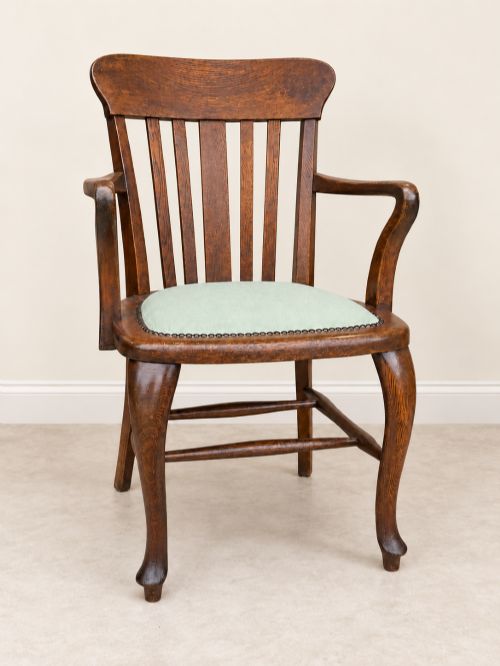
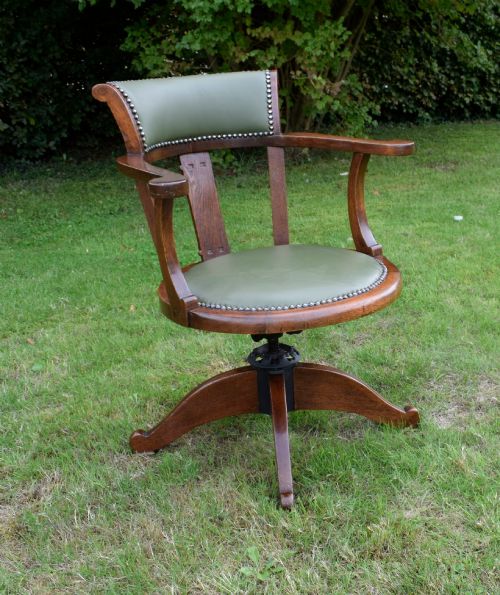
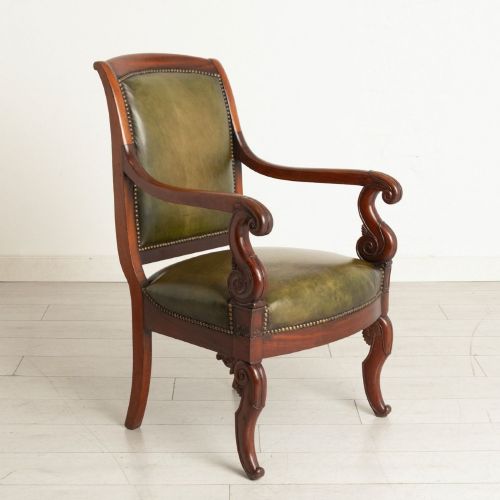
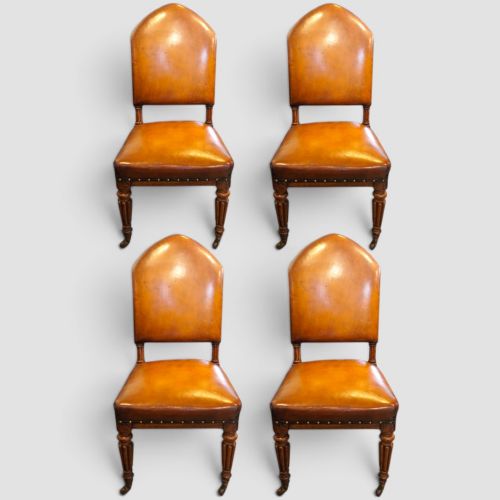
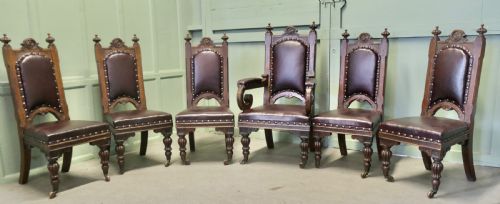
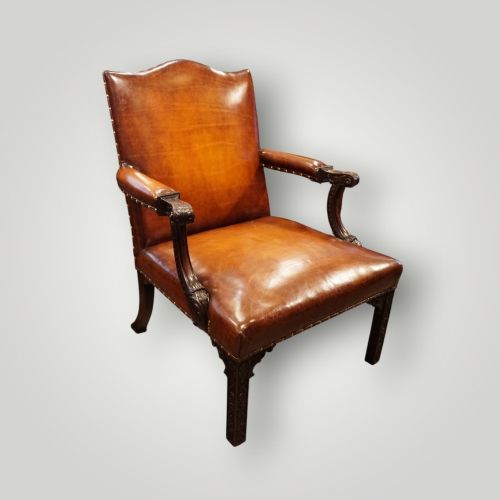
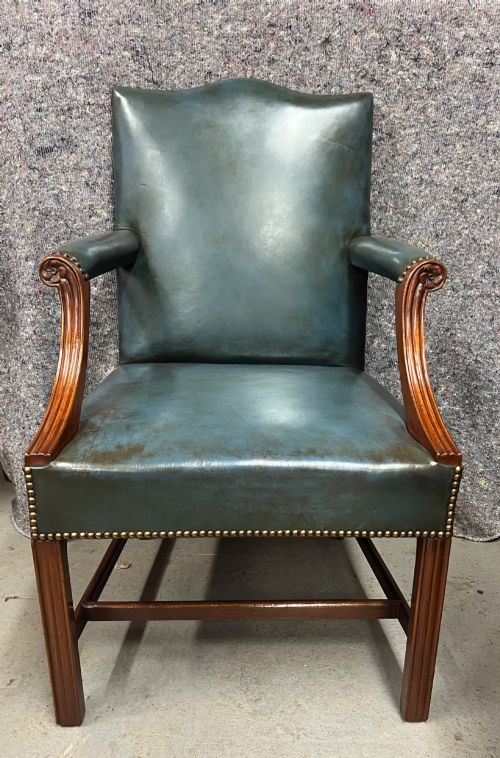
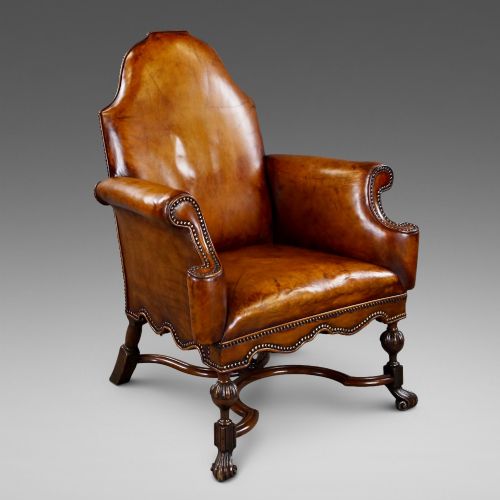
An antique studded desk chair combines domestic seating comfort with functional workplace design, appearing most frequently in Victorian, Edwardian, and Georgian periods. These pieces include revolving mechanisms, fixed frames, swivel functions, and library armchairs upholstered in leather and secured with metal pins along the edges. Mahogany, oak, and walnut form the primary structural timbers for these desk chairs, armchairs, and carvers.
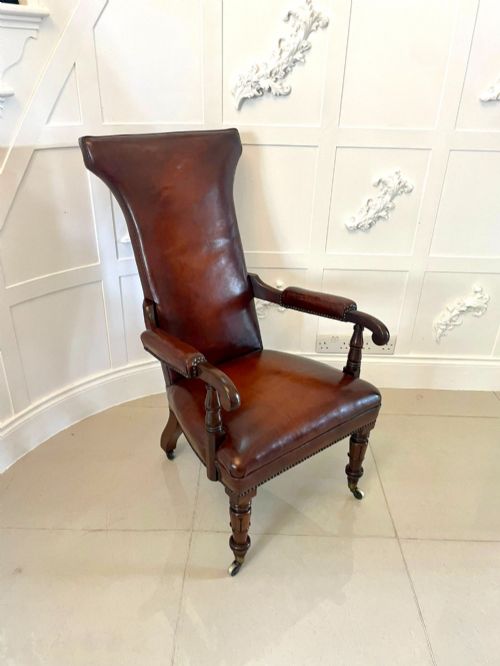
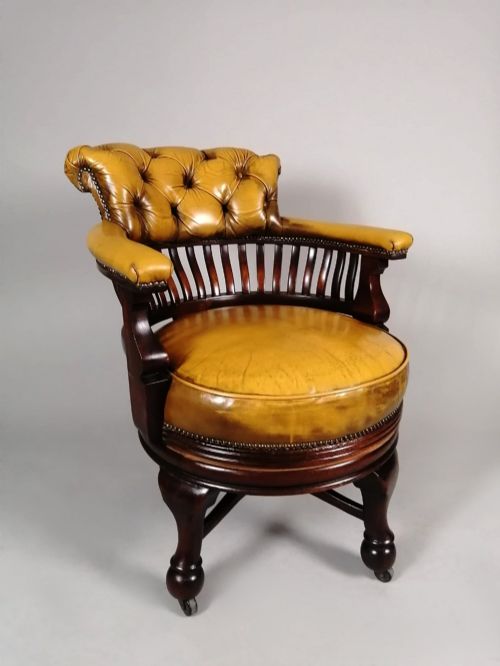
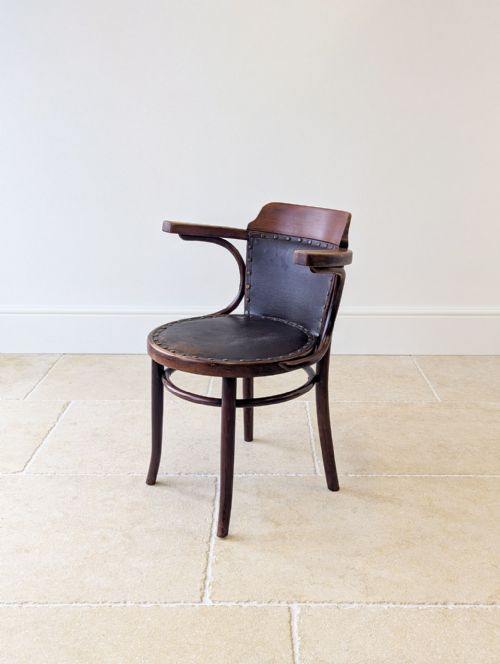
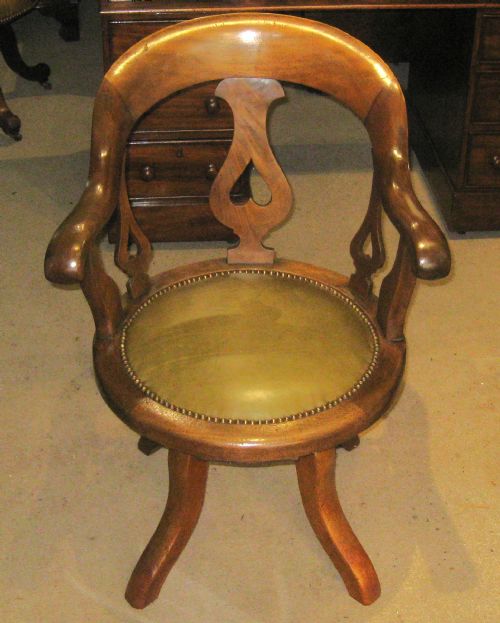
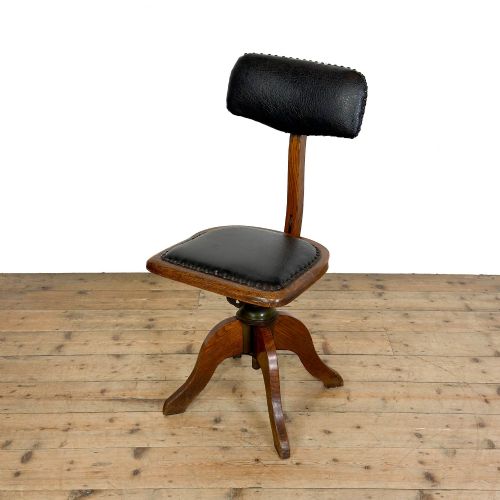
The version most commonly met on this page is the 19th century mahogany or oak desk chair, often featuring a revolving or swivel base alongside leather upholstery. Variations span from late Victorian office designs to Regency and Georgian library armchairs, plus Arts and Crafts or Edwardian bentwood and oak configurations. Buyers encounter desk armchairs, reading chairs, and captain's chairs sharing the characteristic studded hide seating.
Materials and construction methods
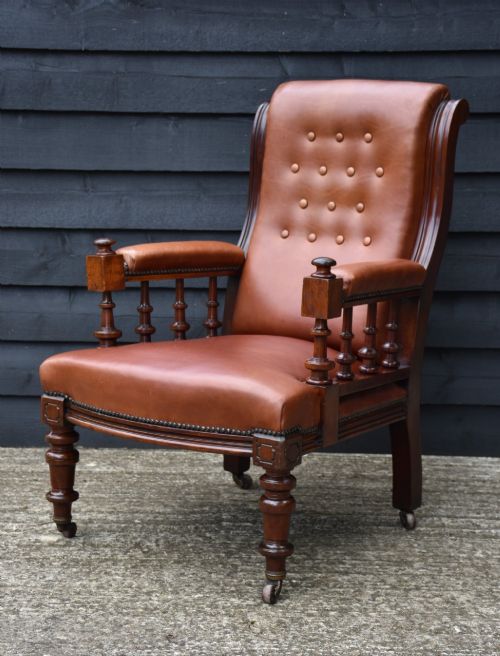
Cabinet makers utilised dense hardwoods including mahogany, oak, walnut, beech, and burr elm to build the frames, joining them with traditional woodworking joints. Turned wooden spindles, carved scroll arms, and blind fretwork embellish the structural supports on specific library and Gainsborough models.
Hides and leather provide the upholstery surface, fixed tightly to the timber frames using rows of brass or metal studs. Swivel and revolving desk chairs integrate iron and cast iron mechanical hardware beneath the seat to permit movement.
Machinist chairs bring industrial iron swivels directly into the executive study.
Factors influencing quality
The grade of timber and the depth of hand-carving dictate the distinction between standard production chairs and exceptional library pieces. Solid mahogany, figured burr elm, and intricate Chippendale blind carving elevate the execution above simple oak or beech office seating.
The integration of the revolving mechanism and the condition of the hand-dyed hide leather determine the mechanical and tactile standard. Original cast iron swivels combined with supple, hand-stitched leather demonstrate superior craftsmanship.
Thonet
The Antique Studded Desk Chair Glossary
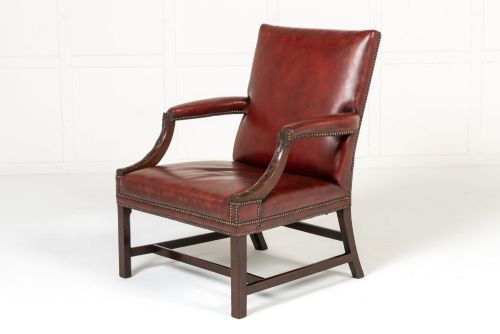
- Gainsborough chair
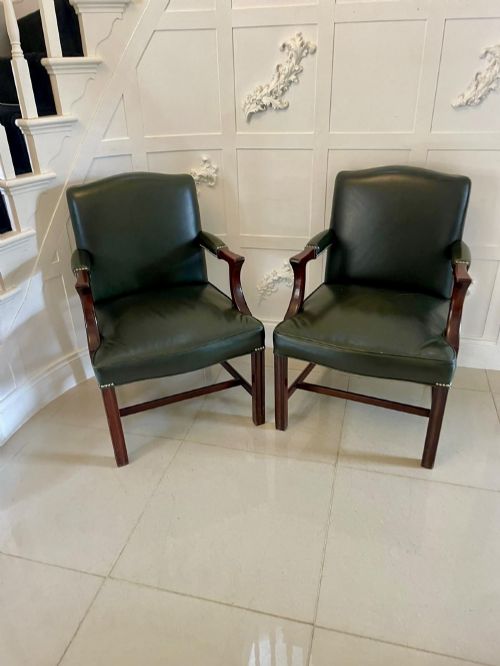
- A wide, open-armed armchair with a padded back and seat, typically upholstered in leather and supported on mahogany legs. These originate from the Georgian era and serve well at desks.
- Captain's chair
- A sturdy wooden armchair, often featuring a rounded spindle back and a leather upholstered seat designed for office or library use.
- Bentwood
- Wood that has been heated and bent into curved shapes, frequently utilised in Edwardian and Victorian chair framing.
- Carver chair
- An armchair matching a set of dining or office chairs, traditionally positioned at the head of a table or desk.
- Blind carving
- Carving applied to a flat surface in low relief, often seen on the woodwork of Georgian seating.
- Burr elm
- A timber harvested from tree growths that produces intricate, swirling grain patterns highly prized in furniture making.
Antique Studded Desk Chair: Frequently Asked Questions
How do I distinguish a Victorian desk chair from a Georgian one?
Victorian desk chairs often incorporate mechanical revolving swivel bases and heavier scroll arms, reflecting the industrial expansion of office furniture.
Georgian examples tend to rely on fixed mahogany frames, straight or Marlborough legs, and elegant Gainsborough proportions without modern iron swivel mechanisms.
Were these chairs originally meant for offices?
Many of these pieces served in private libraries, study rooms, and domestic writing spaces rather than commercial offices.
Over time, robust swivel and captain's chair designs transitioned into professional environments as workplace comfort evolved.
What is the purpose of the metal studs?
The metal studs secure the leather hide firmly to the wooden chair frame while concealing the raw edges of the material.
Beyond their structural function, the brass or iron pins provide a decorative border finish standard to traditional upholstery.
How do I care for the leather upholstery?
Leather upholstery benefits from regular dusting and occasional treatment with appropriate leather balms to maintain flexibility.
Keeping the antique hide away from direct heat sources prevents the material from drying out and cracking over time.