

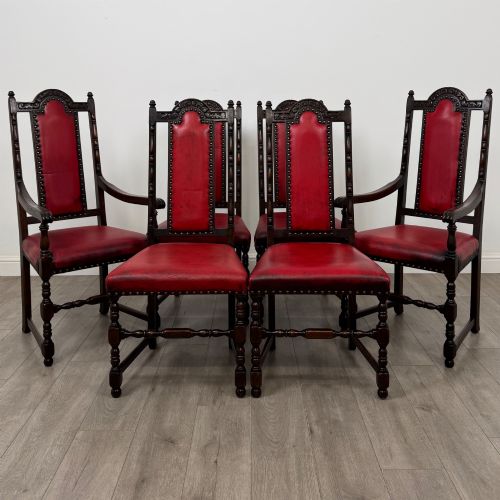
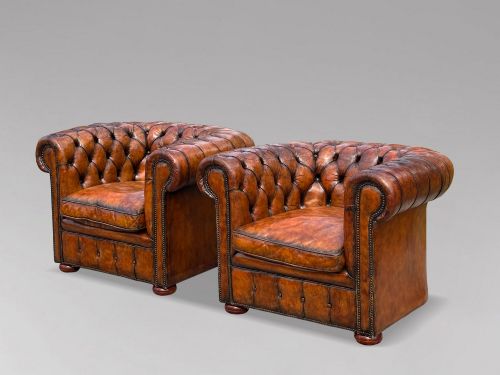
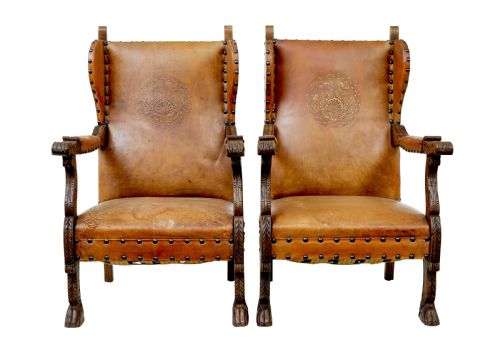
Antique Stud Leather Chair
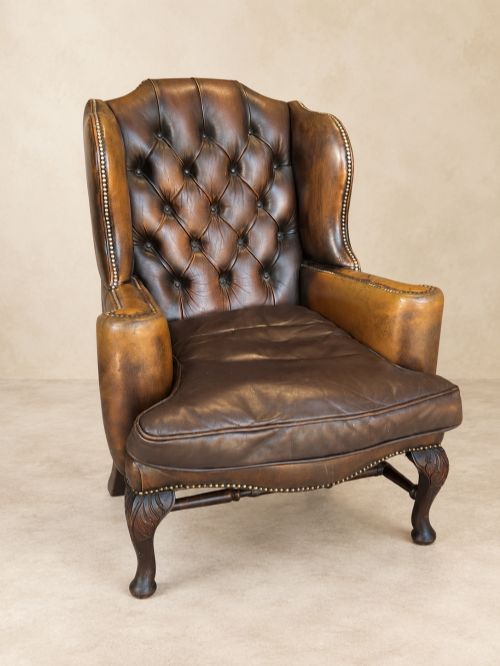
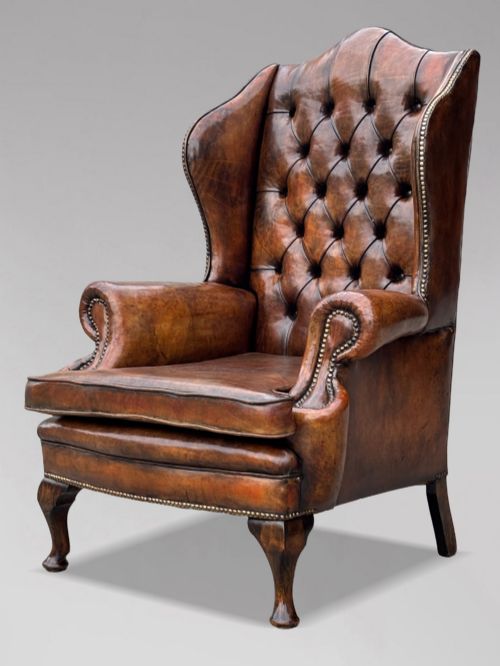
An antique stud leather chair combines robust timber framing with patinated hide, secured by brass or iron tacks for lasting durability.
Antique Stud Leather Chair
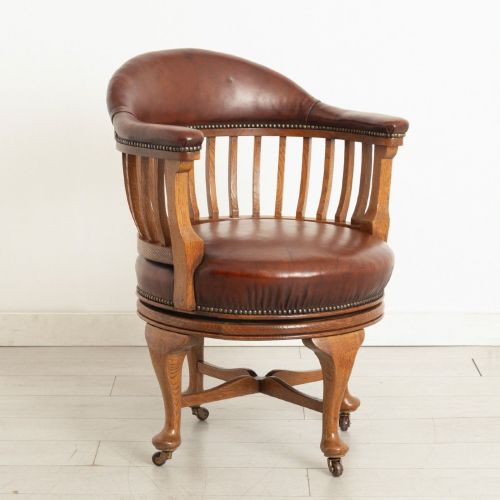
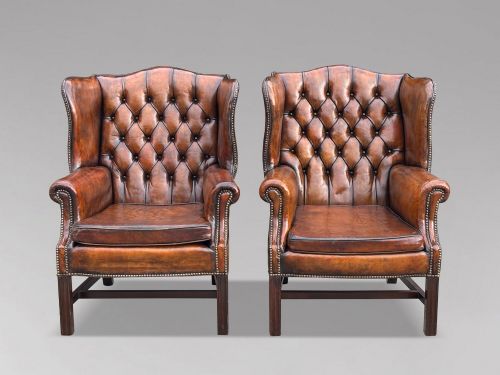
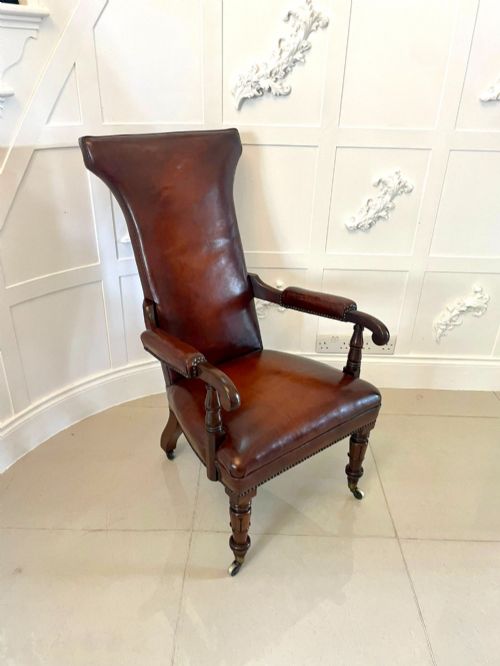
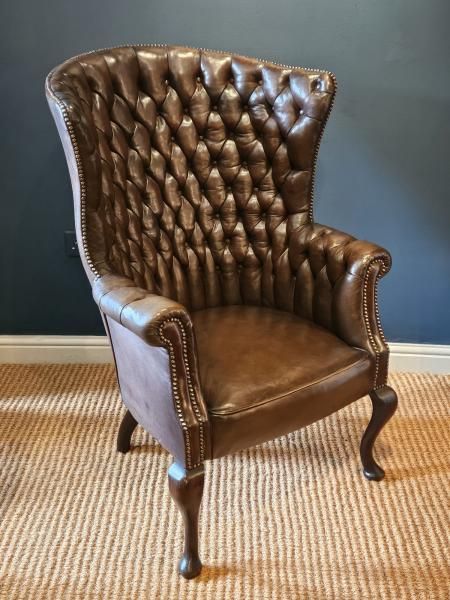
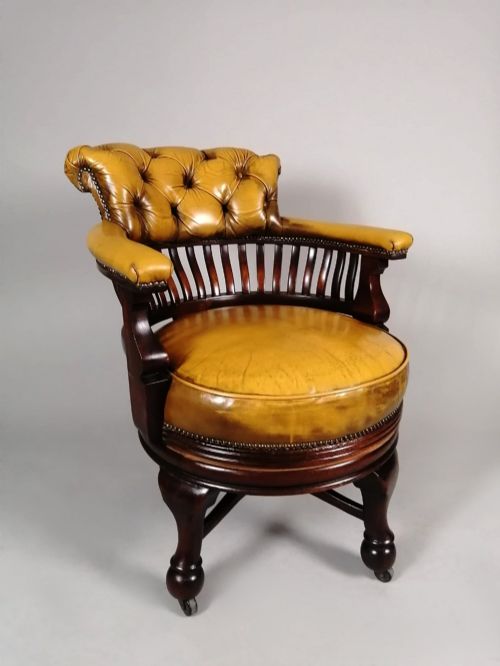
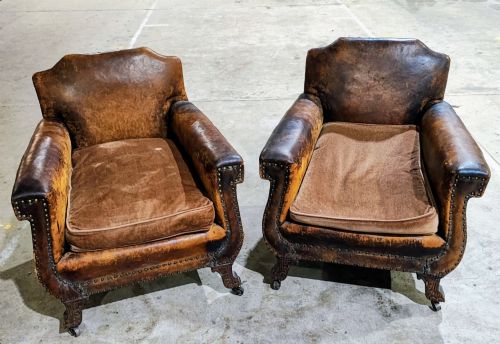
When searching for an antique stud leather chair, buyers encounter seating designed for libraries, studies, and dining rooms across multiple centuries. The selection spans formal Georgian library armchairs, Victorian swivel desk chairs, and Edwardian club chairs.
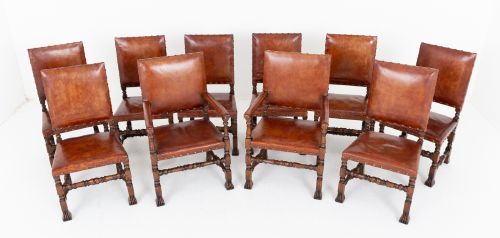
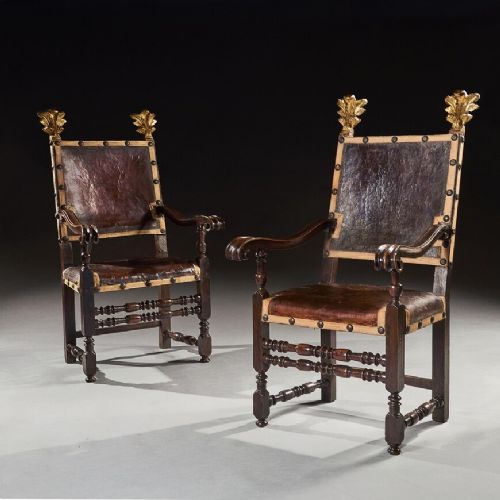
Most pieces seen here belong to the nineteenth and early twentieth centuries, featuring upright desk chairs, low club armchairs, and dining sets. Frames range from mahogany and walnut to sturdy oak.
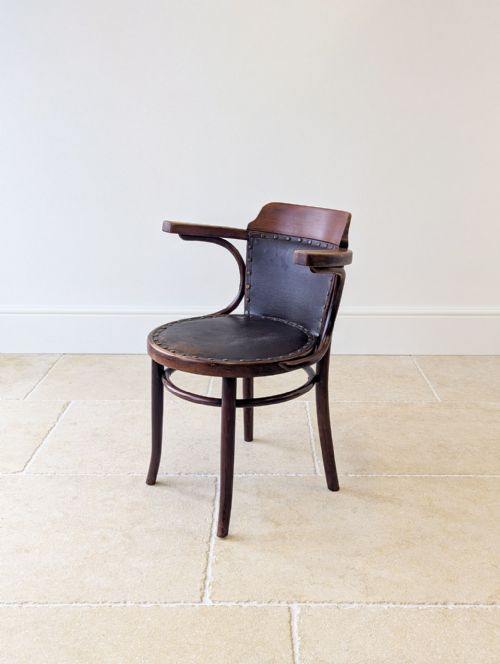
Origin varies from English library seating to French club chairs and bentwood office designs. These pieces served practical functions in studies and offices before finding places in contemporary reception rooms.
Materials and Construction
Construction relies on traditional cabinet-making timbers such as mahogany, oak, walnut, and beech, joined with mortise and tenon methods. Frames support sprung or webbed seats padded with traditional stuffing.
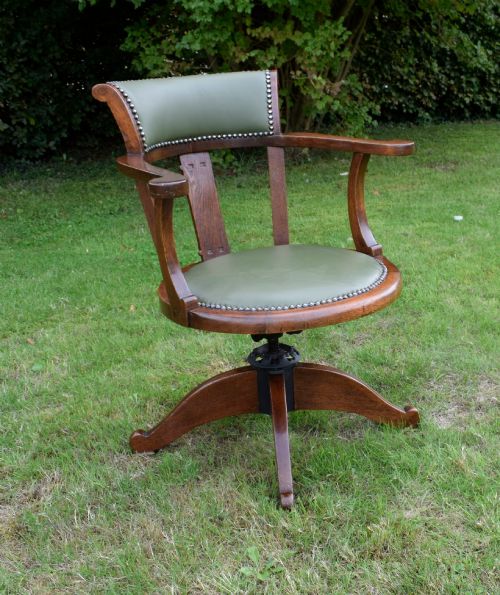
Upholstery utilises leather hides, secured to the timber frame using individual metal studs or brass tacks driven in by hand. Swivel and desk variations incorporate iron mechanisms, brass castors, and revolving wooden spindles.
Listings feature timber frames in mahogany, oak, and walnut paired with leather upholstery across Victorian, Edwardian, and Georgian periods.
Assessing Quality
Quality rests upon the integrity of the timber frame and the condition of the leather upholstery. Original hides displaying natural ageing and patination indicate superior survival compared to modern replacements.
Joinery execution defines the finer pieces, seen in carved mahogany details, blind fretwork, and well-fitted turning. Mechanism smoothness in revolving desk chairs and the precise alignment of individual brass studs separate workshop standards.
The Antique Stud Leather Chair Glossary
- Gainsborough chair
- A wide, upholstered armchair with open arms, originating in the eighteenth century for library use.
- Club chair
- A low, heavily upholstered armchair designed for comfort, frequently upholstered in dark or tan leather.
- Carver chair
- An armchair intended for the head of a dining table, matching a set of smaller side chairs.
- Button-back
- An upholstery technique where depressions are formed in the padding by pulling thread through to the frame, secured with leather buttons.
Antique Stud Leather Chair: Frequently Asked Questions
How do I date an antique leather chair?
Dating relies on combining timber species, structural joinery, and upholstery methods. Earlier pieces from the eighteenth century utilise dense mahogany and hand-carved details, while later nineteenth and twentieth-century versions introduce mechanical swivels and factory-turned elements.
Stud placement also offers clues, as hand-beaten brass tacks precede mass-produced strip upholstery. Comparing the wear patterns on the hide with the construction of the underside helps confirm the period.
Where were these chairs used originally?
Many examples served as desk chairs in studies, offices, and libraries, providing support for extended periods of reading or writing. Others functioned as dining chairs or fireside seating in formal rooms.
Library armchairs and club chairs were built for private studies and smoking rooms, whereas smaller side chairs furnished dining tables and hallways.
How do I care for antique leather upholstery?
Preserving old leather requires maintaining moderate room humidity and keeping chairs away from direct heat sources and sunlight, which dry the hide. Natural wax or suitable leather balms help maintain suppleness without blocking the grain.
Gentle dusting with a soft cloth prevents abrasive particles from settling into the creases and seams around the brass studs.
What is the difference between a desk chair and a club chair?
Desk chairs feature upright wooden frames, often with revolving mechanisms or castors, designed to sit cleanly beneath a writing table. They prioritize structured posture and mobility.
Club chairs provide deep, low cushioning enclosed by upholstered arms, built entirely for relaxation rather than office work.