

Antique Street Scene
An antique street scene captures the movement and atmosphere of past urban life through the hands of painters and printmakers.
Antique Street Scene
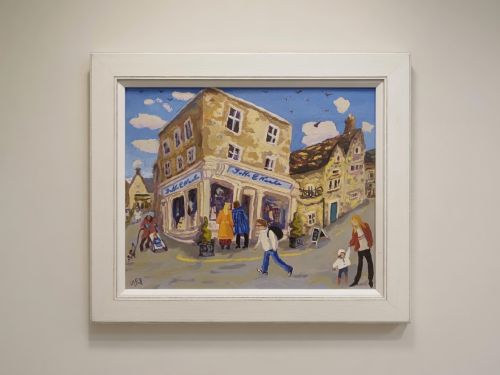
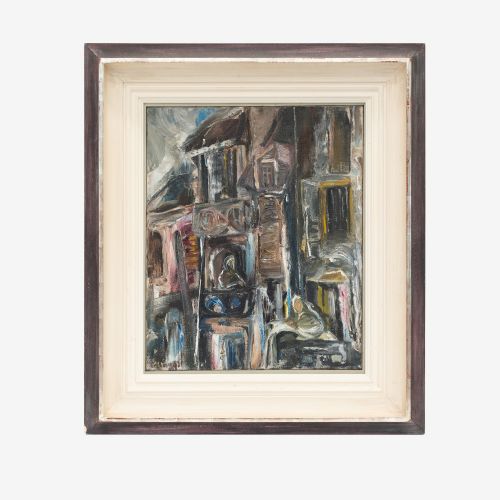
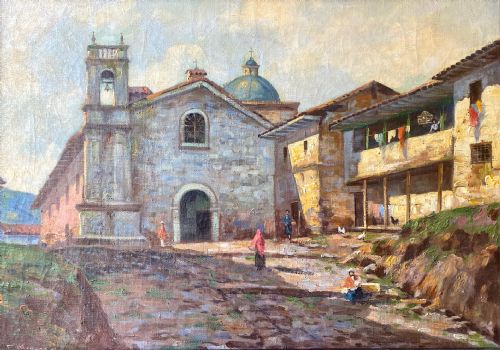
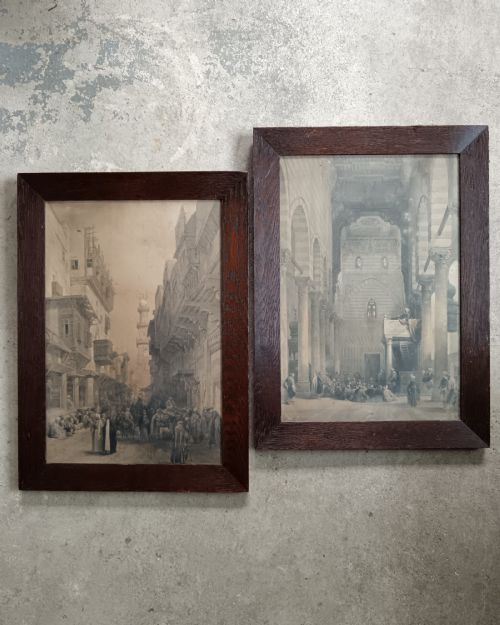
An antique street scene depicts urban life, townscapes, and market squares across Britain and continental Europe. These works record the architecture, transport, and daily routines of past centuries through various artistic movements.
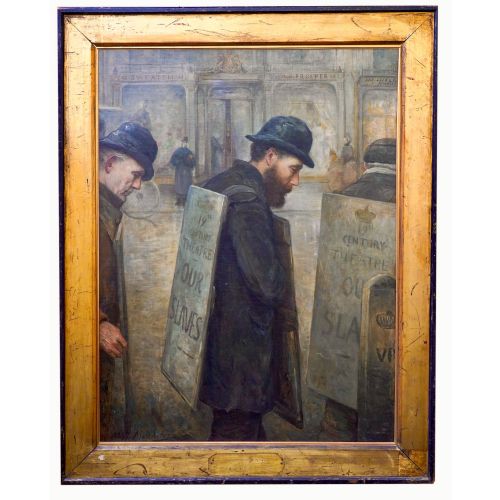
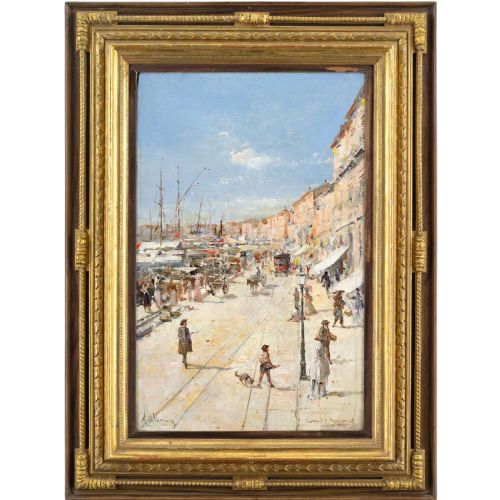
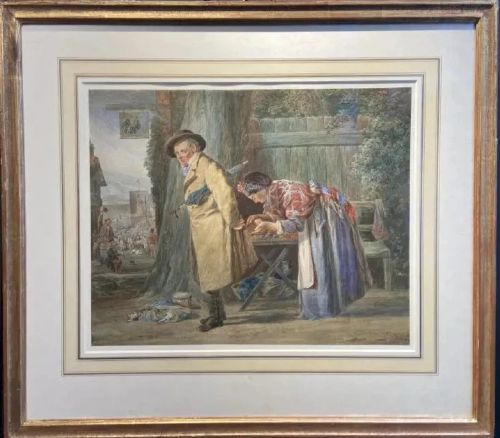
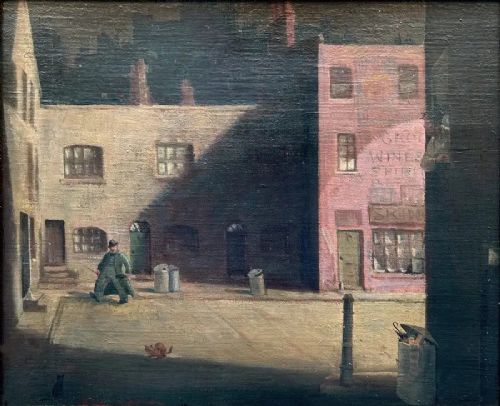
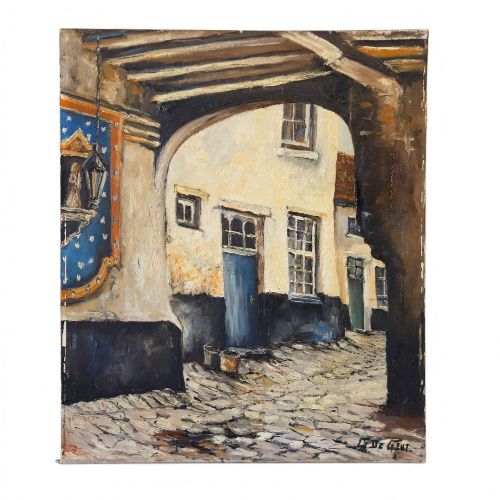
The most common versions met on this page are watercolours and oil paintings dating from the Victorian and Edwardian eras. Artists documented bustling city thoroughfares, quiet provincial lanes, and foreign capitals with remarkable observation.
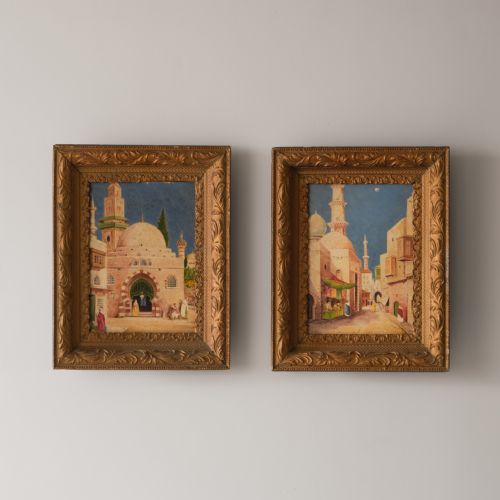
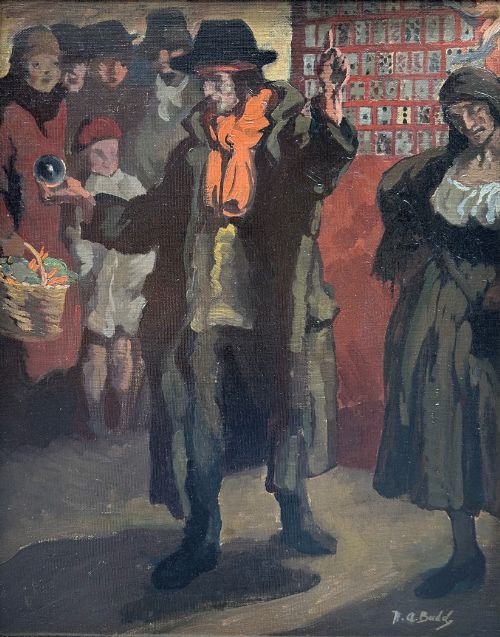
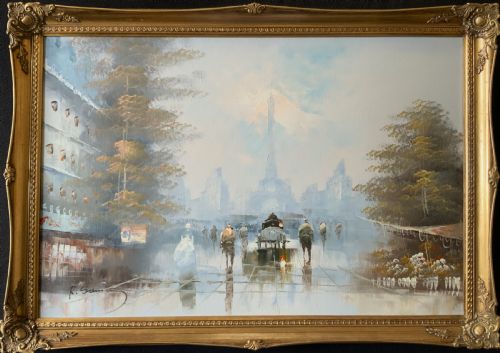
Subjects range from British cities like York and London to continental hubs such as Paris, Venice, and Cairo. Figures such as merchants, cab drivers, and children populate these historic thoroughfares.
How these works were made
Painters applied oil paint to canvas, board, and panel to capture the heavy atmosphere of city weather and evening light. Watercolours on paper offered a fluid medium well suited for recording rapid sketches on location.
Draftsmen utilised pastel and lithography to render detailed urban views and transfer prints of London street life. Framing often involved period giltwood surrounds that complement the traditional subjects.
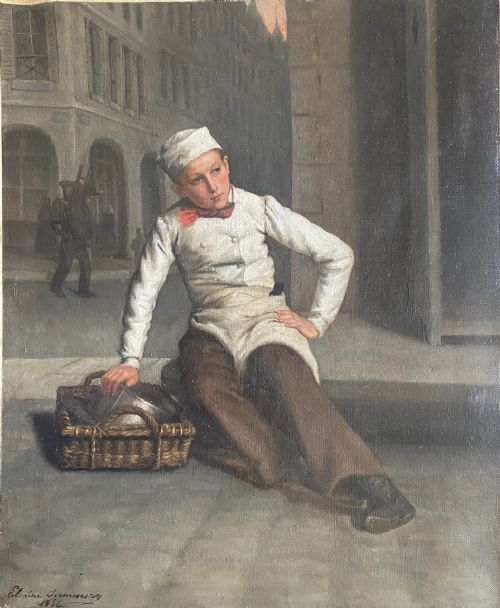
An apprentice cook rests briefly from kitchen duties in mid-nineteenth-century Paris, caught forever in oils.
What varies in quality
Quality rests upon the artist's command of perspective, scale, and the natural movement of crowds. Stronger pieces display confident brushwork and an authentic sense of light rather than stiff architectural drawing.
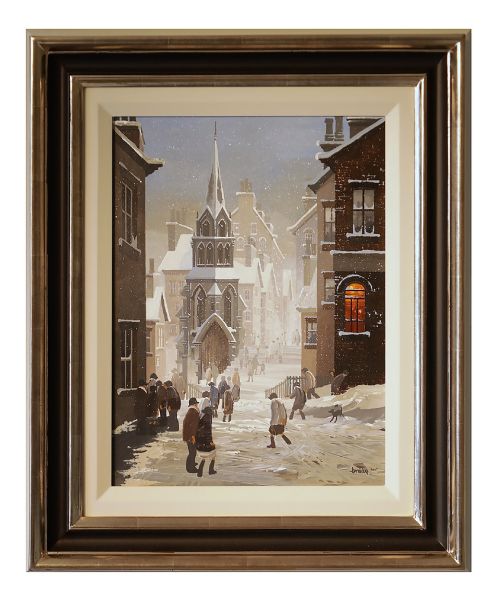
The handling of atmosphere, whether capturing winter snow or evening moonlight, separates accomplished compositions from standard topographical records.
Felix Stone Moscheles·Thomas Ellison·Augusto Alberici·David Roberts·Victor Gabriel Gilbert·Eduard Leon Cortes·Antal Berkes
The Antique Street Scene Glossary
- Genre painting
- Depiction of aspects of everyday life by subjects taking part in ordinary activities. These scenes often feature market sellers, travellers, and street children.
- Lithography
- A planographic printing process using a flat stone or metal plate. This technique enabled the production of multi-coloured street scene prints.
- Giltwood
- Wood carved and finished with a thin layer of gold leaf. Antique frames of this material frequently house oil paintings and watercolours.
- Impressionism
- A 19th-century art movement characterised by relatively small, thin, yet visible brush strokes. Artists focused on accurate depiction of light in changing qualities.
Antique Street Scene: Frequently Asked Questions
What periods do these street scenes cover?
The works span the Georgian, Victorian, and Edwardian eras, extending into the early decades of the twentieth century. Many reflect the changing face of European cities during rapid urbanisation.
Paintings and prints from the nineteenth century often record horse-drawn transport and historic architecture before modern redevelopment altered the streetscapes entirely.
How were street scenes used historically?
Middle-class homes frequently displayed framed watercolours and oil paintings of urban views to celebrate familiar city sights or foreign travels. Prints recorded popular urban characters for wider circulation.
Artists also exhibited larger canvases in official salons and galleries to showcase their mastery of perspective, crowd movement, and atmospheric light effects.
How do I care for antique watercolours?
Works on paper require protection from direct sunlight to prevent fading of watercolours, pastels, and paper supports. Acid-free backing materials help preserve the integrity of the sheet over time.
Keeping pieces in rooms with stable humidity levels prevents foxing spots and moisture damage to the paper and the original frame.
How can I distinguish Victorian views from Edwardian ones?
Victorian street scenes often feature heavier garments, horse-drawn omnibuses, and dark architectural tones suited to industrial-era cityscapes. Edwardian works frequently adopt brighter palettes influenced by Impressionism.
Clothing styles, vehicle types, and the looseness of the brushwork offer clear visual markers for dating the street activity depicted.