




Antique Stream Painting
An antique stream painting captures the quiet pull of running water through pastoral landscapes, drawing you into quiet corners of the British countryside.
Antique Stream Painting
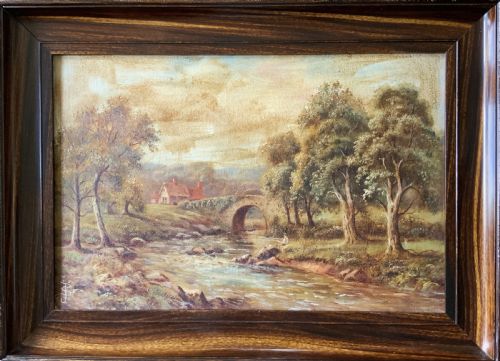
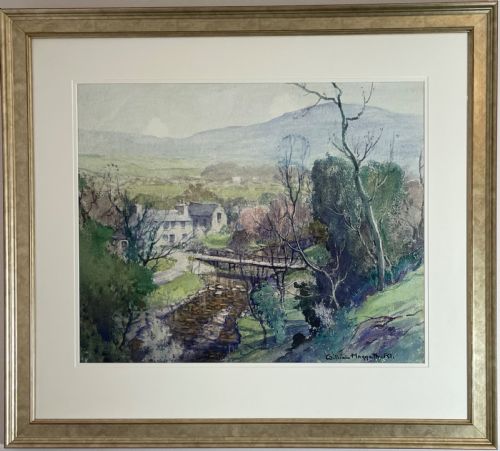
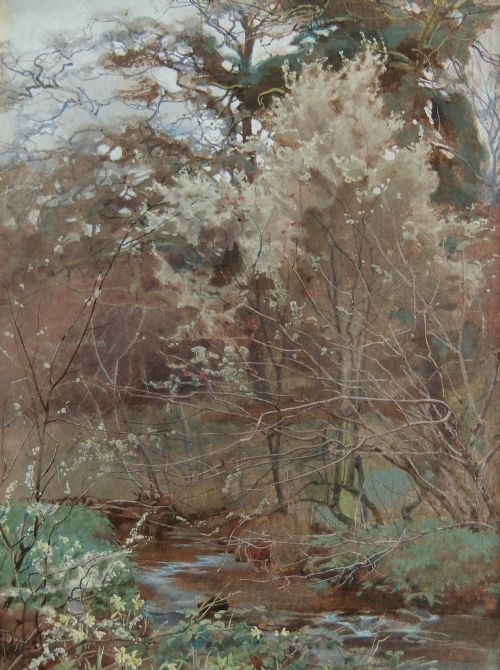
When you search for an antique stream painting, you encounter rural landscapes rendered in oil or watercolour across the Victorian and Edwardian eras. These works range from intimate depictions of mill races and woodland brooks to sweeping mountain streams set in Scotland, Wales, and Yorkshire.
The versions most common on this page date from the nineteenth and early twentieth centuries, featuring pastoral scenes, genre figures fishing by the water, and cattle watering at the edge. Painters utilised these waterways to introduce movement and light reflection into otherwise static countryside views.
Materials and Construction
Artists painted primarily with oil on canvas or wood panel, or applied watercolour pigment onto paper, often framing the finished works in gesso and giltwood. Canvases provide texture and depth for rich oil pigments, whilst watercolours rely on the bright white of the paper underneath to illuminate the water.
Wood panels offered a rigid and stable support for smaller nineteenth-century landscapes, allowing fine detail around the banks of a river. Giltwood frames, frequently contemporary to the paintings, complete the construction and protect the edges of the canvas or paper.
Minnows get caught and cattle linger in the shallows across a century of artists chasing the same trickling brook.
Evaluating Quality in Landscape Art
Quality rests upon the artist's handling of light upon the water and the natural integration of figures or cattle into the surrounding topography. Superior compositions balance the weight of the banks and foliage against the luminous path of the stream.
The strength of the brushwork and the subtlety of colour shifts in the sky and water separate hurried topographical records from accomplished artistic interpretations. A master hand brings movement to the current and atmosphere to the surrounding trees without relying on rigid formulas.
Sydney Yates Johnson·John Grenville Fennell·Ernest Higgins Rigg·Henry John Yeend King·William Hoggatt·Robert Watson·David Watts·Sidney James Beer·Harry Sylvester Stannard·Alfred W. Parsons·Alfred Banner·Noel Harry Leaver·Frederick Richard Lee·William Sidney Cooper·Robert Lesley Howey·Owen Bowen·George F. Wetherbee·Benjamin Callow·William Greaves·Thomas Creswick·John Pedder·Clarence Roe·Henry Hillingford Parker·Peder Knudsen·William R. Hoyles
The Antique Stream Painting Glossary
- Oil Paint
- Pigment suspended in a drying oil, usually linseed, offering rich colour depth and a slow drying time that allows for subtle blending. This medium dominates the nineteenth-century canvas works.
- Watercolour Pigment
- Finely ground colour mixed with a water-soluble binder, applied in translucent washes over paper. It creates luminous, light-filled depictions of rivers and skies.
- Giltwood
- Wood carved and coated with a thin layer of gold leaf, commonly used for traditional picture frames. These frames enhance the warmth of oil paintings.
- Gesso
- A plaster-like mixture applied to wood or canvas as a prepared base for painting, or moulded onto frames to create ornamental relief details. It provides a smooth surface for gilding.
- Genre Painting
- Art depicting scenes from everyday life, such as children fishing or women resting by a stream. These works capture social history alongside the landscape.
Antique Stream Painting: Frequently Asked Questions
What periods do these stream paintings cover?
The listings span from the late eighteenth century through the Victorian and Edwardian eras up to the mid-twentieth century. This temporal range displays evolving approaches to British and European landscape art.
Earlier pieces often reflect romantic ideals of the countryside, whilst later works embrace impressionistic light and post-war tonal shifts.
How were these landscape watercolours displayed?
Watercolours on paper required mounting behind glass within protective wooden frames to prevent moisture damage and fading. This traditional framing preserves the delicate pigment layers from airborne dust.
Many retain their original nineteenth-century gilt mounts, which complement the tonal quality of the paper.
Where are the settings depicted in the paintings?
The locations include specific British waterways such as Sannox Glen on the Isle of Arran, Wharfedale, Swaledale, and the Lake District, alongside European mountain streams. Artists travelled widely to capture recognizable regional topography.
Some works focus on idealized rural idylls without specific geographical markers, emphasising mood over geography.
How do oil paintings on wood panel differ from canvas?
Wood panels provide a rigid, unyielding surface that resists the sagging and punctures common to aged textiles. Painters favoured panels for smaller, highly detailed landscape studies.
Canvases offered flexibility and lighter weight, making them practical for larger works executed outdoors or in the studio.