

Antique Stool Upholstered
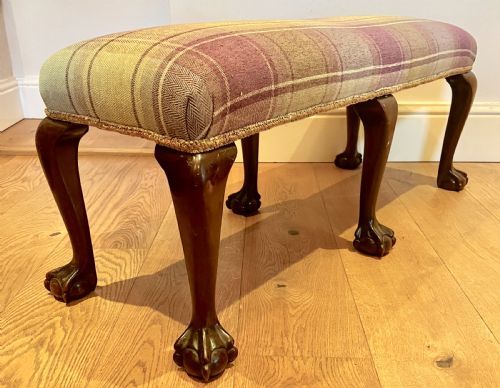
These antique stool upholstered selections bring period comfort and architectural form to a room, offering tactile seating in mahogany, walnut, and rosewood.
Antique Stool Upholstered
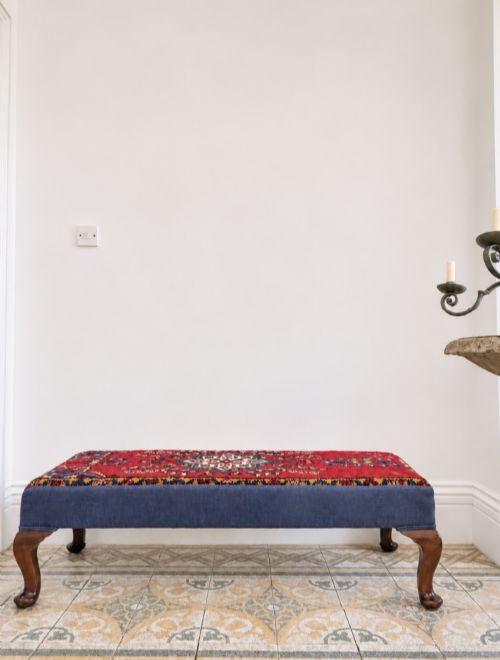
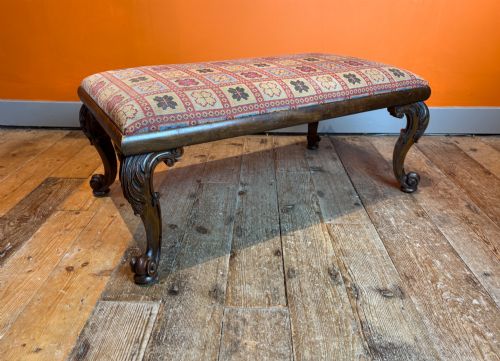
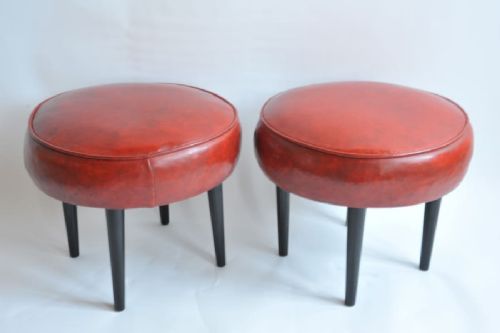
An antique stool upholstered search reveals a diverse category ranging from small footstools and piano seats to large centre stools and sarcophagus ottomans. Buyers on this page will most frequently encounter nineteenth-century Victorian examples alongside Georgian style pieces and early twentieth-century variations.
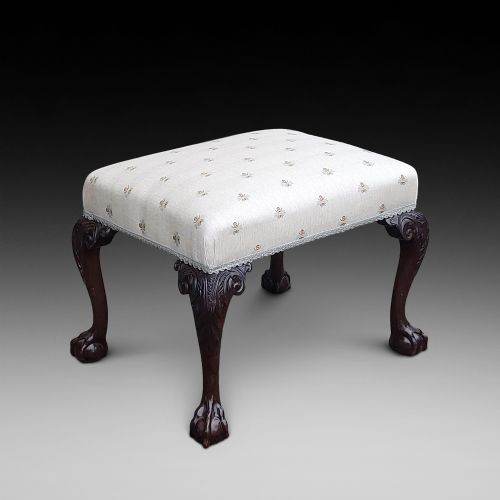
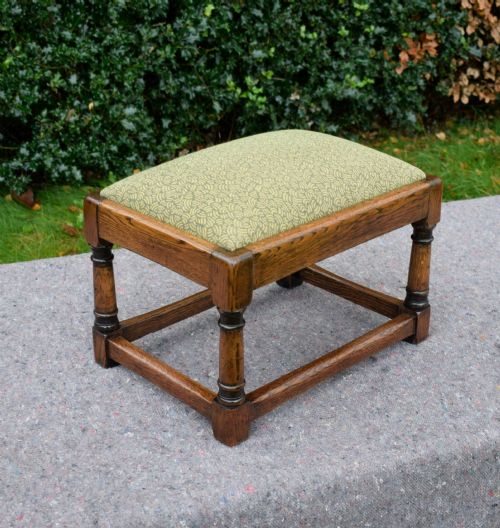
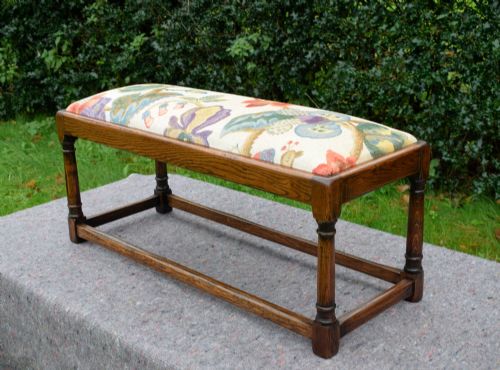
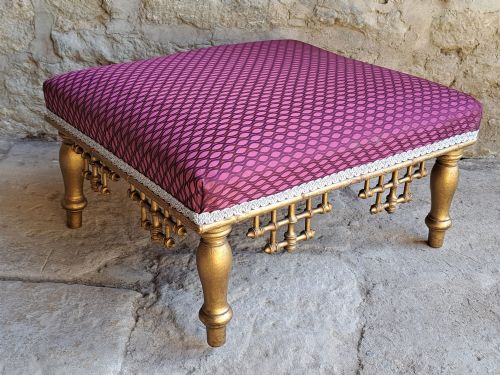
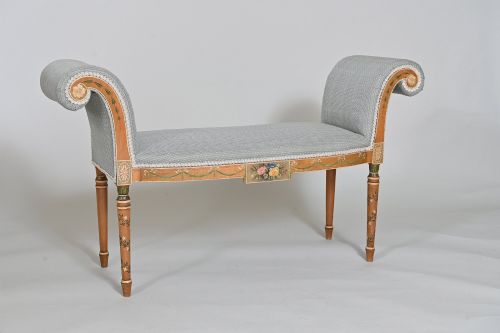
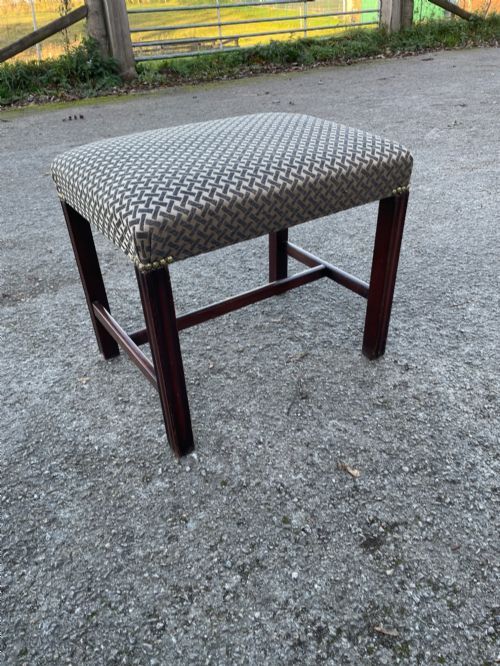
Forms extend from low footstools designed for fireside comfort to long window seats and substantial ottomans with storage. The structural frames reflect historical revivals, encompassing Chippendale style, Regency, Aesthetic Movement, and Jacobean influences.
Origins span English cabinet makers, French workshops, and Scandinavian design, with woods like mahogany, walnut, and rosewood forming the primary structural foundations for upholstered surfaces.
How they were made
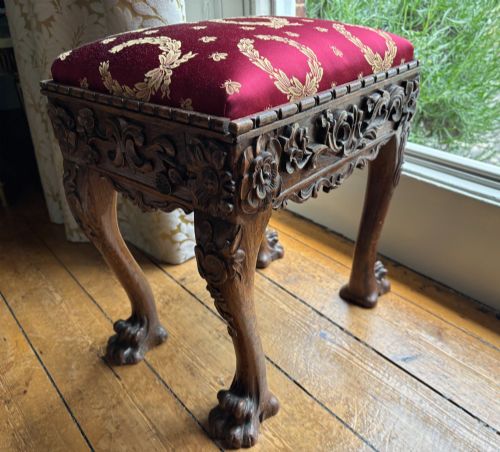
Craftsmen shaped solid timbers such as mahogany, walnut, oak, and satinwood into robust frames utilising traditional joinery. Carved cabriole legs, X-frames, and gilded surfaces demonstrate the dominant woodworking techniques of the eighteenth and nineteenth centuries.
Upholstery methods relied on natural textiles including tapestry, velvet, fabric, and leather, frequently secured over padding and webbing. Decorative embellishments incorporated brass details, beadwork, and intricate needlepoint to complete the seating surfaces.
Antique Stool Upholstered Retail Price Guide 2026
Typical asking prices for stool upholstered among the pieces listed under this phrase on Sellingantiques today, from the lower quarter to the upper quarter. They describe what is for sale here now, not the wider market.
Upholstered stool forms on this site encompass footstools, piano stools, window seats, ottomans, and duet benches.
What varies in quality
The distinction between standard production and exceptional execution lies in the depth of hand-carved detail on the wooden frame and the choice of dense timbers like rosewood or calamander. Superior examples exhibit refined proportions, such as well-balanced cabriole legs or crisp gilding.
Integrity of construction separates enduring pieces from lesser ones, visible in tight joinery and original decorative brass mounts. The historical fidelity of the textile covering, whether period tapestry or needlework, further influences the standing of the piece.
Jas Shoolbred·Loidrault Freres Paris
The Antique Stool Upholstered Glossary
- Sarcophagus ottoman
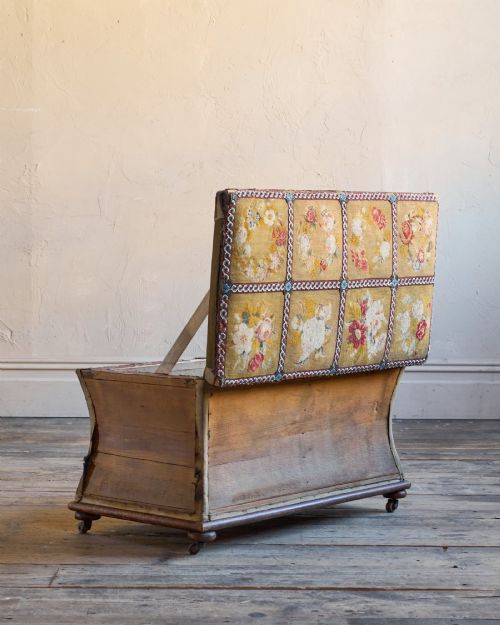
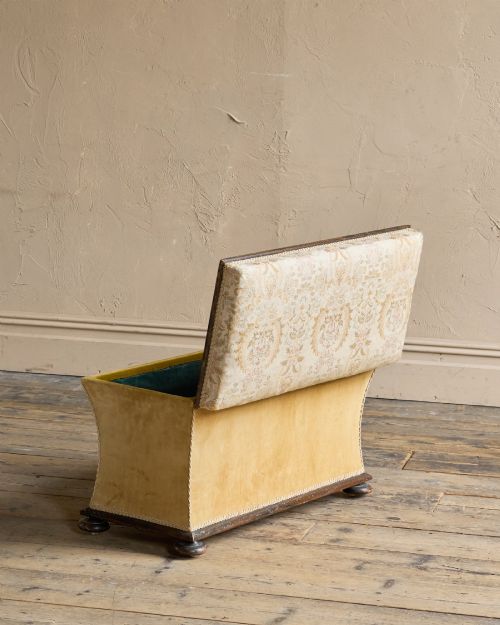
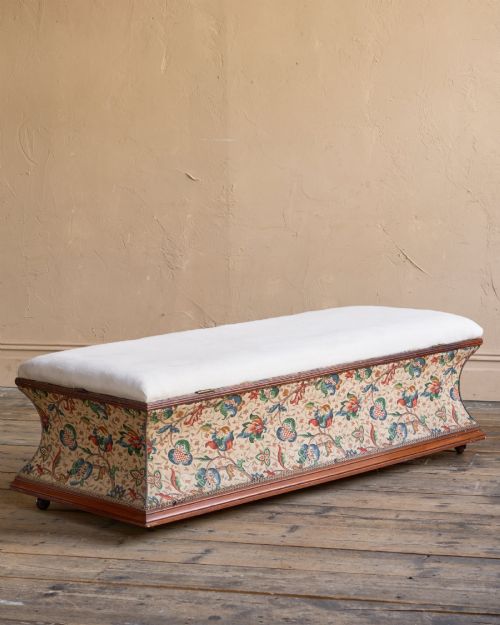
- A box-form storage stool featuring a sloping lid reminiscent of ancient stone coffins, popular during the Regency and Victorian eras. These large pieces often incorporate hinged seats for blanket storage.
- Cabriole leg
- A furniture leg that curves outward at the knee and tapers inward toward the foot, inspired by animal limbs. This form appears frequently on walnut and mahogany seating from the eighteenth century onward.
- X-frame stool
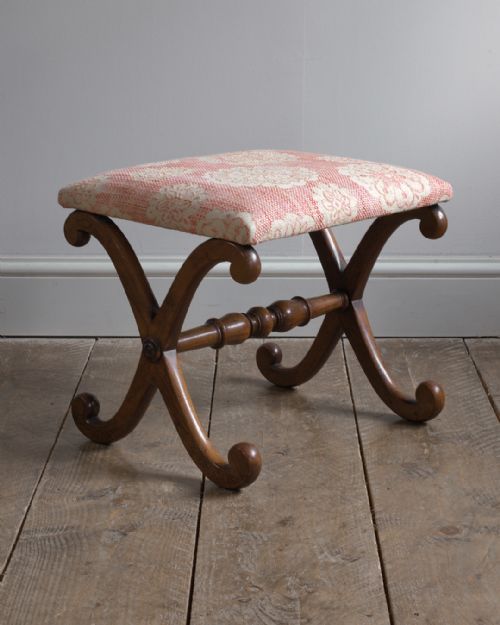
- A cross-legged seating form derived from ancient curule chairs, gaining prominence during the Regency and William IV periods. The intersecting supports provide both structural stability and architectural presence.
- Aesthetic movement
- A late nineteenth-century design style emphasising visual beauty over narrative meaning, often characterised by ebonised wood and gilt highlights. Pieces from this movement frequently utilise striking contrasts in their finish.
Antique Stool Upholstered: Frequently Asked Questions
What is a sarcophagus ottoman used for?
A sarcophagus ottoman serves as both a substantial seat and a concealed storage chest for blankets or textiles. Placed at the foot of a bed or within a large reception room, the heavy box construction offers practical utility alongside strong architectural presence.
These pieces often feature upholstered lids with decorative beadwork or fabric panels. The deep wooden frame provides a stable base that anchors period interior schemes.
How do I identify a Regency footstool?
Regency footstools typically feature classical motifs, dark timbers like mahogany or rosewood, and distinctive brass decoration. The silhouettes often reference ancient Greek or Roman forms, including saber legs or X-frame supports.
Craftsmanship from this period emphasises clean architectural lines and refined proportions. Surviving examples often show exceptional timber selection and precise metal mounts.
Where should I place a window seat?
Window seats fit naturally beneath low windows, along long corridors, or at the foot of a bed. Their elongated proportions provide functional seating without obstructing natural light or blocking views.
These versatile forms bridge the gap between chairs and benches. They offer an inviting surface for reading areas while complementing surrounding antique furniture.
What distinguishes Victorian piano stools?
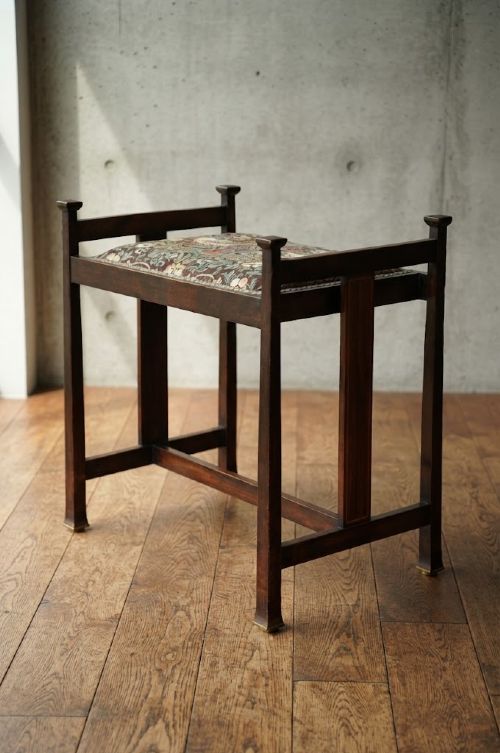
Victorian piano stools are specifically engineered for keyboard players, often incorporating rotating tops or adjustable height mechanisms. The frames frequently display ebonized finishes, gilding, or turned wooden supports typical of the late nineteenth century.
Upholstered surfaces on these stools range from simple needlework to durable velvet. Their compact dimensions make them adaptable as occasional seating in smaller rooms.