
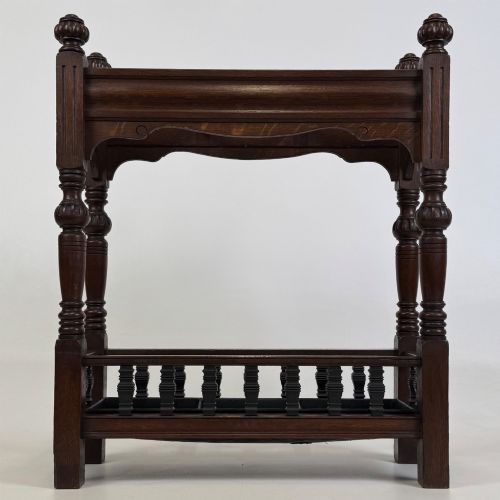
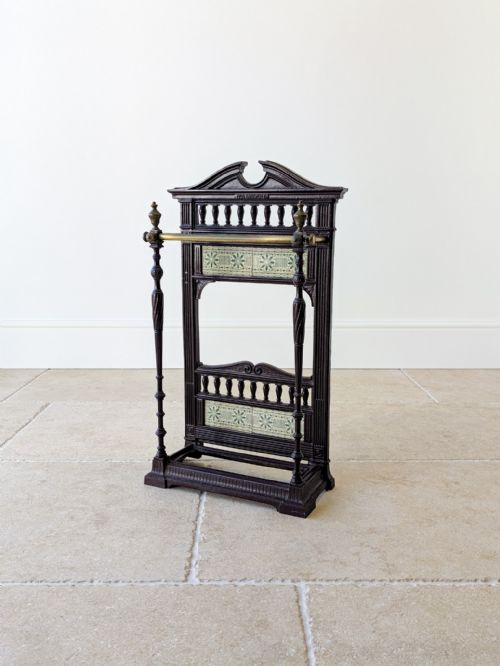
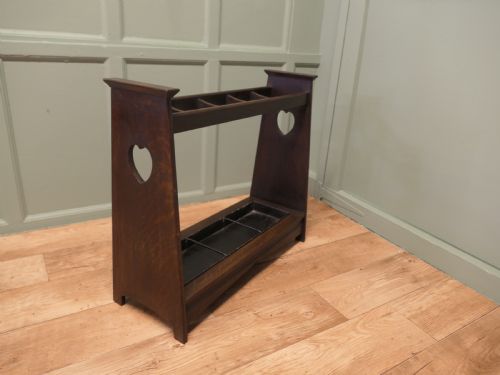


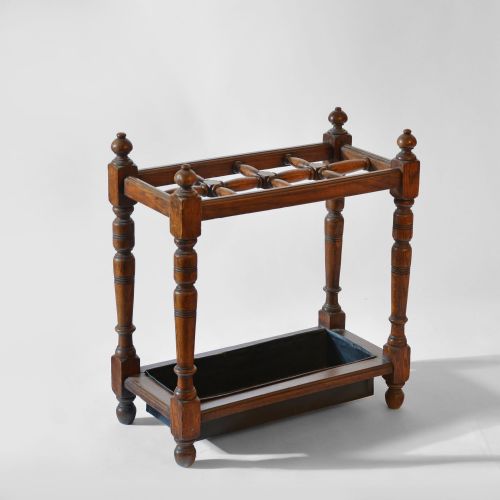
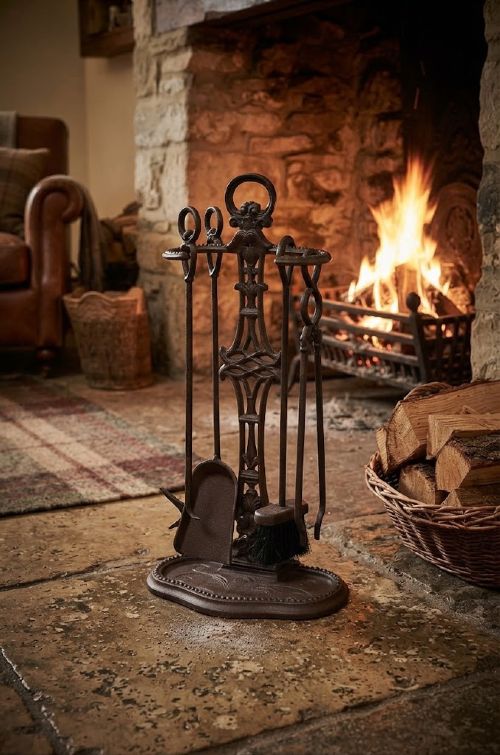
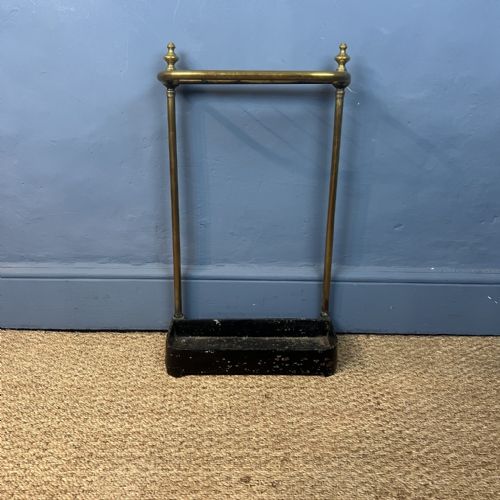
Antique Stick Stand Hall Rack
An antique stick stand hall rack brings purposeful organisation and refined period character to an entrance hall.
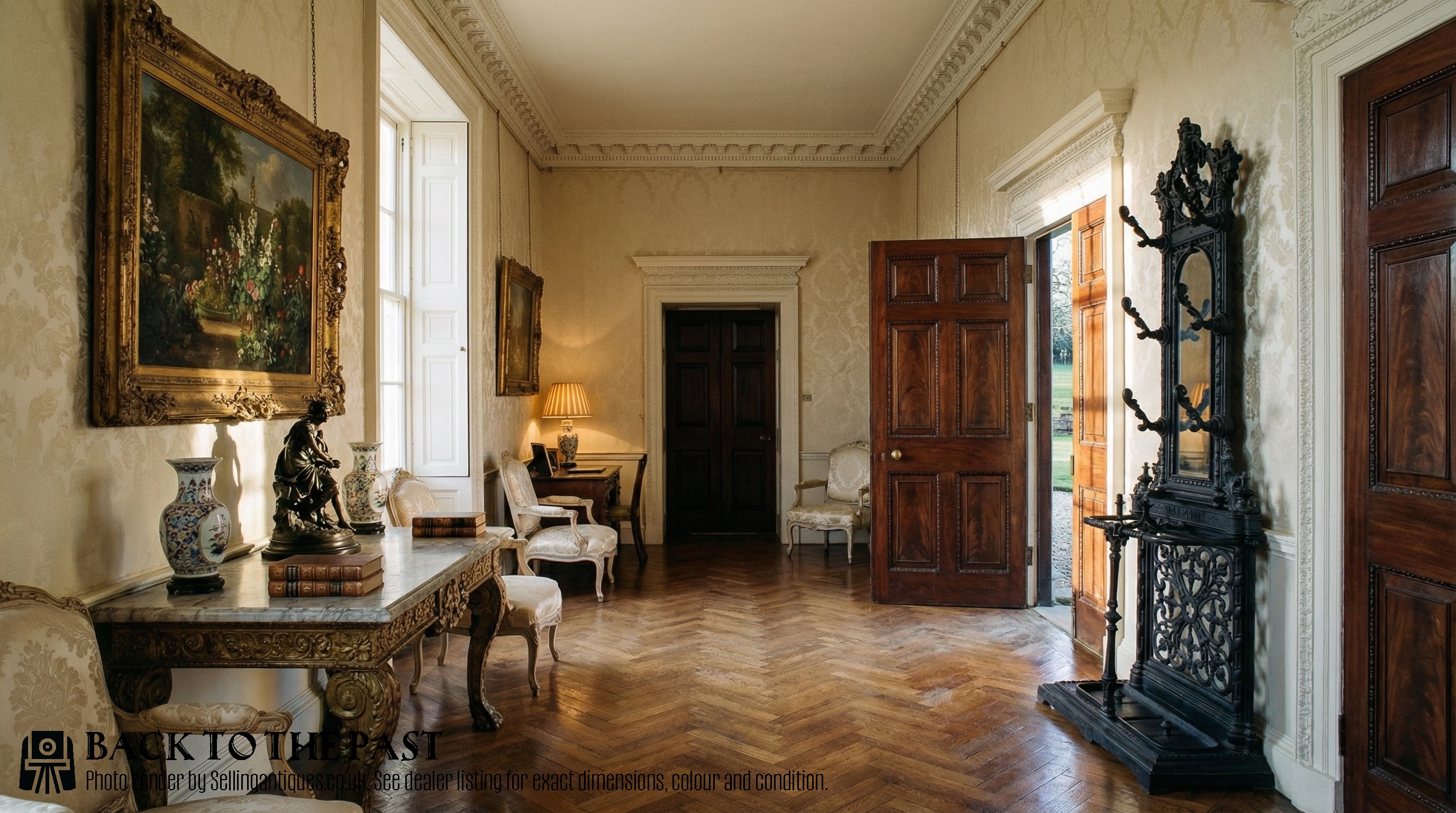
Antique Stick Stand Hall Rack
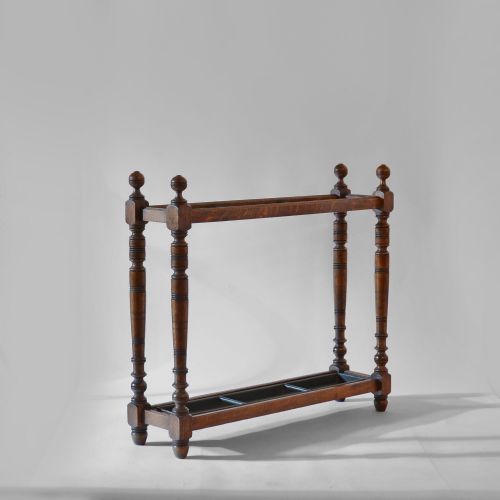
An antique stick stand hall rack serves as a designated place for umbrellas, walking sticks, hats, and coats within a domestic entranceway. These pieces combine vertical storage compartments with heavy drip trays, or merge umbrella racks directly into larger architectural hall furniture.
The pieces on this page span the Victorian, Edwardian, and Art Deco periods, drawing from English, French, and continental design traditions. Oak, mahogany, cast iron, and bentwood appear frequently as primary structural materials.
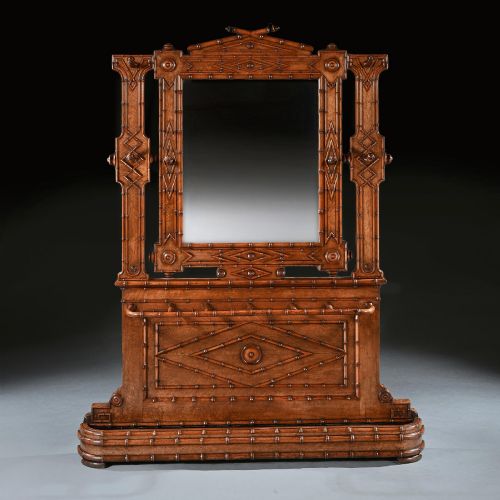
Buyers will encounter compact cast iron umbrella holders alongside expansive combination hall stands fitted with mirrors, coat hooks, and glove boxes. Edwardian oak examples and late Victorian cast iron designs dominate the current selection.
Materials and Technique
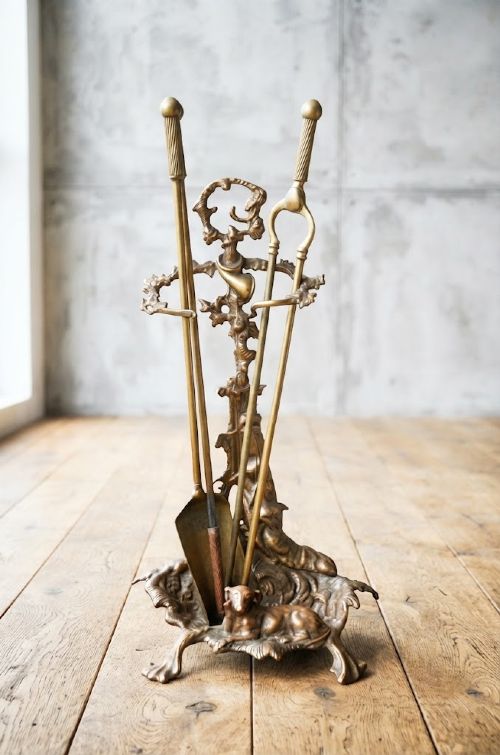
Foundry cast iron and brass form the backbone of the metal stands, often moulded with botanical motifs, geometric divisions, or faux bamboo texturing. Metal components frequently incorporate detachable zinc or iron drip trays at the base to catch rainwater from wet umbrellas.
Cabinetmakers utilised solid oak, mahogany, and birch for wooden hall stands and stick racks, employing traditional joinery alongside steam-bending techniques for beechwood bentwood frames. Applied mirrors, ceramic tiles, and nickel-plated metal divisions add functional detail to the wooden framework.
Listings feature oak, mahogany, cast iron, and brass across Victorian, Edwardian, and Art Deco periods.
Markers of Quality
Quality rests in the integrity of the original hardware, such as matching drip trays, intact brass coat hooks, and secure frame joints. Superior examples display crisp casting detail in ironwork or careful timber selection with matching grain patterns across large panels.
Finer pieces retain original surface finishes, whether polished golden oak, patinated brass, or decorative enamel, without extensive structural replacement. The presence of maker marks or registration stamps further elevates the standing of an individual piece.
Coalbrookdale·Liberty·Thonet
The Antique Stick Stand Hall Rack Glossary
- Drip tray
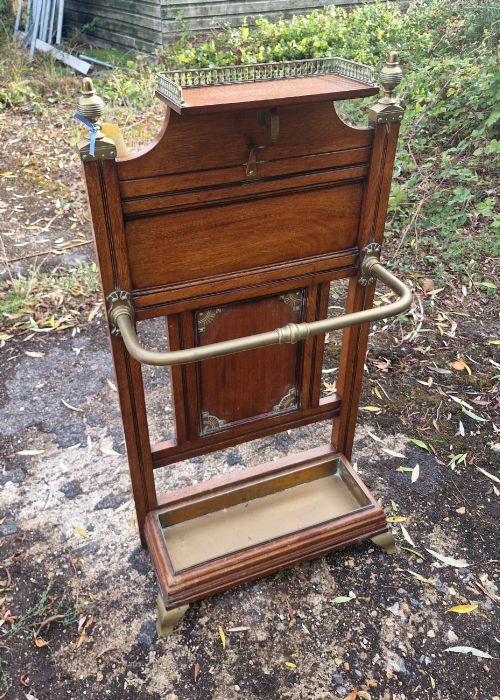
- A removable metal basin positioned at the floor of a stick stand to collect water from wet umbrellas. These trays are often galvanized or painted to resist rust.
- Bentwood
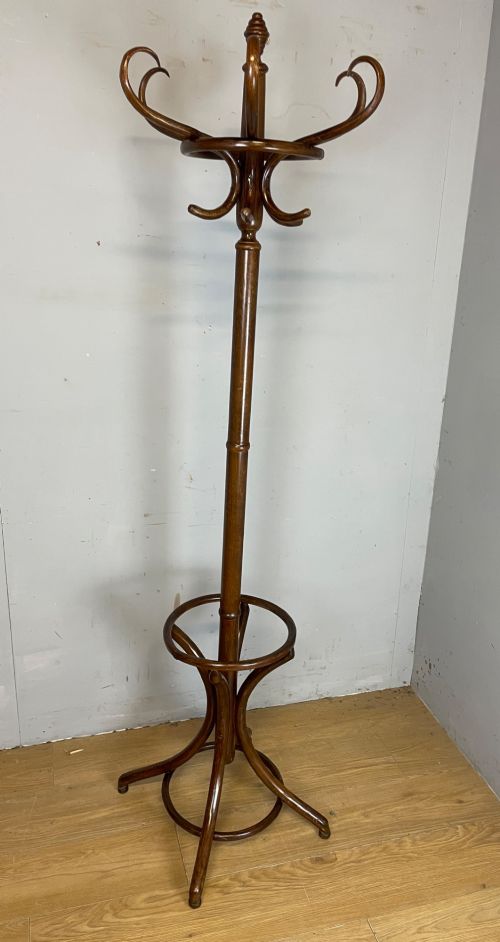
- Wood that has been rendered pliable via steam heat and bent into curved structural forms. This technique defines many coat and stick stands from the late nineteenth and early twentieth centuries.
- Faux bamboo
- Wood or metal carved, moulded, or painted to imitate natural bamboo stalks. This decorative finish appears widely on nineteenth-century French hall stands and stick racks.
- Hall stand
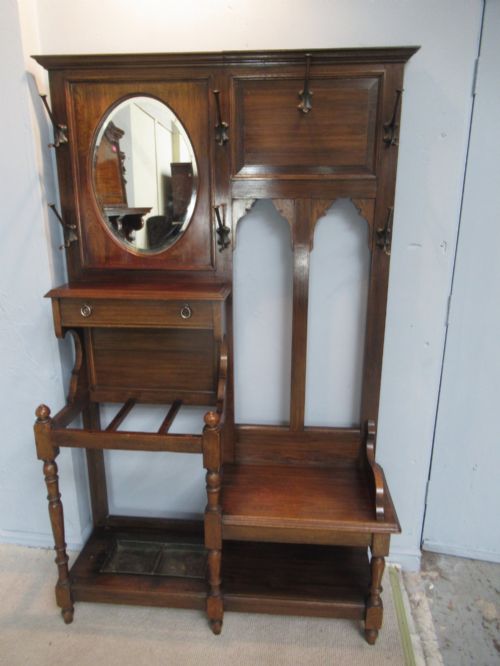
- A large multi-functional entryway piece incorporating coat hooks, a mirror, umbrella compartments, and sometimes a small bench or glove drawer. They combine vertical storage with display capability.
- Demi-lune
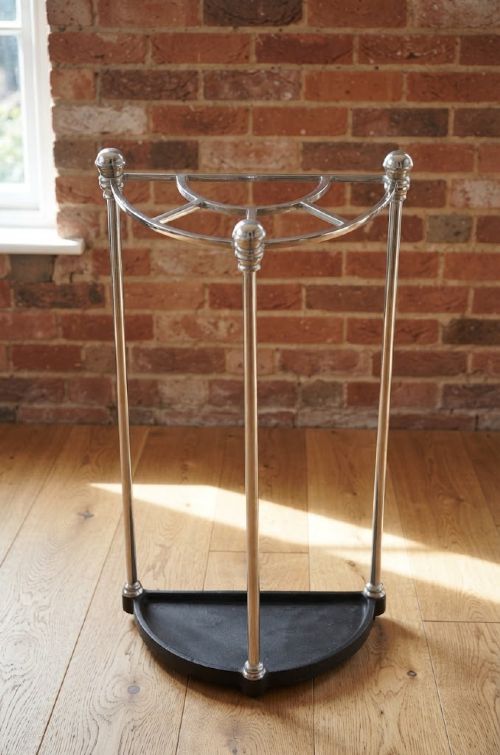
- A half-moon or semicircular shape utilised in the footprint of corner or wall-flush umbrella stands. This profile allows the piece to project minimally into narrow hallways.
Antique Stick Stand Hall Rack: Frequently Asked Questions
What is the difference between a hall stand and a stick stand?
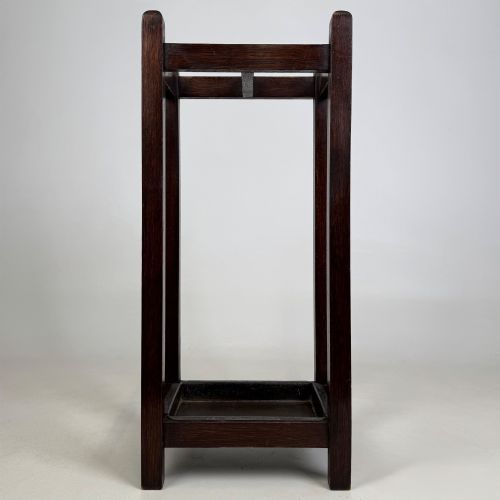
A stick stand is a dedicated, compact holder designed solely for umbrellas and walking sticks, often constructed from cast iron, brass, or small wooden frames.
By contrast, a hall stand is a larger piece of furniture that combines umbrella storage with coat hooks, a mirror, and sometimes a seat or glove box for an entire hallway.
How do I protect my floors from wet umbrellas?
Most antique stick stands include an original metal drip tray situated at the base to catch moisture running off wet canopies.
Ensure your stand retains its tray or place a modern liner inside the base to protect wooden or carpeted hallway flooring from residual dampness.
Are these stands suitable for modern hallways?
Many antique stick stands feature a compact footprint or a demi-lune shape designed to sit flush against narrow hallway walls without obstructing passage.
Their sturdy metal or hardwood construction handles daily modern use just as effectively as it did in Victorian and Edwardian entryways.
How do I identify an Art Nouveau stick stand?
Art Nouveau stands typically display organic, flowing lines inspired by natural plant forms, featuring whiplash curves, stylised floral motifs, or faux bois bamboo surfaces.
These pieces frequently date from around nineteen hundred and utilise cast iron, bronze, or carved oak.