


Antique Stick Stand Bear
An antique stick stand bear brings robust nineteenth-century carving and practical hallway utility together.
Antique Stick Stand Bear
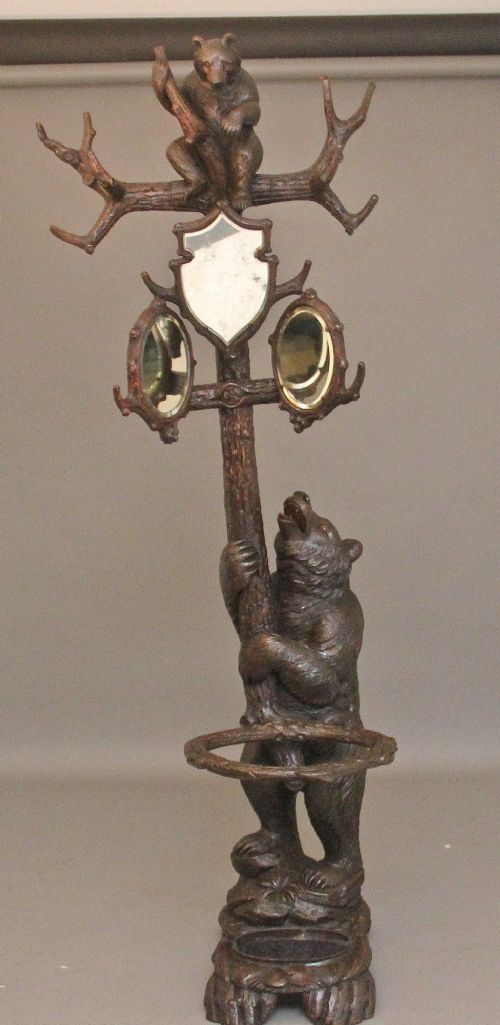
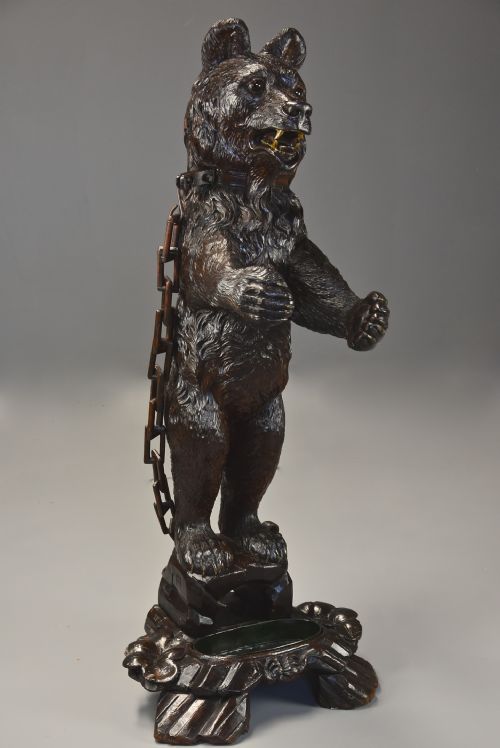
An antique stick stand bear takes the form of a carved wooden figure holding a tray or loop to catch dripping walking sticks and umbrellas in a hallway. These pieces combine taxidermy-like realism with functional hall furniture, often standing upright with branches or hollowed trunks beside them. You will most frequently encounter nineteenth-century examples executed in the characteristic Black Forest manner.
The objects serve as both umbrella stands and coat or hat hooks within a combined hall stand format. They appear in sizes ranging from compact umbrella holders to large exhibition pieces incorporating mirrors. The bear motif dominates the design, typically carved from linden wood or lime wood with notable attention to anatomical detail and glass eyes.
Materials and carving techniques
Carvers shaped these figures primarily from linden wood, lime wood, and assorted carved hardwoods using traditional hand chisels and gouges. The choice of these timbers allowed artisans to render deep fur textures, facial expressions, and complex tree trunk supports without excessive splitting. Metal components frequently appear as drip pans, hooks, or internal structural reinforcement to handle wet umbrellas.
Makers integrated naturalistic elements such as carved oak trees, branches, and occasionally glass or mirror panels into the main wooden body. The finishing process involved staining and waxing the carved wood to highlight the grain and deep relief work. Artisans inserted glass eyes into the bear heads to heighten the lifelike appearance characteristic of Black Forest production.
Many of these bears peer out from the hallway with surprisingly polite glass eyes, ready to guard your umbrella.
Judging the quality of the carving
The integration of the functional elements reveals the maker's hand, with better pieces seamlessly blending the utility of a stick stand into the naturalistic tree or rockwork. The condition and retention of original components, including metal drip pans and glass eyes, influence the integrity of the piece. Wood selection also matters, as dense linden wood takes finer detail than softer alternatives.
The Antique Stick Stand Bear Glossary
- Black Forest
- A style of wood carving originating from the mountain region of Central Europe during the nineteenth century. It is known for realistic depictions of animals, particularly bears, combined with foliage and rustic furniture forms.
- Hall Stand
- A piece of hall furniture combining umbrella stands, coat hooks, and often a mirror or glove box. They provide a central depository for outerwear upon entering a house.
- Linden Wood
- A pale, fine-grained timber commonly used by nineteenth-century woodcarvers. Its even texture allows for intricate detail without splintering.
- Drip Pan
- A metal tray placed at the base of a stick stand to catch moisture from wet umbrellas. These components protect the wooden floor and the base of the carving from water damage.
Antique Stick Stand Bear: Frequently Asked Questions
What is a black forest bear stick stand?
A black forest bear stick stand is a piece of nineteenth-century hall furniture carved in the shape of a bear holding a vessel for walking sticks and umbrellas.
These pieces combine decorative animal carving with everyday utility, often incorporating hooks for coats and trays for water collection.
How were these stands used in nineteenth century halls?
Households placed them in entrance halls to organise wet umbrellas, heavy walking sticks, and outdoor garments.
The integrated design allowed visitors and residents to deposit their gear immediately upon entering the home.
What woods were used for these bear carvings?
Carvers utilised linden wood, lime wood, and other carved hardwoods for their work.
These timbers accepted fine chisel detail well, enabling artisans to replicate realistic fur and muscular forms.
How do I distinguish different periods of black forest carvings?
Nineteenth-century pieces generally exhibit deeper carving, greater anatomical accuracy, and more complex tree or rock structures.
Later examples from the early twentieth century often display simpler execution and lighter framing.